LED Photography Flash
CN → US| HS Code | Tariff Rate | Origin | Destination | Doc |
|---|---|---|---|---|
| 8539520010 | 12.0% | CN | US | Official Doc |
| 8539520091 | 12.0% | CN | US | Official Doc |
| 9405418440 | 38.9% | CN | US | Official Doc |
Product Images
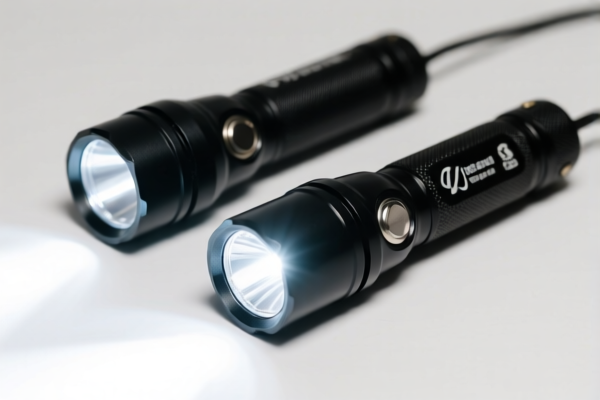
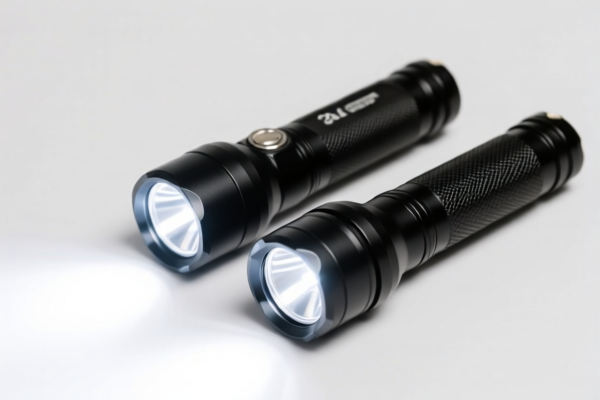


AI Analysis
💡 LED Photography Flash Lights
🌐 HS Code Reference & Customs Clearance Guide | 2026 Latest Tariff Analysis | Professional-Level Clearance Strategy
📌 I. Product Definition & Classification: Do You Really Understand "LED Photography Flash"?
An LED Photography Flash is a specialized lighting device used in professional photography, videography, and content creation. Unlike traditional strobe lights that use gas-filled tubes, these devices utilize Light-Emitting Diodes (LEDs) for continuous or pulsating light output.
In international trade, the classification depends heavily on whether the item is viewed strictly as a light source component or as a complete lumin fixture/apparatus. This distinction is critical for determining the correct HS Code and, consequently, the tariff rate.
⚠️ Key Distinction Point:
- If classified primarily by its emitting technology (LED chips/modules) intended as a light source → Falls under 8539.52.xxxx
- If classified by its function as a complete lighting appliance designed for specific illumination purposes → Falls under 9405.41.xxxx
📦 II. HS Code Classification Details (2026 Latest Tariff Authority Comparison)
| HS Code | Product Description | Applicable Scenario | Classification Logic |
|---|---|---|---|
8539.52.00.10 |
LED Light Sources: Specifically matched as LED sources for photography flashes | Professional studio flashes, LED bulb replacements | ✅ Material/Use: Matches "Light-emitting diode (LED) light sources" |
8539.52.00.91 |
Other LED Light Sources | General LED flash units without specific form factor conflicts | ✅ Category: Clearly within LED light source scope, no material conflict |
9405.41.84.40 |
Other Electric Luminaires and Lighting Fittings | Complete LED flash units with housing, heat sinks, drivers | ✅ Function: Classified as "Other electric luminaires" designed for LED sources |
🔍 Key Reminder:
- 8539 Codes focus on the component aspect (the light-emitting part).
- 9405 Code focuses on the assembly aspect (the complete lamp/fixture).
- Customs may scrutinize the degree of integration (is it a bare module or a ready-to-use product?) when deciding between these codes.
💰 III. 2026 Latest Tariff Rate Details (Including Additional Taxes & Policy Surcharges)
✅ Applicable Country: United States (US)
✅ Country of Origin: China (CN)
✅ Effective Date: From November 10, 2025 (for subsequent imports)
🎯 1. 8539.52.00.10 & 8539.52.00.91 —— LED Light Sources (Component Classification)
| Item | Content |
|---|---|
| Base Tariff | 2.0% (Ad Valorem) |
| Section 301 Surcharge | 0.0% |
| Section 122 Tariff | 10.0% (Specific provision for certain goods) |
| Total Tariff Rate | 12.0% |
| Tax Calculation | CIF Value × 12.0% |
| De Minimis Exemption | ❌ Not Applicable (Subject to strict scrutiny) |
| Legal Basis Path | Base Rate → Section 122 Provision |
📌 Explanation:
- These codes classify the flash as an LED light source.
- The Section 122 tariff of 10% is a specific additional levy applied to certain LED-related imports.
- Total burden is relatively low at 12%, making this classification cost-effective if the product can be justified as a "light source" rather than a "fixture."
🎯 2. 9405.41.84.40 —— Electric Luminaires (Fixture Classification)
| Item | Content |
|---|---|
| Base Tariff | 3.9% (Ad Valorem) |
| Section 301 Surcharge | 25.0% (High penalty for Chinese origin goods) |
| Section 122 Tariff | 10.0% |
| Total Tariff Rate | 38.9% |
| Tax Calculation | CIF Value × 38.9% |
| De Minimis Exemption | ❌ Not Applicable |
| Legal Basis Path | Base Rate → Section 301 (25%) + Section 122 (10%) |
📌 Warning:
- The 25% Section 301 surcharge significantly increases the cost.
- This classification treats the LED flash as a complete lighting appliance.
- Total burden is 38.9%, which is 3.25 times higher than the LED source classification.
- Strategic Note: Misclassifying a complete fixture as a "light source" to avoid the 25% tax is a major customs risk and can lead to penalties.
🛠️ IV. Customs Clearance Practical Advice (Actionable Pitfall Avoidance Guide)
✅ 1. Required Documentation Checklist (Non-Negotiable)
| Document | Must Provide | Description |
|---|---|---|
| ✅ Product Datasheet | ✔️ | Details on LED type, lumen output, voltage, and whether it includes a driver/housing. |
| ✅ Technical Diagram | ✔️ | Crucial to prove if the item is a "component" (LED module) or a "fixture" (complete unit). |
| ✅ Product Photos (with Label) | ✔️ | Clear view of model number, brand, and input/output specs. |
| ✅ Commercial Invoice | ✔️ | Must accurately describe the item: "LED Light Source Module" vs. "LED Photography Flash Lamp." |
| ✅ Packing List | ✔️ | Clearly states if drivers, batteries, or diffusers are included (adds to fixture classification risk). |
| ✅ Original Country Certificate | ✔️ | To verify origin and apply correct Section 301 status. |
✅ 2. Declaration Strategy (Key Mantra)
🔥 “Module is Cheap, Fixture is Heavy; Describe the Truth, Keep the Fee Low!”
| Scenario | Correct Declaration | Wrong Practice | Consequence |
|---|---|---|---|
| Standalone LED Flash Module (No housing/driver) | 8539.52.00.10 / 91 |
Call it "Flash Lamp" | Save ~27% tax |
| Complete Flash Unit (With housing, driver, battery) | 9405.41.84.40 |
Call it "LED Light Source" | Risk of penalty + back taxes |
| Flash + Stand/Bracket | 9405.41.84.40 |
Split declaration | Complexity & Audit Risk |
✅ 3. Special Cases Handling
| Situation | Handling Advice |
|---|---|
| OEM/ODM Custom Flashes | Provide client design specs. If the client provides the housing and you supply only the LED module, declare as 8539. |
| Flash with Integrated Battery/Driver | Strongly lean towards 9405. Customs views integrated power/management systems as part of a "luminaire." |
| Import for Testing/Samples | Ensure samples are clearly marked. If they are complete units, even samples may attract the 38.9% rate if not carefully documented. |
| Re-export to Third Country | If re-exporting from a free trade zone, ensure the HS code matches the original classification to maintain duty drawback eligibility. |
🌍 V. Global Market Comparison (2026 Latest)
| Country/Region | Recommended HS Code | Tariff Rate (China Origin) | Certification Required | Notes |
|---|---|---|---|---|
| 🇺🇸 USA | 8539.52.00.10/91 (Preferred if module) |
12.0% | FCC (if wireless) | 38.9% if classified as fixture (9405). High sensitivity. |
| 🇺🇸 USA | 9405.41.84.40 (If complete unit) |
38.9% | FCC + UL/ETL (Recommended) | Section 301 applies heavily. |
| 🇨🇳 China | 8539.52.00 / 9405.41 |
~5-13% (Import Duty) | CCC (if applicable) | Lower base duties, no Section 301. |
| 🇪🇺 EU | 9405.41 |
0% - 4% (Standard MFN) | CE + RoHS | No equivalent "Section 301" but strict safety rules. |
| 🇬🇧 UK | 9405.41 |
0% | UKCA + CE | Post-Brexit alignment with EU standards. |
📌 Conclusion:
- USA is the most challenging market due to the disparity between the 12% and 38.9% rates.
- Product structuring is key: Can the product be sold/shipped as a modular LED component to qualify for the lower 12% rate?
- Risk vs. Reward: If the product is a complete, ready-to-use flashlight, attempting to declare it as8539is high-risk for audits.
📌 VI. Common Errors & Pitfall Guide (Lessons from the Field)
❌ Error 1: Declaring a complete LED flash unit (with housing and driver) as 8539 (LED Light Source).
👉 Consequence: Customs determines it is a "luminaire," issues a Notice of Redetermination, demands 38.9% instead of 12%, plus penalties and storage fees.
❌ Error 2: Not declaring the Section 122 tariff correctly.
👉 Consequence: Underpayment by 10%. Customs audits will catch this as it is a specific statutory levy.
❌ Error 3: Confusing LED Photography Flash with General Indoor Lighting.
👉 Consequence: Misclassification under general lighting codes may trigger different safety certifications (like UL 1598 vs. specialized photo equipment standards), leading to holds.
✅ Correct Practice:
“LED Light Source Module for Photography, Model XYZ, No Housing Included” → HS 8539.52.00.10
vs.
“Complete LED Photography Flash Unit, with Heat Sink, Driver, and Reflector, Model ABC” → HS 9405.41.84.40
🎯 VII. Conclusion: Precision Classification Saves Money
🎯 Remember the Mantra:
🔹 “Source vs. Fixture: The 27% Gap!”
🔹 “If it has a driver and housing, think 9405. If it’s a chip/module, think 8539.”
🔹 “Don’t risk the 38.9% trap unless you are sure it’s a complete fixture.”
📌 Pro Tip:
If you are importing complete LED flashes, consider:
1. Supply Chain Adjustment: Ship the LED modules (8539) and housings (9405) separately if possible (though assembly location matters for origin rules).
2. Advance Ruling: Apply for a Binding Ruling from U.S. Customs and Border Protection (CBP) to confirm the classification before shipment. This provides legal certainty and avoids surprise bills at customs.
📣 Immediate Action:
📞 Contact a licensed customs broker.
📄 Prepare technical drawings showing the LED component vs. the assembled fixture.
🚀 Declare accurately. Avoid the 25% Section 301 surcharge trap.
✨ Professional Clearance, Starts with Precise Classification!
💼 Your Cost Efficiency Depends on the First 8 Digits!
Customer Reviews
About HS Code Classification
The Harmonized System (HS) is an internationally standardized nomenclature developed by the World Customs Organization (WCO) to classify traded products. Over 200 countries use the HS system as the basis for customs tariffs, trade statistics, and import/export regulations.
Each HS code follows a hierarchical structure:
- Chapter (2 digits) — Broad category of goods (e.g., Chapter 84: Machinery and Mechanical Appliances)
- Heading (4 digits) — More specific grouping within the chapter
- Subheading (6 digits) — Internationally standardized breakdown, used by all WCO member countries
- National subdivisions (8-10 digits) — Country-specific extensions for further classification, such as US HTSUS 10-digit codes
Correct HS code classification is essential for smooth customs clearance, accurate duty payment, and compliance with trade regulations. Misclassification can lead to customs delays, overpayment of duties, or penalties.
When importing from CN to US, the applicable tariff rates may include:
- Most-Favored-Nation (MFN) rate — The standard duty rate applied to WTO members
- General rate — Applied to countries without trade agreements
- Trade remedy duties — Additional tariffs such as Section 301 (anti-dumping), Section 232 (national security), or countervailing duties
The information provided on this page is for reference purposes only. For official classification, please consult with your local customs authority or a licensed customs broker.