LED Reading Table Lamp
CN → US| HS Code | Tariff Rate | Origin | Destination | Doc |
|---|---|---|---|---|
| 9405216010 | 16.0% | CN | US | Official Doc |
| 8543709860 | 37.6% | CN | US | Official Doc |
| 8543707100 | 37.0% | CN | US | Official Doc |
| 8513104000 | 13.5% | CN | US | Official Doc |
| 9405218010 | 38.9% | CN | US | Official Doc |
Product Images
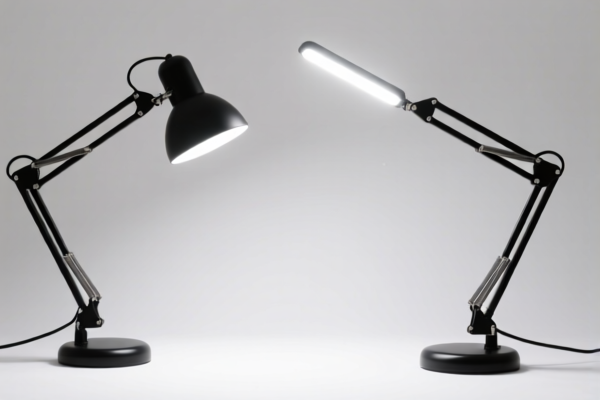
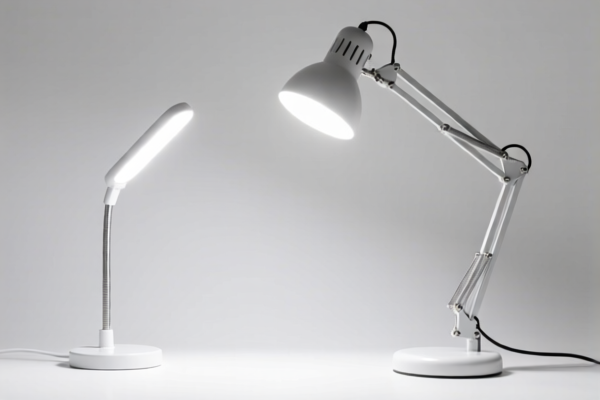
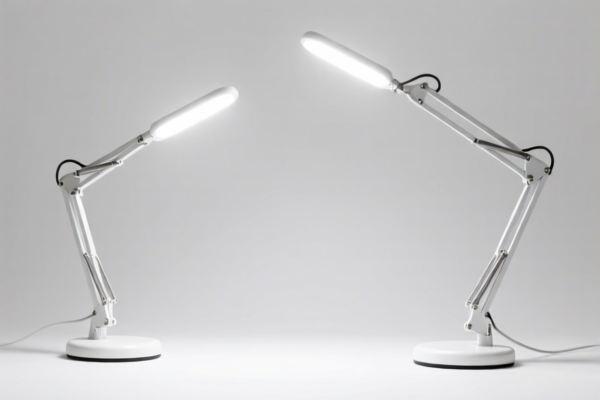
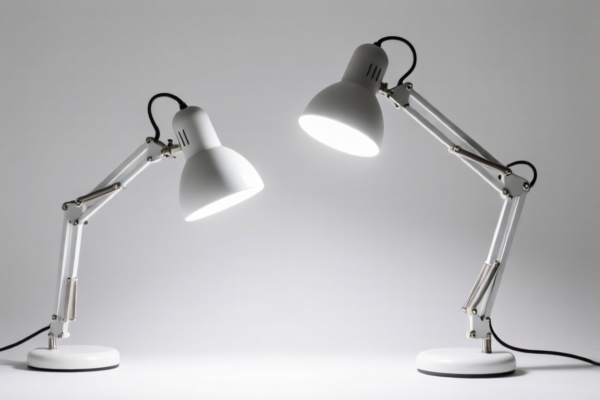
AI Analysis
💡 LED Reading Table Lamp (Home Lighting Solutions)
🌐 HS Code Reference & Customs Clearance Guide | 2026 Latest Tariff Analysis | Professional Compliance Strategy
📌 Part I: Product Definition & Classification: What Exactly is an "LED Reading Table Lamp"?
An LED Reading Table Lamp is a portable or stationary lighting device designed specifically for reading tasks, typically placed on desks or nightstands. In international trade, the classification hinges on function, power source, and integrated components:
Home Desk Lamps (Generic/Structural Focus): Lamps primarily made of base metals or plastics, focusing on illumination structure rather than complex electronic control.
Smart/Electronic Lighting Devices: Lamps with integrated circuits, dimming functions, or specialized electronic components that give them independent functional capabilities beyond simple illumination.
⚠️ Key Classification Distinction:
- If the product is a basic structural lamp (metal/plastic body, simple switch) → It often falls under Chapter 94 (Furniture/Lighting Fixtures).
- If the product has complex electronic circuitry, independent processing functions, or specialized portable energy sources → It may be classified under Chapter 85 (Electrical Machinery/Equipment).
📦 Part II: HS Code Classification Matrix (2026 Latest Tariff Authority Mapping)
Based on your input data, here are the precise HS Codes applicable to different variations of LED Reading Table Lamps, along with their tax implications.
| HS Code | Product Summary (English Translation) | Key Characteristics | Total Tax Rate (China Origin to US) | Tax Structure Breakdown |
|---|---|---|---|---|
9405.21.60.10 |
LED Lamp, Home Desk Lamp, Material: Base Metal or Plastic | Basic structural lamp, standard home use, simple construction. | 16.0% | Base: 6.0% Section 301 (Add'l): 0.0% Section 122 (IEEPA): 10% |
8543.70.98.60 |
Electrical Apparatus, Machines/Devices with Independent Function, Containing Electronic Circuits | Complex electronic device, independent functionality, high-tech circuitry. | 37.6% | Base: 2.6% Section 301 (Add'l): 25.0% Section 122 (IEEPA): 10% |
8543.70.71.00 |
Electric Lamp-Type Functional Lighting Equipment, Containing Electronic Components & Lamp Structure | Hybrid device: Lighting function + Electronic control/processing. | 37.0% | Base: 2.0% Section 301 (Add'l): 25.0% Section 122 (IEEPA): 10% |
8513.10.40.00 |
Portable Electric Lamp, Lighting Equipment Powered by Its Own Energy Source | Self-powered (battery/USB), portable, no external AC plug required. | 13.5% | Base: 3.5% Section 301 (Add'l): 0.0% Section 122 (IEEPA): 10% |
9405.21.80.10 |
LED Light Source, Desk/Table Lamp Form, Home Use | LED-focused, specific home desk form factor, possibly modular light source. | 38.9% | Base: 3.9% Section 301 (Add'l): 25.0% Section 122 (IEEPA): 10% |
🔍 Critical Note:
-9405.21.60.10offers the lowest tax burden (16%) for standard home lamps without complex independent electronic functions.
-8543.70.98.60,8543.70.71.00, and9405.21.80.10are subject to Section 301 tariffs (25%), significantly increasing costs.
-8513.10.40.00is the only category exempt from Section 301 tariffs, making it ideal for battery-operated or USB-rechargeable portable lamps.
💰 Part III: 2026 Latest Tariff Rate Detail (Including Surtaxes & Policy Add-ons)
✅ Applicable Country: United States (US)
✅ Country of Origin: China (CN)
✅ Effective Date: Ongoing (Post-2025 Policy Framework)
🎯 1. 9405.21.60.10 – LED Lamp, Home Desk Lamp (Material: Base Metal/Plastic)
| Item | Content |
|---|---|
| Base Tariff | 6.0% |
| Section 301 Add'l Tariff | 0.0% (Exempt) |
| Section 122 (IEEPA) Tariff | +10% |
| Total Effective Rate | 16.0% |
| Calculation Base | CIF Value × 16.0% |
| De Minimis Eligibility | ❌ No (High-value industrial/commercial goods) |
| Legal Basis Path | USITC:9405.21.60.10 → FOOTNOTE:Section122 |
📌 Explanation:
- This code represents a standard, non-complex lighting fixture.
- It is exempt from the punitive 25% Section 301 tariff, which is a major cost saver.
- Only the 10% IEEPA surcharge applies, resulting in the most competitive duty rate for basic home lamps.
🎯 2. 8543.70.98.60 – Electrical Apparatus with Independent Electronic Function
| Item | Content |
|---|---|
| Base Tariff | 2.6% |
| Section 301 Add'l Tariff | +25.0% |
| Section 122 (IEEPA) Tariff | +10.0% |
| Total Effective Rate | 37.6% |
| Calculation Base | CIF Value × 37.6% |
| De Minimis Eligibility | ❌ No |
| Legal Basis Path | IEEPA:9903.01.24 → USITC:8543.70.98.60 → FOOTNOTE:Section301 |
📌 Explanation:
- Classified as an electrical machine/device with independent function.
- Subject to both Section 301 (25%) and IEEPA (10%), totaling 37.6%.
- High cost; requires strong justification for "independent electronic function" vs. simple lighting.
🎯 3. 8543.70.71.00 – Electric Lamp-Type Functional Lighting Equipment
| Item | Content |
|---|---|
| Base Tariff | 2.0% |
| Section 301 Add'l Tariff | +25.0% |
| Section 122 (IEEPA) Tariff | +10.0% |
| Total Effective Rate | 37.0% |
| Calculation Base | CIF Value × 37.0% |
| De Minimis Eligibility | ❌ No |
| Legal Basis Path | IEEPA:9903.01.24 → USITC:8543.70.71.00 → FOOTNOTE:Section301 |
📌 Explanation:
- Similar to above, but specifically for lighting equipment with electronic components.
- Also incurs 37.0% total duty.
- Must prove presence of electronic control circuits that go beyond basic switching.
🎯 4. 8513.10.40.00 – Portable Electric Lamp (Self-Powered)
| Item | Content |
|---|---|
| Base Tariff | 3.5% |
| Section 301 Add'l Tariff | 0.0% (Exempt) |
| Section 122 (IEEPA) Tariff | +10.0% |
| Total Effective Rate | 13.5% |
| Calculation Base | CIF Value × 13.5% |
| De Minimis Eligibility | ❌ No |
| Legal Basis Path | USITC:8513.10.40.00 → FOOTNOTE:Section122 |
📌 Explanation:
- Best for battery-operated or USB-rechargeable lamps.
- Exempt from Section 301 tariffs, resulting in the lowest total duty (13.5%).
- Ideal for products marketed as "portable," "travel," or "cordless."
🎯 5. 9405.21.80.10 – LED Light Source, Desk/Table Lamp Form
| Item | Content |
|---|---|
| Base Tariff | 3.9% |
| Section 301 Add'l Tariff | +25.0% |
| Section 122 (IEEPA) Tariff | +10.0% |
| Total Effective Rate | 38.9% |
| Calculation Base | CIF Value × 38.9% |
| De Minimis Eligibility | ❌ No |
| Legal Basis Path | IEEPA:9903.01.24 → USITC:9405.21.80.10 → FOOTNOTE:Section301 |
📌 Explanation:
- Despite being in Chapter 94 (Lighting Fixtures), this specific subheading triggers Section 301 tariffs.
- Highest duty rate among all options (38.9%).
- Avoid unless legally required; likely applies to specific LED module configurations.
🛠️ Part IV: Customs Clearance Practical Advice (Pitfall Avoidance Guide)
✅ 1. Preparation Checklist (Mandatory Documents)
| Document | Required? | Notes |
|---|---|---|
| ✅ Product Specification Sheet | ✔️ | Must detail material (metal/plastic), power source (AC/DC/Battery), and electronics presence. |
| ✅ Circuit Diagram/Schematic | ✔️ | Critical for proving if the device has "independent electronic function" (8543) or is a simple fixture (9405). |
| ✅ Product Photos (With Label) | ✔️ | Show model number, input/output voltage, and any certifications (FCC, UL). |
| ✅ Commercial Invoice | ✔️ | Clearly state "LED Table Lamp" or "Portable Electric Lamp" – avoid vague terms like "Lighting Accessory." |
| ✅ Packing List | ✔️ | Ensure weight and dimensions match the HS Code classification. |
| ✅ FCC Certification | ✔️ | Mandatory for all electronic devices sold in the US (especially for 85xx codes). |
✅ 2. Declaration Strategy (Key Mnemonic)
🔥 "Battery Portable? 8513! Basic Home Lamp? 9405! Smart Circuit? 8543/9405-High Tax!"
| Scenario | Recommended HS Code | Reason |
|---|---|---|
| Battery-powered / USB-rechargeable portable lamp | 8513.10.40.00 |
Lowest duty (13.5%), exempt from Section 301. |
| Standard home desk lamp, AC plug, basic switch | 9405.21.60.10 |
Low duty (16%), exempt from Section 301. Simple structure. |
| Smart lamp with app control, dimming circuits, independent processing | 8543.70.98.60 or 8543.70.71.00 |
High duty (37-38%). Must prove electronic independence. |
| LED module or specific desk lamp form with complex electronics | 9405.21.80.10 |
Highest duty (38.9%). Avoid if possible. |
✅ 3. Special Cases Handling
| Case | Handling Advice |
|---|---|
| OEM Custom Lamps | Provide design drawings to prove structure. If it's a simple lamp, insist on 9405.21.60.10. |
| Lamp with Smart Hub (Wi-Fi/Bluetooth) | Risk of classification under 8543. Ensure documentation highlights lighting function as primary to argue for 9405 if possible, but prepare for higher taxes. |
| Rechargeable Battery Included | Clearly state "Portable" in description to support 8513.10.40.00. |
| Lamp with USB Charging Port | If the lamp is primarily for lighting and USB is auxiliary, argue for 9405.21.60.10. If USB is for data/device charging as main feature, risk 8513 or 8543. |
🌍 Part V: Global Market Comparison (2026 Update)
| Country/Region | Recommended HS Code | Estimated Duty (China Origin) | Certification | Notes |
|---|---|---|---|---|
| 🇺🇸 USA | 9405.21.60.10 or 8513.10.40.00 |
16.0% or 13.5% | FCC + UL/ETL | Avoid 8543/9405-High unless necessary due to 37-39% taxes. |
| 🇨🇳 China | 9405.21.60.10 |
~6-10% (Domestic/VAT) | CCC | No Section 301 or IEEPA. |
| 🇪🇺 EU | 9405.40.00 |
0-4% (CE) | CE + RoHS | No Section 301/122. Generally lower taxes. |
| 🇬🇧 UK | 9405.40.00 |
0-4% (UKCA) | UKCA + RoHS | Post-Brexit rules apply. |
📌 Conclusion:
- The US is the most expensive market due to Section 301 and IEEPA tariffs.
- Strategic Classification is Key: Classifying a simple lamp as9405.21.60.10saves 21-25% in duties compared to8543or9405.21.80.10.
- Battery-Powered Portability offers the best duty rate (13.5%).
📌 Part VI: Common Mistakes & Pitfalls (Lessons Learned)
❌ Mistake 1: Declaring a smart lamp with Wi-Fi as a simple 9405.21.60.10.
👉 Consequence: Customs may reclassify to 8543.70.98.60 → Duty jumps from 16% to 37.6% + Penalties.
✅ Fix: If it has independent electronic processing, declare correctly. If not, provide circuit diagrams showing only simple switching.
❌ Mistake 2: Declaring a plug-in desk lamp as 8513.10.40.00 (Portable).
👉 Consequence: Customs rejects "portable" claim → Delays or forced reclassification to 9405 or higher.
✅ Fix: Only use 8513 if the lamp is truly self-powered (battery) and portable.
❌ Mistake 3: Using vague terms like "LED Light" without specifying power source or function.
👉 Consequence: Customs uses anti-circumvention rates or highest applicable duty.
✅ Fix: Be specific: "AC-powered Home Desk Lamp" or "Battery-operated Portable LED Lamp."
🎯 Part VII: Conclusion: Smart Classification, Higher Profits!
🎯 Remember the Golden Rules:
🔹 "Simple Lamp? 9405.60 (16%). Smart Electronics? 8543 (37.6%). Portable Battery? 8513 (13.5%)."
🔹 "Avoid Section 301 (25%) by choosing the right chapter. Every 10% duty difference is 10% less profit!"
📌 Pro Tip:
If your lamp is battery-operated, clearly market it as "Portable" and declare under 8513.10.40.00 to save 22.5% compared to standard smart lamps.
For standard home lamps, ensure no complex circuits are present to qualify for 9405.21.60.10 (16% duty).
📣 Immediate Action:
📞 Contact your customs broker with circuit diagrams and product photos.
📄 Request an Advance Ruling if your product is borderline between9405and8543.
🚀 Optimize your supply chain by choosing the HS code that minimizes Section 301 exposure!
✨ Professional Customs Clearance Starts with Precise Classification!
💼 Your Cost Efficiency Depends on Your HS Code Strategy!
Customer Reviews
About HS Code Classification
The Harmonized System (HS) is an internationally standardized nomenclature developed by the World Customs Organization (WCO) to classify traded products. Over 200 countries use the HS system as the basis for customs tariffs, trade statistics, and import/export regulations.
Each HS code follows a hierarchical structure:
- Chapter (2 digits) — Broad category of goods (e.g., Chapter 84: Machinery and Mechanical Appliances)
- Heading (4 digits) — More specific grouping within the chapter
- Subheading (6 digits) — Internationally standardized breakdown, used by all WCO member countries
- National subdivisions (8-10 digits) — Country-specific extensions for further classification, such as US HTSUS 10-digit codes
Correct HS code classification is essential for smooth customs clearance, accurate duty payment, and compliance with trade regulations. Misclassification can lead to customs delays, overpayment of duties, or penalties.
When importing from CN to US, the applicable tariff rates may include:
- Most-Favored-Nation (MFN) rate — The standard duty rate applied to WTO members
- General rate — Applied to countries without trade agreements
- Trade remedy duties — Additional tariffs such as Section 301 (anti-dumping), Section 232 (national security), or countervailing duties
The information provided on this page is for reference purposes only. For official classification, please consult with your local customs authority or a licensed customs broker.