LED Solar Wall Lamp
CN → US| HS Code | Tariff Rate | Origin | Destination | Doc |
|---|---|---|---|---|
| 9405428440 | 38.9% | CN | US | Official Doc |
| 8541430080 | 60.0% | CN | US | Official Doc |
| 9405418200 | 35.0% | CN | US | Official Doc |
Product Images
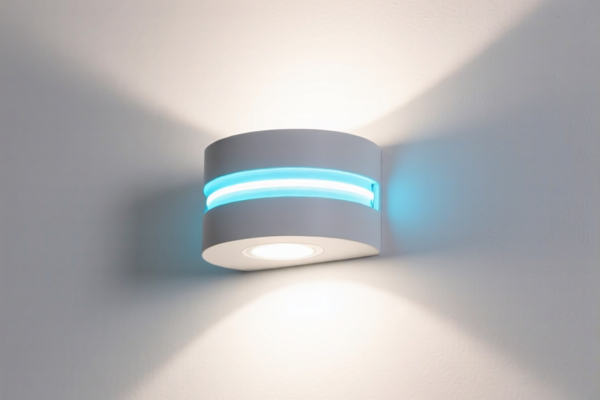
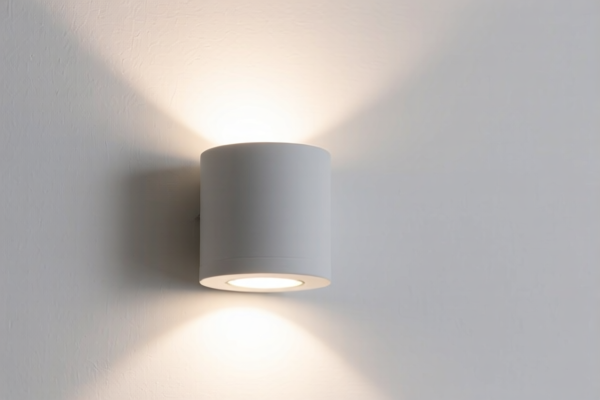
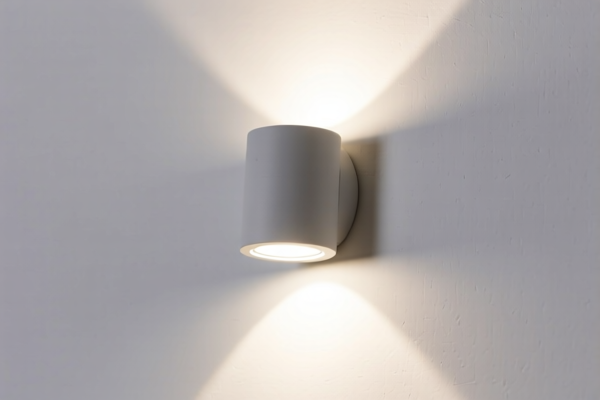
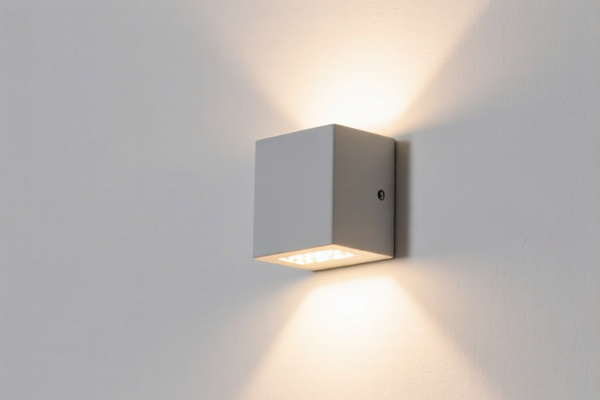
AI Analysis
🌙 LED Solar Wall Lamp (Solar-Powered LED Lighting Fixtures)
🌐 HS Code Reference & Customs Clearance Guide | 2026 Latest Tariff Analysis | Professional Customs Strategy
📌 I. Product Definition & Classification: Do You Really Understand "LED Solar Wall Lamps"?
LED Solar Wall Lamps are hybrid lighting devices that combine LED light sources with photovoltaic (solar) power systems. In international trade, their classification depends on whether they are viewed primarily as "Lighting Fixtures" or "Photovoltaic Components." This distinction drastically affects duty rates due to US trade policies (Section 301 and IEEPA).
⚠️ Key Distinction Point:
- If the product is marketed as a finished lighting fixture (outdoor decoration, street lighting, garden lamp) with integrated battery/solar panel → Classified under Heading 9405 (Lamps).
- If the product is marketed as a photovoltaic module/component (solar cells/panels) intended for energy conversion, even if packaged with LEDs for demonstration → Classified under Heading 8541 (Semiconductors/Solar Cells).
📦 II. HS Code Classification Details (2026 Latest Tariff Authority Comparison)
Based on the provided data, here are the three possible classifications for LED Solar Wall Lamps:
| HS Code | Product Description (Summary) | Application Scenario | Tax Category |
|---|---|---|---|
9405.42.84.40 |
LED Lighting Fixtures: Wall lamps, belonging to the category of lamps and lighting apparatus. | Standard outdoor wall lights, garden lamps, decorative wall lighting. | 38.9% |
8541.43.00.80 |
LED Application Products: Core components contain photovoltaic cells, matching amorphous silicon solar cell assembly form. | Solar panels/modules sold as components; "Solar Cell" kits. | 60.0% |
9405.41.82.00 |
LED Compliant Lamps: Solar wall lamps belonging to electric lamps and lighting devices, meeting material/light source requirements. | Finished solar-powered wall fixtures, integrated systems. | 35.0% |
🔍 Critical Insight:
-9405.41.82.00is generally the most cost-effective classification for finished finished solar wall lamps (35.0% total).
-9405.42.84.40is also viable for specific "wall lamp" types (38.9% total).
-8541.43.00.80is the highest risk/cost (60.0%) and typically applies if customs deems the product a "solar cell module" rather than a "lighting fixture." Avoid this unless you are importing raw solar components.
💰 III. 2026 Latest Tariff Rate Breakdown (Including Additional Taxes)
✅ Applicable Country: United States (US)
✅ Country of Origin: China (CN)
✅ Effective Date: Post-November 2025 (Including subsequent imports)
🎯 1. 9405.41.82.00 —— Solar Wall Lamps (Electric Lamps & Lighting Devices)
| Item | Details |
|---|---|
| Base Tariff | 0.0% (Ad Valorem) |
| Section 301 Additional Tariff | +25.0% |
| IEEPA Additional Tariff | +10.0% |
| Total Tariff Rate | 35.0% |
| Tax Calculation | CIF Value × 35.0% |
| De Minimis Eligibility | ❌ No (Deny de minimis) |
| Legal Basis Path | IEEPA:9903.01.24 → USITC:9405.41.82.00 → FOOTNOTE:301 |
📌 Explanation:
- This code treats the product as a finished lighting appliance.
- The 0% base rate is offset by the heavy US additional tariffs.
- Total 35% is the lowest available rate for this product type in the provided data.
🎯 2. 9405.42.84.40 —— LED Wall Lamps (Specific Lighting Fixtures)
| Item | Details |
|---|---|
| Base Tariff | 3.9% (Ad Valorem) |
| Section 301 Additional Tariff | +25.0% |
| IEEPA Additional Tariff | +10.0% |
| Total Tariff Rate | 38.9% |
| Tax Calculation | CIF Value × 38.9% |
| De Minimis Eligibility | ❌ No (Deny de minimis) |
| Legal Basis Path | IEEPA:9903.01.25 → USITC:9405.42.84.40 → FOOTNOTE:301 |
📌 Explanation:
- Similar to the above, but may apply to specific sub-categories of wall lamps that trigger a 3.9% base duty.
- 38.9% is slightly higher than9405.41.82.00.
🎯 3. 8541.43.00.80 —— Photovoltaic Cells / LED Application Products (High Risk)
| Item | Details |
|---|---|
| Base Tariff | 0.0% (Ad Valorem) |
| Section 301 Additional Tariff | +50.0% |
| IEEPA Additional Tariff | +10.0% |
| Total Tariff Rate | 60.0% |
| Tax Calculation | CIF Value × 60.0% |
| De Minimis Eligibility | ❌ No (Deny de minimis) |
| Legal Basis Path | IEEPA:9903.01.24 → USITC:8541.43.00.80 → FOOTNOTE:301 |
📌 Warning:
- 60.0% is a penalty-level tariff.
- This classification is risky if you are importing finished lamps. Customs may misclassify "solar lamps" as "solar cells" if documentation is unclear.
- Only use if you are importing solar panel components or amorphous silicon modules for assembly elsewhere.
🛠️ IV. Customs Clearance Practical Advice (Avoid Pitfalls)
✅ 1. Required Documentation Checklist
| Document | Must Provide | Notes |
|---|---|---|
| ✅ Product Specifications | ✔️ | Clearly state: "Solar Powered LED Wall Lamp," "Integrated Battery," "LED Light Source." |
| ✅ Circuit Diagram / Structure | ✔️ | Proves it is a finished appliance (with controller, LED, battery) rather than just a solar panel. |
| ✅ Product Photos (with Label) | ✔️ | Show the entire lamp, including mounting bracket, solar panel, and LED unit. |
| ✅ Commercial Invoice | ✔️ | Description should emphasize "Wall Lamp" or "Lighting Fixture," NOT "Solar Cell Module." |
| ✅ Packing List | ✔️ | Show items as complete units, not disassembled components. |
| ✅ Third-Party Certifications | ✔️ | UL, ETL, FCC (if wireless), or CE. Proves it is a regulated electrical appliance. |
✅ 2. Declaration Tips (Key Mantras)
🔥 "Declare as Lamp, Not Cell; Show Integration, Not Components."
| Scenario | Correct Declaration | Incorrect Declaration | Result |
|---|---|---|---|
| Finished Solar Wall Lamp | 9405.41.82.00 |
8541.43.00.80 |
35% vs. 60% |
| Solar Panel Only | 8541.43.00.80 |
9405.41.82.00 |
60% (Intended) vs. 35% (Misclassified) |
| Mixed Packaging | Single HS Code for whole unit | Split into Panel + Lamp | Risk of seizure or high duties on parts |
✅ 3. Special Case Handling
| Situation | Recommendation |
|---|---|
| OEM/ODM Solar Lamps | Provide customer PO and design specs. Emphasize the lighting function in all documents. |
| Product Name Confusion | Avoid using "Solar Module" in the name. Use "Solar LED Wall Light," "Solar Outdoor Wall Lamp." |
| Customs Audit Risk | If questioned, provide a Function Statement: "The primary purpose is illumination. The solar panel is merely the power source, not the primary good." |
| Origin Labeling | Ensure clear "Made in China" labeling. IEEPA tariffs apply strictly to Chinese origin. |
🌍 V. Global Market Comparison (2026 Latest)
| Country/Region | Recommended HS Code | Total Tariff | Certification Required | Notes |
|---|---|---|---|---|
| 🇺🇸 USA | 9405.41.82.00 |
35.0% | FCC, UL, ETL | Highest risk; avoid 8541 classification |
| 🇺🇸 USA | 8541.43.00.80 |
60.0% | FCC, UL | Avoid unless importing raw cells |
| 🇨🇳 China | 9405.41.82.00 |
~13-16% | CCC | Lower duties; standard export |
| 🇪🇺 EU | 9405.41.00 |
0% (if CE) | CE, RoHS, ErP | Favorable; no additional trade tariffs |
| 🇬🇧 UK | 9405.41.00 |
0% (if UKCA) | UKCA, RoHS | Post-Brexit, still favorable |
📌 Conclusion:
- USA is the most challenging market due to Section 301 and IEEPA tariffs.
- EU/UK are much more favorable for LED solar lamps.
- Never declare a finished lamp as a "solar cell" (8541) in the US unless you want to pay 60% duty.
📌 VI. Common Mistakes & Pitfalls (Lessons Learned)
❌ Mistake 1: Naming the product "Solar Cell Module" in the invoice
👉 Consequence: Customs classifies it under 8541.43.00.80 → 60% Duty!
❌ Mistake 2: Packing solar panels and LED lamps separately in one shipment
👉 Consequence: Parts may be classified individually, leading to complex duty calculations and potential penalties.
❌ Mistake 3: Omitting "Integrated Battery" or "Controller" details
👉 Consequence: Customs may view it as a simple solar panel → Higher duty.
✅ Correct Practice:
"Solar Powered LED Wall Lamp, Outdoor Lighting Fixture, Integrated Battery & Controller, Model XYZ, UL Listed"
🎯 VII. Conclusion: Precise Classification Saves Money!
🎯 Remember:
🔹 "Lamp vs. Cell: The 25% Difference!" (35% vs. 60%)
🔹 "Show Function, Not Component: Declare as Lighting!"
🔹 "US Market: High Tariffs Expected – Plan Ahead!"
📌 Pro Tip:
If your solar lamps are originating from Vietnam, Thailand, or Malaysia, you may qualify for IEEPA Exemptions or lower Section 301 rates.
Consider Advance Ruling (Pre-classification) with US CBP to secure the 9405 classification and avoid surprise duties.
📣 Immediate Action:
📞 Contact a licensed US customs broker + Provide product photos + Apply for HS Code Advance Ruling
🚀 Ensure smooth clearance, minimize costs, and maximize profits!
✨ Professional clearance starts with accurate classification!
💼 Every dollar of duty saved is pure profit!
Customer Reviews
About HS Code Classification
The Harmonized System (HS) is an internationally standardized nomenclature developed by the World Customs Organization (WCO) to classify traded products. Over 200 countries use the HS system as the basis for customs tariffs, trade statistics, and import/export regulations.
Each HS code follows a hierarchical structure:
- Chapter (2 digits) — Broad category of goods (e.g., Chapter 84: Machinery and Mechanical Appliances)
- Heading (4 digits) — More specific grouping within the chapter
- Subheading (6 digits) — Internationally standardized breakdown, used by all WCO member countries
- National subdivisions (8-10 digits) — Country-specific extensions for further classification, such as US HTSUS 10-digit codes
Correct HS code classification is essential for smooth customs clearance, accurate duty payment, and compliance with trade regulations. Misclassification can lead to customs delays, overpayment of duties, or penalties.
When importing from CN to US, the applicable tariff rates may include:
- Most-Favored-Nation (MFN) rate — The standard duty rate applied to WTO members
- General rate — Applied to countries without trade agreements
- Trade remedy duties — Additional tariffs such as Section 301 (anti-dumping), Section 232 (national security), or countervailing duties
The information provided on this page is for reference purposes only. For official classification, please consult with your local customs authority or a licensed customs broker.