LED Solar Wall Lights
CN → US| HS Code | Tariff Rate | Origin | Destination | Doc |
|---|---|---|---|---|
| 8501721000 | 37.5% | CN | US | Official Doc |
| 8501729000 | 37.0% | CN | US | Official Doc |
| 9405418200 | 35.0% | CN | US | Official Doc |
| 9405416000 | 41.0% | CN | US | Official Doc |
| 8541410000 | 35.0% | CN | US | Official Doc |
| 8541430010 | 60.0% | CN | US | Official Doc |
Product Images
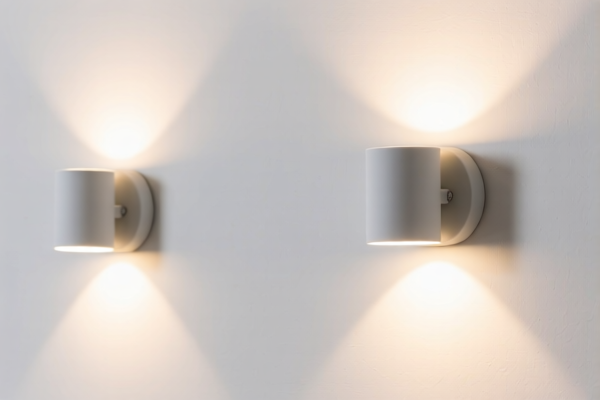
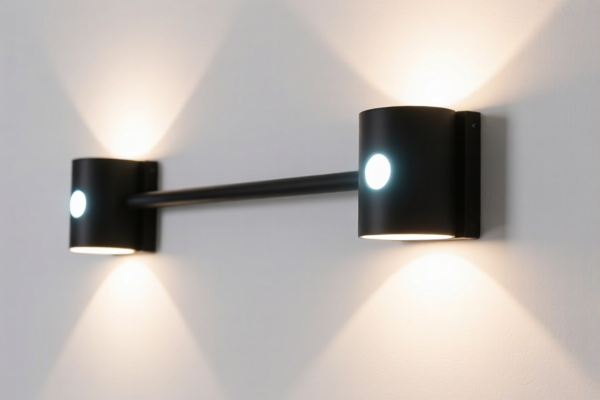
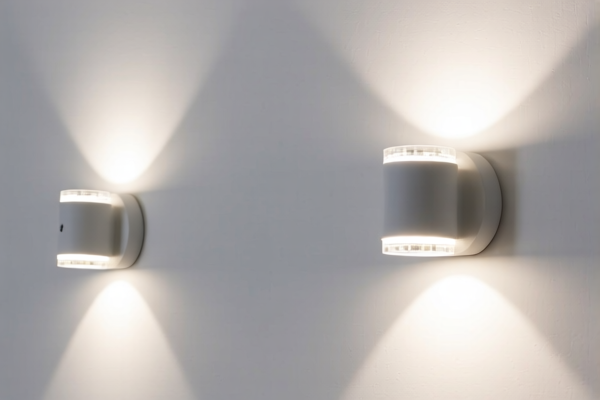
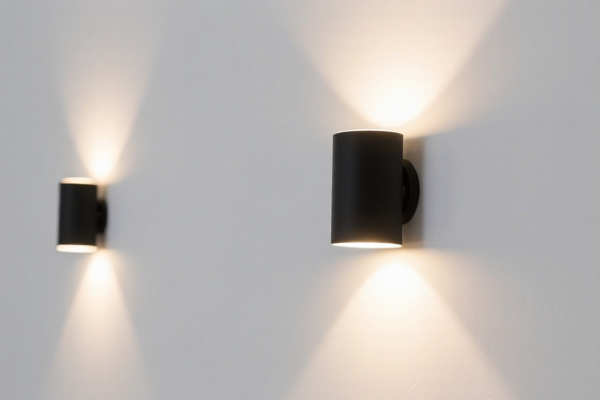
AI Analysis
☀️ LED Solar Wall Lights (Solar-Powered Lighting Fittings)
🌐 HS Code Reference & Customs Clearance Guide | 2026 Latest Tariff Analysis | Professional Clearance Strategy
📌 I. Product Definition & Classification: Do You Truly Understand "Solar LED Lights"?
LED Solar Wall Lights are autonomous lighting fixtures that integrate three core components: 1. Light Source: Light-Emitting Diodes (LEDs). 2. Power Source: Photovoltaic (PV) cells/modules that convert sunlight into electricity. 3. Housing: The outer casing, sensors, and battery holder.
In international trade, these products are often misclassified because they sit at the intersection of Electronics (Chapter 85) and Lighting Fittings (Chapter 94). The correct classification depends entirely on the structure and intended use: * Isolated PV Cells: Raw silicon cells for manufacturing. * Complete Lighting Fixtures: Fully assembled units ready for installation on a wall.
⚠️ Key Distinction Point:
- If the item is merely a PV Cell/Module without lighting functionality (e.g., a bare solar panel component) → It may fall under Chapter 85 (Electrical Machinery).
- If the item is a Complete Wall Light designed to emit light using solar power → It falls under Chapter 94 (Furniture/Lighting Fittings).
- Crucial Note: Many "Solar Wall Lights" contain specific LED Backlight Modules for LCDs or specific DC generator outputs, which have different tax treatments.
📦 II. HS Code Classification Details (2026 Latest Tariff Authority Match)
Based on the provided data, here are the specific HS Codes relevant to components and finished goods of LED Solar Wall Lights.
| HS Code | Product Description | Applicable Scenario | Tax Rate (Total) |
|---|---|---|---|
8541.41.00.00 |
Light-Emitting Diodes (LED) | Isolated LEDs used within the wall light; not assembled into other LEDs | 25.0% |
8541.43.00.10 |
Photovoltaic Cells (Crystalline Silicon) | Crystalline silicon PV cells assembled in modules/panels (the "solar" part) | 50.0% |
8501.72.10.00 |
Photovoltaic DC Generators | Output >50W but ≤750W (Large-scale solar generators, unlikely for standard wall lights but possible for large systems) | 27.5% |
8501.72.90.00 |
Photovoltaic DC Generators (Other) | Output >50W, exceeding 750W or other types | 0.0% |
9405.41.82.00 |
LED Backlight Modules for LCDs | Specific Component: LED modules mounted on PCBs used as backlights for LCDs (NOT general wall lighting) | 25.0% |
9405.41.60.00 |
Other Electric Luminaires (Base Metal) | Other electric luminaires made of base metal (Standard Solar Wall Light Housing/Fixture) | 31.0% |
🔍 Critical Analysis for Solar Wall Lights: 1. The Fixture Itself: A standard solar-powered wall light is a "Luminaire." If it is made of base metal (aluminum/plastic coating), it likely falls under
9405.41.60.00with a 31.0% tariff. 2. The Solar Panel: The PV cells inside are "Photovoltaic cells... assembled in modules." These fall under8541.43.00.10with a massive 50.0% tariff. 3. The LED Chips: The actual LED emitters are classified under8541.41.00.00with a 25.0% tariff.
💰 III. 2026 Latest Tariff Rate Breakdown (Detailed)
✅ Applicable Country: United States (US)
✅ Origin: China (CN)
✅ Effective Time: Current Section 301 Duties Apply
🎯 1. 9405.41.60.00 —— Other Electric Luminaires (Base Metal)
This is the most likely classification for the entire assembled solar wall light housing.
| Item | Content |
|---|---|
| Base Rate | 6.0% |
| Section 301 Surcharge | +25.0% |
| Total Tax | 31.0% |
| Tax Calculation | CIF Value × 31.0% |
| De Minimis Exemption | ❌ Not Eligible (Section 301 duties apply to all Chinese imports regardless of value, generally) |
| Legal Basis | USITC Harmonized Tariff Schedule (HTSUS) Section 301 List |
📌 Explanation:
- The "Base Rate" of 6% is the standard Most Favored Nation (MFN) rate for lighting fixtures. - The "+25%" is the Section 301 additional duty applied to Chinese-made goods in this category. - Total Cost Impact: For a $100 shipment, you pay $31 in duties alone.
🎯 2. 8541.43.00.10 —— Crystalline Silicon Photovoltaic Cells (The Solar Panel)
If you are importing the solar panels separately or the customs officer disaggregates the light into its components:
| Item | Content |
|---|---|
| Base Rate | 0.0% |
| Section 301 Surcharge | +50.0% |
| Total Tax | 50.0% |
| Tax Calculation | CIF Value × 50.0% |
| De Minimis Exemption | ❌ Not Eligible |
| Legal Basis | USITC Section 301 List (High Priority Category) |
📌 Warning:
- Solar PV cells are heavily taxed due to trade protectionism. A 50% rate is extremely high. - If your invoice lists "Solar Panel" separately, expect this rate.
🎯 3. 8541.41.00.00 —— Light-Emitting Diodes (LEDs)
| Item | Content |
|---|---|
| Base Rate | 0.0% |
| Section 301 Surcharge | +25.0% |
| Total Tax | 25.0% |
| Tax Calculation | CIF Value × 25.0% |
| De Minimis Exemption | ❌ Not Eligible |
📌 Note:
- If you ship loose LEDs for assembly, they incur a 25% duty.
🎯 4. 8501.72.90.00 —— Photovoltaic DC Generators (Other)
| Item | Content |
|---|---|
| Base Rate | 0.0% |
| Section 301 Surcharge | 0.0% |
| Total Tax | 0.0% |
📌 Opportunity:
- This code is for large-scale photovoltaic DC generators (output >50W, often industrial).
- Caution: Standard solar wall lights typically have very low wattage (e.g., 1W–10W). They do NOT qualify for this 0% rate. This code is for utility-scale or large commercial generators. Do not misuse this code for small consumer lights; it will lead to audits and penalties.
🛠️ IV. Customs Clearance Practical Advice (Combat Pitfalls)
✅ 1. Preparation Checklist (Must-Have Documents)
| Document | Required? | Description |
|---|---|---|
| ✅ Product Specification Sheet | ✔️ | Must detail: Input Voltage (DC), LED Wattage, PV Cell Type (Monocrystalline/Polycrystalline), Battery Capacity (mAh). |
| ✅ Circuit Diagram | ✔️ | To prove whether it is a "generating set" (8501) or a "luminaire" (9405). |
| ✅ Product Photos (Labeled) | ✔️ | Clear view of the solar panel, LED lens, and mounting bracket. |
| ✅ Commercial Invoice | ✔️ | Clearly state: "Solar Powered LED Wall Light, Model XYZ, Made in China." |
| ✅ Bill of Lading / Air Waybill | ✔️ | Standard shipping docs. |
✅ 2. Declaration Strategy (Key Mantra)
🔥 "Classify by Function, Not by Power Source!"
"Luminaire is 31%, PV Cell is 50%. Don't Mix Them Up!"
| Scenario | Correct HS Code | Wrong Code | Consequence |
|---|---|---|---|
| Assembled Solar Wall Light (Aluminum housing, integrated solar panel & LED) | 9405.41.60.00 (31%) |
8501.72.90.00 (0%) |
High Risk: Customs will reclassify as luminaire or PV generator, leading to underpayment penalties + back taxes. |
| Loose Solar Panels only | 8541.43.00.10 (50%) |
9405.41.60.00 (31%) |
Overpayment: You pay 31% instead of 50%? No, you underpay duties if classified wrongly. If you claim 31% for loose panels, you risk 50% back-tax + fines. |
| Loose LEDs only | 8541.41.00.00 (25%) |
8541.43.00.10 (50%) |
Audit Trigger: LED vs. PV Cell is a common audit point. |
| Large Solar Generator (>750W) | 8501.72.90.00 (0%) |
9405.41.60.00 (31%) |
Valid Saving: Ensure output exceeds 750W to qualify for 0%. |
✅ 3. Special Handling Tips
| Situation | Recommendation |
|---|---|
| Mixed Container (LCL) | If shipping solar lights with other electronics, ensure the "Solar" aspect is clearly documented to avoid being lumped into generic "Electrical Machinery" buckets that might attract different scrutiny. |
| OEM Custom Lights | Provide the design file. If the light has unique features (e.g., motion sensor, specific solar panel shape), document it. |
| Battery Issues | Most solar lights contain Li-ion or Lead-Acid batteries. Ensure UN38.3 test reports are included to avoid shipment rejection for safety reasons. |
| Valuation | Do not undervalue the solar panel component. Customs systems can flag shipments where the "lighting" value is disproportionately high compared to the "electronics" value. |
🌍 V. Global Market Comparison (2026 Latest)
| Country/Region | Recommended HS Code | Est. Tariff (China Origin) | Notes |
|---|---|---|---|
| 🇺🇸 USA | 9405.41.60.00 |
31.0% | High Section 301 duty on lighting fixtures. |
| 🇺🇸 USA (PV Cells) | 8541.43.00.10 |
50.0% | Extremely high duty on solar components. |
| 🇪🇺 EU | 9405.41.00 |
4.0% (Base) + VAT | No Section 301 equivalent, but strict CE/RoHS compliance required. |
| 🇨🇳 China | 9405.41.00 |
0%~4% | Import duties are low; focus is on VAT (13%). |
| 🇦🇺 Australia | 9405.41.00 |
10% | Standard GST (10%) applies on top of CIF + Duty. |
📌 Conclusion:
- The US is the most expensive market for Chinese LED Solar Lights due to the 31%–50% layered tariffs. - EU is more lenient on duties but strict on eco-design and battery safety regulations.
📌 VI. Common Mistakes & Pitfalls (Blood & Tears Lessons)
❌ Mistake 1: Classifying the entire solar wall light as a "Battery" or "Charger" (8507.60 or 8504.40).
👉 Consequence: The HS code for battery chargers may have lower tariffs, but customs will reject it because the primary function is lighting. You will face reclassification + penalty.
❌ Mistake 2: Claiming 8501.72.90.00 (0% duty) for a small 5W solar wall light.
👉 Consequence: Audit & Seizure. This code is for >50W/750W generators. Misusing it is considered fraud.
❌ Mistake 3: Ignoring the Solar Panel's separate classification.
👉 Consequence: If you import panels separately, you must pay 50%. Combining them into an assembled light (9405) reduces the rate to 31%, which is cost-saving. Ensure they are shipped as assembled units if possible.
✅ Correct Practice:
"Solar Powered LED Wall Lamp, Aluminum Housing, 5W LED, Monocrystalline PV Panel, Includes Motion Sensor, Model SOWL-5W, FCC/CE Certified"
🎯 VII. Conclusion: Professional Classification Saves Money
🎯 Remember the Mantra:
🔹 "Assembled Light = 31% (Luminaire)"
🔹 "Loose Solar Panel = 50% (PV Cell)"
🔹 "Loose LED = 25% (Diode)"
🔹 "Big Generator (>750W) = 0% (Generator)"
📌 Pro Tip:
If you are importing small solar lights (<50W), always declare them as assembled luminaires (9405.41.60.00) rather than components. The 31% tariff is significantly lower than the 50% tariff on PV cells.
For large-scale solar projects, verify if you exceed 750W output to potentially qualify for the 0% generator rate (8501.72.90.00).
📣 Immediate Action:
📞 Consult a Customs Broker: Provide your BOM (Bill of Materials) to confirm if the PV cell is "crystalline silicon" (50%) or another type.
🚀 Optimize Shipping: Ship assembled units to avoid the 50% component tariff.
💼 Your Profit Margin: Protect it by accurate HS Code selection!
✨ Professional Clearance Starts with Accurate Classification!
💼 Every percent of tariff saved is pure profit!
Customer Reviews
About HS Code Classification
The Harmonized System (HS) is an internationally standardized nomenclature developed by the World Customs Organization (WCO) to classify traded products. Over 200 countries use the HS system as the basis for customs tariffs, trade statistics, and import/export regulations.
Each HS code follows a hierarchical structure:
- Chapter (2 digits) — Broad category of goods (e.g., Chapter 84: Machinery and Mechanical Appliances)
- Heading (4 digits) — More specific grouping within the chapter
- Subheading (6 digits) — Internationally standardized breakdown, used by all WCO member countries
- National subdivisions (8-10 digits) — Country-specific extensions for further classification, such as US HTSUS 10-digit codes
Correct HS code classification is essential for smooth customs clearance, accurate duty payment, and compliance with trade regulations. Misclassification can lead to customs delays, overpayment of duties, or penalties.
When importing from CN to US, the applicable tariff rates may include:
- Most-Favored-Nation (MFN) rate — The standard duty rate applied to WTO members
- General rate — Applied to countries without trade agreements
- Trade remedy duties — Additional tariffs such as Section 301 (anti-dumping), Section 232 (national security), or countervailing duties
The information provided on this page is for reference purposes only. For official classification, please consult with your local customs authority or a licensed customs broker.