LED化妆镜
CN → US| HS Code | Tariff Rate | Origin | Destination | Doc |
|---|---|---|---|---|
| 8543908885 | 85.0% | CN | US | Official Doc |
| 7009911010 | 42.8% | CN | US | Official Doc |
| 9405418440 | 38.9% | CN | US | Official Doc |
| 7009921010 | 42.8% | CN | US | Official Doc |
| 9405416000 | 41.0% | CN | US | Official Doc |
Product Images
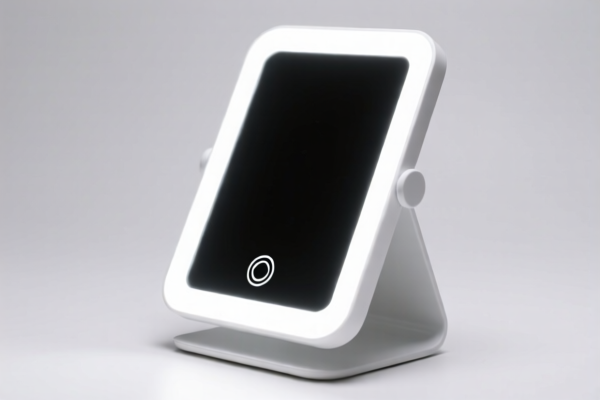
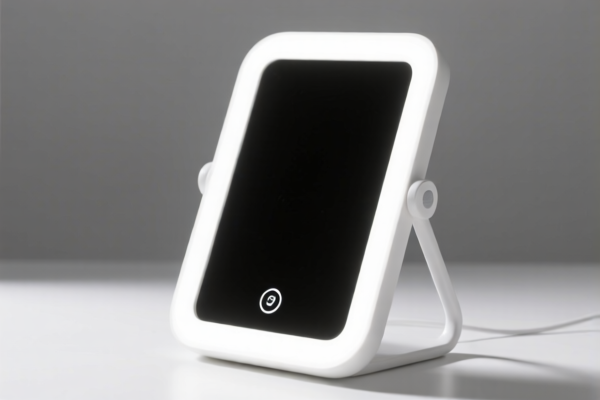
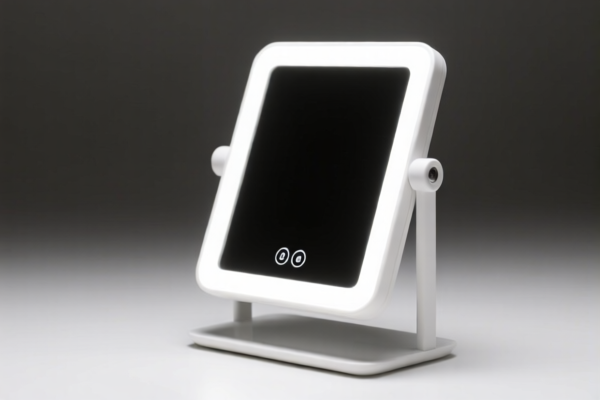
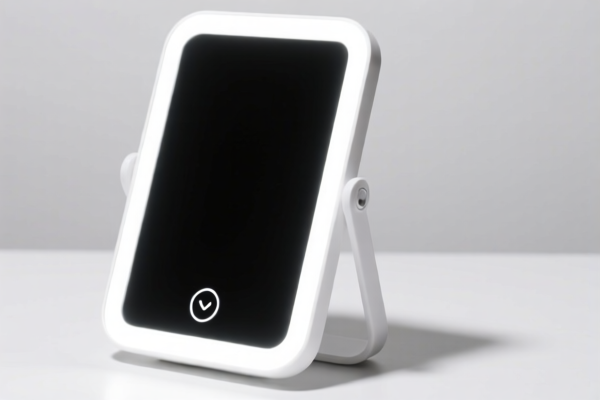
AI Analysis
🪞 LED Vanity Mirror (LED Makeup Mirror)
🌐 HS Code Reference & Customs Clearance Guide | 2026 Latest Tariff Analysis | Professional Clearance Strategy
📌 I. Product Definition & Classification: Do You Really Understand the "LED Vanity Mirror"?
The LED Vanity Mirror is a hybrid product combining optical glass components with electrical lighting functions. In international trade, its classification depends on whether it is viewed primarily as a glass article (with incidental lighting) or an electrical lighting fixture.
Key Distinction: * Glass-Centric View: Classified under Chapter 70 (Glassware) because the core value is the mirror surface, with LED as an accessory. * Electrical-Centric View: Classified under Chapter 94 or 85 (Electrical/Lighting fixtures) because the LED function is integral to its operation.
⚠️ Critical Classification Point:
- If the LED is merely an added feature to a standard mirror → Often classified under 7009 (Mirrors).
- If designed specifically as a lighting device with a mirror surface → Often classified under 9405 (Luminaires).
- If considered a generic electrical appliance without specific lighting features → Falls into the "Other" bucket 8543.
📦 II. HS Code Classification Details (2026 Latest Tariff Authority Comparison)
Based on the provided data, here are the 5 possible HS Codes, ranked by logical fit and tax efficiency:
| HS Code | Product Description | Matching Logic | Total Tax Rate (China Origin) |
|---|---|---|---|
| 9405.41.84.40 | Other electric lamps and lighting fittings designed for use solely with LED sources | Best Fit (Lowest Tax). The mirror is treated as a specialized "luminaire" (lighting device). The 'other' category captures non-standard shapes like vanity mirrors. | 38.9% |
| 9405.41.60.00 | Electric lamps and lighting fittings designed for use solely with LED sources | Strong Fit. Classifies as a standard electrical lighting fixture. Assumes base materials (bracket/housing) are base metals. | 41.0% |
| 7009.92.10.10 | Glass mirrors, other, containing LED or fluorescent light | High Tax. Treats the item primarily as a glass mirror with integrated lighting. | 42.8% |
| 7009.91.10.10 | Glass mirrors, other, containing LED or fluorescent light | High Tax. Similar to above, focuses on the glass material. | 42.8% |
| 8543.90.88.85 | Electrical machines and apparatus having individual functions, not specified elsewhere | Highest Tax (Avoid!). A "catch-all" for electrical equipment. No specific material conflict, but considered a generic electrical component/part. | 85.0% |
🔍 Key Takeaway:
- 9405.41.84.40 is the most cost-effective classification if you can justify the mirror as a "lighting fixture."
- 7009.9x.xxxx are safer if the mirror glass itself is the dominant feature, but costs ~4% more in total duties.
- 8543.90.88.85 is a high-risk, high-cost fallback with no material justification, resulting in a punitive 85% rate.
💰 III. 2026 Latest Tariff Rate Breakdown (Including Surcharges & Policy Add-ons)
✅ Applicable Country: United States (US)
✅ Origin: China (CN)
✅ Effective Time: Post-2025 (Current Active Rates)
🎯 1. 9405.41.84.40 —— Other LED Luminaires (Recommended for Cost Efficiency)
| Item | Content |
|---|---|
| Base Tariff | 3.9% |
| Section 301 Surcharge | +25.0% (USITC Footnote) |
| IEEPA Surcharge (122 Clause) | +10.0% (针对中国产品) |
| Total Tax Rate | 38.9% |
| Tax Calculation | CIF Value × 38.9% |
| De Minimis Exemption | ❌ Not Applicable (Must pay full duties) |
| Legal Basis Path | IEEPA:9903.01.24 → USITC:9405.41.84.40 → FOOTNOTE:301 |
📌 Explanation:
- This is the lowest total rate among all options.
- The "Other" designation allows flexibility for non-standard fixtures like vanity mirrors.
- Savings: ~$4–$4.60 per $100 of goods compared to the 7009 classifications.
🎯 2. 9405.41.60.00 —— Electric Lamps & Lighting Fittings (Standard Fit)
| Item | Content |
|---|---|
| Base Tariff | 6.0% |
| Section 301 Surcharge | +25.0% |
| IEEPA Surcharge (122 Clause) | +10.0% |
| Total Tax Rate | 41.0% |
| Tax Calculation | CIF Value × 41.0% |
| De Minimis Exemption | ❌ Not Applicable |
| Legal Basis Path | IEEPA:9903.01.24 → USITC:9405.41.60.00 |
📌 Note:
- Slightly higher base rate (6.0% vs 3.9%) due to being a more "standard" lighting category.
- Still significantly cheaper than the 7009 glass category or 8543 electrical bucket.
🎯 3. 7009.92.10.10 & 7009.91.10.10 —— Glass Mirrors with LED (High Tax)
| Item | Content |
|---|---|
| Base Tariff | 7.8% |
| Section 301 Surcharge | +25.0% |
| IEEPA Surcharge (122 Clause) | +10.0% |
| Total Tax Rate | 42.8% |
| Tax Calculation | CIF Value × 42.8% |
| De Minimis Exemption | ❌ Not Applicable |
📌 Explanation:
- The higher base rate (7.8%) comes from treating the item as a "mirror" (Chapter 70).
- While logically sound for a mirror, it is 1.8% more expensive than the best lighting fixture option.
🎯 4. 8543.90.88.85 —— Other Electrical Machines (High Risk/Avoid)
| Item | Content |
|---|---|
| Base Tariff | 0.0% |
| Section 301 Surcharge | +25.0% |
| IEEPA Surcharge (122 Clause) | +10.0% |
| Steel/Aluminum/Copper Surcharge | +50.0% (If applicable components trigger this) |
| Total Tax Rate | 85.0% |
| Tax Calculation | CIF Value × 85.0% |
| De Minimis Exemption | ❌ Not Applicable |
⚠️ WARNING:
- This is a fallback category.
- The 50% steel/aluminum surcharge can apply if any structural parts are made of these metals.
- Total tax of 85% makes this category commercially unviable. Do not use unless absolutely necessary.
🛠️ IV. Customs Clearance Practical Advice (Field Avoidance Guide)
✅ 1. Required Documentation Checklist
| Document | Mandatory | Description |
|---|---|---|
| ✅ Product Specification Sheet | ✔️ | Must detail LED wattage, voltage, mirror dimensions, and materials. |
| ✅ Product Photos | ✔️ | Clear images showing the LED integration, power cord, and mirror surface. |
| ✅ Bill of Lading / Invoice | ✔️ | Must describe the item as "LED Vanity Mirror" or "Electric Lighting Fixture." |
| ✅ Material Declaration | ✔️ | Specify materials of the frame/bracket (e.g., Plastic, Base Metal) to avoid 8543/Steel surcharges. |
| ✅ Certificate of Origin | ✔️ | Essential for applying IEEPA 122 Clause rules. |
✅ 2. Declaration Tips (Critical Mnemonics)
🔥 “Lighting First, Glass Second; Avoid the ‘Other’ Trap!”
| Scenario | Correct Declaration | Wrong Action |
|---|---|---|
| Mirror with integrated LED | Declare as 9405.41.84.40 (Lighting Fixture) | Declare as 7009 (Glass Mirror) → Saves nothing, adds complexity |
| Mirror with separate power adapter | Still declare as 9405 | Split into "Mirror" + "Adapter" → 8543 Surcharge Risk! |
| Frame made of Steel/Aluminum | Ensure description focuses on LED Function | If labeled "Steel Mirror," you may trigger the 50% surcharge |
| Generic "LED Mirror" | Use precise term: "Electric Vanity Lighting with Mirror Surface" | Use vague terms like "Home Decor" → Customs Audit/Delay |
✅ 3. Special Case Handling
| Case | Recommendation |
|---|---|
| OEM Custom Mirrors | Provide design files proving LED integration is core to function, supporting 9405 classification. |
| Battery-Powered Mirrors | Still likely 9405 if designed for lighting. If battery is removable, clarify battery type (Lithium-ion requires UN38.3). |
| With Touch Sensors | Emphasize Electrical Function in description to support 9405 over 7009. |
| Plastic Frame Mirrors | Clearly state "Plastic Housing" to avoid assumptions of steel/aluminum (which trigger the 50% surcharge in 8543 logic). |
🌍 V. Global Market Comparison (2026 Latest)
| Country/Region | Recommended HS Code | Tariff (China Origin) | Certification | Notes |
|---|---|---|---|---|
| 🇺🇸 USA | 9405.41.84.40 |
38.9% | FCC + UL (if applicable) | Most cost-effective option. Avoid 8543 at all costs. |
| 🇨🇳 China | 9405.41.84.40 |
~5-10% (Domestic) | CCC | No Section 301 or IEEPA. |
| 🇪🇺 EU | 9405.41.84.40 |
~4% | CE + RoHS | No heavy surcharges if compliant. |
| 🇬🇧 UK | 9405.41.84.40 |
~4% | UKCA | Post-Brexit standards apply. |
| 🇦🇺 Australia | 9405.41.84.40 |
~5% | RCM | Standard duties apply. |
📌 Conclusion:
- The USA is the only market with punitive surcharges.
- Optimization Strategy: Always argue for Classification 9405.41.84.40 to save ~4% vs. glass classifications.
- Avoid 8543: The risk of misclassification leading to an 85% tax is unacceptable.
📌 VI. Common Errors & Pitfalls (Blood & Tears Lessons)
❌ Error 1: Declaring as "Glass Mirror" (7009) when it’s clearly an electrical fixture
👉 Consequence: Higher base tariff (7.8% vs 3.9%). No functional benefit.
❌ Error 2: Declaring as "Electrical Machine" (8543) due to vague description
👉 Consequence: Triggers the 50% Steel/Aluminum surcharge if any metal parts exist. Total tax 85%.
❌ Error 3: Splitting Mirror + Power Adapter into two shipments
👉 Consequence: Customs may reclassify the adapter as a standalone electrical good (8543) and apply surcharges. Declare as a single unit.
❌ Error 4: Ignoring the "122 Clause" IEEPA surcharge
👉 Consequence: Underestimating costs. The 10% is mandatory for Chinese goods.
✅ Correct Declaration Example:
"LED Vanity Mirror, Electric Lighting Fixture, Designed for Use Solely with LED Sources, Plastic Base, Model XYZ, FCC Certified"
🎯 VII. Conclusion: Professional Declaration, Cost Savings, Risk Mitigation!
🎯 Remember the Mantra:
🔹 "Lighting Function First, Avoid Glass Trap!"
🔹 "HS Code Determines Fate, 38.9% is the Goal, 85% is the Nightmare!"
🔹 "One Unit, One Declaration, No Splitting!"
📌 Pro Tip:
- If your product has unique features (e.g., magnification, color temperature adjustment), highlight these in the 9405 description to justify it as a specialized "luminaire."
- Pre-ruling: Consider applying for an Advance Ruling from US Customs (CBP) if shipping large volumes, to lock in the 38.9% rate.
📣 Immediate Action:
📞 Contact your freight forwarder + Provide clear product photos + Declare as 9405.41.84.40
🚀 Clear customs smoothly, reduce costs, and maximize your profit margin!
✨ Professional Clearance Starts with Accurate Classification!
💼 Every cent saved is pure profit!
Customer Reviews
About HS Code Classification
The Harmonized System (HS) is an internationally standardized nomenclature developed by the World Customs Organization (WCO) to classify traded products. Over 200 countries use the HS system as the basis for customs tariffs, trade statistics, and import/export regulations.
Each HS code follows a hierarchical structure:
- Chapter (2 digits) — Broad category of goods (e.g., Chapter 84: Machinery and Mechanical Appliances)
- Heading (4 digits) — More specific grouping within the chapter
- Subheading (6 digits) — Internationally standardized breakdown, used by all WCO member countries
- National subdivisions (8-10 digits) — Country-specific extensions for further classification, such as US HTSUS 10-digit codes
Correct HS code classification is essential for smooth customs clearance, accurate duty payment, and compliance with trade regulations. Misclassification can lead to customs delays, overpayment of duties, or penalties.
When importing from CN to US, the applicable tariff rates may include:
- Most-Favored-Nation (MFN) rate — The standard duty rate applied to WTO members
- General rate — Applied to countries without trade agreements
- Trade remedy duties — Additional tariffs such as Section 301 (anti-dumping), Section 232 (national security), or countervailing duties
The information provided on this page is for reference purposes only. For official classification, please consult with your local customs authority or a licensed customs broker.