LLDPE Injection Molding Grade Polyethylene Resin
CN → US| HS Code | Tariff Rate | Origin | Destination | Doc |
|---|---|---|---|---|
| 3902100000 | 41.5% | CN | US | Official Doc |
| 3902900050 | 41.5% | CN | US | Official Doc |
| 3916100000 | 40.8% | CN | US | Official Doc |
| 3916903000 | 41.5% | CN | US | Official Doc |
| 3901105030 | 41.5% | CN | US | Official Doc |
Product Images
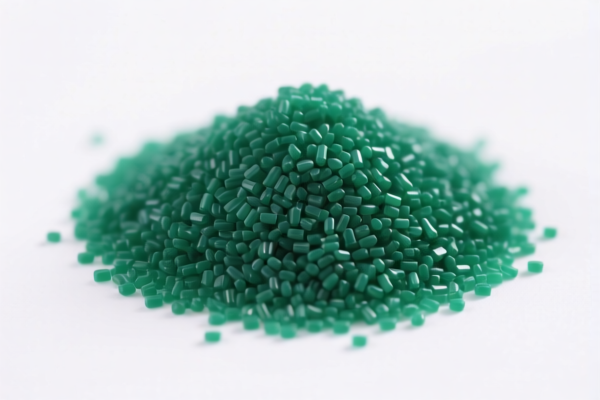

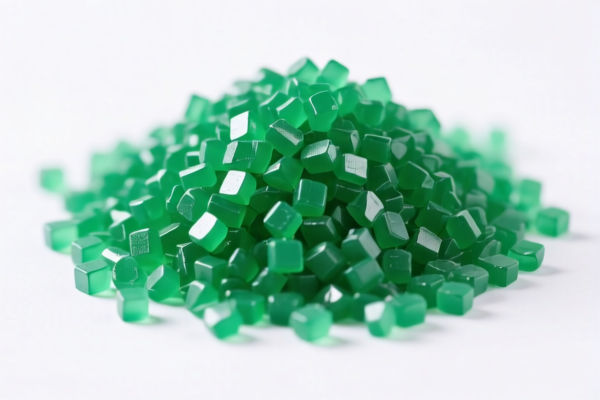
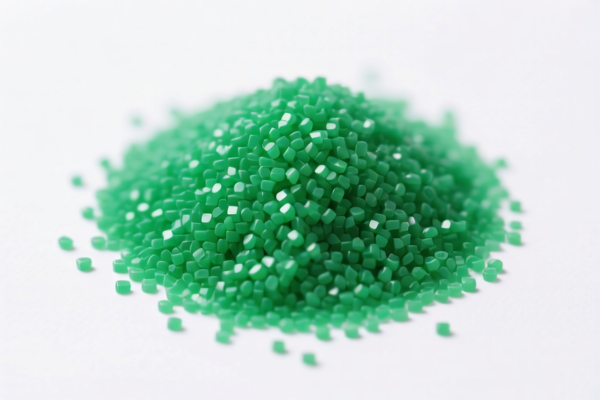
AI Analysis
🏭 LLDPE Injection Molding Grade Polyethylene Resin (Linear Low-Density Polyethylene)
🌐 HS Code Classification & Customs Clearance Guide | 2026 Latest Tariff Analysis | Professional Entry Strategy
📌 I. Product Definition & Classification: Decoding LLDPE Injection Grade
Linear Low-Density Polyethylene (LLDPE) is a thermoplastic polymer produced by copolymerization of ethylene with higher alpha-olefins (such as butene, hexene, or octene). Unlike traditional LDPE, LLDPE has a linear molecular structure with short branches, offering superior tensile strength, puncture resistance, and environmental stress crack resistance.
In international trade, LLDPE Injection Molding Grade specifically refers to LLDPE resins engineered for injection molding processes, distinguishing it from grades used for film blowing (films, bags) or extrusion (pipes, profiles). Key characteristics include: * Form: Primary shape (pellets, granules, or powder). * Application: Manufacturing plastic parts like caps, crates, toys, automotive components, and household goods. * Key Distinction: While chemically similar to film-grade LLDPE, injection-grade resins have specific molecular weight distributions and flow indices tailored for high-pressure mold filling.
⚠️ Critical Classification Nuance:
- If the product is waste/scrap (discarded or remanufactured), it falls under Chapter 39.02 (Waste, parings, and scrap).
- If the product is virgin/resin (new, usable raw material), it falls under Chapter 39.01 or 39.16 (Primary forms of polymers).
The data below covers both scenarios based on the provided dataset.
📦 II. HS Code Classification Details (2026 Latest Tariff Matrix)
Based on the provided dataset, the following HS Codes apply. Note that the classification depends on whether the item is considered "Waste" or "Virgin Resin," and its specific density/processing form.
| HS Code | Product Summary | Classification Logic | Total Tax Rate |
|---|---|---|---|
3902.10.00.00 |
LLDPE Waste/Scrap (Linear Low-Density Polyethylene Waste) | Classified under 39.02 (Polymers of propylene or other olefins). Specifically, "Waste, parings, and scrap" of olefin polymers. | 41.5% |
3902.90.00.50 |
Other LLDPE Waste/Scrap (Olefin Polymers, Other) | A residual category for LLDPE waste not fitting the specific 3902.10 description. Also under 39.02. | 41.5% |
3916.10.00.00 |
MDPE Injection Grade (Medium Density Polyethylene, Primary Form) | Classified under 39.16 (Plastics, in primary forms). Specifically for "Ethylene polymers." Note: Often used interchangeably with LLDPE in broader customs contexts if not strictly distinguished. | 40.8% |
3916.90.30.00 |
MDPE/PE Injection Grade (Plastics in Primary Forms, Other) | A broader category under 39.16 for plastics not specified elsewhere. | 41.5% |
3901.10.50.30 |
MDPE Primary Product (Medium Density Polyethylene, Primary Form) | Classified under 39.01 (Polymers of ethylene). Specifically for "Medium density polyethylene" in primary forms. | 41.5% |
🔍 Key Insight:
- Waste vs. Virgin:3902.xxcodes are for recycled/scrap material.3901and3916codes are for virgin/resin material.
- Density Matters: The dataset mixes "LLDPE Waste" (3902) with "MDPE Virgin" (3901/3916). Ensure your product documentation clearly states whether it is waste or virgin resin. Misclassification can lead to significant duty discrepancies and customs delays.
💰 III. 2026 Tariff Rate Breakdown (With Additional Duties)
✅ Applicable Country: USA (US)
✅ Origin: China (CN)
✅ Effective Date: November 10, 2025 (and subsequent imports)
The total tax burden is a combination of the Most Favored Nation (MFN) Base Rate, Section 301 Additional Duties, and Section 122 (IEEPA) Additional Duties.
🎯 1. 3902.10.00.00 & 3902.90.00.50 – LLDPE Waste/Scrap
| Item | Details |
|---|---|
| Base Duty (MFN) | 6.5% |
| Section 301 Duty | +25.0% (Additional duty on Chinese imports) |
| Section 122 Duty (IEEPA) | +10.0% (Emergency economic powers duty) |
| Total Effective Rate | 41.5% |
| De Minimis Exemption | ❌ NOT APPLICABLE |
| Calculation Basis | Duty is calculated on the CIF Value (Cost, Insurance, Freight). |
| Legal Authority Path | HTSUS: 3902.10.00.00 → Section 301: Footnote 9903.88.01 → IEEPA: 9903.01.25 |
📌 Explanation:
- 6.5% Base: The standard MFN rate for plastic waste/scrap.
- 25% Section 301: Standard retaliatory tariff on Chinese plastics.
- 10% Section 122: Recent emergency tariff targeting specific Chinese goods, applied on top.
- Result: Importers face a steep 41.5% duty cost, making LLDPE waste imports from China highly expensive.
🎯 2. 3916.10.00.00 – MDPE Injection Grade (Ethylene Polymers)
| Item | Details |
|---|---|
| Base Duty (MFN) | 5.8% |
| Section 301 Duty | +25.0% |
| Section 122 Duty (IEEPA) | +10.0% |
| Total Effective Rate | 40.8% |
| De Minimis Exemption | ❌ NOT APPLICABLE |
| Calculation Basis | CIF Value × 40.8% |
| Legal Authority Path | HTSUS: 3916.10.00.00 → Section 301 → IEEPA |
🎯 3. 3916.90.30.00 & 3901.10.50.30 – Other MDPE/PE Primary Forms
| Item | Details |
|---|---|
| Base Duty (MFN) | 6.5% (for 3916.90.30.00) / 6.5% (for 3901.10.50.30) |
| Section 301 Duty | +25.0% |
| Section 122 Duty (IEEPA) | +10.0% |
| Total Effective Rate | 41.5% |
| De Minimis Exemption | ❌ NOT APPLICABLE |
| Calculation Basis | CIF Value × 41.5% |
📌 Note:
-3916.10.00.00has a slightly lower base rate (5.8%) compared to other categories (6.5%), resulting in a 0.7% savings (40.8% vs 41.5%).
- All these codes are subject to Section 301 and Section 122 duties. There are no current exemptions for LLDPE/MDPE resins from China.
🛠️ IV. Customs Clearance Practical Advice
✅ 1. Documentation Checklist (Mandatory)
| Document | Required? | Purpose |
|---|---|---|
| Commercial Invoice | ✔️ | Must clearly state: "LLDPE Injection Molding Grade," HS Code, Country of Origin, and CIF Value. |
| Packing List | ✔️ | Detail net/gross weight, number of bags/pallets. |
| Certificate of Origin (CO) | ✔️ | Essential for proving origin (China) to apply correct Section 301/122 rates. |
| Material Safety Data Sheet (MSDS) | ✔️ | Required for chemical safety compliance. |
| Product Specification Sheet | ✔️ | Must specify: Type (LLDPE/MDPE), Density, Melt Flow Index (MFI), and Application (Injection Molding). This helps avoid misclassification as film-grade. |
| Bill of Lading/Air Waybill | ✔️ | Proof of shipment. |
✅ 2. Declaration Strategy (Pro Tips)
🔥 Golden Rule:
"Be Precise: Specify 'Waste' or 'Virgin,' and 'Injection Grade.' Ambiguity invites Audit."
| Scenario | Recommended Declaration | Risk if Incorrect |
|---|---|---|
| Virgin Resin | "LLDPE Resin, Injection Grade, Virgin, Not Waste" | If declared as waste, you may face penalties for false classification. |
| Waste/Scrap | "LLDPE Waste, Recyclable, Not for Direct Use" | If declared as virgin, you may evade higher duties, leading to fraud charges. |
| MDPE vs. LLDPE | Specify exact density range if known. | Customs may default to the highest duty rate or require further testing. |
| Packaging | "Polyethylene Pellets in 25kg Bags" | Ensure packaging is consistent with the description. |
✅ 3. Special Considerations
| Issue | Action Item |
|---|---|
| Section 122 Applicability | Verify if the specific HS Code is subject to the 10% IEEPA duty. The dataset confirms yes for all listed codes. |
| De Minimis (Section 321) | ❌ No Relief: LLDPE/MDPE resins from China are not eligible for the $800 de minimis exemption due to Section 301 and Section 122. Even small shipments are subject to full duties. |
| Product Testing | Be prepared for CBP (Customs and Border Protection) to request lab tests to verify density and polymer type if classification is disputed. |
| Inventory Management | Since duties are high (40%+), consider holding inventory in a Foreign Trade Zone (FTZ) to defer duty payments until goods are sold domestically. |
🌍 V. Global Market Comparison (2026)
| Country/Region | Recommended HS Code | Base Duty | Additional Duties (China) | Total Effective Duty | Notes |
|---|---|---|---|---|---|
| 🇺🇸 USA | 3902.10.00.00 (Waste) / 3901.10.50.30 (Virgin) |
5.8% - 6.5% | +25% (301) +10% (122) | 40.8% - 41.5% | Highest cost market. Strict enforcement. |
| 🇨🇳 China | 3901.10.50.30 |
0% - 6% | None | 0% - 6% | Low import duty, but high VAT (13%). |
| 🇪🇺 EU | 3901.10.00 |
0% | None | 0% | No additional tariffs, but standard EU VAT applies. |
| 🇮🇳 India | 3901.10.00 |
~5% | Basic Customs Duty + SWS | ~15% - 20% | Lower than US, but regulatory complexity is high. |
📌 Conclusion:
- The US market is the most expensive for Chinese LLDPE/MDPE imports due to the layered tariffs (MFN + 301 + 122).
- Alternative Sourcing: Consider sourcing from non-China countries (e.g., South Korea, Japan, USA, Saudi Arabia) to avoid Section 301 and 122 duties, potentially reducing total duty to 0% - 6.5%.
📌 VI. Common Mistakes & Pitfalls (Lessons Learned)
❌ Mistake 1: Declaring "LLDPE" without specifying "Waste" or "Virgin."
👉 Consequence: Customs will reject the declaration or assess duties on the highest applicable code, causing delays and storage fees.
❌ Mistake 2: Assuming "Injection Grade" allows for a lower duty rate than "Film Grade."
👉 Consequence: Duty rates are based on HS Code (Polymer Type/Form), not end-use application. Both film and injection grades often share the same HS code and duty rate.
❌ Mistake 3: Ignoring Section 122 Duties.
👉 Consequence: Underpaying duties by 10%. CBP can audit shipments from the past 5 years, leading to back taxes + interest + penalties.
❌ Mistake 4: Using De Minimis ($800) for small LCL shipments.
👉 Consequence: CBP increasingly scrutinizes "Section 301" goods under de minimis. Shipments may be seized, and the importer of record may be flagged for future audits.
✅ Correct Approach:
"LLDPE, Linear Low-Density Polyethylene, Injection Molding Grade, Virgin, Primary Form, Not Waste. Country of Origin: China. HS Code: 3901.10.50.30. Duty: 41.5%."
🎯 VII. Final Recommendations: Optimize Costs, Ensure Compliance
🎯 Strategic Advice:
🔹 "Verify Origin: If your LLDPE is from Vietnam, Thailand, or Mexico, check for FTZ (Free Trade Zone) benefits. Some may qualify for lower or zero duties.
🔹 "Pre-Audit:" Engage a licensed customs broker to review your shipment documentation before arrival.
🔹 "FTZ Utilization:" Use Foreign Trade Zones to defer duty payments, improving cash flow for high-duty items.
🔹 "Diversify Supply Chain:" Given the 41.5% effective duty, evaluate the cost-benefit of sourcing from non-China origins.
📌 Pro Tip:
If you are importing waste/scrap (
3902), ensure you have an EPA (Environmental Protection Agency) permit if applicable, as plastic waste imports face additional environmental regulations in the US.
📣 Take Action:
📞 Consult a Customs Broker: Provide product specs, origin, and HS Codes for pre-classification.
📄 Prepare Documents: Invoice, CO, MSDS, and Specs ready before shipment.
📉 Calculate True Landed Cost: Include duty, freight, insurance, and handling fees in your pricing model.
✨ Smart Clearance, Smart Profits!
💼 Precision in Classification Saves Thousands.
Customer Reviews
About HS Code Classification
The Harmonized System (HS) is an internationally standardized nomenclature developed by the World Customs Organization (WCO) to classify traded products. Over 200 countries use the HS system as the basis for customs tariffs, trade statistics, and import/export regulations.
Each HS code follows a hierarchical structure:
- Chapter (2 digits) — Broad category of goods (e.g., Chapter 84: Machinery and Mechanical Appliances)
- Heading (4 digits) — More specific grouping within the chapter
- Subheading (6 digits) — Internationally standardized breakdown, used by all WCO member countries
- National subdivisions (8-10 digits) — Country-specific extensions for further classification, such as US HTSUS 10-digit codes
Correct HS code classification is essential for smooth customs clearance, accurate duty payment, and compliance with trade regulations. Misclassification can lead to customs delays, overpayment of duties, or penalties.
When importing from CN to US, the applicable tariff rates may include:
- Most-Favored-Nation (MFN) rate — The standard duty rate applied to WTO members
- General rate — Applied to countries without trade agreements
- Trade remedy duties — Additional tariffs such as Section 301 (anti-dumping), Section 232 (national security), or countervailing duties
The information provided on this page is for reference purposes only. For official classification, please consult with your local customs authority or a licensed customs broker.