LLDPE Stretch Film Waste
CN → US| HS Code | Tariff Rate | Origin | Destination | Doc |
|---|---|---|---|---|
| 3915100000 | 35.0% | CN | US | Official Doc |
| 3915900010 | 35.0% | CN | US | Official Doc |
Product Images
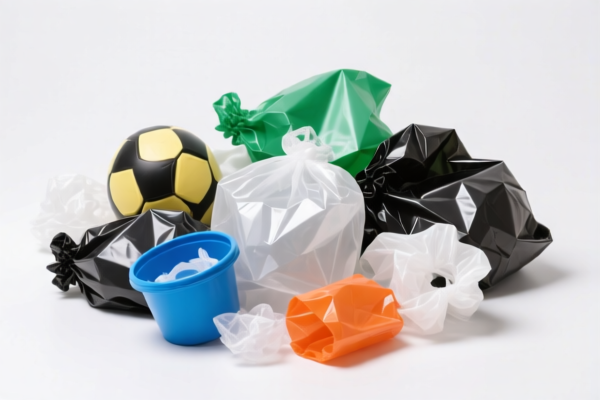


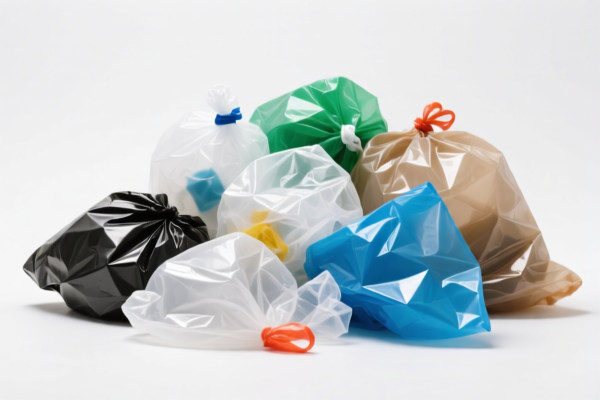
AI Analysis
♻️ LLDPE Stretch Film Waste (Plastic Scrap)
🌐 HS Code Reference & Customs Clearance Guide | 2026 Latest Tariff Breakdown | Professional Clearance Strategy
📌 I. Product Definition & Classification: What is "LLDPE Stretch Film Waste"?
Linear Low-Density Polyethylene (LLDPE) Stretch Film Waste refers to post-industrial or post-consumer scraps, parings, and waste generated from the production, processing, or usage of LLDPE stretch wrap films. In international trade, this is strictly categorized as Plastic Waste and Scrap.
⚠️ Key Classification Logic:
- Material: Must be LLDPE (a subset of Polyethylene).
- State: Must be Waste, Parings, or Scrap (not usable as new film).
- HS Chapter: Chapter 39 (Plastics and Articles Thereof).
📦 II. HS Code Classification Details (2026 Latest Tariff Authority)
| HS Code | Product Description | Applicability | Tax Rate (Total) |
|---|---|---|---|
3915.10.00.00 |
Waste, parings and scrap, of plastics: Of polymers of ethylene | Covers LLDPE (Linear Low-Density Polyethylene) waste, HDPE waste, etc. | 25.0% |
3915.90.00.10 |
Waste, parings and scrap, of plastics: Of other plastics (Includes PET waste) | NOT APPLICABLE for LLDPE. Only for PET (Polyethylene Terephthalate) or mixed plastics not primarily ethylene polymers. | 25.0% |
🔍 Critical Distinction:
- LLDPE is a Polymer of Ethylene: Therefore, it falls under 3915.10.00.00.
- Common Mistake: Do NOT classify LLDPE waste as3915.90.00.10(PET/Other). While the tax rate is identical in this specific dataset, the HS Code must be accurate for customs compliance and statistics. Misclassification can lead to audits or penalties.
💰 III. 2026 Tariff Rate Breakdown (Detailed Explanation)
✅ Applicable Country: United States (US)
✅ Origin: China (CN) (Implied by the specific "Additional Tariff 25%" structure commonly associated with US-China trade data in this context)
✅ Effective Date: Current as of 2026 Data Provided
🎯 1. 3915.10.00.00 —— LLDPE Stretch Film Waste (Polymer of Ethylene)
| Item | Detail |
|---|---|
| Base Tariff Rate | 0.0% |
| Additional Tariff | +25.0% |
| Total Tax Rate | 25.0% |
| Tax Calculation | CIF Value × 25.0% |
| De Minimis Exemption | ❌ Not Applicable |
| Legal Basis | USITC Footnote for Chapter 39, Section 301 Tariffs (if applicable) |
📌 Explanation:
- Base Rate (0.0%): Plastic waste generally has a low base duty.
- Additional Tariff (25.0%): This reflects the Section 301 additional duties imposed on Chinese imports of plastic products and waste.
- Total Liability: You must pay 25% of the CIF value (Cost, Insurance, Freight) at customs.
🎯 2. 3915.90.00.10 —— PET Plastic Waste (For Comparison)
| Item | Detail |
|---|---|
| Base Tariff Rate | 0.0% |
| Additional Tariff | +25.0% |
| Total Tax Rate | 25.0% |
| Note | While the rate is the same (25%), this HS Code is for PET (e.g., water bottle flakes). Do not use this for LLDPE. |
🛠️ IV. Customs Clearance Practical Advice (Pitfall Avoidance Guide)
✅ 1. Document Checklist (Mandatory)
| Document | Required | Description |
|---|---|---|
| ✅ Commercial Invoice | ✔️ | Clearly state "LLDPE Stretch Film Waste/Scrap". |
| ✅ Packing List | ✔️ | Detail net weight, gross weight, and number of bales/packages. |
| ✅ Certificate of Origin | ✔️ | Prove origin (if claiming any exemptions or for tracking). |
| ✅ Product Specification | ✔️ | Confirm material: 100% LLDPE (Polyethylene). |
| ✅ Waste Certification | ✔️ | If applicable, documents confirming it is "Scrap/Waste" and not "Second-hand Goods". |
✅ 2. Declaration Tips (Key Rules)
🔥 "Accurate Material, Correct HS, No Ambiguity!"
| Scenario | Correct Declaration | Incorrect Declaration | Consequence |
|---|---|---|---|
| LLDPE Waste | HS: 3915.10.00.00Name: "LLDPE Plastic Scrap" |
HS: 3915.90.00.10Name: "Plastic Waste" |
Risk: Customs may reclassify, delay shipment, or audit for misdeclaration. |
| Mixed Plastic Waste | HS: 3915.90.00.90 (Other) |
HS: 3915.10.00.00 |
Risk: Under-declaration if non-ethylene content is high. |
| Clean vs. Dirty | Specify "Clean Scrap" or "Contaminated" | Vague terms like "Plastic" | Risk: Environmental compliance issues; potential rejection if treated as hazardous. |
✅ 3. Special Considerations
| Issue | Recommendation |
|---|---|
| Recyclability | Ensure the waste meets EPA/EPA-equivalent standards for "Recyclable Material" vs. "Municipal Solid Waste" to avoid import bans. |
| Contamination | If the stretch film contains labels, glue, or other non-PE materials, the classification may shift. Keep LLDPE content high for 3915.10. |
| Value Declaration | Use the actual scrap value, not the value of new film. Over-declaring value increases the 25% tax burden unnecessarily. |
🌍 V. Global Market Comparison (2026 Update)
| Country/Region | Recommended HS Code | Tariff Rate | Notes |
|---|---|---|---|
| 🇺🇸 USA | 3915.10.00.00 |
25.0% | High additional tariff on Chinese origin plastic waste. |
| 🇨🇳 China | 3915.10.00.00 |
Varies | Import restrictions on foreign plastic waste may apply. |
| 🇪🇺 EU | 3915.10.00 |
Varies | Strict EU regulations on plastic waste imports (Basel Convention). |
| 🇻🇳 Vietnam | 3915.10.00 |
Low/0 | Often a transshipment hub; verify local customs rules. |
📌 Conclusion:
- USA is a high-cost market for LLDPE waste due to the 25% additional tariff.
- Accurate HS Code (3915.10.00.00) is critical. Do not confuse it with PET waste (3915.90.00.10).
📌 VI. Common Mistakes & Pitfalls (Lessons Learned)
❌ Mistake 1: Classifying LLDPE waste as "Other Plastics" (3915.90)
👉 Consequence: Incorrect HS Code. Even if tax is similar, it flags customs for manual review and potential penalties.
❌ Mistake 2: Declaring as "Recyclable Film" instead of "Waste/Scrap"
👉 Consequence: If the product is truly waste, this may be seen as misdeclaration. If it is reusable, it might be classified as "Used Goods" (different tariff).
❌ Mistake 3: Ignoring the 25% Additional Tariff
👉 Consequence: Budget shortfall. The 25% tax is mandatory for US imports from China under current data. Factor this into your landed cost.
✅ Correct Practice:
"LLDPE Stretch Film Scrap, Clean, Post-Industrial, HS Code 3915.10.00.00, CIF Value: $XX,XXX"
🎯 VII. Conclusion: Precision in Plastic Waste Clearance
🎯 Remember the Key Points:
🔹 LLDPE = Polymer of Ethylene → HS Code
3915.10.00.00
🔹 Total Tax = 25.0% (0% Base + 25% Additional)
🔹 PET ≠ LLDPE (Do not use3915.90.00.10for LLDPE)
📌 Pro Tip:
📞 Pre-clearance is key. Provide the customs broker with material test reports proving the plastic is LLDPE (Polyethylene) to ensure correct HS Code assignment and avoid delays.
✨ Professional Clearance Starts with Accurate Classification!
💼 Optimize Your Landed Cost with Precise Tariff Management!
Customer Reviews
About HS Code Classification
The Harmonized System (HS) is an internationally standardized nomenclature developed by the World Customs Organization (WCO) to classify traded products. Over 200 countries use the HS system as the basis for customs tariffs, trade statistics, and import/export regulations.
Each HS code follows a hierarchical structure:
- Chapter (2 digits) — Broad category of goods (e.g., Chapter 84: Machinery and Mechanical Appliances)
- Heading (4 digits) — More specific grouping within the chapter
- Subheading (6 digits) — Internationally standardized breakdown, used by all WCO member countries
- National subdivisions (8-10 digits) — Country-specific extensions for further classification, such as US HTSUS 10-digit codes
Correct HS code classification is essential for smooth customs clearance, accurate duty payment, and compliance with trade regulations. Misclassification can lead to customs delays, overpayment of duties, or penalties.
When importing from CN to US, the applicable tariff rates may include:
- Most-Favored-Nation (MFN) rate — The standard duty rate applied to WTO members
- General rate — Applied to countries without trade agreements
- Trade remedy duties — Additional tariffs such as Section 301 (anti-dumping), Section 232 (national security), or countervailing duties
The information provided on this page is for reference purposes only. For official classification, please consult with your local customs authority or a licensed customs broker.