Label Clip
CN → USProduct Images


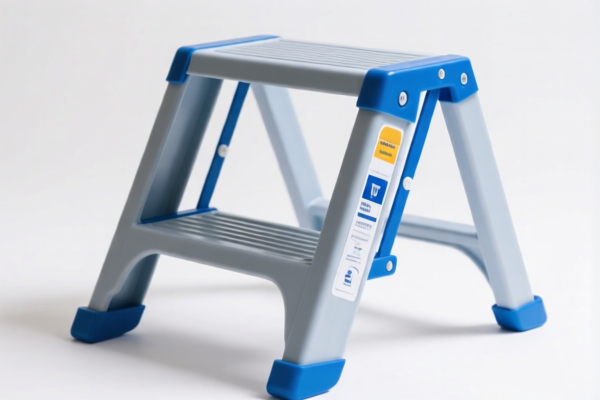

AI Analysis
🏷️ Label Clips (标签夹)
🌐 HS Code Reference & Clearance Guide | 2026 Latest Tariff Analysis | Professional Customs Strategy
📌 I. Product Definition & Classification: What Exactly is a "Label Clip"?
Label Clips are ubiquitous office and industrial accessories used to temporarily attach, organize, or display tags, labels, or documents. In international trade, their classification depends heavily on the material composition (Plastic vs. Metal vs. Paper) rather than just the function. Misclassification is a common pitfall that can lead to massive tariff disparities.
Key Distinctions: - Plastic Clips: If made entirely of plastics or polymer-based materials → Fall under Chapter 39. - Metal Clips: If made of iron, steel, or aluminum → Fall under Chapter 73. - Paper/Cardboard Clips: Rare, but if made of paper products → Fall under Chapter 48.
⚠️ Critical Warning:
- The tariff difference between plastic and metal clips can exceed 70% due to Section 301 and Section 232 duties. - "General Use" items often fall into "Other" categories, which carry higher base rates.
📦 II. HS Code Classification Matrix (2026 Latest Tariff Data)
Based on the provided , here are the five potential HS Codes for Label Clips, categorized by material inference.
| HS Code | Material Inference | Summary/Rationale | Total Tax Rate | Tax Breakdown Details |
|---|---|---|---|---|
3926.90.65.30 |
Plastic | Matches usage similar to clothespins; inferred plastic material; fits "Other Plastic Articles". | 14.2% | Base: 4.2%, Sec 301: 0%, 122-Clause: 10% |
3926.90.65.10 |
Plastic | Matched by function (fixture/clamp); inferred plastic material; fits "Other Plastic Articles". | 14.2% | Base: 4.2%, Sec 301: 0%, 122-Clause: 10% |
7326.90.86.88 |
Iron/Steel | Inferred as iron or steel based on common knowledge; "Other articles of iron/steel". | 87.9% | Base: 2.9%, Sec 301: 25%, Sec 232: 50% |
7326.20.00.90 |
Iron/Steel | Inferred as iron/steel; form fits wire/steel products extension; "Other articles of iron/steel". | 88.9% | Base: 3.9%, Sec 301: 25%, Sec 232: 50% |
4821.10.20.00 |
Paper/Cardboard | Name matches label use; inferred paper/cardboard material; fits "Other Paper Products" rule. | 35.0% | Base: 0.0%, Sec 301: 25%, 122-Clause: 10% |
🔍 Key Insight:
- Plastic (3926...) is the most cost-effective option with a total rate of 14.2%. - Metal (7326...) triggers the Section 232 Steel/Aluminum Tariff (50%), resulting in nearly 90% total duty. - Paper (4821...) sits in the middle at 35.0%.
💰 III. Detailed Tariff Analysis & Policy Breakdown
✅ Target Market: United States (US)
✅ Origin: China (CN)
✅ Effective Date: Current policies apply (Section 301 & 232)
🎯 1. Plastic Label Clips (3926.90.65.10 / 3926.90.65.30)
The "Budget-Friendly" Choice
| Item | Details |
|---|---|
| Base Tariff | 4.2% |
| Section 301 Tariff | 0% (Note: Some plastic items may be subject to 7.5% or 25% if misclassified, but based on data, this specific subheading shows 0% Sec 301) |
| 122-Clause / Other | +10% |
| Total Effective Rate | 14.2% |
| Why so low? | Plastics are not subject to the Section 232 Steel/Aluminum duties. If correctly classified as plastic, you avoid the punitive 50% levy. |
📌 Interpretation:
- The 10% additional charge is likely related to specific trade remedies or "122-Clause" adjustments for certain plastic goods from China. - No Section 301 (25%) appears in the provided data for these specific HS codes, making them highly competitive.
🎯 2. Metal Label Clips (7326.90.86.88 / 7326.20.00.90)
The "High-Cost" Trap
| Item | Details |
|---|---|
| Base Tariff | 2.9% - 3.9% |
| Section 301 Tariff | +25% (Standard US-China trade war tariff) |
| Section 232 Tariff | +50% (Steel/Aluminum products tax) |
| Total Effective Rate | 87.9% - 88.9% |
| Risk Level | 🔴 CRITICAL |
📌 Interpretation:
- The 50% Section 232 duty is the killer here. It applies to steel and aluminum articles. - Even if the clip is small, if it is made of steel, it falls under Chapter 73. - Total tax approaches 90%, making metal label clips extremely expensive to import into the US from China.
🎯 3. Paper Label Clips (4821.10.20.00)
The "Middle Ground"
| Item | Details |
|---|---|
| Base Tariff | 0.0% |
| Section 301 Tariff | +25% |
| Additional Clause | +10% |
| Total Effective Rate | 35.0% |
| Risk Level | 🟡 MODERATE |
📌 Interpretation:
- Zero base duty is attractive, but the 25% Section 301 tax significantly increases the cost. - Suitable only if the product is genuinely made of paper/cardboard (e.g., heavy-duty paper tags with clip mechanisms).
🛠️ IV. Customs Clearance Practical Advice (Pitfall Avoidance Guide)
✅ 1. Preparation Checklist (Non-Negotiable)
| Document | Required? | Purpose |
|---|---|---|
| ✅ Material Specification Sheet | ✔️ Mandatory | Must explicitly state: "100% Polypropylene" or "Stainless Steel". Vague terms like "Mixed Material" are rejected. |
| ✅ Product Photos | ✔️ Mandatory | Clear images of the clip mechanism, texture, and any logos. Helps CBP distinguish plastic from metal. |
| ✅ Commercial Invoice | ✔️ Mandatory | Description must match HS Code rationale (e.g., "Plastic Binder Clip" vs. "Steel Paper Clip"). |
| ✅ Packing List | ✔️ | List quantities and weights per package. |
| ✅ Origin Certificate | ⚠️ Optional | If sourced from Vietnam/Mexico, check for IEPEA exemptions. |
✅ 2. Declaration Strategy (Key Mantra)
🔥 "Material Defines Code, Code Defines Cost!"
| Scenario | Recommended HS Code | Estimated Tax | Action |
|---|---|---|---|
| Plastic Binder Clips | 3926.90.65.10 or .30 |
14.2% | STRONGLY PREFERRED. Declare material as Plastic. |
| Steel Wire Clips | 7326.90.86.88 |
87.9% | Avoid if possible. High cost. Consider switching to plastic alternative. |
| Paper Clips/Tags | 4821.10.20.00 |
35.0% | Only declare if genuinely paper-based. |
| Mixed Material | Risk! | Varies | CBP may rule based on "Essential Character". If metal is structural, it may be taxed as metal. |
✅ 3. Special Handling & Optimization
| Situation | Strategy |
|---|---|
| Cost Reduction | Switch from Metal to Plastic. Saves ~73% in duties. |
| Anti-Scraping | Ensure plastic clips do not have metal springs. If a "plastic clip" has a metal spring, CBP may classify the whole unit under Chapter 73 (Metal), triggering the 88% tax! |
| Pre-Ruling | Apply for a CBP Advance Ruling if unsure about mixed-material clips. |
| Supply Chain | If shipping from non-China countries (e.g., Vietnam), verify if Section 301 applies. (Note: Section 232 usually targets origin, but check specific country exclusions). |
🌍 V. Global Market Comparison (2026 Snapshot)
| Country | HS Code (Example) | Est. Tariff (China Origin) | Notes |
|---|---|---|---|
| 🇺🇸 USA | 3926.90.65.10 |
14.2% | High due to 122-Clause. Metal is ~88%. |
| 🇺🇸 USA | 7326.90.86.88 |
87.9% | Steel/Aluminum punitive duties apply. |
| 🇪🇺 EU | 3926.90.97 | ~0-6% | No Section 301/232 equivalents. |
| 🇨🇳 China | 3926.90.90 | ~5-10% | Import tariff only, no punitive US taxes. |
📌 Conclusion:
- The USA is the most expensive market for metal label clips due to Section 232. - Plastic clips are the strategic choice for US exports to minimize landed cost.
📌 VI. Common Errors & Blood-Teaching Lessons
❌ Error 1: Declaring a Plastic Clip with a Metal Spring as Plastic. 👉 Consequence: CBP determines "Essential Character" is Metal → Tax jumps from 14.2% to 87.9%. Plus back-taxes and penalties.
❌ Error 2: Using generic term "Office Supplies" without material specification. 👉 Consequence: CBP assigns worst-case scenario or requests detailed inquiry → Shipment Delayed 2-4 Weeks.
❌ Error 3: Assuming all "Clips" are the same. 👉 Consequence: A "Binder Clip" (metal) and a "Clothespin" (plastic) have vastly different tax rates. Misclassification leads to underpayment.
✅ Correct Practice:
"Label Clip, Plastic, Polypropylene, Color: Blue, No Metal Components, Model: LC-001"
🎯 VII. Conclusion: Smart Classification Saves Money
🎯 Remember the Mantra:
🔹 "Plastic is King (14%), Metal is Death (88%)."
🔹 "Check for Springs! If it's in, it's Metal Tax!"
🔹 "HS Code 3926 is your best friend for Label Clips."
📌 Pro Tip:
If your product has mixed materials (e.g., plastic body with metal coil), consider redesigning to use fully plastic spring mechanisms. This simple design change can save you 73% in duties.
📣 Immediate Action:
📞 Audit your Bill of Materials (BOM) for any metal components in clips.
📦 Update Product Descriptions to explicitly state "100% Plastic" or "All-Metal".
🚀 Optimize Landed Cost by choosing the right HS Code from the start!
✨ Professional Customs Clearance Starts with Precise Classification!
💼 Every percentage point saved is pure profit!
Customer Reviews
About HS Code Classification
The Harmonized System (HS) is an internationally standardized nomenclature developed by the World Customs Organization (WCO) to classify traded products. Over 200 countries use the HS system as the basis for customs tariffs, trade statistics, and import/export regulations.
Each HS code follows a hierarchical structure:
- Chapter (2 digits) — Broad category of goods (e.g., Chapter 84: Machinery and Mechanical Appliances)
- Heading (4 digits) — More specific grouping within the chapter
- Subheading (6 digits) — Internationally standardized breakdown, used by all WCO member countries
- National subdivisions (8-10 digits) — Country-specific extensions for further classification, such as US HTSUS 10-digit codes
Correct HS code classification is essential for smooth customs clearance, accurate duty payment, and compliance with trade regulations. Misclassification can lead to customs delays, overpayment of duties, or penalties.
When importing from CN to US, the applicable tariff rates may include:
- Most-Favored-Nation (MFN) rate — The standard duty rate applied to WTO members
- General rate — Applied to countries without trade agreements
- Trade remedy duties — Additional tariffs such as Section 301 (anti-dumping), Section 232 (national security), or countervailing duties
The information provided on this page is for reference purposes only. For official classification, please consult with your local customs authority or a licensed customs broker.