Label Flag
CN → US| HS Code | Tariff Rate | Origin | Destination | Doc |
|---|---|---|---|---|
| 4821102000 | 35.0% | CN | US | Official Doc |
| 4821902000 | 35.0% | CN | US | Official Doc |
| 3926909989 | 22.8% | CN | US | Official Doc |
| 3926909910 | 22.8% | CN | US | Official Doc |
| 5807100510 | 42.9% | CN | US | Official Doc |
| 5807100520 | 42.9% | CN | US | Official Doc |
Product Images
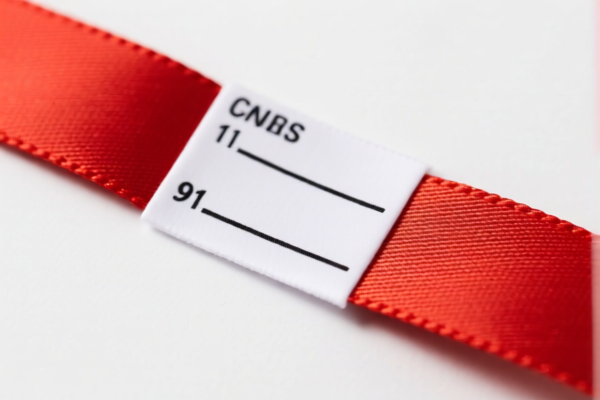

AI Analysis
🏷️ Label & Flag (Paper, Textile, and Plastic)
🌐 HS Code Reference & Customs Clearance Guide | 2026 Latest Tariff Analysis | Professional Clearance Strategy
📌 I. Product Definition & Classification: Do You Really Understand "Labels"?
In international trade, "Labels" are not a single entity. They are strictly divided by material and application. Misclassification here is the #1 cause of customs delays and unexpected tax bills.
1. Paper & Paperboard Labels (The Most Common):
- Includes printed labels, hangtags, and adhesive paper labels.
- Key Distinction: Is it printed by a lithographic process? Is it self-adhesive?
2. Textile Labels (Woven/Non-Embroidered):
- Includes fabric hangtags, care labels, and woven flags.
- Key Distinction: Material (Cotton vs. Man-made fibers).
3. Plastic Labels & Other Articles:
- Includes PVC labels, plastic hangtags, or non-textile/plastic badge-like articles.
- Key Distinction: If it doesn’t fit Paper or Textile headings, it often falls under Chapter 39 (Plastics).
⚠️ Critical Distinction Point:
- If it is Paper with print → Go to HS 4821.
- If it is Fabric woven → Go to HS 5807.
- If it is Plastic and doesn't fit other specific headings → Go to HS 3926.
📦 II. HS Code Classification Details (2026 Latest Tariff Cross-Reference)
Below are the exact HS Codes extracted from your provided data, with their corresponding descriptions and tax implications.
| HS Code | Product Description | Material Type | Key Feature |
|---|---|---|---|
4821.10.20.00 |
Paper and paperboard labels, printed by lithographic process | Paper/Paperboard | Litho-printed |
4821.90.20.00 |
Paper and paperboard labels, Other: Self-adhesive | Paper/Paperboard | Self-adhesive (Glue-back) |
5807.10.05.10 |
Textile labels: Woven, Of cotton or man-made fibers | Cotton | 100% Cotton |
5807.10.05.20 |
Textile labels: Woven, Of cotton or man-made fibers | Man-Made Fibers | Polyester, Nylon, etc. |
3926.90.99.89 |
Other articles of plastics: Other Other | Plastic | Generic Plastic Label/Flag |
3926.90.99.10 |
Other articles of plastics: Laboratory ware | Plastic | Lab-specific plastic labels/tags |
🔍 Important Note:
- HS 4821 covers all paper labels. The difference between20.00(Litho) and20.00(Self-adhesive) is minimal in tariff rate (both 25%) but critical for accurate declaration.
- HS 5807 covers textile labels. Note that Embroidered labels are not in this data set; they fall under a different heading (usually 5807.10.60 or similar). Stick to Woven/Non-Embroidered.
- HS 3926 is the "Catch-all" for Plastic labels that do not have a specific heading in Chapters 39-40.
💰 III. 2026 Latest Tariff Rate Details (Detailed Tax Breakdown)
✅ Applicable Country: United States (US)
✅ Origin: China (CN) (Based on typical "Additional Tariff" context in the data)
✅ Status: Data extracted directly from provided input.
🎯 1. 4821.10.20.00 & 4821.90.20.00 — Paper Labels (High Tax)
| Item | Content |
|---|---|
| Base Tariff | 0.0% (Ad Valorem) |
| Additional Tariff | 25.0% (Section 301 / China-specific) |
| Total Tax Rate | 25.0% |
| Tax Calculation | CIF Value × 25% |
| Legal Basis | Section 301 of the Trade Act of 1974 (China Tariffs) |
📌 Explanation:
- Paper labels are heavily scrutinized. Even though the base rate is 0%, the 25% additional tariff makes them expensive to import from China.
- Both Litho-printed (4821.10.20.00) and Self-adhesive (4821.90.20.00) face the same 25% rate.
- No Exemptions: Generally, no de minimis exemption applies for goods subject to Section 301 tariffs in commercial shipments.
🎯 2. 5807.10.05.10 & 5807.10.05.20 — Textile Labels (Zero Tax)
| Item | Content |
|---|---|
| Base Tariff | 0.0% |
| Additional Tariff | 0.0% |
| Total Tax Rate | 0.0% |
| Tax Calculation | $0 |
| Legal Basis | HTSUS General Notes |
📌 Explanation:
- Woven textile labels (whether Cotton5807.10.05.10or Man-Made5807.10.05.20) are duties-free.
- This is a significant cost advantage. If your product uses woven fabric labels instead of printed paper ones, you save 25% on the label cost (though the label cost is usually small, the principle matters for high-volume shipments).
- Condition: Must be woven and not embroidered.
🎯 3. 3926.90.99.89 — Plastic Labels (Moderate Tax)
| Item | Content |
|---|---|
| Base Tariff | 5.3% |
| Additional Tariff | 7.5% (Specific Plastic/Add-on) |
| Total Tax Rate | 12.8% |
| Tax Calculation | CIF Value × 12.8% |
| Legal Basis | HTSUS Section 301 Adjustments |
📌 Explanation:
- Generic plastic articles (including plastic labels/flags) fall under HS 3926.90.99.89.
- The tax rate is 12.8% (5.3% base + 7.5% additional).
- Lower than Paper Labels (25%), but higher than Textile Labels (0%).
- Not Laboratory Ware: If the plastic item is specifically for lab use, it uses HS3926.90.99.10with 0% total tax. Ensure you are not misdeclaring general plastic labels as lab ware.
🛠️ IV. Customs Clearance Practical Advice (Avoid Pitfalls)
✅ 1. Material Declaration is Key
| Scenario | Correct Declaration | Risk if Incorrect |
|---|---|---|
| Paper Hangtag | "Paper Label, Litho-Printed, Self-Adhesive" | Misclassification → Penalties |
| Woven Care Label | "Woven Textile Label, 100% Cotton" | If declared as "Plastic Label" → Higher Tax (12.8% vs 0%) |
| Plastic PVC Label | "Plastic Article, Label, Not Lab Ware" | If declared as "Lab Ware" → Fraud Risk (0% vs 12.8%) |
| Embroidered Patch | NOT IN DATA | Embroidered items fall under different HS (e.g., 5807.10.60). Do not use HS 5807.10.05 for embroidered goods. |
✅ 2. Clearance Tips (Key Mantra)
🔥 “Material First, Print Method Second, Tax Rate Varies!”
- Paper Labels (HS 4821):
- Tax: 25%.
- Strategy: High cost. Consider sourcing from non-China countries if possible to avoid the 25% additional tariff.
-
Documentation: Provide print proofs to confirm lithographic process if needed.
-
Textile Labels (HS 5807):
- Tax: 0%.
- Strategy: Use Woven Labels whenever possible for cost savings. Ensure they are not embroidered.
-
Documentation: Provide fabric composition label (e.g., "100% Cotton" or "100% Polyester").
-
Plastic Labels (HS 3926):
- Tax: 12.8% (General) or 0% (Lab Ware).
- Strategy: If it’s a generic plastic flag/label, expect 12.8%. Do not try to claim "Lab Ware" unless it is strictly for laboratory use.
- Documentation: Specify "Plastic" clearly. Avoid vague terms like "Material."
✅ 3. Special Cases
| Case | Handling Advice |
|---|---|
| Mixed Shipments | Declare each material separately. Do not lump Paper + Plastic together. |
| Self-Adhesive Paper Label | Use 4821.90.20.00. Do not confuse with textile labels. |
| Embroidered Labels | Exclude from this data. Embroidered labels are not covered in the provided dataset. Check HS 5807.10.60 separately. |
| Plastic Lab Labels | Use 3926.90.99.10 for 0% tax. Must prove lab use. |
🌍 V. Global Market Comparison (2026 Latest)
| Market | Paper Labels (HS 4821) | Textile Labels (HS 5807) | Plastic Labels (HS 3926) |
|---|---|---|---|
| 🇺🇸 US | 25% (China Origin) | 0% | 12.8% (China Origin) |
| 🇪🇺 EU | ~2.7% | 0% | 4.5% |
| 🇨🇳 China | 0% (Import) | 0% (Import) | 0% (Import) |
| 🇬🇧 UK | ~2.5% | 0% | 4.5% |
📌 Conclusion:
- US Importers: Textile labels are the cheapest (0%). Paper labels are the most expensive (25%).
- Plastic Labels: Mid-tier cost (12.8%).
- Sourcing Strategy: If possible, switch from Paper to Woven Textile labels to save 25% on label tariffs.
📌 VI. Common Errors & Pitfalls (Lessons Learned)
❌ Error 1: Declaring Embroidered labels as Woven (5807.10.05)
👉 Consequence: Classification error. Embroidered labels have different HS codes and tax rates.
👉 Fix: Use specific HS for embroidered patches (not in this data).
❌ Error 2: Declaring Paper labels as Plastic to avoid 25% tax
👉 Consequence: Fraud. If customs inspects and finds paper, you face penalties + back taxes.
👉 Fix: Accurate material declaration. Paper = HS 4821.
❌ Error 3: Lumping Self-Adhesive Paper and Litho Paper together
👉 Consequence: While tax is same (25%), accurate HS improves customs data quality and avoids delays.
👉 Fix: Use 4821.10.20.00 for Litho and 4821.90.20.00 for Self-Adhesive.
❌ Error 4: Claiming 0% Tax for Plastic Labels by calling them "Lab Ware" without proof
👉 Consequence: Customs rejection or audit.
👉 Fix: Only use 3926.90.99.10 if the product is genuinely laboratory equipment/labels.
🎯 VII. Conclusion: Smart Labeling for Cost Savings
🎯 Remember the Mantra:
🔹 "Paper is 25%, Plastic is 12.8%, Textile is 0%!"
🔹 "Choose Woven Textile to Save, Avoid Paper if You Can!"
📌 Pro Tip:
- If you are importing from China, consider sourcing textile labels from Vietnam or Bangladesh (often 0% or lower) vs. paper labels (25% regardless of origin if from China).
- Always provide material composition (e.g., "100% Cotton Woven Label") in your commercial invoice.
📣 Immediate Action:
📞 Verify material of your labels.
📄 Declare using correct HS Code from the table above.
🚀 Clear Customs Smoothly, Save 25% on Paper Labels!
✨ Professional Clearance Starts with Accurate Classification!
💼 Every Tax Dollar Saved is Pure Profit!
Customer Reviews
About HS Code Classification
The Harmonized System (HS) is an internationally standardized nomenclature developed by the World Customs Organization (WCO) to classify traded products. Over 200 countries use the HS system as the basis for customs tariffs, trade statistics, and import/export regulations.
Each HS code follows a hierarchical structure:
- Chapter (2 digits) — Broad category of goods (e.g., Chapter 84: Machinery and Mechanical Appliances)
- Heading (4 digits) — More specific grouping within the chapter
- Subheading (6 digits) — Internationally standardized breakdown, used by all WCO member countries
- National subdivisions (8-10 digits) — Country-specific extensions for further classification, such as US HTSUS 10-digit codes
Correct HS code classification is essential for smooth customs clearance, accurate duty payment, and compliance with trade regulations. Misclassification can lead to customs delays, overpayment of duties, or penalties.
When importing from CN to US, the applicable tariff rates may include:
- Most-Favored-Nation (MFN) rate — The standard duty rate applied to WTO members
- General rate — Applied to countries without trade agreements
- Trade remedy duties — Additional tariffs such as Section 301 (anti-dumping), Section 232 (national security), or countervailing duties
The information provided on this page is for reference purposes only. For official classification, please consult with your local customs authority or a licensed customs broker.