Laboratory Anti static Shoe Covers
CN → US| HS Code | Tariff Rate | Origin | Destination | Doc |
|---|---|---|---|---|
| 6217909095 | 32.1% | CN | US | Official Doc |
| 6217909085 | 32.1% | CN | US | Official Doc |
| 3926201020 | 10.0% | CN | US | Official Doc |
| 6402915020 | 47.5% | CN | US | Official Doc |
Product Images
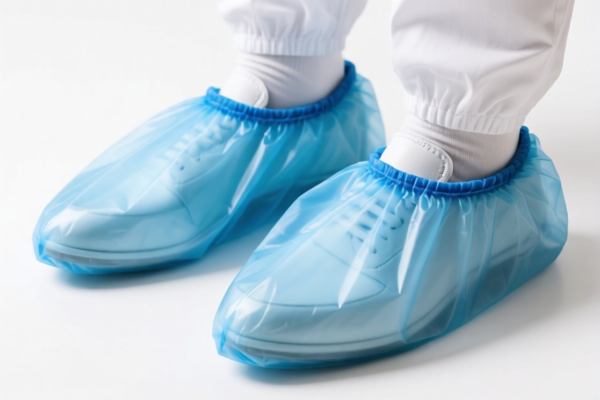
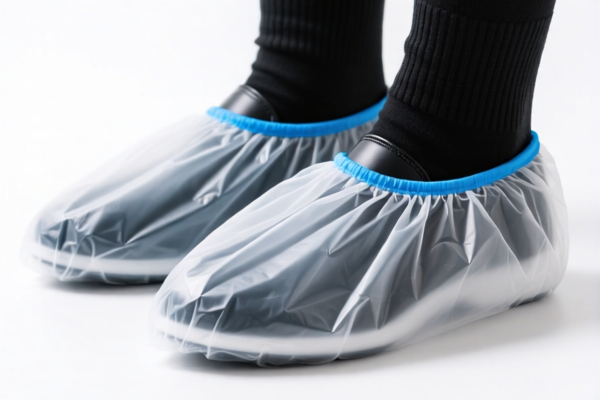
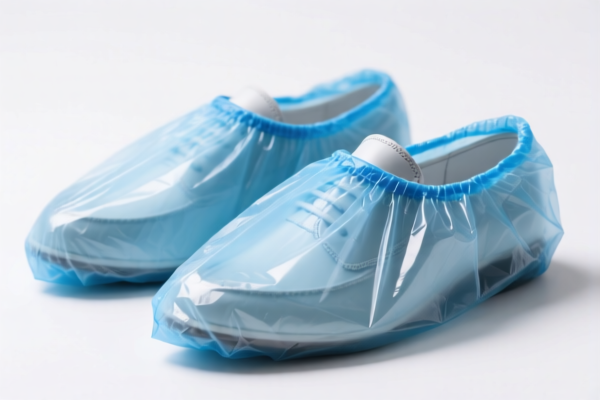
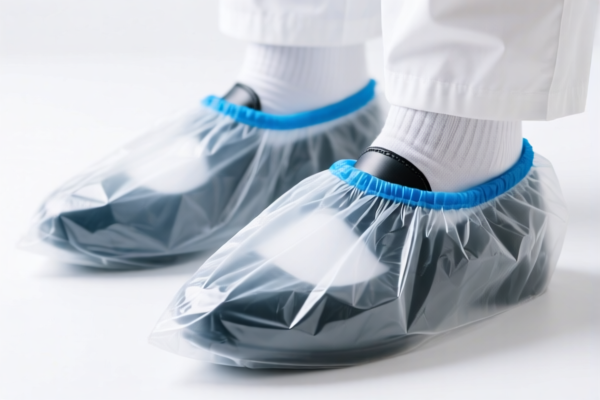
AI Analysis
🥾 Laboratory Anti-Static Shoe Covers (ESD Shoe Covers)
🌐 HS Code Reference & Customs Clearance Guide | 2026 Latest Tariff Analysis | Professional Compliance Strategy
📌 I. Product Definition & Classification: What Are "Lab Anti-Static Shoe Covers"?
Laboratory Anti-Static Shoe Covers are specialized protective garments designed for cleanroom, electronics manufacturing, or laboratory environments. Their primary function is to prevent static electricity discharge (ESD) while protecting footwear from contamination.
In international trade, these products are ambiguous because they straddle two main categories: 1. Footwear/Accessories (Chapter 62/64): If viewed as protective gear for shoes, similar to overshoes or shoe covers. 2. Plastic Articles (Chapter 39): If viewed primarily as disposable plastic sheaths, regardless of the anti-static function.
⚠️ Critical Classification Point:
- If classified under Chapter 62/64, it is treated as garments/accessories. However, due to US-China trade tensions, this category attracts high additional tariffs (Section 301 + Section 122 + IEEPA).
- If classified under Chapter 39, it is treated as a plastic product. This category currently has significantly lower tariffs (only Section 122/IEEPA applicable).
📦 II. HS Code Classification Details (2026 Latest Tariff Authority)
Based on the provided data, here are the three potential HS Codes and their rationales:
| HS Code | Product Description | Rationale for Classification | Total Tax Rate |
|---|---|---|---|
| 6217.90.90.95 | Parts of accessories of apparel or clothing accessories (Plastic/Rubber/Fiber) | Treated as garment accessories or parts of clothing. The material (plastic/rubber/fiber) fits the "other parts" catch-all clause for apparel accessories. | 32.1% |
| 6217.90.90.85 | Other made-up clothing accessories, of artificial fibers | Treated as a clothing attachment made of synthetic materials. No conflict with garment chapters; considered an accessory to footwear/clothing. | 32.1% |
| 3926.20.10.20 | Articles of plastic: Clothes and clothing accessories, disposable | Treated as a disposable plastic item. Since it is a non-medical, disposable plastic sheath, it falls under plastic articles rather than textile/apparel. | 10.0% |
| 6402.91.50.20 | Footwear with outer soles and uppers of rubber/plastic, not athletic | Treated as footwear itself. Because it covers the shoe and is made of plastic/rubber, it mimics a "shoe" form. High tax due to footwear classification. | 47.5% |
🔍 Key Insight:
- 6217 and 6402 classifications trigger heavy additional tariffs (Base 14.6%/37.5% + Add 7.5%/0% + 122 10% + IEEPA 10%).
- 3926 has zero base tariff but still incurs the 10% Section 122/IEEPA surcharge.
- Strategy: Classification as 3926.20.10.20 is currently the most cost-effective option if customs accepts the argument that these are "plastic articles" rather than "textile/apparel accessories."
💰 III. 2026 Latest Tariff Rate Breakdown (Including Surcharges)
✅ Applicable Country: United States (US)
✅ Origin: China (CN)
✅ Effective Date: Post-November 2025 (Current Trade Policy)
🎯 1. HS Code 6217.90.90.95 & 6217.90.90.85 — Garment Accessories
| Item | Detail |
|---|---|
| Base Tariff | 14.6% (ad valorem) |
| Section 301 Add-on | +7.5% (USITC Footnote for apparel accessories) |
| Section 122 / IEEPA | +10% (Specific surcharge for China-origin goods) |
| Total Effective Rate | 32.1% |
| Calculation | CIF Value × 32.1% |
| De Minimis Exemption | ❌ Not Eligible |
| Legal Path | Base: 6217 → Add-on: 7.5% → Surcharge: 10% |
📌 Explanation:
- These codes fall under Chapter 62 (Articles of Apparel), which is heavily targeted in US-China trade disputes.
- The 32.1% rate is significant and impacts profit margins substantially.
- Customs may scrutinize whether "shoe covers" are truly "apparel accessories" or "plastic products."
🎯 2. HS Code 6402.91.50.20 — Plastic/Rubber Footwear
| Item | Detail |
|---|---|
| Base Tariff | 37.5% (ad valorem) |
| Section 301 Add-on | 0% (Footwear often has different 301 rates) |
| Section 122 / IEEPA | +10% |
| Total Effective Rate | 47.5% |
| Calculation | CIF Value × 47.5% |
| De Minimis Exemption | ❌ Not Eligible |
| Legal Path | Base: 6402 → Surcharge: 10% |
📌 Warning:
- This is the most expensive classification.
- Misclassifying a simple plastic cover as "footwear" (which implies a structured shoe) is a high-risk compliance error.
- Only use if the product is structurally rigid and resembles a shoe (e.g., reusable silicone shoe boots), not disposable plastic covers.
🎯 3. HS Code 3926.20.10.20 — Plastic Articles (Disposable)
| Item | Detail |
|---|---|
| Base Tariff | 0.0% |
| Section 301 Add-on | 0.0% |
| Section 122 / IEEPA | +10% |
| Total Effective Rate | 10.0% |
| Calculation | CIF Value × 10.0% |
| De Minimis Exemption | ❌ Not Eligible (if subject to IEEPA) |
| Legal Path | Base: 3926 → Surcharge: 10% |
📌 Advantage:
- This is the most economical classification.
- The argument is that the product is a disposable plastic sheet/sheath, not a textile or structured garment.
- Risk: Customs may reject this if the product is deemed to be primarily "apparel" due to its fit and function. Requires strong justification (e.g., material composition, disposal nature).
🛠️ IV. Customs Clearance Practical Advice (Avoiding Pitfalls)
✅ 1. Preparation Checklist (Mandatory)
| Document | Requirement | Explanation |
|---|---|---|
| ✅ Product Specs | ✔️ | Detailed material composition (e.g., "PE with carbon fiber threads for ESD"). |
| ✅ Photos | ✔️ | Show the product in use (on a shoe) to demonstrate it is a "cover," not a "shoe." |
| ✅ Material Test Report | ✔️ | Prove anti-static properties (surface resistance < 10^9 ohms). |
| ✅ Commercial Invoice | ✔️ | Description: "Disposable Plastic Anti-Static Shoe Covers, Not Apparel, Not Footwear." |
| ✅ Origin Certificate | ✔️ | Required to confirm China origin and apply correct surcharges. |
| ✅ Customs Ruling (Optional) | ✔️ | Highly recommended to get an Advance Ruling for HS 3926. |
✅ 2. Declaration Strategy (Key Tips)
🔥 “Don’t Call It ‘Shoes,’ Call It ‘Plastic Covers’!”
| Scenario | Recommended HS Code | Risk Level |
|---|---|---|
| Disposable PE/PP Plastic Covers | 3926.20.10.20 |
🟡 Medium (Need to prove non-apparel nature) |
| Reusable Fabric/Rubber Overshoes | 6217.90.90.95 |
🔴 High (High tax, but clear classification) |
| Structured Silicone Booties | 6402.91.50.20 |
🔴 Very High (Highest tax, compliance risk) |
- Do NOT describe the product as "Shoes" or "Footwear" in the invoice if it is disposable.
- DO emphasize "Disposable," "Plastic Material," and "Accessories" rather than "Clothing."
✅ 3. Special Cases
| Case | Advice |
|---|---|
| OEM/Custom Labels | Ensure labels do not imply "Apparel" or "Fashion." Use "Lab Safety Equipment." |
| Mixed Containers | If mixed with other items, ensure shoe covers are clearly separated in packing list to avoid misclassification. |
| Cleanroom Certification | Provide ISO 14644 compliance docs to support the "industrial/lab use" argument, not "personal apparel." |
🌍 V. Global Market Comparison (2026)
| Country/Region | Recommended HS Code | Total Tax Rate | Notes |
|---|---|---|---|
| 🇺🇸 USA | 3926.20.10.20 |
10% | Best rate if accepted. 6217 = 32.1%. |
| 🇨🇳 China | 6117.90.00.90 |
8% | Import into China is different; local rules apply. |
| 🇪🇺 EU | 6217.90.90 |
0-12% | Varies by member state. No US-style surcharges. |
| 🇬🇧 UK | 6217.90.90 |
0-12% | Post-Brexit rules similar to EU but independent. |
| 🇯🇵 Japan | 6217.90.90 |
6-10% | Generally low tariffs, no major surcharges. |
📌 Conclusion:
- The US market is the most challenging due to Section 301, 122, and IEEPA tariffs.
- Classification as3926(Plastic) is critical for cost savings in the US.
- Always verify with a US customs broker before shipping.
📌 VI. Common Mistakes & Pitfalls (Lessons Learned)
❌ Mistake 1: Declaring as "Safety Shoes" (6402)
👉 Result: 47.5% tax! Overpayment of 37.5% vs. plastic classification.
👉 Fix: Prove it is a disposable cover, not a structured shoe.
❌ Mistake 2: Declaring as "Apparel Accessories" (6217) without justification
👉 Result: 32.1% tax. Acceptable if 3926 is rejected, but suboptimal.
👉 Fix: Provide material specs showing plastic dominance.
❌ Mistake 3: Ignoring Section 122/IEEPA
👉 Result: Even 3926 has 10% tax. Assuming 0% is wrong.
👉 Fix: Budget for the 10% surcharge regardless of base rate.
✅ Correct Approach:
"Disposable Plastic Anti-Static Shoe Covers for Laboratory Use, Model XYZ, Material: PE + Carbon Fiber, Not Classified as Footwear or Apparel, Complies with ISO Cleanroom Standards."
🎯 VII. Conclusion: Professional Declaration for Cost Efficiency
🎯 Remember the Golden Rule:
🔹 "Plastic Covers = 10% Tax; Garment Accessories = 32.1% Tax; Footwear = 47.5% Tax!"
🔹 "Prove it’s plastic, not apparel, to save 22%!"
🔹 "Check IEEPA surcharge – it applies to all China-origin goods!"
📌 Pro Tip:
If your product is 100% plastic and disposable, fight for HS 3926.20.10.20.
If it is fabric/reusable, accept HS 6217.90.90.95 (32.1%).
Never declare disposable covers as6402unless structurally identical to a shoe.
📣 Immediate Action:
📞 Contact a US Customs Broker to file an Advance Ruling for
3926.20.10.20.
📦 Prepare Material Test Reports to prove plastic composition.
🚀 Optimize your supply chain to handle the 10% IEEPA surcharge.
✨ Professional Clearance Starts with Accurate Classification!
💼 Your Profit Margin Depends on This 22% Difference!
Customer Reviews
About HS Code Classification
The Harmonized System (HS) is an internationally standardized nomenclature developed by the World Customs Organization (WCO) to classify traded products. Over 200 countries use the HS system as the basis for customs tariffs, trade statistics, and import/export regulations.
Each HS code follows a hierarchical structure:
- Chapter (2 digits) — Broad category of goods (e.g., Chapter 84: Machinery and Mechanical Appliances)
- Heading (4 digits) — More specific grouping within the chapter
- Subheading (6 digits) — Internationally standardized breakdown, used by all WCO member countries
- National subdivisions (8-10 digits) — Country-specific extensions for further classification, such as US HTSUS 10-digit codes
Correct HS code classification is essential for smooth customs clearance, accurate duty payment, and compliance with trade regulations. Misclassification can lead to customs delays, overpayment of duties, or penalties.
When importing from CN to US, the applicable tariff rates may include:
- Most-Favored-Nation (MFN) rate — The standard duty rate applied to WTO members
- General rate — Applied to countries without trade agreements
- Trade remedy duties — Additional tariffs such as Section 301 (anti-dumping), Section 232 (national security), or countervailing duties
The information provided on this page is for reference purposes only. For official classification, please consult with your local customs authority or a licensed customs broker.