Laboratory Consumables
CN → US| HS Code | Tariff Rate | Origin | Destination | Doc |
|---|---|---|---|---|
| 3821000010 | 15.0% | CN | US | Official Doc |
| 3821000090 | 15.0% | CN | US | Official Doc |
| 7017905000 | 41.7% | CN | US | Official Doc |
| 7017901000 | 35.0% | CN | US | Official Doc |
| 3926909910 | 22.8% | CN | US | Official Doc |
| 3926909989 | 22.8% | CN | US | Official Doc |
| 3822190080 | 10.0% | CN | US | Official Doc |
| 3822900000 | 10.0% | CN | US | Official Doc |
Product Images
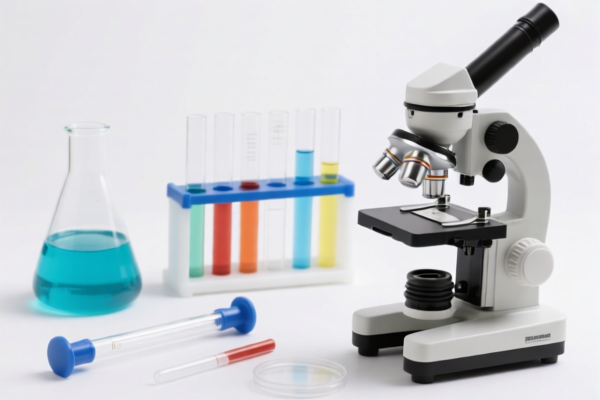



AI Analysis
🧪 Laboratory Consumables (Hygiene, Pharma & Diagnostic Glassware/Plastics)
🌐 HS Code Reference & Customs Clearance Guide | 2026 Latest Tariff Analysis | Professional Clearance Strategy
📌 I. Product Definition & Classification: What Exactly Are "Laboratory Consumables"?
"Laboratory Consumables" is a broad commercial term covering items used in scientific, medical, and industrial labs. However, in international trade (US Customs), material and specific function dictate the HS Code, not the general term "consumable."
We categorize them into three distinct groups based on the provided data:
- Glassware: Test tubes, beakers, flasks, microscope slides (Headings 7017).
- Reagents & Media: Transport media, certified reference materials (Headings 3822).
- Plastic Ware: Pipettes, containers, lab consumables made of plastics (Heading 3926).
⚠️ Critical Distinction Point:
- Glass vs. Plastic: Glass items fall under Chapter 70; Plastic items fall under Chapter 39.
- Instrument vs. Supply: Microscope slides are consumables (7017); Microscope units are instruments (9011). Do not confuse them.
- Reagent Nature: Is it a liquid medium for viruses (3821) or a diagnostic kit on a backing (3822)?
📦 II. HS Code Classification Details (2026 Authoritative Data Mapping)
| HS Code | Product Description | Key Identifiers | Tax Rate (Total) |
|---|---|---|---|
7017.90.50.00 |
Lab/Pharma Glassware (Other) | Graduated/calibrated vessels, flasks, beakers (Non-microscope) | 31.7% |
7017.90.10.00 |
Microscope Slides & Covers | Glass slides for microscopy, cover slips | 25.0% |
3821.00.00.10 |
Viral Transport Media | Prepared liquids for viral transmission (Hydraulic brake fluids excluded) | 5.0% |
3821.00.00.90 |
Other Prepared Liquids | Hydraulic brake fluids, other hydraulic transmission liquids | 0.0% |
3822.19.00.80 |
Other Diagnostic/ Lab Reagents | Reagents on backing, kits, certified references (Non-3006) | 0.0% |
3822.90.00.00 |
Certified Reference Materials | Standard reference materials for calibration/testing | 0.0% |
3926.90.99.10 |
Plastic Laboratory Ware | Items like pipettes, centrifuge tubes, bottles | 0.0% |
3926.90.99.89 |
Other Plastic Articles | General plastic lab accessories (Non-specified) | 12.8% |
🔍 Key Insight:
- Plastic Lab Ware (3926.90.99.10) enjoys a 0% total tax rate.
- Glassware suffers from high tariffs (up to 31.7% due to 6.7% base + 25% Section 301).
- Reagents/Media are generally low-tax or zero-tax, provided they are correctly classified.
💰 III. Detailed Tariff Breakdown & Legal Basis
✅ Applicable Country: United States (US)
✅ Origin: China (CN)
✅ Context: Includes Base Tariff + Section 301 Additional Tariffs where applicable.
🎯 1. Glassware: The High-Cost Category
A. 7017.90.50.00 – Other Glassware (Beakers, Flasks)
| Item | Detail |
|---|---|
| Base Tariff | 6.7% |
| Additional Tariff (Sec 301) | 25.0% |
| Total Tax Rate | 31.7% |
| Calculation | CIF Value × 31.7% |
| De Minimis Exemption | ❌ Not Eligible for $800 de minimis if value exceeds threshold or is part of bulk cargo subject to scrutiny. |
B. 7017.90.10.00 – Microscope Slides
| Item | Detail |
|---|---|
| Base Tariff | 0.0% |
| Additional Tariff (Sec 301) | 25.0% |
| Total Tax Rate | 25.0% |
| Calculation | CIF Value × 25.0% |
📌 Explanation:
- Glass laboratory ware is heavily targeted by trade policies. Even if the base duty is low or zero, the 25% additional duty applies to most Chinese-origin glass lab supplies.
🎯 2. Viral Transport Media (3821.00.00.10)
| Item | Detail |
|---|---|
| Base Tariff | 5.0% |
| Additional Tariff | 0.0% |
| Total Tax Rate | 5.0% |
| Legal Note | Classified under "Hydraulic brake fluids..." in the source data, but specifically listed as "Other Viral transport media." Ensure proper description to avoid misclassification as hydraulic fluids. |
🎯 3. Other Prepared Liquids (3821.00.00.90)
| Item | Detail |
|---|---|
| Base Tariff | 0.0% |
| Additional Tariff | 0.0% |
| Total Tax Rate | 0.0% |
| Note | Applies to hydraulic brake fluids and other prepared transmission liquids not elsewhere specified. |
🎯 4. Diagnostic Reagents & Kits (3822.19.00.80)
| Item | Detail |
|---|---|
| Base Tariff | 0.0% |
| Additional Tariff | 0.0% |
| Total Tax Rate | 0.0% |
| Scope | Reagents on backing, kits, other than heading 3006 (pharmaceutical). |
🎯 5. Certified Reference Materials (3822.90.00.00)
| Item | Detail |
|---|---|
| Base Tariff | 0.0% |
| Additional Tariff | 0.0% |
| Total Tax Rate | 0.0% |
| Scope | Standards used for calibration of instruments. |
🎯 6. Plastic Laboratory Ware (3926.90.99.10)
| Item | Detail |
|---|---|
| Base Tariff | 0.0% |
| Additional Tariff | 0.0% |
| Total Tax Rate | 0.0% |
| Scope | Specifically "Other Laboratory ware" made of plastic. |
📌 Strategic Advantage:
If your product is a plastic pipette tip or plastic centrifuge tube, classify under3926.90.99.10for 0% duty. Do NOT classify as "other plastic articles" (3926.90.99.89) which carries a 12.8% total duty.
🎯 7. Other Plastic Articles (3926.90.99.89)
| Item | Detail |
|---|---|
| Base Tariff | 5.3% |
| Additional Tariff | 7.5% |
| Total Tax Rate | 12.8% |
| Scope | Generic plastic lab accessories not specifically listed as "laboratory ware." |
🛠️ IV. Customs Clearance Practical Advice (Avoiding Pitfalls)
✅ 1. Documentation Checklist (Mandatory)
| Document | Requirement | Purpose |
|---|---|---|
| Product Specification Sheet | ✔️ Required | Must specify material (Glass vs. Plastic) and exact use (e.g., "Viral Transport" vs. "Hydraulic Fluid"). |
| Ingredients List | ✔️ Required (for Reagents) | For HS 3821/3822, customs need to know composition to distinguish from pharmaceuticals (3006). |
| Certificate of Origin | ✔️ Required | To prove CN origin and apply correct Section 301 rates. |
| Commercial Invoice | ✔️ Required | Must match HS Code description exactly. |
| Packing List | ✔️ Required | Separate glass, plastic, and liquid items if possible to avoid confusion. |
✅ 2. Classification Strategy (The "Golden Rules")
| Scenario | Correct HS Code | Mistake to Avoid |
|---|---|---|
| Plastic Pipettes/Tips | 3926.90.99.10 (0%) |
❌ Classifying as 3926.90.99.89 (12.8%) |
| Glass Test Tubes | 7017.90.50.00 (31.7%) |
❌ Trying to claim as "medical device" without proper FDA/CE docs |
| Viral Transport Swabs/Liquid | 3821.00.00.10 (5%) |
❌ Classifying as "Hydraulic Fluid" (3821.00.00.90) if it’s not |
| Microscope Slides | 7017.90.10.00 (25%) |
❌ Classifying as general glassware if they are specifically for microscopes |
| Certified Standards | 3822.90.00.00 (0%) |
❌ Classifying as general chemicals |
🔥 Key Tip:
"Plastic Lab Ware" is your best friend for cost-saving. If the item is plastic and used in a lab, ensure it falls under the specific "Laboratory ware" subheading (3926.90.99.10) to enjoy 0% duty. Generic plastic items incur 12.8%.
✅ 3. Special Handling for Liquids
- Viral Transport Media (
3821.00.00.10): - Must clearly state "Viral Transport Media" in the description.
- Ensure it is not classified as a pharmaceutical product (Heading 3006), which may require FDA prior notice.
- Hydraulic Fluids (
3821.00.00.90): - Zero duty, but ensure it is genuinely industrial/hydraulic and not mislabeled lab reagents.
🌍 V. Global Market Comparison (2026 Outlook)
| Market | Recommended HS Code | Est. Total Duty (China Origin) | Notes |
|---|---|---|---|
| 🇺🇸 USA | 3926.90.99.10 (Plastic) |
0% | Best for plastic lab consumables. |
| 🇺🇸 USA | 7017.90.50.00 (Glass) |
31.7% | High cost; consider pricing strategy. |
| 🇪🇺 EU | 3926.90.99 |
~0-6.5% | Check EUDR if bio-based materials involved. |
| 🇨🇳 China | Varies | 5-13% | Import duties vary by exact classification. |
📌 Conclusion:
The US market offers 0% duty for plastic lab ware and reagents, making it highly competitive for these items. However, glassware remains expensive due to Section 301 tariffs.
📌 VI. Common Errors & Pitfalls (Lessons Learned)
❌ Error 1: Classifying all plastic lab items as "Other Plastic Articles" (3926.90.99.89).
👉 Consequence: Paying 12.8% duty instead of 0%. Save $12,800 per $100k shipment!
❌ Error 2: Describing "Viral Transport Media" simply as "Lab Liquid."
👉 Consequence: Customs may reject the 5% rate or classify it incorrectly, causing delays or higher duties.
❌ Error 3: Combining Glass and Plastic items in one HS Code line.
👉 Consequence: Customs will split the shipment and apply duties separately, potentially leading to discrepancies and penalties.
✅ Correct Description Example:
"Plastic Pipette Tips, sterile, disposable, for laboratory use. HS: 3926.90.99.10."
"Glass Beakers, graduated, for laboratory use. HS: 7017.90.50.00."
🎯 VII. Conclusion: Smart Classification = Maximum Savings
🎯 Remember:
🔹 "Plastic Lab Ware: 0% Duty – Use it wisely!"
🔹 "Glass Ware: 31.7% Duty – Price it accordingly."
🔹 "Reagents: Low Duty – Verify composition carefully."
📌 Pro Tip:
If you are importing large volumes of plastic laboratory consumables, ensure your supplier provides a Product Specification Sheet explicitly stating "Laboratory Use" and "Plastic Material" to support the 3926.90.99.10 classification. For pre-certified reagents, request a Certificate of Analysis (CoA) to support 3822 classification.
📣 Immediate Action:
📞 Consult your customs broker with material type and specific application.
🚀 Optimize your supply chain by leveraging the 0% duty on plastic lab ware!
✨ Professional Customs Clearance Starts with Precise Classification!
💼 Your Margins Depend on Accurate HS Codes!
Customer Reviews
About HS Code Classification
The Harmonized System (HS) is an internationally standardized nomenclature developed by the World Customs Organization (WCO) to classify traded products. Over 200 countries use the HS system as the basis for customs tariffs, trade statistics, and import/export regulations.
Each HS code follows a hierarchical structure:
- Chapter (2 digits) — Broad category of goods (e.g., Chapter 84: Machinery and Mechanical Appliances)
- Heading (4 digits) — More specific grouping within the chapter
- Subheading (6 digits) — Internationally standardized breakdown, used by all WCO member countries
- National subdivisions (8-10 digits) — Country-specific extensions for further classification, such as US HTSUS 10-digit codes
Correct HS code classification is essential for smooth customs clearance, accurate duty payment, and compliance with trade regulations. Misclassification can lead to customs delays, overpayment of duties, or penalties.
When importing from CN to US, the applicable tariff rates may include:
- Most-Favored-Nation (MFN) rate — The standard duty rate applied to WTO members
- General rate — Applied to countries without trade agreements
- Trade remedy duties — Additional tariffs such as Section 301 (anti-dumping), Section 232 (national security), or countervailing duties
The information provided on this page is for reference purposes only. For official classification, please consult with your local customs authority or a licensed customs broker.