Laboratory Glassware
CN → USProduct Images

AI Analysis
🧪 Laboratory Glassware (Scientific Glass Instruments)
🌐 HS Code Reference & Customs Clearance Guide | 2026 Latest Tariff Analysis | Professional Clearance Strategy 📌 I. Product Definition & Classification: Do You Really Understand "Lab Glass"?
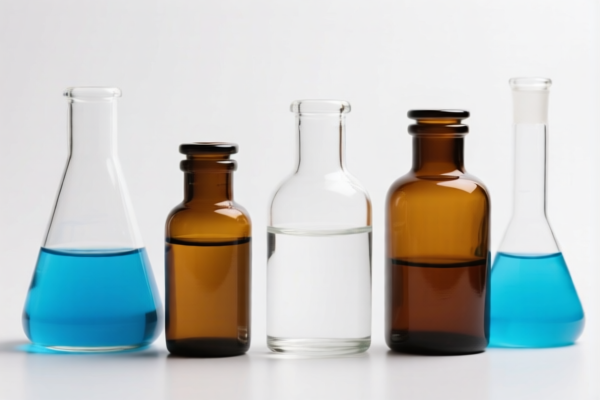
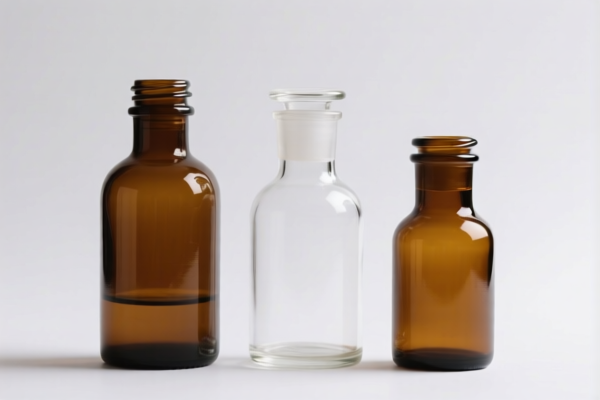
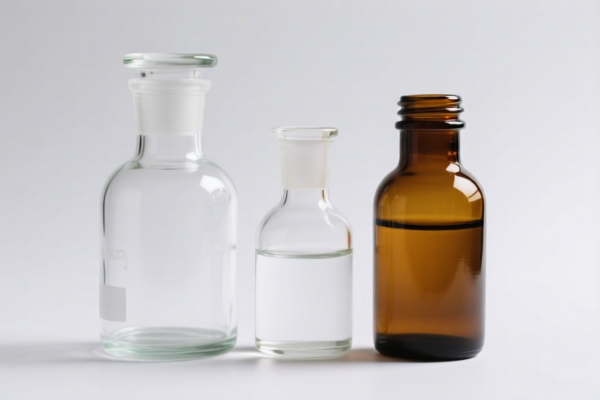
Laboratory glassware refers to specialized glass products used for measuring, mixing, heating, and storing chemicals or biological samples in scientific research, medical, and industrial settings. In international trade, they are broadly categorized based on their precision, complexity, and specific function:
- Standard Laboratory Glassware (Volumetric/General): Beakers, flasks (Erlenmeyer, round-bottom), test tubes, and graduated cylinders. These are often considered general-purpose or measuring instruments.
- Specialized Analytical Glassware: Distillation columns, condensers, reaction vessels with complex joints, and sealed systems. These often fall under specialized scientific instruments.
- Glass Parts for Instruments: Necks, stoppers, or specific fittings designed for inclusion in larger analytical machines.
⚠️ Key Distinction Point: - If the item is a simple container (e.g., beaker, jar) without precise calibration markings for measurement → It may be classified as general glassware or household/industrial glass. - If the item has calibration markings (e.g., graduated cylinder, volumetric flask) or is part of a scientific instrument → It falls under Chapter 90 (Instruments). - If it is a component for a machine (e.g., a glass tube for a spectrometer) → It falls under Chapter 90 Parts.
📦 II. HS Code Classification Details (2026 Latest Tariff Authority Comparison)
| HS Code | Product Description | Applicable Scenario | Precision/Function |
|---|---|---|---|
7017.20.00.00 |
Glassware of borosilicate glass, whether or not graduated or calibrated | Borosilicate beakers, flasks, condensers, distillation heads | ✅ High heat resistance, often calibrated |
7017.90.00.00 |
Other laboratory, chemical, or medical glassware | Soda-lime glass test tubes, simple jars, non-calibrated containers | ❌ Low heat resistance, general use |
9026.20.90.00 |
Instruments and apparatus for measuring or checking flow, level, pressure, or other variables of liquids/gases | Flow meters, pressure gauges with glass components | ✅ Instrument-grade |
9027.80.95.90 |
Other instruments/apparatus for physical or chemical analysis | Complex setups involving glass columns (e.g., chromatography columns) | ✅ Analytical instrument component |
7013.99.00.00 |
Other glassware, for table, kitchen, toilet, office, indoor decoration or similar purposes | Decorative glass vials, non-scientific bottles | ❌ Not for lab use |
9027.90.80.00 |
Parts and accessories for instruments in heading 9027 | Glass lenses, chambers, or specific tubes for analyzers | ✅ Instrument Part |
🔍 Important Reminder: - Borosilicate Glass (e.g., Pyrex, Kimax) with calibration markings is typically classified under 7017.20. - Soda-lime Glass (common test tubes, simple jars) is typically classified under 7017.90. - If the glassware is integrated into an electronic or mechanical analytical machine and cannot be sold separately as a standalone instrument, it may be considered a part (9027.90) rather than a standalone instrument.
💰 III. 2026 Latest Tariff Rate Details (Including Surcharges & Policy Add-ons)
✅ Applicable Country: United States (US) ✅ Country of Origin: China (CN) ✅ Effective Date: November 10, 2025 (and subsequent imports)
🎯 1. 7017.20.00.00 —— Borosilicate Laboratory Glassware (Graduated/Calibrated)
| Item | Content |
|---|---|
| Base Rate | 0% (ad valorem) |
| USITC Surcharge | +25% (from USITC Footnote 9903.88.01) |
| IEEPA Surcharge | +10% (for China/HK products, from Nov 10, 2025) |
| Total Rate | 35% |
| Tax Calculation | CIF Value × 35% |
| De Minimis Eligibility | ❌ No (deny_de_minimis) |
| Legal Basis Path | IEEPA:9903.01.25 → IEEPA:9903.01.24 → USITC:7017.20.00.00 → FOOTNOTE:9903.88.01 |
📌 Explanation: - "USITC Surcharge 25%" comes from Section 301 of the U.S. Trade Act under "Additional Duties"; - "IEEPA 10%" is the additional duty on China/HK products under the International Emergency Economic Powers Act; - Total 35% is a high tariff, must be anticipated in advance!
🎯 2. 7017.90.00.00 —— Other Laboratory/Chemical/Medical Glassware (Non-Borosilicate/Non-Graduated)
| Item | Content |
|---|---|
| Base Rate | 0% |
| USITC Surcharge | +25% |
| IEEPA Surcharge | +10% |
| Total Rate | 35% |
| Tax Calculation | CIF × 35% |
| De Minimis Eligibility | ❌ No |
| Legal Basis Path | IEEPA:9901.25 → IEEPA:9903.01.24 → USITC:7017.90.00.00 → FOOTNOTE:9903.88.01 |
📌 Note: - Same as the above, both fall under "Glassware" category; - Even if it is "Test Tubes," "Sample Vials," or "Reagent Bottles," as long as they are not borosilicate or not calibrated, they still face the 35% total rate if from China.
🎯 3. 9027.90.80.00 —— Parts and Accessories for Analytical Instruments
| Item | Content |
|---|---|
| Base Rate | 0% |
| USITC Surcharge | +25% |
| IEEPA Surcharge | +10% |
| Total Rate | 35% |
| Tax Calculation | CIF × 35% |
| De Minimis Eligibility | ❌ No |
| Legal Basis Path | IEEPA:9903.01.25 → IEEPA:9903.01.24 → USITC:9027.90.80.00 → FOOTNOTE:9903.88.01 |
📌 Note: - If the glassware is a replaceable part of a larger machine (e.g., a glass column for an HPLC machine), it is classified here; - The tariff rate is identical, but the classification logic differs (Instrument Part vs. Standalone Glassware).
🛠️ IV. Customs Clearance Practical Advice (Real-World Pitfall Avoidance Guide)
✅ 1. Required Documents Checklist (Cannot Be Missing)
| Document | Must Provide | Explanation |
|---|---|---|
| ✅ Product Specification Sheet | ✔️ | Material (Borosilicate vs. Soda-lime), Calibrated? Volume/Size |
| ✅ Product Photos (Label & Overall) | ✔️ | Clear view of markings, brand, model number |
| ✅ Third-Party Test Report | ✔️ | FDA (if medical), ISO 17025 calibration certificate (if calibrated) |
| ✅ Commercial Invoice | ✔️ | Clearly state "Laboratory Glassware, Borosilicate, Graduated" |
| ✅ Packing List | ✔️ | Detail fragile items, packing method |
| ✅ Certificate of Origin (CO) | ✔️ | If not from China, may qualify for preferential rates |
✅ 2. Declaration Tips (Key Mantra)
🔥 "Material First, Calibration Second, Name Precise, Tariff Clear!"
| Scenario | Correct Declaration | Wrong Practice |
|---|---|---|
| Borosilicate Beaker with Markings | 7017.20.00.00 |
Misdeclare as "Decorative Glass" (7013.99) → 25% Surcharge Risk |
| Soda-lime Test Tube | 7017.90.00.00 |
Misdeclare as "Borosilicate" → Discrepancy Check |
| Glass Column for HPLC Machine | 9027.90.80.00 |
Misdeclare as Standalone Glass → Classification Error |
| Glass Vial (Non-Scientific) | 7013.99.00.00 |
Misdeclare as Lab Glass → Wrong Duty Base |
✅ 3. Special Case Handling
| Scenario | Handling Advice |
|---|---|
| OEM Custom Glassware | Provide customer order + design drawing to avoid "non-standard" classification issues |
| Glassware with Plastic Parts | If plastic parts are essential for function (e.g., seals), declare as assembly if value of glass < critical threshold; otherwise, main material prevails |
| Glassware for Medical Diagnosis | If used for in vitro diagnosis, may qualify for Medical Instrument classification (Chapter 90) with different rules,需提供临床用途证明 |
| Glassware for Military/Aerospace | Apply for "Special Purpose" declaration, may have reduced tariffs, need prior communication |
🌍 V. Global Major Market Clearance Comparison (2026 Latest)
| Country/Region | Recommended HS Code | Tariff | Certification Required | Notes |
|---|---|---|---|---|
| 🇺🇸 USA | 7017.20.00.00 / 7017.90.00.00 |
35% (CN Origin) | FDA (if medical), ISO | High surcharge applies |
| 🇨🇳 China | 7017.20.00.00 / 7017.90.00.00 |
0-6% | CCC (if applicable) | No additional surcharges |
| 🇪🇺 EU | 7017.20.00 / 7017.90.00 |
0% (Most FET) | CE (if medical), REACH | No additional surcharges |
| 🇦🇺 Australia | 7017.20.00.00 / 7017.90.00.00 |
5% | SAA/RCM | No additional surcharges |
| 🇯🇵 Japan | 7017.20.00 / 7017.90.00 |
0-5% | PSE (if electrical parts) | No additional surcharges |
📌 Conclusion: - USA is the only major market imposing high surcharges on laboratory glassware from China; - Importing Chinese lab glassware to the US is extremely costly, suggest evaluating supply chain adjustments or alternative origins (Vietnam, India, Mexico).
📌 VI. Common Errors & Pitfall Avoidance Guide (Blood & Tears Lessons)
❌ Error 1: Declaring "Borosilicate Glass" as "Decorative Glass" to avoid tariffs 👉 Consequence: Customs audits find calibration markings → Back taxes + Fines!
❌ Error 2: Mixing "Calibrated" and "Non-calibrated" items in one HS Code 👉 Consequence: Customs may reclassify all items to the higher-risk category → Delays & Inspections
❌ Error 3: Not specifying "Borosilicate" in the declaration 👉 Consequence: Customs assumes "Soda-lime" → Potential misclassification if actual material differs
❌ Error 4: Declaring "Glass Parts" as "Standalone Glassware" 👉 Consequence: Wrong duty base → Overpayment or Underpayment Penalties
✅ Correct Practice:
"Laboratory Glassware, Borosilicate, Graduated, Erlenmeyer Flask 500ml, Model XYZ, ISO 17025 Calibrated, for Scientific Research Use Only"
🎯 VII. Conclusion: Professional Declaration, Save Time, Reduce Costs!
🎯 Remember the Mantra:
🔹 "Borosilicate is 7017.20, Soda-lime is 7017.90, Parts are 9027.90, Get it wrong, Pay more!"
🔹 "US Tariffs are 35%, Origin Matters, Declaration Must Be Precise!"
📌 Tips: If your laboratory glassware is originating from Vietnam, India, Mexico, or Thailand, you may apply for IEEPA Exemptions, and the tariff can be as low as 0%~5%; Suggest applying for Advance Rulings before shipment to avoid clearance risks.
📣 Take Action Now:
📞 Contact Professional Customs Broker + Provide Product Specs + Apply for HS Code Advance Ruling 🚀 Let your Laboratory Glassware Pass Customs Smoothly, Export Efficiently, and Maximize Profits!
✨ Professional Customs Clearance Starts with Accurate Classification! 💼 Every Cent of Your Cost Deserves Accurate Calculation!
Customer Reviews
About HS Code Classification
The Harmonized System (HS) is an internationally standardized nomenclature developed by the World Customs Organization (WCO) to classify traded products. Over 200 countries use the HS system as the basis for customs tariffs, trade statistics, and import/export regulations.
Each HS code follows a hierarchical structure:
- Chapter (2 digits) — Broad category of goods (e.g., Chapter 84: Machinery and Mechanical Appliances)
- Heading (4 digits) — More specific grouping within the chapter
- Subheading (6 digits) — Internationally standardized breakdown, used by all WCO member countries
- National subdivisions (8-10 digits) — Country-specific extensions for further classification, such as US HTSUS 10-digit codes
Correct HS code classification is essential for smooth customs clearance, accurate duty payment, and compliance with trade regulations. Misclassification can lead to customs delays, overpayment of duties, or penalties.
When importing from CN to US, the applicable tariff rates may include:
- Most-Favored-Nation (MFN) rate — The standard duty rate applied to WTO members
- General rate — Applied to countries without trade agreements
- Trade remedy duties — Additional tariffs such as Section 301 (anti-dumping), Section 232 (national security), or countervailing duties
The information provided on this page is for reference purposes only. For official classification, please consult with your local customs authority or a licensed customs broker.