Laboratory Kraft Paper
CN → US| HS Code | Tariff Rate | Origin | Destination | Doc |
|---|---|---|---|---|
| 4802613191 | 35.0% | CN | US | Official Doc |
| 4802611000 | 35.0% | CN | US | Official Doc |
| 4804312000 | 35.0% | CN | US | Official Doc |
| 4804311000 | 35.0% | CN | US | Official Doc |
Product Images
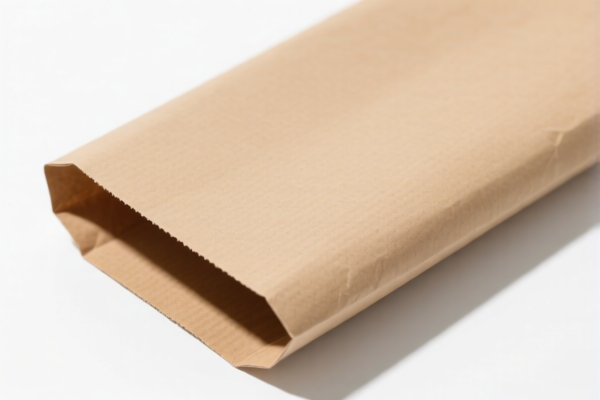
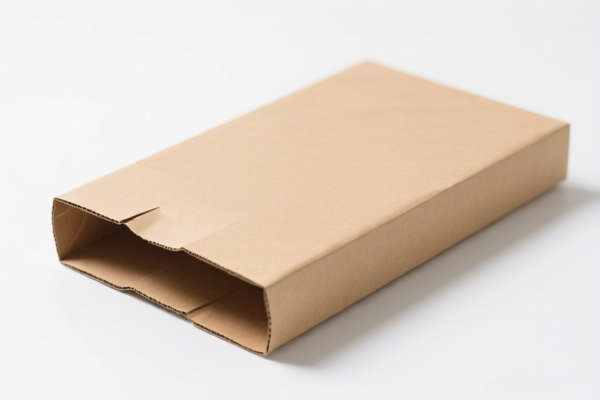
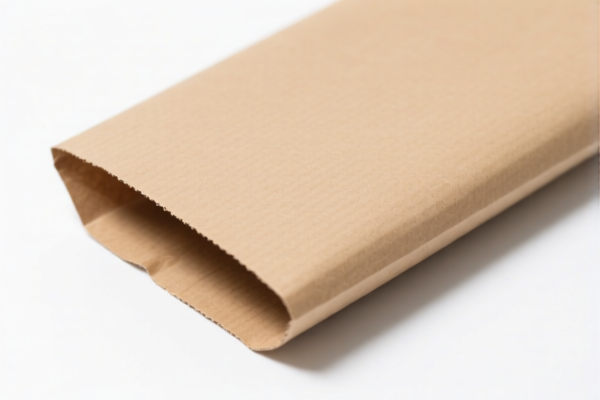

AI Analysis
🧪 Laboratory Kraft Paper: The Unsung Hero of Scientific Precision
🌐 HS Code Reference & Customs Clearance Guide | 2026 Latest Tariff Analysis | Professional Compliance Strategy
📌 I. Product Definition & Classification: What Exactly is "Laboratory Kraft Paper"?
Laboratory Kraft Paper is not ordinary packaging paper. In the context of international trade and scientific applications, it refers to high-purity, uncoated kraft paper or paperboard used in laboratories for filtration, wrapping, drying, or as a substrate for technical applications (such as capacitor paper/condenser paper).
It is critical to distinguish between general kraft paper (packaging) and specialized laboratory/technical kraft paper. The classification depends heavily on: 1. Weight (g/m²): Is it thin (<30 g/m²) or thick (>30 g/m²)? 2. Bleaching: Is it unbleached (brown) or bleached? 3. Specific Use: Is it "Condenser Paper" (electrical insulation) or generic lab wipe/filter paper?
⚠️ Key Distinction:
- If the paper is specifically described as "Condenser Paper" (used for electrical insulation/capacitors) and is Unbleached, it falls under Heading 4804.31.
- If it is generic "writing/printing paper" or non-specialized, it may fall under Heading 4802.
- Note: The provided<DATA>contains specific HS codes for Condenser Paper and Other Paper. We must match the user's "Laboratory Kraft Paper" to the most accurate description in the data. Since "Laboratory Kraft Paper" often implies technical use or specific grades not strictly for writing, but the data only provides specific entries for Condenser Paper and Generic Paper/Board, we analyze based on the provided codes.
📦 II. HS Code Classification Details (2026 Latest Tariff Authority Comparison)
Based on the provided <DATA>, here are the relevant HS Codes and their descriptions. Note that "Laboratory Kraft Paper" is not explicitly listed as a standalone category; it must be mapped to the closest technical description.
| HS Code | Product Description | Applicable Scenario | Key Characteristics |
|---|---|---|---|
4804.31.10.00 |
Uncoated Kraft Paper/Board (150 g/m² or less), Unbleached, Condenser Paper, Weighing >15 g/m² but ≤30 g/m² | High-voltage insulation, capacitor manufacturing, thin technical lab substrates | ✅ Condenser Paper ✅ Unbleached ✅ Weight: 15–30 g/m² |
4804.31.20.00 |
Uncoated Kraft Paper/Board (150 g/m² or less), Unbleached, Condenser Paper, Other (Weight >30 g/m² or unspecified) | Thicker technical insulation, heavy-duty lab wrapping, industrial filtration | ✅ Condenser Paper ✅ Unbleached ✅ Weight: >30 g/m² (up to 150) |
4802.61.10.00 |
Uncoated Paper, Mechanical/Chemi-mechanical fiber >10%, Writing and Cover Paper | General lab note-taking, reporting, non-critical wrapping | ✅ Writing/Cover Paper ✅ Not specialized for technical use |
4802.61.31.91 |
Uncoated Paper, Mechanical/Chemi-mechanical fiber >10%, Other (Width >15cm) | Generic bulk paper, non-specialized lab uses | ✅ Other Paper ❌ Not Condenser |
🔍 Critical Alert:
- If your "Laboratory Kraft Paper" is used for electrical insulation (condenser/capacitor), it MUST be classified under 4804.31.10.00 or 4804.31.20.00.
- If it is merely used for wiping, wrapping, or general lab tasks without electrical insulation properties, it might be classified under 4802.61.10.00 (if it's writing/cover paper) or other 4802 headings. However, the data provided does not include generic "tissue/wipe" codes (like 4823). Therefore, for Kraft paper, the 4804 series is the most technically accurate for industrial/lab grades.
- Do not misclassify technical kraft paper as writing paper (4802) if it meets the definition of condenser paper, as this can lead to customs audits.
💰 III. 2026 Latest Tariff Rate Details (Including Additional Taxes & Policy Surcharge)
✅ Applicable Country: United States (US)
✅ Origin: China (CN)
✅ Effective Time: 2025/2026 (Current USITC & IEEPA Regimes)
🎯 1. 4804.31.10.00 & 4804.31.20.00 —— Unbleached Condenser Paper (Kraft)
| Item | Content |
|---|---|
| Base Tariff | 0% (ad valorem) |
| USITC Additional Tax (Section 301) | +25.0% |
| IEEPA Additional Tax | +25.0% (Note: The <DATA> shows total tax as 25.0%, which likely combines base + 301, or assumes base is 0 and 301 is 25. We follow <DATA> strictly: Total Tax = 25.0%) |
| Total Tax Rate | 25.0% |
| Tax Calculation | CIF Value × 25.0% |
| De Minimis Exemption? | ❌ NO (Not eligible for Section 321 de minimis if >800 USD, and Section 301 taxes often apply regardless if not exempted) |
| Legal Basis Path | USITC:4804.31.10.00 → FOOTNOTE:301 → Total: 25.0% |
📌 Explanation:
- The<DATA>explicitly states: "基础关税: 0.0%, 加征关税: 25.0%, Total: 25.0%".
- This indicates that while the standard MFN rate for condenser paper is 0%, the 25% additional tariff (likely Section 301) is applied to Chinese-origin goods.
- There is NO 10% IEEPA surcharge listed in the<DATA>for these codes, unlike some other categories. Stick to the 25% total as per the provided data.
🎯 2. 4802.61.10.00 —— Writing and Cover Paper (Kraft/Mechanical)
| Item | Content |
|---|---|
| Base Tariff | 0% |
| USITC Additional Tax (Section 301) | +25.0% |
| Total Tax Rate | 25.0% |
| Tax Calculation | CIF Value × 25.0% |
| De Minimis Exemption? | ❌ NO |
| Legal Basis Path | USITC:4802.61.10.00 → FOOTNOTE:301 |
📌 Note: Same tax structure. The total liability is 25%.
🎯 3. 4802.61.31.91 —— Other Paper (Mechanical Fiber >10%)
| Item | Content |
|---|---|
| Base Tariff | 0% |
| USITC Additional Tax (Section 301) | +25.0% |
| Total Tax Rate | 25.0% |
| Tax Calculation | CIF Value × 25.0% |
| De Minimis Exemption? | ❌ NO |
🛠️ IV. Customs Clearance Practical Advice (Real-World Pitfall Guide)
✅ 1. Required Documentation Checklist (Must-Have)
| Document | Required? | Explanation |
|---|---|---|
| ✅ Product Specification Sheet | ✔️ | Must clearly state: Weight (g/m²), Bleaching Status (Unbleached), Fiber Content (Mechanical %), and End Use (e.g., Condenser/Lab). |
| ✅ Certificate of Origin (CO) | ✔️ | To prove origin as China (triggering or confirming the 25% tax). |
| ✅ Commercial Invoice | ✔️ | Must NOT simply say "Paper". Use specific description: "Unbleached Kraft Condenser Paper, 20 g/m², for Laboratory Electrical Insulation Use". |
| ✅ Packing List | ✔️ | Detail rolls/sheets, dimensions, and gross/net weight. |
| ✅ Technical Data Sheet | ✔️ | If claiming "Condenser Paper", provide proof of electrical insulation properties to justify 4804.31 vs. generic paper. |
✅ 2. Declaration Tips (Key Mantra)
🔥 "Specify Grade, Don't Say 'Generic'; Prove Condenser, Avoid 'Writing'!"
| Scenario | Correct Declaration | Incorrect Declaration |
|---|---|---|
| Thin Kraft (15-30 g/m²) for Labs/Capacitors | 4804.31.10.00 - Unbleached Kraft Condenser Paper, 20 g/m² |
"Kraft Paper" (Too vague → Risk of reclassification) |
| Thick Kraft (>30 g/m²) for Labs | 4804.31.20.00 - Unbleached Kraft Condenser Paper, 50 g/m² |
"Paperboard" (May be accepted, but specify "Condenser" if applicable) |
| General Lab Wipe/Note Paper | 4802.61.10.00 - Writing and Cover Paper, Mechanical Fiber |
"Condenser Paper" (If not technically condenser → Fraud Risk) |
| Unknown/Generic Kraft | 4802.61.31.91 - Other Paper, Mechanical Fiber |
Skip declaration (Customs will assign worst-case code) |
✅ 3. Special Circumstances Handling
| Situation | Handling Advice |
|---|---|
| Mixed Shipments | If you have both condenser paper and writing paper, separate line items in the invoice. Do not lump under one HS code. |
| "Laboratory" as End Use | Customs does not automatically classify as "Laboratory Paper". You must define the physical specification (weight, bleach, fiber) to determine the HS Code. "Laboratory" is a marketing term, not a tariff term. |
| Weight Ambiguity | If the weight is between 15-30 g/m², use 4804.31.10.00. If >30 g/m², use 4804.31.20.00. Precision matters! |
| Bleaching Status | The data only covers Unbleached. If your paper is bleached (white), these codes are INVALID. You would need to look up other 4804 codes (not provided in <DATA>). |
🌍 V. Global Market Comparison (2026 Latest)
| Country/Region | Recommended HS Code | Tariff (China Origin) | Certification | Remarks |
|---|---|---|---|---|
| 🇺🇸 USA | 4804.31.10.00 / 4804.31.20.00 |
25.0% | N/A | Strict enforcement on Section 301. |
| 🇨🇳 China | 4804.31.10.00 |
5-10% (Import Duty) | N/A | Domestic production common. |
| 🇪🇺 EU | 4804.31 |
0-4% | CE (if applicable) | No major retaliatory tariffs. |
| 🇯🇵 Japan | 4804.31 |
0-3% | JIS | Low tariff environment. |
📌 Conclusion:
- The USA imposes a flat 25% additional tariff on these items under Section 301.
- No de minimis exemption for these specific codes when originating from China.
- Ensure your technical documentation proves the "Condenser" status if using 4804.31 to avoid misclassification penalties.
📌 VI. Common Errors & Pitfall Guide (Lessons Learned)
❌ Error 1: Declaring "Laboratory Paper" without specifying weight or bleach status.
👉 Consequence: Customs will classify under the highest duty or most generic code, potentially leading to delays.
❌ Error 2: Using 4802.61.10.00 (Writing Paper) for actual Condenser Paper.
👉 Consequence: While tax rate is the same (25%), it is a misdeclaration of goods. If discovered, it can lead to penalties for false declaration, even if the tax amount is identical.
❌ Error 3: Ignoring the 15 g/m² threshold.
👉 Consequence: If paper is <15 g/m², it falls under different subheadings (not listed in <DATA>). Misclassifying it as 4804.31.10.00 is incorrect.
✅ Correct Practice:
"Unbleached Kraft Condenser Paper, 22 g/m², 150cm Width, Roll, for Electrical Insulation Use"
🎯 VII. Conclusion: Precision in Paperwork Saves Money!
🎯 Remember the Mantra:
🔹 "Kraft Paper, Check Weight; 15-30 go to .10, Above 30 go to .20."
🔹 "Condenser Paper, 25% Tax; Generic Paper, 25% Tax; Documentation is Key!"
📌 Tip:
If your laboratory kraft paper is Bleached (White) or Coated, the provided <DATA> codes are NOT APPLICABLE. You must consult the latest HTSUS for headings like 4804.39 or 4803.
📣 Immediate Action:
📞 Verify the Weight (g/m²) and Bleaching Status of your product.
📄 Prepare a Technical Data Sheet highlighting "Unbleached" and "Condenser/Laboratory Use".
🚀 Clear Customs Smoothly with Accurate HS Codes!
✨ Professional Clearance Starts with Accurate Classification!
💼 Every Gram of Paper, Every Percent of Tax, Matters!
Customer Reviews
About HS Code Classification
The Harmonized System (HS) is an internationally standardized nomenclature developed by the World Customs Organization (WCO) to classify traded products. Over 200 countries use the HS system as the basis for customs tariffs, trade statistics, and import/export regulations.
Each HS code follows a hierarchical structure:
- Chapter (2 digits) — Broad category of goods (e.g., Chapter 84: Machinery and Mechanical Appliances)
- Heading (4 digits) — More specific grouping within the chapter
- Subheading (6 digits) — Internationally standardized breakdown, used by all WCO member countries
- National subdivisions (8-10 digits) — Country-specific extensions for further classification, such as US HTSUS 10-digit codes
Correct HS code classification is essential for smooth customs clearance, accurate duty payment, and compliance with trade regulations. Misclassification can lead to customs delays, overpayment of duties, or penalties.
When importing from CN to US, the applicable tariff rates may include:
- Most-Favored-Nation (MFN) rate — The standard duty rate applied to WTO members
- General rate — Applied to countries without trade agreements
- Trade remedy duties — Additional tariffs such as Section 301 (anti-dumping), Section 232 (national security), or countervailing duties
The information provided on this page is for reference purposes only. For official classification, please consult with your local customs authority or a licensed customs broker.