Laboratory Plastic Dropper Bottle
CN → US| HS Code | Tariff Rate | Origin | Destination | Doc |
|---|---|---|---|---|
| 3923300010 | 38.0% | CN | US | Official Doc |
| 3926909989 | 22.8% | CN | US | Official Doc |
| 3926909910 | 22.8% | CN | US | Official Doc |
| 3923300090 | 38.0% | CN | US | Official Doc |
| 9011800000 | 35.0% | CN | US | Official Doc |
Product Images
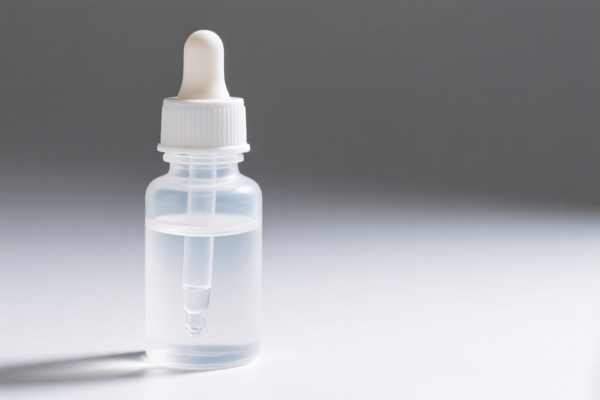
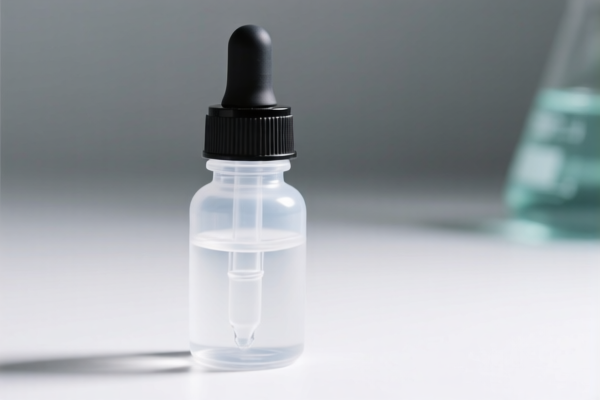
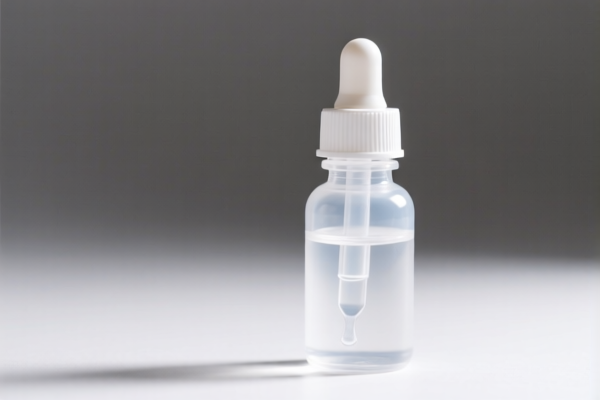
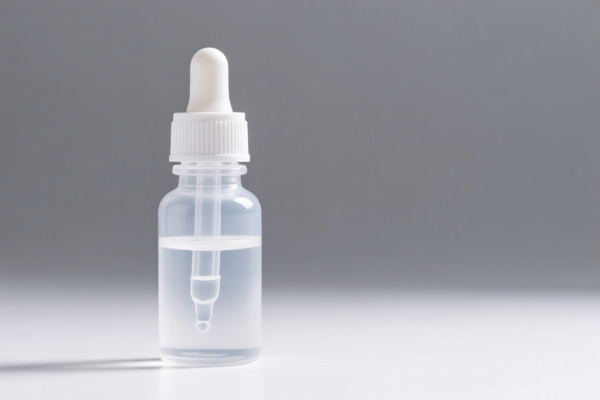
AI Analysis
🧪 Laboratory Plastic Dropper Bottle (Labware/Chemical Containers)
🌐 HS Code Reference & Customs Clearance Guide | 2026 Latest Tariff Analysis | Professional Clearance Strategy
📌 I. Product Definition & Classification: Do You Really Understand the "Dropper Bottle"?
A plastic dropper bottle is a versatile container used in laboratories, cosmetics, and chemical industries. Its classification depends heavily on its primary function and structural design:
- Packaging Container: If the bottle is primarily used for general packaging (e.g., cosmetics, reagents) and features a standard closure system, it falls under packaging articles.
- Specialized Laboratory Ware: If designed specifically for precise chemical handling, titration, or lab storage, it may be classified as laboratory equipment or parts thereof.
- Optical Accessory: Rarely, if it is an integral, non-separable part of an optical microscope system (e.g., immersion oil reservoir), it might be grouped with optical instruments.
⚠️ Key Distinction Point:
- If it is a standalone container for holding liquids, generally used for packaging or general lab storage → Refer to 3923.30 or 3926.90.
- If it is an accessory to a microscope (e.g., for holding immersion oil attached to the scope) → Refer to 9011.80.
📦 II. HS Code Classification Details (2026 Latest Tariff Authority Comparison)
| HS Code | Product Description | Applicable Scenario | Tax Rate |
|---|---|---|---|
3923.30.00.10 |
Plastic bottles, articles for the conveyance or packaging of goods (specifically "Plastic Dropper Bottles") | General packaging, cosmetic bottles, reagent packaging | 38.0% |
3923.30.00.90 |
Plastic bottles, articles for conveyance/packaging (Other than above) | Other plastic packaging bottles | 38.0% |
3926.90.99.89 |
Other plastic articles (Not elsewhere specified) | General plastic lab containers, not strictly "packaging" | 22.8% |
3926.90.99.10 |
Laboratory ware / Chemical containers (Plastic) | Specific lab use, chemical storage, precise lab instruments | 22.8% |
9011.80.00.00 |
Parts and accessories of optical microscopes | Dropper bottles integrated into/for optical microscopes | 35.0% |
🔍 Key Reminder:
- Packaging vs. Labware: Customs often scrutinizes whether the item is for "packaging" (3923) or "specialized lab use" (3926). The intent of use and labeling matter.
- Microscope Parts: If the bottle is not sold as a standalone product but as a part of a microscope kit, it may fall under 9011.80.
💰 III. 2026 Latest Tariff Rate Detailed Breakdown (Including Surtaxes & Policy Add-ons)
✅ Applicable Country: United States (US)
✅ Origin: China (CN)
✅ Effective Time: 2025 Nov 10 onwards (including subsequent imports)
🎯 1. 3923.30.00.10 & 3923.30.00.90 —— Plastic Bottles (Packaging)
| Item | Content |
|---|---|
| Basic Tariff | 3.0% (ad valorem) |
| Surtax (Section 301) | +25.0% |
| IEEPA Surtax | +10.0% (Targeting China/HK products, from 2025 Nov 10) |
| Total Tariff Rate | 38.0% |
| Tax Calculation | CIF Value × 38.0% |
| De Minimis Exemption | ❌ Not Eligible (deny_de_minimis) |
| Legal Basis Path | IEEPA:9903.01.25 → USITC:3923.30.00.10 → FOOTNOTE:3923.30 |
📌 Explanation:
- The 25% surtax is from the Section 301 trade remedy measures.
- The 10% IEEPA surtax is an additional penalty on Chinese-origin goods under the International Emergency Economic Powers Act.
- Total 38% is high for plastic packaging. Clear labeling as "Packaging" is required.
🎯 2. 3926.90.99.89 & 3926.90.99.10 —— Other Plastic Articles / Laboratory Ware
| Item | Content |
|---|---|
| Basic Tariff | 5.3% (ad valorem) |
| Surtax (Section 301) | +7.5% |
| IEEPA Surtax | +10.0% (Targeting China/HK products, from 2025 Nov 10) |
| Total Tariff Rate | 22.8% |
| Tax Calculation | CIF Value × 22.8% |
| De Minimis Exemption | ❌ Not Eligible (deny_de_minimis) |
| Legal Basis Path | IEEPA:9901.25 → IEEPA:9903.01.24 → USITC:3926.90.99.10 → FOOTNOTE:3926.90 |
📌 Note:
- Classifying as Laboratory Ware (3926.90.99.10) significantly reduces the base rate and surtax compared to packaging.
- To qualify, you must prove specialized lab use (e.g., chemical resistance, precision graduations, lab-specific labeling).
- Savings: 22.8% vs. 38.0% = 15.2% difference. This is a major cost-saving opportunity if justified.
🎯 3. 9011.80.00.00 —— Parts & Accessories of Microscopes
| Item | Content |
|---|---|
| Basic Tariff | 0.0% (ad valorem) |
| Surtax (Section 301) | +25.0% |
| IEEPA Surtax | +10.0% (Targeting China/HK products, from 2025 Nov 10) |
| Total Tariff Rate | 35.0% |
| Tax Calculation | CIF Value × 35.0% |
| De Minimis Exemption | ❌ Not Eligible (deny_de_minimis) |
| Legal Basis Path | IEEPA:9903.01.25 → USITC:9011.80.00.00 → FOOTNOTE:9011.80 |
📌 Analysis:
- While the basic rate is 0%, the high surtaxes push the total to 35%.
- Only applicable if the bottle is clearly defined as a part/accessory of a microscope (e.g., sold together with a microscope, or specifically designed for it).
- Risk: If classified as packaging, it jumps to 38%. If classified as general labware, it drops to 22.8%. 22.8% is the lowest option.
🛠️ IV. Customs Clearance Practical Advice (Real-World Pitfall Avoidance Guide)
✅ 1. Required Documents Checklist (缺一不可)
| Document | Mandatory | Description |
|---|---|---|
| ✅ Product Specifications | ✔️ | Material (e.g., PP, PE, LDPE), capacity, closure type, chemical resistance |
| ✅ Usage Declaration | ✔️ | Clearly state: "Laboratory Use," "Chemical Storage," or "Packaging" |
| ✅ Product Photos | ✔️ | Show graduation marks, dropper mechanism, and any lab-specific branding |
| ✅ Commercial Invoice | ✔️ | Accurate description matching HS Code logic |
| ✅ Packing List | ✔️ | Separate line items if sold with microscopes |
| ✅ Third-Party Test Report | ✔️ | FDA compliance (if food/cosmetic), Chemical resistance tests |
✅ 2. Declaration Tips (Key Mnemonic)
🔥 "Lab Use, Lower Tax; Packaging, Higher Tax; Microscope, Middle Tax!"
| Scenario | Correct Declaration | Wrong Approach |
|---|---|---|
| General chemical storage, lab-specific | 3926.90.99.10 (22.8%) |
Calling it "Packaging" → 38.0% |
| Cosmetic bottle, general retail use | 3923.30.00.10 (38.0%) |
Calling it "Lab Ware" to avoid tax → Audit Risk |
| Sold with a microscope kit | 9011.80.00.00 (35.0%) |
Separating bottle as packaging → 38.0% |
| Standalone plastic bottle | 3926.90.99.10 (22.8%) |
Generic "Plastic Container" → 22.8% (Best Option) |
✅ 3. Special Circumstances Handling
| Situation | Handling Advice |
|---|---|
| OEM Lab Bottles | Provide design specs showing chemical resistance and precision. Avoid "cosmetic" keywords. |
| Bottles for Cosmetics | Must declare as 3923.30 (Packaging). High tax is unavoidable. |
| Mixed Container | If sold with microscope, declare bottle as part of 9011.80. If standalone, use 3926.90. |
| Material Declaration | Specify exact plastic type (PP vs. PE). Some plastics have different chemical resistance profiles affecting classification. |
🌍 V. Global Major Market Customs Comparison (2026 Latest)
| Country/Region | Recommended HS Code | Tariff (China Origin) | Certification | Notes |
|---|---|---|---|---|
| 🇺🇸 USA | 3926.90.99.10 |
22.8% | FDA (if applicable) | Lowest tariff for lab use. Avoid "Packaging" classification. |
| 🇨🇳 China | 3926.90.99.10 |
~5-6% | CCC (if applicable) | Low tariff, stable policy. |
| 🇪🇺 EU | 3926.90.99 |
~6% | CE (if applicable) | No Section 301/IEEPA equivalent. |
| 🇦🇺 Australia | 3926.90.99 |
~5% | ADR (if chemical) | No high surtaxes. |
| 🇯🇵 Japan | 3926.90.99 |
~0-5% | PSE (if electrical) | Generally low tariffs. |
📌 Conclusion:
- USA has the highest complexity due to surtaxes.
- Strategic Advantage: Classifying as "Laboratory Ware" (3926.90.99.10) saves 15.2% compared to packaging classification.
- Actionable Advice: Ensure product labeling and marketing materials emphasize "Laboratory," "Chemical Resistant," "Scientific Use" rather than "Cosmetic" or "General Packaging."
📌 VI. Common Errors & Pitfall Guide (Blood Lessons)
❌ Error 1: Declaring lab bottles as "Packaging" to simplify | 📉 Result: Higher tariff (38.0% vs 22.8%)
👉 Fix: Prove specialized lab use with technical specs.
❌ Error 2: Declaring standalone bottles as "Microscope Parts" | ⚠️ Result: Customs rejection if not part of a scope kit | 📉 Result: 35.0% (still higher than 22.8%)
👉 Fix: Only use 9011.80 if sold with microscopes.
❌ Error 3: Ignoring IEEPA 10% surtax in cost calculation | 💸 Result: Margin erosion |
👉 Fix: Include all surtaxes (301 + IEEPA) in CIF costing.
❌ Error 4: Using vague descriptions like "Plastic Bottle" | 🚫 Result: Customs audit & delay |
👉 Fix: Use precise terms: "Polypropylene Laboratory Dropper Bottle, Chemical Resistant."
✅ Correct Practice:
"Lab-Grade PP Dropper Bottle, 30ml, Graduated, Chemical Resistant, For Laboratory Reagent Storage, Model LAB-30, Non-Cosmetic Use"
🎯 VII. Conclusion: Professional Declaration, Cost Savings, Efficiency!
🎯 Remember the Mnemonic:
🔹 "Lab Use Wins, Packaging Costs, Microscope Mixes!"
🔹 "HS Code Saves 15%, Declaration Avoids Fines!"
📌 Pro Tip:
If your dropper bottles are originally from Vietnam, Thailand, or Malaysia, you may qualify for IEEPA exemptions or lower 301 rates.
Recommendation: Apply for a Binding Ruling (Advance Ruling) from US CBP to confirm 3926.90.99.10 classification before shipment.
📣 Immediate Action:
📞 Contact a professional customs broker + Provide technical specs + Request HS Code Pre-ruling
🚀 Let your lab bottles clear customs smoothly, save costs, and boost margins!
✨ Professional clearance starts with accurate classification!
💼 Every cent of tariff is worth calculating precisely!
Customer Reviews
About HS Code Classification
The Harmonized System (HS) is an internationally standardized nomenclature developed by the World Customs Organization (WCO) to classify traded products. Over 200 countries use the HS system as the basis for customs tariffs, trade statistics, and import/export regulations.
Each HS code follows a hierarchical structure:
- Chapter (2 digits) — Broad category of goods (e.g., Chapter 84: Machinery and Mechanical Appliances)
- Heading (4 digits) — More specific grouping within the chapter
- Subheading (6 digits) — Internationally standardized breakdown, used by all WCO member countries
- National subdivisions (8-10 digits) — Country-specific extensions for further classification, such as US HTSUS 10-digit codes
Correct HS code classification is essential for smooth customs clearance, accurate duty payment, and compliance with trade regulations. Misclassification can lead to customs delays, overpayment of duties, or penalties.
When importing from CN to US, the applicable tariff rates may include:
- Most-Favored-Nation (MFN) rate — The standard duty rate applied to WTO members
- General rate — Applied to countries without trade agreements
- Trade remedy duties — Additional tariffs such as Section 301 (anti-dumping), Section 232 (national security), or countervailing duties
The information provided on this page is for reference purposes only. For official classification, please consult with your local customs authority or a licensed customs broker.