Laboratory Recording Paper
CN → US| HS Code | Tariff Rate | Origin | Destination | Doc |
|---|---|---|---|---|
| 4823908680 | 35.0% | CN | US | Official Doc |
| 4820104000 | 10.0% | CN | US | Official Doc |
| 4823400000 | 35.0% | CN | US | Official Doc |
| 4817100000 | 35.0% | CN | US | Official Doc |
| 4817202000 | 35.0% | CN | US | Official Doc |
| 4820900000 | 35.0% | CN | US | Official Doc |
Product Images
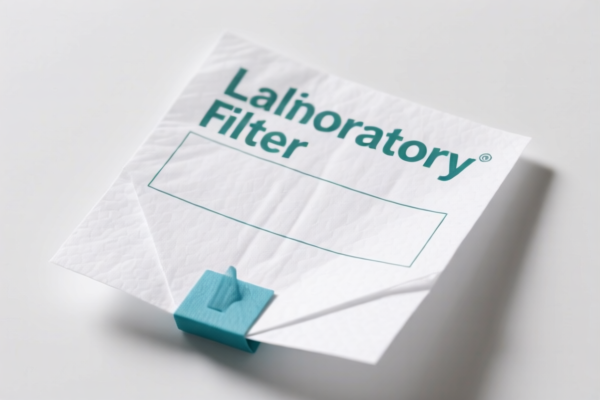
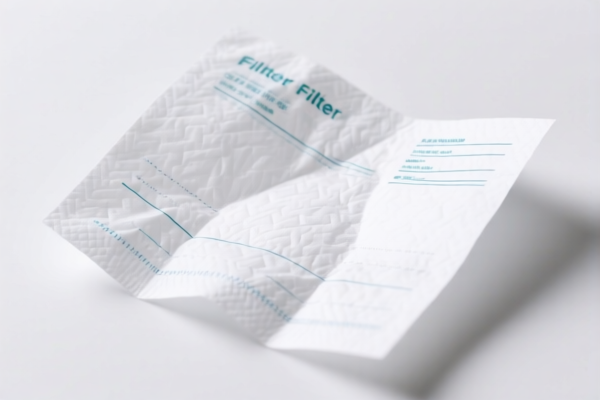
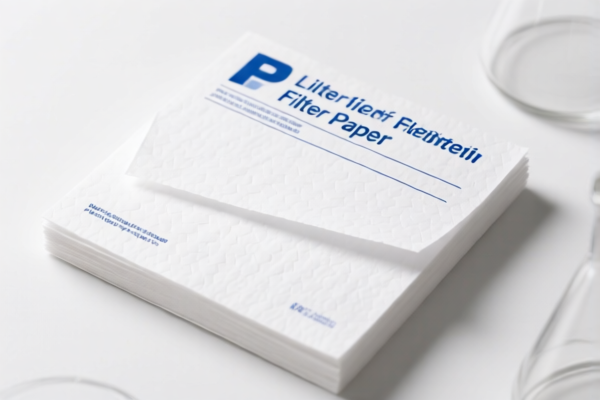
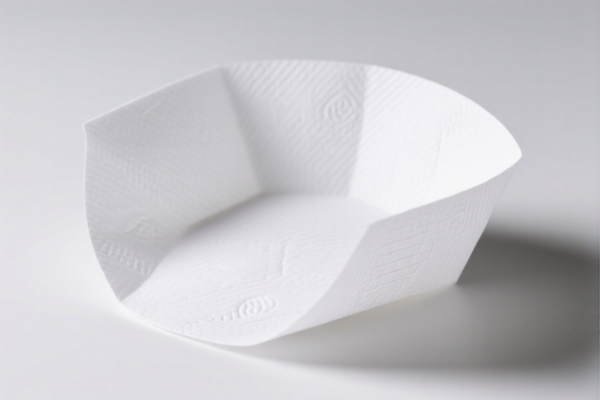
AI Analysis
📝 Laboratory Recording Paper (Experiment Record Sheets)
🌐 HS Code Classification & Customs Clearance Guide | 2026 Latest Tariff Analysis | Strategic Compliance Strategy
📌 I. Product Definition & Classification: What Exactly is "Laboratory Recording Paper"?
Laboratory Recording Paper refers to paper products specifically designed for recording experimental data, scientific observations, or instrument outputs. In international trade, its classification depends heavily on its physical form (rolled, cut sheets, notebook format) and specific usage (general writing vs. automatic recording devices).
⚠️ Key Classification Differentiators:
- If it is cut to size/shape for general manual recording → Likely 4823.90.86.80 (Other paper articles).
- If it is in notebook/loose-leaf format for writing/recording → Likely 4820.10.40.00 or 4820.90.00.00 (Stationery).
- If it is specialized for automatic recording instruments (chart paper) → Likely 4823.40.00.00.
- If considered general paper stationery/envelopes/cards → Likely 4817.10.00.00 or 4817.20.20.00.
📦 II. HS Code Classification Details (2026 Latest Tariff Authority Comparison)
| HS Code | Product Description | Application Scenario | Key Classification Logic |
|---|---|---|---|
4823.90.86.80 |
Other articles of paper and paperboard | Cut-to-size paper for lab recording; not specifically excluded | Material: Paper; Form: Cut/Shape; No specific exclusion applies. |
4820.10.40.00 |
Notebooks, loose-leaf binders, letter pads | Writing/recording books; paper-based stationery | Usage: Recording/Writing; Material: Paper; Falls under paper stationery. |
4823.40.00.00 |
Paper for automatic recording instruments | Chart paper for data loggers; scientific instruments | Usage: Logic matches "for automatic recorders"; Form: Paper product. |
4817.10.00.00 |
Envelopes, letter cards, etc. | General paper stationery items | Material: Paper; Form: Paper article; Broad stationery category. |
4817.20.20.00 |
Paper or paperboard stationary/office supplies | Letter paper, note pads, writing paper | Material: Paper; Usage: Writing/Noting; Matches stationery logic. |
4820.90.00.00 |
Other stationery articles | General recording stationery | Material: Paper; Usage: Recording; Stationery category. |
🔍 Critical Reminder:
- Form Matters: If the paper is simply "cut to size" without being part of a bound book, 4823.90.86.80 is a strong candidate.
- Usage Matters: If used in conjunction with machines (auto-recorders), 4823.40.00.00 may apply, but manual lab records often fall under 4820 (Stationery) or 4823 (Other Paper).
- No Specific Exclusions: Ensure the product is not a "shoe cover" or other excluded item to validate 4823.90.86.80.
💰 III. 2026 Latest Tariff Rate Breakdown (Including Surcharge, Policy Add-ons)
✅ Applicable Country: United States (US)
✅ Country of Origin: China (CN)
✅ Effective Date: Post-2025 Policy (Including subsequent imports)
🎯 1. 4823.90.86.80 —— Other Paper Articles (Cut/Shape)
| Item | Content |
|---|---|
| Base Tariff Rate | 0.0% (ad valorem) |
| Section 301 Surcharge | +25.0% (USITC Footnote 9903.88.01) |
| IEEPA Surcharge | +10.0% (For China/HK products, effective Nov 10, 2025) |
| Total Tariff Rate | 35.0% |
| Tax Calculation | CIF Value × 35% |
| De Minimis Exemption | ❌ Not Eligible (deny_de_minimis) |
| Legal Basis Path | IEEPA:9903.01.25 → IEEPA:9903.01.24 → USITC:4823.90.86.80 → FOOTNOTE:9903.88.01 |
📌 Explanation:
- The 25% Section 301 tariff applies to most Chinese paper products.
- The 10% IEEPA tariff is an additional layer for Chinese imports.
- Total 35% is a significant cost factor. Accurate declaration as "Paper Articles" rather than "Stationery" (which may have different treatment) is crucial.
🎯 2. 4820.10.40.00 —— Notebooks/Loose-leaf Binders (Stationery)
| Item | Content |
|---|---|
| Base Tariff Rate | 0.0% |
| Section 301 Surcharge | 0.0% |
| IEEPA Surcharge | +10.0% |
| Total Tariff Rate | 10.0% |
| Tax Calculation | CIF Value × 10% |
| De Minimis Exemption | ❌ Not Eligible |
| Legal Basis Path | IEEPA:9901.25 → IEEPA:9903.01.24 → USITC:4820.10.40.00 |
📌 Important:
- This category enjoys 0% Section 301 surcharge, making it significantly cheaper than "Other Paper Articles."
- Strategy: If the laboratory paper is packaged as notebooks, pads, or loose-leaf sets, classify under 4820.10.40.00 to save 25% in tariffs.
- Ensure the product description emphasizes "Stationery" or "Notebook" rather than "Loose Paper."
🎯 3. 4823.40.00.00 —— Paper for Automatic Recording Instruments
| Item | Content |
|---|---|
| Base Tariff Rate | 0.0% |
| Section 301 Surcharge | +25.0% |
| IEEPA Surcharge | +10.0% |
| Total Tariff Rate | 35.0% |
| Tax Calculation | CIF Value × 35% |
| De Minimis Exemption | ❌ Not Eligible |
| Legal Basis Path | IEEPA:9903.01.25 → IEEPA:9903.01.24 → USITC:4823.40.00.00 |
📌 Note:
- Although logically aligned with "automatic recording," this code attracts the full 35% tariff.
- Only use if the product is specifically designed for machine chart recorders (e.g., strip chart paper rolls). Manual lab sheets should not use this code unless strictly specified.
🎯 4. 4817.10.00.00 & 4817.20.20.00 & 4820.90.00.00 —— General Stationery/Paper Articles
| Item | Content |
|---|---|
| Base Tariff Rate | 0.0% |
| Section 301 Surcharge | +25.0% |
| IEEPA Surcharge | +10.0% |
| Total Tariff Rate | 35.0% |
| Tax Calculation | CIF Value × 35% |
| De Minimis Exemption | ❌ Not Eligible |
| Legal Basis Path | IEEPA:9903.01.25 → IEEPA:9903.01.24 → USITC:4817/4820 codes |
📌 Note:
- These codes generally carry the 35% total rate.
- 4820.10.40.00 is the only exception among the listed options with a lower 10% rate.
- Avoid4817codes for simple writing paper unless it fits specific "envelope/card" definitions.
🛠️ IV. Customs Clearance Practical Advice (Real-World Pitfall Guide)
✅ 1. Preparation Checklist (Mandatory)
| Document | Required | Description |
|---|---|---|
| ✅ Product Specification Sheet | ✔️ | Define dimensions, paper weight, type (graph paper, blank, lined). |
| ✅ Product Photos | ✔️ | Show if it’s loose sheets, bound notebooks, or rolls. |
| ✅ Commercial Invoice | ✔️ | Clearly state "Laboratory Recording Paper" or "Scientific Notebooks." |
| ✅ Packing List | ✔️ | Indicate if items are loose or bound. |
| ✅ Origin Certificate | ✔️ | Proof of Chinese origin (if applicable) for tariff assessment. |
| ✅ HS Code Pre-ruling | ✔️ | Highly Recommended to confirm 4820.10.40.00 vs. 4823.90.86.80. |
✅ 2. Declaration Strategy (Key Mnemonic)
🔥 “Bound is 10%, Loose is 35%, Name it ‘Stationery’ not ‘Paper’!”
| Scenario | Correct HS Code | Tariff Rate | Error Consequence |
|---|---|---|---|
| Loose Sheets (Cut size) | 4823.90.86.80 |
35% | Misdeclaring as notebook → Penalty/Back Tax |
| Notebooks/Pads | 4820.10.40.00 |
10% | Safe choice for low tariff |
| Chart Paper Rolls | 4823.40.00.00 |
35% | Only for auto-instruments |
| General Writing Paper | 4820.90.00.00 |
35% | Higher cost than notebooks |
✅ 3. Special Cases Handling
| Situation | Handling Advice |
|---|---|
| Mixed Packaging (Loose + Notebook) | Declare as the dominant form. If mostly notebooks, use 4820.10.40.00. |
| Graph Paper vs. Blank Paper | Both fall under paper stationery. Emphasize "Stationery" in description. |
| OEM for Lab Equipment | If sold as an accessory to a machine, it might still be 4823.40.00.00 (35%). Verify machine dependency. |
| Small Quantity Samples | Not eligible for de minimis due to China origin surcharge. Full tax applies. |
🌍 V. Global Market Clearance Comparison (2026 Latest)
| Country/Region | Recommended HS Code | Tariff | Certification | Notes |
|---|---|---|---|---|
| 🇺🇸 USA | 4820.10.40.00 |
10% | None | Best Rate for notebooks. Avoid 4823 for 35%. |
| 🇨🇳 China | 4820.10.40.00 |
5% | None | Low import duty. No surcharge. |
| 🇪🇺 EU | 4820.10.40.00 |
0% | CE (if applicable) | No additional duties for paper stationery. |
| 🇬🇧 UK | 4820.10.40.00 |
0% | UKCA | Post-Brexit standard duties often 0% for paper. |
| 🇦🇺 Australia | 4820.10.40.00 |
5% | None | Moderate duty. |
📌 Conclusion:
- USA is the most complex market due to 301/IEEPA surcharges.
- Optimization Tip: If your product can be packaged as notebooks or pads, declare under 4820.10.40.00 to reduce US tariffs from 35% to 10%.
- Loose sheets are harder to optimize and will face the 35% rate.
📌 VI. Common Mistakes & Pitfall Guide (Lessons Learned)
❌ Mistake 1: Declaring loose lab sheets as "Notebooks"
👉 Consequence: Customs inspection reveals loose sheets → Retrospective tax + Penalty.
❌ Mistake 2: Using 4823.40.00.00 for manual recording paper
👉 Consequence: Unnecessary 35% tariff when 4820.10.40.00 (10%) might be eligible if structured as stationery.
❌ Mistake 3: Ignoring "Section 301" applicability
👉 Consequence: Assuming 0% base rate means 0% total → Unexpected 35% bill.
❌ Mistake 4: Vague Description "Paper"
👉 Consequence: Customs assigns worst-case code → Delays + Higher Tax.
✅ Correct Approach:
"Laboratory Recording Paper, Bound in Notebook Format, Blank/Grid Pages, For Scientific Data Logging, HS 4820.10.40.00"
🎯 VII. Conclusion: Precision in Classification, Profit in Compliance!
🎯 Remember the Mantra:
🔹 “Bound Pads 10%, Loose Sheets 35%, Choose ‘Stationery’ Wisely!”
🔹 “HS Code Dictates Profit, 25% Difference Changes Everything!”
📌 Pro Tip:
If your laboratory paper is originated from Vietnam, Mexico, or Thailand, you may qualify for IEEPA Exemptions, reducing tariffs to 0%-5%.
Recommendation: Apply for an Advance Ruling (PB9) with US Customs to lock in the 10% rate for notebook-style recording papers.
📣 Immediate Action:
📞 Consult a Professional Customs Broker + Provide Product Photos + Apply for HS Code Pre-ruling
🚀 Ensure your Laboratory Recording Paper clears customs smoothly, minimizes tax, and maximizes profit!
✨ Professional Clearance Starts with Accurate Classification!
💼 Every Cent of Cost Deserves Precise Calculation!
Customer Reviews
About HS Code Classification
The Harmonized System (HS) is an internationally standardized nomenclature developed by the World Customs Organization (WCO) to classify traded products. Over 200 countries use the HS system as the basis for customs tariffs, trade statistics, and import/export regulations.
Each HS code follows a hierarchical structure:
- Chapter (2 digits) — Broad category of goods (e.g., Chapter 84: Machinery and Mechanical Appliances)
- Heading (4 digits) — More specific grouping within the chapter
- Subheading (6 digits) — Internationally standardized breakdown, used by all WCO member countries
- National subdivisions (8-10 digits) — Country-specific extensions for further classification, such as US HTSUS 10-digit codes
Correct HS code classification is essential for smooth customs clearance, accurate duty payment, and compliance with trade regulations. Misclassification can lead to customs delays, overpayment of duties, or penalties.
When importing from CN to US, the applicable tariff rates may include:
- Most-Favored-Nation (MFN) rate — The standard duty rate applied to WTO members
- General rate — Applied to countries without trade agreements
- Trade remedy duties — Additional tariffs such as Section 301 (anti-dumping), Section 232 (national security), or countervailing duties
The information provided on this page is for reference purposes only. For official classification, please consult with your local customs authority or a licensed customs broker.