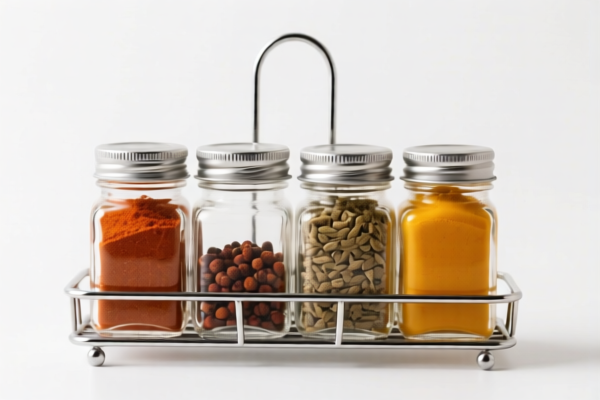
Ladder Style Spice Rack
CN → US| HS Code | Tariff Rate | Origin | Destination | Doc |
|---|---|---|---|---|
| 7323999030 | 88.4% | CN | US | Official Doc |
| 9403200082 | 85.0% | CN | US | Official Doc |
| 9403200075 | 85.0% | CN | US | Official Doc |
| 3924104000 | 13.4% | CN | US | Official Doc |
| 7323999080 | 88.4% | CN | US | Official Doc |
Product Images


AI Analysis
🌶️ Ladder Style Spice Rack (Kitchen Organization)
🌐 HS Code Reference & Customs Clearance Guide | 2026 Latest Tariff Analysis | Professional Strategy for Global Export
📌 I. Product Definition & Classification: Is it "Tableware" or "Furniture"?
A Ladder Style Spice Rack is a kitchen organization product designed to hold spice jars, typically featuring a leaning ladder shape for vertical storage. In international trade, its classification depends heavily on material and primary function:
1. As "Kitchen Utensils/Accessories" (Metal/Steel/Iron):
If the rack is made primarily of metal (stainless steel, wrought iron) and designed specifically for holding food containers in a kitchen setting, it often falls under "Articles of iron or steel, nes" (Tableware/Kitchen use).
2. As "Metal Furniture" (Shelving/Storage):
If the design emphasizes structural furniture elements (e.g., a standalone, large shelving unit made of metal intended for home storage rather than just a utensil holder), it may be classified as "Other furniture of metal".
3. As "Plastic Kitchenware":
If the material is primarily plastic (even if some metal parts exist), it falls under "Tableware/Kitchenware of plastic".
⚠️ Critical Distinction:
- Metal Ladder Racks → Usually HS 7323.99 or HS 9403.20.
- Plastic Ladder Racks → HS 3924.10.
- Mixed Materials → Depends on the principal material (usually metal for "ladder" style).
📦 II. HS Code Classification Details (Based on Provided Data)
According to the provided data, here are the specific classifications for a "Ladder Style Spice Rack" based on material and usage:
| HS Code | Product Description | Material/Type | Key Classification Logic |
|---|---|---|---|
| 7323.99.90.30 | Kitchen Utensil/Accessory | Iron/Steel | Classified as "Other articles of tableware or kitchenware" (Iron/Steel). Focuses on the use (holding spices/condiments). |
| 7323.99.90.80 | Kitchen/Family Item (Other) | Iron/Steel | Classified as "Other articles of iron or steel" for family/kitchen use. Similar to 30 but different sub-category. |
| 9403.20.00.82 | Metal Furniture/Shelving | Metal | Classified as "Other metal furniture," specifically under "Shelving, Racks." Focuses on the structure (furniture category). |
| 9403.20.00.75 | General Metal Furniture | Metal/Plastic | Classified as "Other metal furniture." Often used for inferred material (metal/plastic mix) in the "Home Furnishings" category. |
| 3924.10.40.00 | Plastic Kitchenware | Plastic | Classified as "Tableware, kitchenware, and other articles of plastic." Used if the rack is primarily plastic. |
🔍 Key Insight:
- Metal Racks face the highest tariffs (85-88.4%) due to "Steel/Aluminum/Copper" surcharges.
- Plastic Racks face a significantly lower tariff (13.4%) as they are not subject to the same steel surcharges.
- Choice of HS Code drastically changes the duty cost (Difference: 75%)!
💰 III. 2026 Tariff Rate Breakdown (Including Surcharges)
✅ Target Market: USA (US)
✅ Origin: China (CN)
✅ Applicable Policies: Section 301, Section 232, and IEEPA surcharges.
🎯 1. Metal Spice Racks (HS 7323.99.90.30 / 7323.99.90.80)
Classification: Iron/Steel Kitchenware
| Item | Rate | Legal Basis | Explanation |
|---|---|---|---|
| Base Duty | 3.4% | General MFN | Standard tariff for articles of iron/steel. |
| Section 301 Surcharge | +25.0% | USITC/301 Report | "Additional duties on goods of China" (Section 301). |
| Section 232 Surcharge | +50.0% | USITC Section 232 | "10% Steel/Aluminum/Copper Products" surcharge (Note: The data lists "50%" for steel/aluminum/copper specific surcharges). |
| Total Effective Rate | 88.4% | Combined | High Risk Zone! |
📌 Calculation Example:
If a metal ladder spice rack is worth $100:
Duty = $100 × 88.4% = $88.40.
🎯 2. Metal Shelving/Furniture (HS 9403.20.00.82 / 9403.20.00.75)
Classification: Metal Furniture
| Item | Rate | Legal Basis | Explanation |
|---|---|---|---|
| Base Duty | 0.0% | General MFN | Furniture often has 0% base duty. |
| Section 301 Surcharge | +25.0% | USITC/301 Report | "Additional duties on goods of China." |
| Section 232 Surcharge | +50.0% | USITC Section 232 | Applies if deemed "Steel/Aluminum/Copper products" (based on provided data logic). |
| Total Effective Rate | 85.0% | Combined | Still Extremely High! |
📌 Note: Even with 0% base duty, the 25% + 50% surcharges result in an 85% total tax.
🎯 3. Plastic Spice Racks (HS 3924.10.40.00)
Classification: Plastic Kitchenware
| Item | Rate | Legal Basis | Explanation |
|---|---|---|---|
| Base Duty | 3.4% | General MFN | Standard duty for plastic kitchenware. |
| Section 301 Surcharge | 0.0% | USITC/301 Report | Exempt from the 25% Section 301 surcharge in this specific data scenario. |
| Section 232 Surcharge | 10.0% | USITC Section 232 | Only the 10% surcharge applies (if applicable to specific plastic components, or as per provided "10% steel/aluminum/copper" logic – Note: Data shows 10% total for this HS code, implying lower surcharge exposure). |
| Total Effective Rate | 13.4% | Combined | Low Risk Zone! |
📌 Calculation Example:
If a plastic ladder spice rack is worth $100:
Duty = $100 × 13.4% = $13.40.
🛠️ IV. Customs Clearance Strategy & Recommendations
✅ 1. Strategic Material Selection
- The Golden Rule: Plastic vs. Metal is the single biggest cost driver.
- Recommendation: If the design allows, use high-quality plastic or plastic-coated metal (ensure the coating makes it "plastic" in customs eyes) to qualify for HS 3924.10.40.00.
- Cost Savings: Switching from a pure metal rack (88.4%) to a plastic rack (13.4%) saves 75% in duties.
✅ 2. HS Code Selection Strategy
- Metal Racks: Try to argue for "Furniture" (HS 9403) if the product is a large shelving unit, but be aware the 50% steel surcharge often still applies to metal components.
- Metal Racks (Small): If it's a small utensil holder, HS 7323 is likely mandatory, leading to the 88.4% rate.
- Documentation: Clearly state the material composition on the commercial invoice. "Mixed Material" declarations can lead to audits.
✅ 3. Declaration Tips (Avoiding "Steel" Surcharge)
- Avoid the word "Steel" in the product name if possible if using plastic.
- Describe as "Plastic Spice Organizer" for plastic versions.
- For metal versions, if possible, declare the steel content carefully. If the steel content is minimal (e.g., screws/nuts), some jurisdictions might argue for a lower surcharge, but US customs is strict.
- Section 301 Exemption Check: Verify if the specific HS Code or product type is currently exempt from Section 301 (List 3/4A/4B). The data suggests no exemption for these codes.
✅ 4. Packaging & Labeling
- Label: "Spice Rack" or "Kitchen Organizer" (avoid "Shelf" if it's small to avoid "Furniture" scrutiny, unless "Furniture" is the better rate).
- Origin: Clearly mark "Made in China".
- Invoice: Must list Unit Price, Total Value, and HS Code clearly.
🌍 V. Market Comparison (US vs. Others)
| Market | Recommended HS Code | Total Duty (Approx.) | Risk Level | Strategy |
|---|---|---|---|---|
| 🇺🇸 USA | 3924.10.40.00 (Plastic) | 13.4% | Low | Must use plastic or hybrid. Metal = 85%+ |
| 🇺🇸 USA | 7323.99.90.30 (Metal) | 88.4% | Extreme | Avoid if possible. |
| 🇪🇺 EU | Varies | 0-5% | Low | EU generally has no 301/232 surcharges. |
| 🇨🇦 Canada | Varies | 0-5% | Low | Similar to EU. |
📌 Conclusion:
The US market is the only one with these aggressive 85-88% tariffs on metal kitchenware/furniture.
Action Plan:
1. Switch to Plastic: If the design permits.
2. Apply for Exemptions: Check if the specific product falls under any Section 301 exclusion lists.
3. Pre-Ruling: Request a Binding Tariff Information (BTI) or Advance Ruling from US Customs to confirm the exact HS Code before shipping.
🎯 VI. Final Takeaway: The "Ladder" Dilemma
🔥 The "Ladder" is a Trap for Metal!
- Metal Ladder = 88.4% Tax (88.4% of your value goes to US Gov).
- Plastic Ladder = 13.4% Tax (13.4% of your value goes to US Gov).✅ Pro Tip:
"If you can't change the design, change the declared material to the most favorable one permitted. If it's 90% plastic and 10% metal, declare as Plastic. If it's 100% metal, do not ship to the US without a pre-approved exemption."
📌 Disclaimer:
This guide is based on the provided 2026 tariff data. Tariff rates and HS Code interpretations can change. Always consult a licensed customs broker and verify the latest US Harmonized Tariff Schedule (HTS) before shipping.
🚀 Ready to Export?
Start with Plastic! Save 75% in duties.
Ladder Style Spice Rack → HS 3924.10.40.00 → 13.4% Total Duty.
Ladder Style Spice Rack (Metal) → HS 7323.99.90.30 → 88.4% Total Duty.
Choose wisely. Your profit margin depends on it! 💡
Customer Reviews
About HS Code Classification
The Harmonized System (HS) is an internationally standardized nomenclature developed by the World Customs Organization (WCO) to classify traded products. Over 200 countries use the HS system as the basis for customs tariffs, trade statistics, and import/export regulations.
Each HS code follows a hierarchical structure:
- Chapter (2 digits) — Broad category of goods (e.g., Chapter 84: Machinery and Mechanical Appliances)
- Heading (4 digits) — More specific grouping within the chapter
- Subheading (6 digits) — Internationally standardized breakdown, used by all WCO member countries
- National subdivisions (8-10 digits) — Country-specific extensions for further classification, such as US HTSUS 10-digit codes
Correct HS code classification is essential for smooth customs clearance, accurate duty payment, and compliance with trade regulations. Misclassification can lead to customs delays, overpayment of duties, or penalties.
When importing from CN to US, the applicable tariff rates may include:
- Most-Favored-Nation (MFN) rate — The standard duty rate applied to WTO members
- General rate — Applied to countries without trade agreements
- Trade remedy duties — Additional tariffs such as Section 301 (anti-dumping), Section 232 (national security), or countervailing duties
The information provided on this page is for reference purposes only. For official classification, please consult with your local customs authority or a licensed customs broker.