Ladies Undergarments
CN → US| HS Code | Tariff Rate | Origin | Destination | Doc |
|---|---|---|---|---|
| 6208210020 | 26.4% | CN | US | Official Doc |
| 6108320010 | 33.5% | CN | US | Official Doc |
| 6208220000 | 33.5% | CN | US | Official Doc |
| 6114200010 | 28.3% | CN | US | Official Doc |
| 6114200060 | 28.3% | CN | US | Official Doc |
| 6108310010 | 26.0% | CN | US | Official Doc |
Product Images
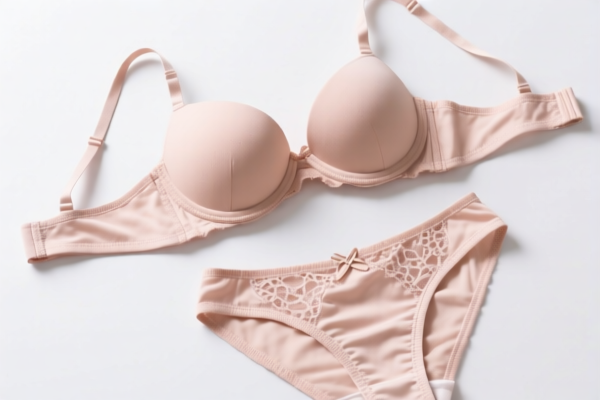
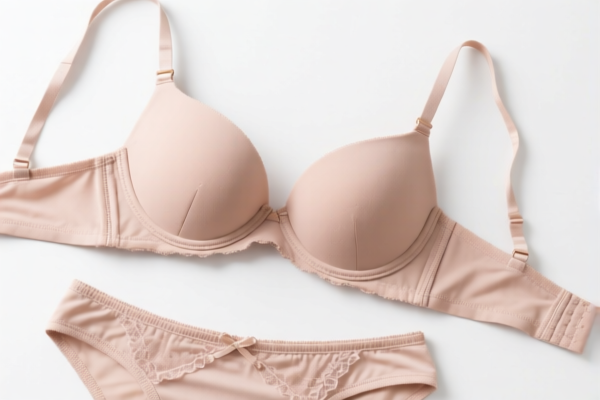
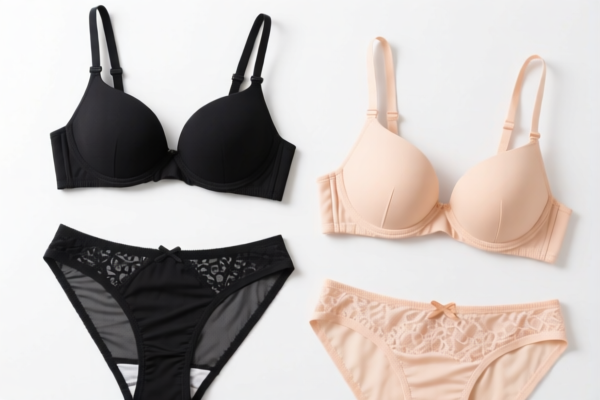
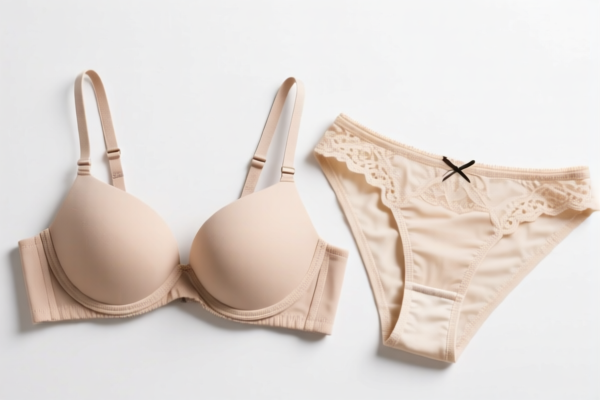
AI Analysis
👙 Women’s Undergarments & Sleepwear (Category Analysis)
🌐 HS Code Reference & Customs Clearance Guide | 2026 Latest Tariff Analysis | Professional Entry Strategy
📌 I. Product Definition & Classification: Decoding "Ladies Undergarments"
In international trade, the term "ladies undergarments" is often used loosely but requires precise classification based on fabric composition and construction method (knitted vs. woven). The dataset provided highlights four distinct HS Codes for women's sleepwear and general apparel, primarily focusing on sleepwear/pyjamas and general outer garments made from cotton, synthetic fibers, or mixed materials.
⚠️ Key Classification Logic:
- Knitted/Crocheted (61xx) vs. Woven (62xx) is the primary divider.
- Material (Cotton vs. Man-Made Fibers) significantly impacts the base tariff rate.
- Product Type: Specific codes exist for "Nightdresses/Pyjamas" (6108/6208) versus "General Clothing" (6114).
📦 II. HS Code Classification Details (2026 Latest Tariff Alignment)
Based strictly on the provided <DATA>, here is the breakdown of applicable HS Codes for women's apparel, primarily sleepwear and general garments.
| HS Code | Summary Description | Key Classification Criteria | Construction | Material Basis |
|---|---|---|---|---|
6208.21.00.20 |
Women’s Pyjamas / Sleepwear | Women's nightwear | Woven | Cotton inferred |
6108.32.00.10 |
Women’s Pyjamas / Sleepwear | Women's nightwear | Knitted/Crocheted | Man-Made Fibers |
6208.22.00.00 |
Women’s Pyjamas / Sleepwear | Women's nightwear | Woven | Synthetic or Natural Fiber (Mixed/Other) |
6114.20.00.10 |
Women’s Apparel (General) | General clothing items | Knitted/Crocheted | Cotton or Polyester |
6114.20.00.60 |
Women’s Apparel (General) | General clothing items | Knitted/Crocheted | Cotton inferred |
6108.31.00.10 |
Women’s Nightdresses | Women's nightwear | Knitted/Crocheted | Other (Implied Synthetic/Blend) |
🔍 Critical Distinction:
-6208Series: Woven pyjamas/nightdresses. Typically higher base tariffs if not 100% cotton.
-6108Series: Knitted/crocheted nightdresses/pyjamas.
-6114Series: "Other garments," often used for items like t-shirts, sweatshirts, or general knitwear that don't fit specific categories like tops or trousers.
- ⚠️ Note: The term "undergarments" in common speech often refers to lingerie (bras, panties, which fall under6108.92or6212). However, the provided data only contains codes for sleepwear (6108.3x/6208.2x) and general apparel (6114.20). This suggests the user's input "ladies undergarments" is being interpreted or filtered through a context of sleepwear/loungewear or knitted general apparel in this specific dataset.
💰 III. 2026 Latest Tariff Rate Breakdown (Including Surcharges & Policy Add-ons)
✅ Applicable Country: United States (US)
✅ Origin: China (CN) (Implied by "122 Clause" and tariff structure typical of US-China trade)
✅ Effective Time: Current 2025/2026 regime
The total tax rate is a composite of three components:
1. Base Duty (MFN Rate): The standard duty rate.
2. Section 301 Surcharge ("Added Duty"): Typically 7.5% for many textile categories in recent adjustments.
3. Section 122 Tariff: A specific 10% surcharge applied to certain textile/apparel items from China.
🎯 1. 6208.21.00.20 — Women’s Pyjamas (Woven, Cotton)
| Item | Content |
|---|---|
| Base Duty | 8.9% |
| Added Duty (Sec 301) | +7.5% |
| 122 Clause Tariff | +10.0% |
| Total Tax Rate | 26.4% |
| Tax Calculation | CIF Value × 26.4% |
| Legal Path | Base MFN → Sec 301 Footnote → 122 Clause |
📌 Explanation:
- Cotton woven pyjamas benefit from a relatively low base duty (8.9%).
- However, the cumulative surcharges (17.5%) push the total to 26.4%.
- Advantage: Lower total tax compared to synthetic counterparts in this dataset.
🎯 2. 6108.32.00.10 — Women’s Pyjamas (Knitted, Man-Made Fibers)
| Item | Content |
|---|---|
| Base Duty | 16.0% |
| Added Duty (Sec 301) | +7.5% |
| 122 Clause Tariff | +10.0% |
| Total Tax Rate | 33.5% |
| Tax Calculation | CIF Value × 33.5% |
| Legal Path | Base MFN → Sec 301 Footnote → 122 Clause |
📌 Note:
- Knitted pyjamas made of synthetic/man-made fibers have a high base duty (16.0%).
- Total tax is 33.5%, significantly higher than cotton woven options.
🎯 3. 6208.22.00.00 — Women’s Pyjamas (Woven, Other Fiber)
| Item | Content |
|---|---|
| Base Duty | 16.0% |
| Added Duty (Sec 301) | +7.5% |
| 122 Clause Tariff | +10.0% |
| Total Tax Rate | 33.5% |
| Tax Calculation | CIF Value × 33.5% |
| Legal Path | Base MFN → Sec 301 Footnote → 122 Clause |
📌 Explanation:
- Woven garments made of synthetic or mixed fibers (non-cotton) incur the highest base rate (16.0%).
- Matches the high tax bracket of knitted synthetics.
🎯 4. 6114.20.00.10 & 6114.20.00.60 — Women’s Apparel (Knitted, Cotton/Blends)
| Item | Content |
|---|---|
| Base Duty | 10.8% |
| Added Duty (Sec 301) | +7.5% |
| 122 Clause Tariff | +10.0% |
| Total Tax Rate | 28.3% |
| Tax Calculation | CIF Value × 28.3% |
| Legal Path | Base MFN → Sec 301 Footnote → 122 Clause |
📌 Explanation:
- These codes cover general knitted apparel (e.g., cotton t-shirts, sweatshirts).
- Total tax is 28.3%, sitting between the low cotton pyjama rate and the high synthetic pyjama rate.
🎯 5. 6108.31.00.10 — Women’s Nightdresses (Knitted)
| Item | Content |
|---|---|
| Base Duty | 8.5% |
| Added Duty (Sec 301) | +7.5% |
| 122 Clause Tariff | +10.0% |
| Total Tax Rate | 26.0% |
| Tax Calculation | CIF Value × 26.0% |
| Legal Path | Base MFN → Sec 301 Footnote → 122 Clause |
📌 Explanation:
- Knitted nightdresses have the lowest base duty in this dataset (8.5%).
- Total tax is only 26.0%, making this the most cost-effective option among knitted sleepwear.
🛠️ IV. Customs Clearance Practical Advice (Pitfall Avoidance Guide)
✅ 1. Preparation Checklist (Non-Negotiable)
| Document | Required? | Purpose |
|---|---|---|
| ✅ Product Spec Sheet | ✔️ | Must specify: Knitted vs. Woven, Fabric Composition (% Cotton, % Polyester, etc.). |
| ✅ Composition Label | ✔️ | Physical tag on garment showing material breakdown. Customs verifies this against declaration. |
| ✅ Product Photos | ✔️ | Front/back views to confirm style (Pyjama set vs. Nightdress vs. General Apparel). |
| ✅ Commercial Invoice | ✔️ | Clearly state "Women’s Knitted Woven Pyjamas" or "Nightdress," NOT generic "Undergarments." |
| ✅ Packing List | ✔️ | Detail items to ensure HTS/HS code consistency across docs. |
✅ 2. Declaration Strategy (Key Tips)
🔥 "Fabric Dictates Base Rate, Style Dictates HS Code!"
| Scenario | Correct Declaration | Wrong Action | Consequence |
|---|---|---|---|
| Cotton Woven Pyjamas | 6208.21.00.20 |
Declare as 6208.22.00.00 (Other) |
Overpay Tax: 26.4% vs 33.5%. |
| Synthetic Knitted Pyjamas | 6108.32.00.10 |
Declare as 6108.31.00.10 (Nightdress) |
Underpay Risk: If customs re-classifies, penalties apply. |
| Knitted T-Shirt | 6114.20.00.10 |
Declare as "Pyjamas" | Misclassification: Delays and potential fines. |
| Mixed Fabric | Verify % Composition | Guess material | Random Inspection: High risk of re-classification to highest bracket (33.5%). |
✅ 3. Special Handling
| Situation | Advice |
|---|---|
| Lingerie vs. Sleepwear | If the item is truly lingerie (bras, panties), it is NOT in this dataset. Ensure you are not misusing these codes for actual underwear, which have different duties. |
| Sample Shipments | Even samples are subject to these rates. Do not declare as "Gift" or "0 Value" without proper documentation; 26-33% duty still applies. |
| Origin Labeling | "Made in China" must be clearly marked. This triggers the 122 Clause + 7.5% surcharge. |
🌍 V. Global Market Comparison (2026 Context)
| Country/Region | Recommended HS Code | Est. Total Duty (China Origin) | Notes |
|---|---|---|---|
| 🇺🇸 United States | 6108.31.00.10 / 6208.21.00.20 |
26.0% - 33.5% | High due to Section 301 & 122 Clause. |
| 🇨🇳 China | Same Codes | Varies (10-15%) | No 122 Clause. Base rates apply. |
| 🇪🇺 European Union | Similar Codes | 8% - 12% | No Section 301/122 equivalents. |
| 🇨🇦 Canada | Similar Codes | 15% - 18% | MIPA restrictions may apply. |
📌 Conclusion:
- The US market is the most expensive for these categories due to political tariffs.
- Cotton Woven (6208.21) and Knitted Nightdresses (6108.31) offer the lowest tax burden (26-26.4%).
- Synthetic/Knitted Pyjamas (6108.32) and Woven Other (6208.22) are the most expensive (33.5%).
📌 VI. Common Errors & Pitfall Guide (Lessons Learned)
❌ Error 1: Using "Undergarments" as the description.
👉 Result: Customs ambiguity. Must specify "Pyjamas," "Nightdress," or "Knitted Apparel."
❌ Error 2: Misidentifying Fabric.
👉 Result: If you declare Cotton but customs finds Polyester, you shift from 26.4% to 33.5%. Back taxes + penalties.
❌ Error 3: Ignoring the 122 Clause.
👉 Result: Failing to budget for the extra 10% on top of base + 301 duties. Cash flow crunch.
❌ Error 4: Mixing Knitted and Woven in one shipment without clear split.
👉 Result: Complex inspection. Separate shipments by construction method if possible to streamline clearance.
✅ Correct Practice:
"Women’s Cotton Woven Pyjama Set, 100% Cotton, Model XYZ" →
6208.21.00.20(26.4%)
"Women’s Synthetic Knitted Nightdress, 100% Polyester" →6108.31.00.10(26.0%)
🎯 VII. Conclusion: Optimize Classification, Minimize Cost!
🎯 Key Takeaways:
🔹 Cotton is King:
6208.21(Cotton Woven) and6114.20(Cotton Knitted) offer lower base rates.
🔹 Style Matters: Nightdresses (6108.31) have the lowest base duty (8.5%).
🔹 Tariff Shock: The 122 Clause (10%) and Section 301 (7.5%) are unavoidable for China-origin goods. Total tax ranges 26.0% – 33.5%.
🔹 Precision Wins: A 1% error in fabric composition can lead to a 7%+ difference in total tax liability.
📌 Pro Tip:
If you are importing significant volumes, consider Applying for an Advance Ruling to confirm the exact HS Code and duty rate before shipment. This prevents clearance delays and ensures accurate costing.
📣 Action Plan:
📞 Verify Fabric Composition: Check labels immediately.
📄 Update Commercial Invoice: Use specific descriptions (Pyjamas, Nightdress).
📊 Calculate Landed Cost: Include 26.0%-33.5% duty in your pricing model.
✨ Precision Classification = Maximized Profit!
💼 Don’t let tariff surprises eat your margin!
Customer Reviews
About HS Code Classification
The Harmonized System (HS) is an internationally standardized nomenclature developed by the World Customs Organization (WCO) to classify traded products. Over 200 countries use the HS system as the basis for customs tariffs, trade statistics, and import/export regulations.
Each HS code follows a hierarchical structure:
- Chapter (2 digits) — Broad category of goods (e.g., Chapter 84: Machinery and Mechanical Appliances)
- Heading (4 digits) — More specific grouping within the chapter
- Subheading (6 digits) — Internationally standardized breakdown, used by all WCO member countries
- National subdivisions (8-10 digits) — Country-specific extensions for further classification, such as US HTSUS 10-digit codes
Correct HS code classification is essential for smooth customs clearance, accurate duty payment, and compliance with trade regulations. Misclassification can lead to customs delays, overpayment of duties, or penalties.
When importing from CN to US, the applicable tariff rates may include:
- Most-Favored-Nation (MFN) rate — The standard duty rate applied to WTO members
- General rate — Applied to countries without trade agreements
- Trade remedy duties — Additional tariffs such as Section 301 (anti-dumping), Section 232 (national security), or countervailing duties
The information provided on this page is for reference purposes only. For official classification, please consult with your local customs authority or a licensed customs broker.