Lafite Rope
CN → US| HS Code | Tariff Rate | Origin | Destination | Doc |
|---|---|---|---|---|
| 4007000000 | 35.0% | CN | US | Official Doc |
| 5607493000 | 38.6% | CN | US | Official Doc |
| 5607909000 | 41.3% | CN | US | Official Doc |
Product Images


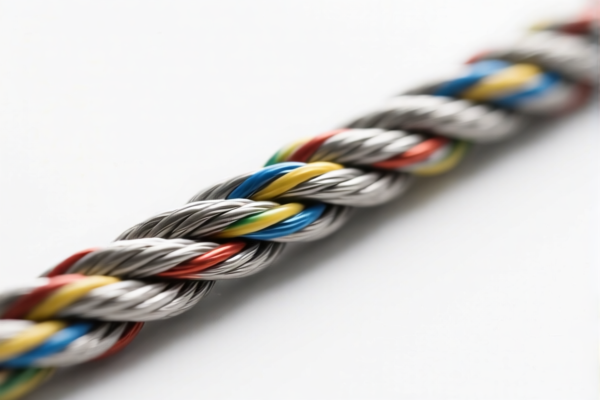

AI Analysis
🪢 LAFITE ROPE (Synthetic/Rubber Ropes)
🌐 HS Code Reference & Customs Clearance Guide | 2026 Latest Tariff Analysis | Professional Clearance Strategy
📌 I. Product Definition & Classification: What is "Lafite Rope"?
"Lafite Rope" (拉菲特绳索) generally refers to high-strength synthetic or rubber-coated ropes used in industrial lifting, marine, or logistics applications. The term "Lafite" is often a brand or specific product line name. In customs classification, the key factors are material composition (rubber vs. textile) and physical form (rope/cable).
Based on the provided data, three primary HS Codes are applicable, depending on the specific material structure (Sulfur-Cured Rubber vs. Other Textiles/Synthetics).
⚠️ Key Distinction:
- If the rope is sulfur-cured rubber (black, industrial grade) → 4007.00.00.00
- If the rope is textile/synthetic (nylon, polypropylene, etc.) → 5607.49.30.00 or 5607.90.90.00
📦 II. HS Code Classification Details (2026 Latest Tariff Mapping)
| HS Code | Product Description | Application Scenario | Total Tax Rate (China Origin) |
|---|---|---|---|
4007.00.00.00 |
Sulfur-cured rubber lines and cords | Industrial rubber ropes, marine rubber hawsers | 35.0% |
5607.49.30.00 |
Other ropes and cordage, of nylon or other polyamides | Synthetic ropes, nylon ropes, high-strength poly ropes | 38.6% |
5607.90.90.00 |
Other ropes and cordage, not elsewhere specified | General synthetic/textile ropes, fallback category | 41.3% |
🔍 Critical Logic:
- 4007.00.00.00 is chosen based on the common sense inference that "Lafite ropes" may be in the form of sulfur-cured rubber lines, matching the physical form of rubber ropes.
- 5607.49.30.00 and 5607.90.90.00 are chosen because the product name "Rope" matches the rope/cordage form in these chapters. The logic follows the "fallback principle" for other categories if not specified as nylon/polyamide or rubber.
- No other HS Codes are provided in the data source; do not speculate beyond these three.
💰 III. 2026 Latest Tariff Rate Breakdown (Including Additional Taxes & Policy Surcharge)
✅ Applicable Country: United States (US)
✅ Origin: China (CN)
✅ Effective Time: 2025/2026 (Current Tariff Regime)
🎯 1. 4007.00.00.00 — Sulfur-Cured Rubber Lines and Cords
| Item | Content |
|---|---|
| Base Tariff | 0.0% (ad valorem) |
| Section 301 Additional Tariff | +25.0% |
| Section 122 Tariff | +10.0% |
| Total Tax Rate | 35.0% |
| Tax Calculation | CIF Value × 35% |
| De Minimis Exemption | ❌ Not Eligible |
| Legal Basis Path | Base: 0% → Section 301: 25% → Section 122: 10% |
📌 Explanation:
- "Base Tariff 0%": Rubber articles (Chapter 40) often have low base duties.
- "Section 301 Additional Tariff 25%": Standard trade war tariff for Chinese goods.
- "Section 122 Tariff 10%": Additional surcharge under specific trade provisions.
- Total 35%: This is a moderate-high tariff for rubber products.
🎯 2. 5607.49.30.00 — Other Ropes and Cordage, of Nylon or Other Polyamides
| Item | Content |
|---|---|
| Base Tariff | 3.6% (ad valorem) |
| Section 301 Additional Tariff | +25.0% |
| Section 122 Tariff | +10.0% |
| Total Tax Rate | 38.6% |
| Tax Calculation | CIF Value × 38.6% |
| De Minimis Exemption | ❌ Not Eligible |
| Legal Basis Path | Base: 3.6% → Section 301: 25% → Section 122: 10% |
📌 Note:
- Material Match: The form matches ropes, and material inference shows no conflict.
- Higher Base Duty: Textile/synthetic ropes have a higher base duty (3.6%) than rubber (0%).
- Same Surcharges: Section 301 (25%) and Section 122 (10%) apply uniformly.
🎯 3. 5607.90.90.00 — Other Ropes and Cordage, Not Elsewhere Specified
| Item | Content |
|---|---|
| Base Tariff | 6.3% (ad valorem) |
| Section 301 Additional Tariff | +25.0% |
| Section 122 Tariff | +10.0% |
| Total Tax Rate | 41.3% |
| Tax Calculation | CIF Value × 41.3% |
| De Minimis Exemption | ❌ Not Eligible |
| Legal Basis Path | Base: 6.3% → Section 301: 25% → Section 122: 10% |
📌 Important:
- Fallback Category: If the specific material (e.g., nylon) is not declared or verified, it falls into this "other" category.
- Highest Base Duty: 6.3% is the highest base duty among the three, making this the most expensive option if misclassified.
- Logic: Matches "rope form" and follows the "other category fallback principle."
🛠️ IV. Customs Clearance Practical Advice (Battle-Tested Pitfall Guide)
✅ 1. Document Checklist (Must-Have)
| Document | Required | Description |
|---|---|---|
| ✅ Product Specification Sheet | ✔️ | Must specify Material (Rubber vs. Nylon/Polyster) and Construction (Braid, Stranded, etc.) |
| ✅ Product Photos | ✔️ | Clear images of cross-section, label, and usage. Black rubber ropes vs. colored synthetic ropes are visually distinct. |
| ✅ Commercial Invoice | ✔️ | Must use precise term: "Rubber Rope" or "Nylon Rope" (not just "Lafite Rope") |
| ✅ Packing List | ✔️ | Detail weight, quantity, and dimensions |
| ✅ Certificate of Origin | ✔️ | Proof of China origin to apply correct Section 301/122 tariffs |
✅ 2. Declaration Tips (Key Mnemonics)
🔥 "Identify Material First, Avoid Fallback Costs!"
| Scenario | Correct Declaration | Wrong Practice |
|---|---|---|
| Black, flexible, rubbery rope | 4007.00.00.00 (Rubber) |
Declare as "Nylon Rope" → 38.6% |
| Colored, strong, synthetic rope | 5607.49.30.00 (Nylon) or 5607.90.90.00 (Other) |
Declare as "Rubber Rope" → 35.0% |
| Uncertain Material | 5607.90.90.00 (Fallback) |
Guessing → Risk of penalty or audit |
| Brand Name "Lafite" | Use as Model Name, not HS descriptor | Labeling as "Lafite HS Code" → Confusion |
✅ 3. Special Handling
| Situation | Handling Advice |
|---|---|
| Mixed Materials | If rope has rubber coating + nylon core, consult with a customs broker. It may still fall under 4007 if rubber is substantial. |
| OEM/Custom Orders | Provide client specification sheets to justify material type. |
| Section 122 Exemptions | Check if the specific HTS code is exempt from Section 122. Data indicates 10% applies, so plan accordingly. |
🌍 V. Global Market Comparison (2026 Latest)
| Country/Region | Recommended HS Code | Tariff (China Origin) | Notes |
|---|---|---|---|
| 🇺🇸 USA | 4007.00.00.00 |
35.0% | High surcharges (301+122) |
| 🇺🇸 USA | 5607.49.30.00 |
38.6% | Synthetic ropes pay more base duty |
| 🇺🇸 USA | 5607.90.90.00 |
41.3% | Fallback category, highest duty |
| 🇨🇳 China | 4007.00.00.00 |
~10-15% | Lower import duty for rubber |
| 🇪🇺 EU | 4007.00.00 |
~2-5% | No Section 301/122 equivalent |
| 🇬🇧 UK | 4007.00.00 |
~2-5% | Post-Brexit tariff structure |
📌 Conclusion:
- USA is the highest-cost market due to Section 301 (25%) and Section 122 (10%).
- Material classification is critical: Rubber (0% base) saves 3.6% base duty vs. Nylon (3.6% base).
- Always declare material explicitly to avoid falling into the highest "Other" category (41.3%).
📌 VI. Common Mistakes & Pitfalls (Lessons Learned)
❌ Mistake 1: Using "Lafite Rope" as the HS Code descriptor
👉 Consequence: Customs rejects declaration due to unclear material. Delay + Storage Fees!
❌ Mistake 2: Misclassifying Nylon Ropes as Rubber
👉 Consequence: Under-declared duty (0% vs 3.6% base). Audit + Penalty!
❌ Mistake 3: Ignoring Section 122 Tariff
👉 Consequence: 10% surprise tax at border. Cash Flow Crisis!
❌ Mistake 4: Assuming "Rope" = One HS Code
👉 Consequence: Using 5607.90.90.00 (41.3%) when 4007.00.00.00 (35.0%) is applicable. Overpaying 6.3% unnecessarily!
✅ Correct Practice:
"Sulfur-Cured Rubber Rope, 10mm Diameter, Industrial Grade"
"Nylon Braided Rope, 12mm, High-Tensile, Synthetic Fiber"
🎯 VII. Conclusion: Precise Classification Saves Money!
🎯 Remember the Mnemonic:
🔹 "Rubber 0%, Nylon 3.6%, Other 6.3% — Base Duty Matters!"
🔹 "Add 25% + 10% = 35-41% Total — No Escape!"
🔹 "Declare Material, Not Brand — Avoid Fallback Costs!"
📌 Pro Tip:
If your "Lafite Rope" is 100% Rubber, use 4007.00.00.00 to save 3.6-6.3% in base duty.
If it is Synthetic, ensure it is Nylon/Polyamide to qualify for 5607.49.30.00 (38.6%) instead of the "Other" category (41.3%).
📣 Immediate Action:
📞 Contact your customs broker with material certificates
📄 Prepare product photos showing cross-section (Rubber vs. Fiber)
💰 Calculate CIF × 35-41% in your landed cost model
✨ Professional Clearance Starts with Accurate Classification!
💼 Every Percent Saved is Pure Profit!
Customer Reviews
About HS Code Classification
The Harmonized System (HS) is an internationally standardized nomenclature developed by the World Customs Organization (WCO) to classify traded products. Over 200 countries use the HS system as the basis for customs tariffs, trade statistics, and import/export regulations.
Each HS code follows a hierarchical structure:
- Chapter (2 digits) — Broad category of goods (e.g., Chapter 84: Machinery and Mechanical Appliances)
- Heading (4 digits) — More specific grouping within the chapter
- Subheading (6 digits) — Internationally standardized breakdown, used by all WCO member countries
- National subdivisions (8-10 digits) — Country-specific extensions for further classification, such as US HTSUS 10-digit codes
Correct HS code classification is essential for smooth customs clearance, accurate duty payment, and compliance with trade regulations. Misclassification can lead to customs delays, overpayment of duties, or penalties.
When importing from CN to US, the applicable tariff rates may include:
- Most-Favored-Nation (MFN) rate — The standard duty rate applied to WTO members
- General rate — Applied to countries without trade agreements
- Trade remedy duties — Additional tariffs such as Section 301 (anti-dumping), Section 232 (national security), or countervailing duties
The information provided on this page is for reference purposes only. For official classification, please consult with your local customs authority or a licensed customs broker.