Lamp Housing
CN → US| HS Code | Tariff Rate | Origin | Destination | Doc |
|---|---|---|---|---|
| 9018200080 | 35.0% | CN | US | Official Doc |
| 9018200040 | 35.0% | CN | US | Official Doc |
| 8539900000 | 37.6% | CN | US | Official Doc |
| 8539520091 | 12.0% | CN | US | Official Doc |
| 7020006000 | 40.0% | CN | US | Official Doc |
Product Images


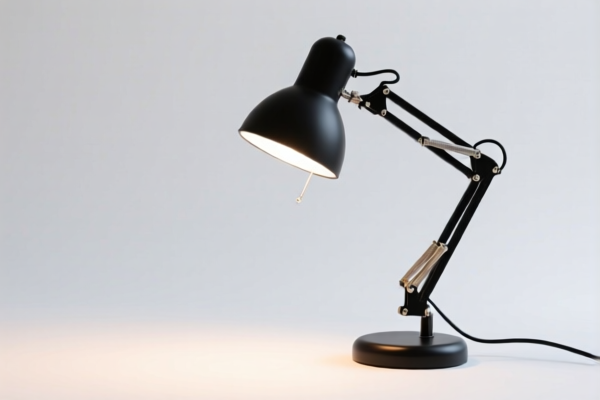
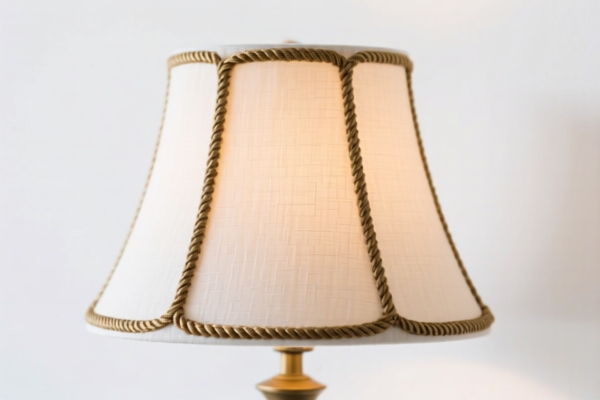
AI Analysis
💡 Lamp Housing: The Ultimate HS Code & Customs Clearance Guide (2026 Edition)
🌐 Global Trade Intelligence | Smart Classification Strategy | Tax Optimization for 2026
📌 I. Product Definition & Classification Logic: Is "Lamp Housing" a Bulb or a Part?
Lamp Housing (the outer shell or casing of a lamp/tube) is a critical component in lighting systems. In international trade, its classification depends heavily on material composition and functional specificity.
It falls into a competitive "clash" between Electrical Lamp Parts (8539), Glass/Ceramic Goods (7020), and Medical/X-Ray Device Parts (9018).
⚠️ The Critical Distinction:
- As a "General Part": If it's a generic glass/plastic shell for standard lighting, it leans toward 8539.90.00.00.
- As a "Specialized Part": If it's a component specifically for X-ray/Ultra-violet (UV) or Infrared (IR) devices (e.g., medical lamps), it may be classified under 9018.20.00.40/80.
- As "Glass Goods": If the primary characteristic is glass material and it doesn't fit specific electrical parts, customs may push it to 7020.00.60.00 (兜底/Catch-all).
- As "Other Parts": If generic and material-neutral, 8539.52.00.91 is the fallback.
📦 II. HS Code Classification Matrix (2026 Tax Regime)
| HS Code | Product Description | Material/Logic | Tax Profile | Risk Level |
| :--- | :--- | :--- | :--- :--- |
| 9018.20.00.80 | X-Ray/UV/IR Device Parts | Classified as parts for medical/special radiation devices. High preference for "Accessory" logic. | 🚩 35.0% | ⚠️ High (Medical/Spec. Goods) |
| 9018.20.00.40 | Specialized Lamp Parts | Parts for UV/IR ray devices. No material conflict. Fits "Parts/Components" category. | 🚩 35.0% | ⚠️ High (Medical/Spec. Goods) |
| 8539.90.00.00 | General Electric Lamp Parts | Most Common. Parts of electric lamps (bulbs/tubes). Matches usage/form. | 🟢 37.6% | ⚠️ Medium (Standard) |
| 8539.52.00.91 | Other Lamp Parts | General fallback. No material conflict. "Other" category. | ✅ 12.0% | ✅ Lowest Cost |
| 7020.00.60.00 | Other Glass Articles | Risk Category. Inferred as glass parts if material is primarily glass but not specific to electric parts. | 🔴 40.0% | ⚠️ High (Glass Duty) |
🔍 Key Insight:
The difference between 12.0% (8539.52.00.91) and 37.6%~40.0% (8539.90.00.00or7020.00.60.00) can make or break your profit margin.8539.52.00.91is the "Golden Code" for generic parts, while9018codes imply a specialized medical/radiation use case which triggers higher duties.
💰 III. 2026 Tariff Rate Deep Dive (US Market Context)
✅ Origin: China (CN)
✅ Target: United States (US)
✅ Applicable Section: Section 301 + 122 Clause + Base Rate
🎯 Scenario A: 8539.52.00.91 (The "Low Tax" Winner)
| Item | Detail |
|---|---|
| Base Tariff | 2.0% (Standard MFN) |
| Section 301 (Additional) | 0.0% (No extra "Section 301" duty listed in data) |
| 122 Clause | +10.0% (China-specific add-on) |
| Total Rate | 🎯 12.0% |
| Calculation | CIF Value × 12.0% |
| Strategy | Best Case: If the housing is generic and not specifically for X-ray, fight for this code. |
📌 Why: It falls under "Other parts of electric lamps" with no specific conflict. The 122 Clause adds a mandatory 10%, but the base is low.
🎯 Scenario B: 8539.90.00.00 (The "Standard Part" Path)
| Item | Detail |
|---|---|
| Base Tariff | 2.6% |
| Section 301 (Additional) | +25.0% (High tariff on electrical parts) |
| 122 Clause | +10.0% |
| Total Rate | 🔥 37.6% |
| Calculation | CIF Value × 37.6% |
| Strategy | High Risk: Used if the housing is deemed a "general part" but not the specific "other" code. The 25% Section 301 surcharge is the killer. |
📌 Why: This classification assumes the part is a standard component but subject to the heavy 301 tariff on electrical goods.
🎯 Scenario C: 9018.20.00.xx (The "Medical/Specialized" Trap)
| Item | Detail |
|---|---|
| Base Tariff | 0.0% |
| Section 301 (Additional) | +25.0% |
| 122 Clause | +10.0% |
| Total Rate | 🔥 35.0% |
| Calculation | CIF Value × 35.0% |
| Strategy | Avoid unless Verified: Only use if the lamp housing is explicitly for X-ray, UV, or IR medical devices. If misclassified here, customs may audit for medical device compliance. |
📌 Why: Even with 0% base duty, the 25% Section 301 and 10% 122 Clause combine to 35%.
🎯 Scenario D: 7020.00.60.00 (The "Glass" Catch-All)
| Item | Detail |
|---|---|
| Base Tariff | 5.0% |
| Section 301 (Additional) | +25.0% |
| 122 Clause | +10.0% |
| Total Rate | 🔴 40.0% |
| Calculation | CIF Value × 40.0% |
| Strategy | Worst Case: Used if customs decides the "glass" nature overrides the "electrical part" nature. |
📌 Why: Glass articles often face higher base rates, and combined with Section 301, this becomes the most expensive option (40%).
🛠️ IV. Customs Clearance Action Plan (Pro Tips)
✅ 1. Preparation Checklist (Non-Negotiable)
To ensure the 12.0% or 37.6% classification (and avoid the 40% glass trap), you must provide:
| Document | Requirement | Why It Matters |
|---|---|---|
| Product Specification Sheet | Must state: "Lamp Housing," "Material: Glass/Plastic," "Application: General Lighting." | Proves it's not a medical X-ray part (avoiding 9018). |
| Technical Drawings | Show connection points to the bulb/tube. | Proves it is a part of an electric lamp (8539), not just a "glass container" (7020). |
| Material Certificate | Explicitly state "Glass" or "Plastic." | If glass, emphasize it's coated/conductive or designed for electric insulation to argue for 8539 over 7020. |
| Commercial Invoice | CRITICAL: Use description "Electric Lamp Housing / Shell" (NOT "Glass Tube" or "Medical Part"). | Mislabeling as "Medical" triggers 9018 or audit. |
| Photos (Labeled) | Show the housing attached to a bulb. | Visual proof of "Part" status. |
✅ 2. Declaration Strategy (The "122 Clause" Defense)
🔥 Golden Rule: "Part vs. Article"
- If the housing is specifically molded for a bulb (e.g., E27 screw base, specific heat rating), argue8539.52.00.91(12% Total).
- If the housing is a generic glass tube sold separately for multiple uses, customs may force7020.00.60.00(40% Total).
- Never declare it as a "Medical Device Part" unless it is actually used in an X-ray tube. False declaration leads to seizures.
✅ 3. Special Situation Handling
| Scenario | Recommended Action |
|---|---|
| Lamp Housing is for Medical X-Ray | Must declare 9018.20.00.40/80. BUT be ready to provide FDA/CE medical compliance docs. If not medical, do not use this code. |
| Mixed Glass & Plastic Housing | If the function is electrical insulation, prioritize 8539. If the form is just a glass container, risk 7020. |
| OEM Custom Parts | Provide the End-User Specification to prove it's a "part" for a specific lamp model. |
🌍 V. Market Comparison & Risk Summary (2026)
| Market | Best HS Code | Total Duty | Risk Factor |
|---|---|---|---|
| 🇺🇸 USA | 8539.52.00.91 |
12.0% | Medium (Requires strong "Part" argument) |
| 🇺🇸 USA | 8539.90.00.00 |
37.6% | High (Standard Electrical Tariff) |
| 🇺🇸 USA | 9018.20.00.xx |
35.0% | Very High (Medical Compliance Audit) |
| 🇺🇸 USA | 7020.00.60.00 |
40.0% | Critical (Highest Duty) |
📌 Conclusion:
- Avoid7020(40%) at all costs. It is the "Glass Trap."
- Target8539.52.00.91(12%) by proving the item is a specialized part, not a generic article.
- Avoid9018(35%) unless you have a medical contract; it invites unnecessary scrutiny.
📌 VI. Final Verdict & Call to Action
🎯 The Bottom Line:
The difference between 12% and 40% is a 3200 basis points swing in cost. For a $100,000 shipment, that's $28,000 saved by choosing the right HS Code.
✅ Your Next Steps:
1. Verify Material & Function: Is it a generic glass tube or a molded electrical part?
2. Draft the Invoice: Use "Electric Lamp Housing" or "Lamp Component."
3. Request Advance Ruling: If the product is borderline between 8539 and 7020, file for an CBP Binding Ruling before shipping.
🚀 Don't let a 28% tax difference ruin your margin. Classify right, clear fast, profit high!
✨ Smart Trade, Precise Compliance.
💼 Your Lamp Housing is a Part, Not Just Glass.
Customer Reviews
About HS Code Classification
The Harmonized System (HS) is an internationally standardized nomenclature developed by the World Customs Organization (WCO) to classify traded products. Over 200 countries use the HS system as the basis for customs tariffs, trade statistics, and import/export regulations.
Each HS code follows a hierarchical structure:
- Chapter (2 digits) — Broad category of goods (e.g., Chapter 84: Machinery and Mechanical Appliances)
- Heading (4 digits) — More specific grouping within the chapter
- Subheading (6 digits) — Internationally standardized breakdown, used by all WCO member countries
- National subdivisions (8-10 digits) — Country-specific extensions for further classification, such as US HTSUS 10-digit codes
Correct HS code classification is essential for smooth customs clearance, accurate duty payment, and compliance with trade regulations. Misclassification can lead to customs delays, overpayment of duties, or penalties.
When importing from CN to US, the applicable tariff rates may include:
- Most-Favored-Nation (MFN) rate — The standard duty rate applied to WTO members
- General rate — Applied to countries without trade agreements
- Trade remedy duties — Additional tariffs such as Section 301 (anti-dumping), Section 232 (national security), or countervailing duties
The information provided on this page is for reference purposes only. For official classification, please consult with your local customs authority or a licensed customs broker.