Lamp Shade
CN → US| HS Code | Tariff Rate | Origin | Destination | Doc |
|---|---|---|---|---|
| 7020004000 | 41.6% | CN | US | Official Doc |
| 9405920000 | 38.7% | CN | US | Official Doc |
| 9405913000 | 47.0% | CN | US | Official Doc |
| 7020006000 | 40.0% | CN | US | Official Doc |
| 4823700040 | 35.0% | CN | US | Official Doc |
| 9405503000 | 40.7% | CN | US | Official Doc |
Product Images
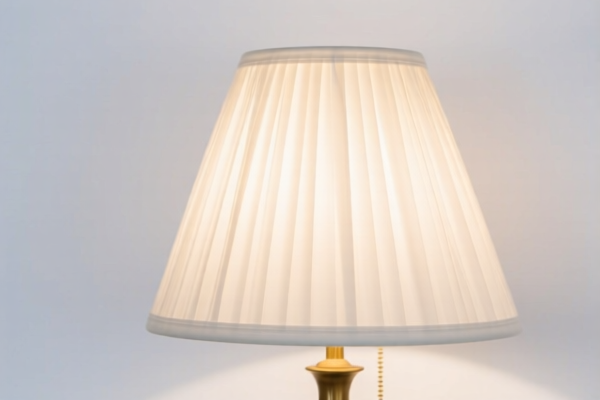


AI Analysis
💡 Lamp Shade: The Ultimate 2026 US Customs Classification & Tariff Guide
HS Code Breakdown | Tax Strategy | Clearance Pitfalls | Professional Compliance
🌐 Executive Summary: The Material Matters!
A "Lamp Shade" is not just one product. In US Customs (CBP), the material composition determines the HS Code and the Total Tax Rate. A small shift in material (Glass vs. Plastic vs. Paper) can change your tax bill by 4% to 7%.
⚠️ Critical Warning: Do NOT assume all lamp shades are treated the same. Misclassification leads to audits, seized cargo, and unexpected penalties. Below is the 2026 Authorized Reference based on strict material definitions.
📦 II. HS Code Classification Matrix (2026 US Tariff Schedule)
Based on Material Composition & Functionality
| HS Code | Material Type | Product Description | Total Tax Rate | Key Legal Logic |
|---|---|---|---|---|
7020.00.60.00 |
Glass | Standalone Glass Lamp Shades (Not part of a complete lighting fixture) |
40.0% | Classified as "Other Articles of Glass." |
7020.00.40.00 |
Glass | Glass Lamp Shades as Parts/Accessories (Specifically designed as accessories for lamps) |
41.6% | Classified as "Accessories of Glass Articles." |
9405.91.30.00 |
Glass | Glass Lamp Shade as Part of a Lamp (Inferred as a component of a lighting fixture) |
47.0% | Highest rate! Classified as "Parts of Lamps." |
9405.92.00.00 |
Plastic / Metal | Lamp Shades (Plastic or Metal) (As components of lighting fixtures) |
38.7% | Classified as "Parts of Lamps of other materials." |
4823.70.00.40 |
Paper/Pulp | Molded/Pressed Paper Pulp Shades | 35.0% | Lowest rate! Classified as "Articles of Paper Pulp." |
💰 III. 2026 US Tariff Breakdown (China Origin)
Applicable to All Codes Above (Total Tax = Base + Section 301 + 122 Clause)
🔴 The "China Import Tax Formula"
For all lamp shades originating from China, the tax structure is a layered penalty:
| Tax Component | Rate | Legal Basis | Description |
|---|---|---|---|
| Base Duty (MFN) | 0.0% - 12.0% | HTSUS Table 1 | Varies by HS Code (e.g., Paper is 0%, Glass parts are 12%). |
| Section 301 (Add-on) | +25.0% | 19 USC § 1307 | Mandatory penalty on Chinese manufactured goods. |
| Section 122 Clause | +10.0% | 19 CFR § 4823/7020 | Specific penalty on Chinese glass/paper products. |
| TOTAL | 35.0% - 47.0% | High Risk | The "Total Tax" column in the matrix above. |
📌 Example Calculation (Glass Part -
7020.00.60.00): * CIF Value: $1,000 * Base Duty: $50 (5.0%) * Section 301: $250 (25.0%) * Section 122: $100 (10.0%) * Total Duty: $400 (40.0%)
🛠️ IV. Clearance Strategy & Practical Advice
✅ 1. How to Declare Correctly (The "Golden Rule")
Do not just write "Lamp Shade" on the Commercial Invoice. You must specify the material and the "Finished vs. Part" status.
| Scenario | Correct Declaration | Risky Declaration | Result |
|---|---|---|---|
| Glass Shade | "Glass Lamp Shade, Standalone, 12-inch, Clear Glass" | "Lamp Shade, Glass" | ⚠️ Risk: May be re-classified to 9405.91.30.00 (47%) if viewed as a lamp part. |
| Plastic Shade | "Plastic Lamp Shade, Component for Floor Lamp" | "Lamp Shade, Plastic" | ✅ Safe: 9405.92.00.00 (38.7%). |
| Paper Shade | "Molded Paper Pulp Lamp Shade, Decorative" | "Paper Shade" | ✅ Safe: 4823.70.00.40 (35.0%). |
✅ 2. Documentation Checklist (Mandatory for CBP)
To avoid "Missing Documentation" delays:
1. Detailed Product Description: Must explicitly state Material (Glass, Plastic, Paper, Metal).
2. Composition Statement: A certificate stating "100% Glass" or "100% Plastic."
3. Usage Intent:
* If shipped as a complete lamp: Use 9405 codes.
* If shipped as a spare part: Use 9405.91.30.00 (Glass) or 9405.92.00.00 (Plastic/Metal).
* If shipped as a standalone decorative item: Use 7020.00.60.00 (Glass) or 4823.70.00.40 (Paper).
4. Origin Label: Must clearly mark "Made in China" (subject to Section 122 & 301).
✅ 3. Common Pitfalls (Avoid These!)
- ❌ The "Glass Trap": Shipping a glass shade intended for a lamp but declaring it as "Glass Article" (
7020) when CBP deems it a "Part of a Lamp" (9405).- Consequence: Tax jumps from 40% → 47%.
- ❌ The "Mixed Material" Error: Shipping a shade with a plastic rim and glass center.
- Solution: Declare under the dominant material (usually the glass part) or separate lines. If mixed, CBP may apply the highest tax rate of the components.
- ❌ Missing Section 122 Declaration: Forgetting to explicitly state "China Origin" for glass/paper items can lead to a penalty for "Failure to Declare."
🌍 V. Global Market Comparison (US vs. Rest of World)
| Region | Recommended HS Code | Total Tax (China Origin) | Special Note |
|---|---|---|---|
| 🇺🇸 USA | See Matrix Above | 35% - 47% | High Penalty Zone: Section 301 + 122 Clause apply. |
| 🇪🇺 EU | 9405.91/9405.92 | 2.5% - 3.0% | No Section 301/122. Standard EU duty only. |
| 🇨🇦 Canada | 9405.91/9405.92 | 2.5% - 3.0% | No Section 301/122. CETA may apply. |
| 🇦🇺 Australia | 9405.91/9405.92 | 5.0% | Standard Australian duty. |
🚨 Insight: The US market is the only major market where Glass and Paper lamp shades face the double penalty (301 + 122). For the US, Plastic shades (
9405.92.00.00) are the most cost-effective option (38.7%).
🎯 VI. Final Verdict & Action Plan
🏆 Best Tax Strategy for Importers
- Choose Plastic/Metal: If design allows, switch from Glass to Plastic or Metal (
9405.92.00.00).- Tax Savings: ~2% to 8% compared to Glass Parts.
- Optimize Paper Products: For decorative/pulp shades,
4823.70.00.40is the lowest tax (35.0%) but verify the pulp composition strictly. - Avoid Glass "Parts": Never declare a glass shade as a "Part of a Lamp" (
9405.91.30.00) unless it is exclusively for a lamp assembly. If it can be sold standalone, try to qualify under7020.00.60.00(40%) instead of 47%.
📢 Immediate Action Steps
- Step 1: Audit your Bill of Materials (BOM). Is the shade 100% Glass? 100% Plastic?
- Step 2: Update your Commercial Invoice to match the exact HS Code material definition.
- Step 3: Consult a customs broker to verify if your specific design qualifies for the lower-tier Glass Code (
7020) or if it is forced into the High-Tax Part Code (9405).
Disclaimer: Tax rates and HS Codes are subject to change by US Customs and Border Protection (CBP) and USTR. This guide reflects the 2026 data provided in the source context. Always verify with the latest HTSUS database before shipment.
💡 Smart Clearance = Precise Classification + Material Accuracy = Maximized Profit.
Customer Reviews
About HS Code Classification
The Harmonized System (HS) is an internationally standardized nomenclature developed by the World Customs Organization (WCO) to classify traded products. Over 200 countries use the HS system as the basis for customs tariffs, trade statistics, and import/export regulations.
Each HS code follows a hierarchical structure:
- Chapter (2 digits) — Broad category of goods (e.g., Chapter 84: Machinery and Mechanical Appliances)
- Heading (4 digits) — More specific grouping within the chapter
- Subheading (6 digits) — Internationally standardized breakdown, used by all WCO member countries
- National subdivisions (8-10 digits) — Country-specific extensions for further classification, such as US HTSUS 10-digit codes
Correct HS code classification is essential for smooth customs clearance, accurate duty payment, and compliance with trade regulations. Misclassification can lead to customs delays, overpayment of duties, or penalties.
When importing from CN to US, the applicable tariff rates may include:
- Most-Favored-Nation (MFN) rate — The standard duty rate applied to WTO members
- General rate — Applied to countries without trade agreements
- Trade remedy duties — Additional tariffs such as Section 301 (anti-dumping), Section 232 (national security), or countervailing duties
The information provided on this page is for reference purposes only. For official classification, please consult with your local customs authority or a licensed customs broker.