Landing Net
CN → US| HS Code | Tariff Rate | Origin | Destination | Doc |
|---|---|---|---|---|
| 5608110090 | 43.0% | CN | US | Official Doc |
| 5608901000 | 43.0% | CN | US | Official Doc |
| 3926909989 | 22.8% | CN | US | Official Doc |
| 3926903500 | 16.5% | CN | US | Official Doc |
| 9507906000 | 65.0% | CN | US | Official Doc |
| 9507100080 | 16.0% | CN | US | Official Doc |
Product Images
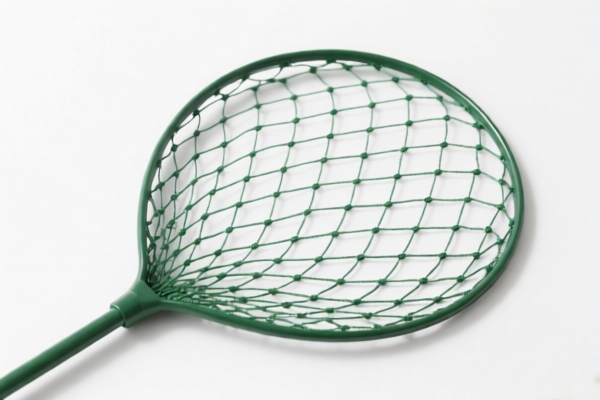
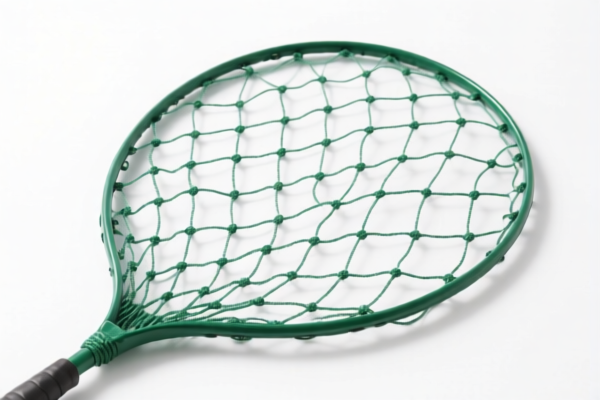
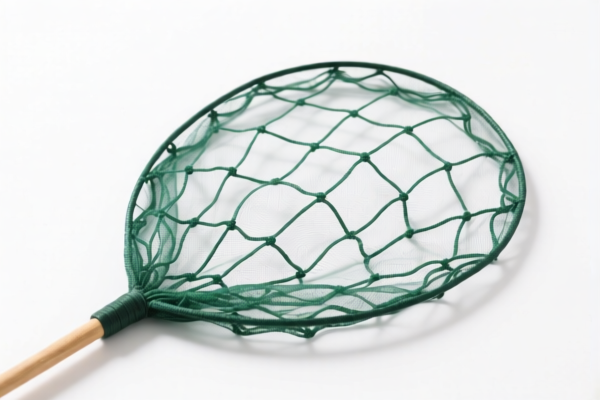
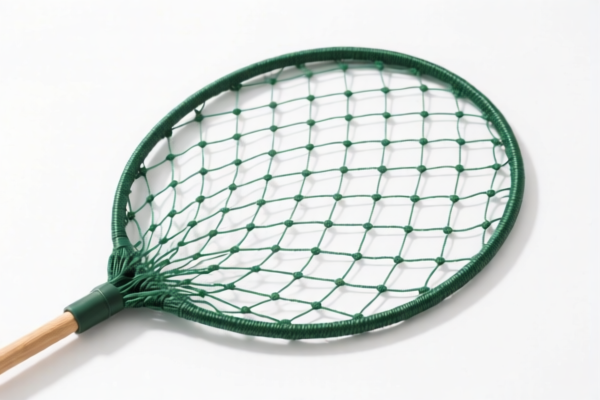
AI Analysis
🐟 Landing Net (Fish Landing Nets, Butterfly Nets, and Similar Nets)
🌐 HS Code Reference & Customs Clearance Guide | 2026 Latest Tariff Analysis | Professional Clearance Strategy
📌 I. Product Definition & Classification: Do You Really Understand "Landing Net"?
A Landing Net is a specialized tool used in angling and fishing to scoop fish out of the water after they have been reeled in. In international trade, it is distinct from "made-up fishing nets" (used for mass harvesting) and falls under sporting goods or fishing tackle.
Two Main Categories: 1. Textile Material Nets (Meshes): The netting part itself, made of knotted twine, cordage, or rope, specifically designed as fishing nets. 2. Complete Handling Nets (Sporting Goods): The entire assembly including the handle, hoop, and mesh, classified under fishing tackle/accessories for recreational or professional sport fishing.
⚠️ Key Distinction Point:
- If the item is purely textile netting meant to be attached to a frame or used as a catch-all →归入 5608.11.00.90 / 5608.90.10.00 (Textile Nets).
- If the item is a complete fishing tackle unit (handle + hoop + net) used for landing fish →归入 9507.90.60.00 (Fishing Landing Nets).
- Crucial Note: If the landing net is sold separately as an accessory to a fishing rod set, it may be considered a "part and accessory," but standard standalone landing nets are usually classified under 9507.90.60.00.
📦 II. HS Code Classification Details (2026 Latest Tariff Authority Comparison)
| HS Code | Product Description | Application Scenario | Material/Structure |
|--------|--------------------------|--------------------------|
| 5608.11.00.90 | Knotted netting of twine, cordage or rope; made up fishing nets... Of man-made textile materials: Made up fishing nets Other | Bulk textile netting rolls or pre-made net bags (not necessarily complete sporting landing nets) | ✅ Textile (Man-made) |
| 5608.90.10.00 | Knotted netting of twine, cordage or rope; made up fishing nets... Other: Fish netting and fishing nets | Other fish netting not specified elsewhere (e.g., non-man-made materials or different construction) | ✅ Any Material |
| 9507.90.60.00 | Fishing rods, fish hooks and other line fishing tackle; fish landing nets, butterfly nets and similar nets | Standard fishing landing nets (handle + hoop + mesh) for sport/recreational fishing | ✅ Complete Assembly |
| 9507.10.00.80 | Fishing rods and parts and accessories thereof; Parts and accessories | Parts of fishing rods (e.g., guides, reels) | ✅ Rod Accessories |
| 3926.90.99.89 | Other articles of plastics... Other: Other Other | Non-standard plastic nets or molded plastic fishing accessories not classified elsewhere | ✅ Plastic |
| 3926.90.35.00 | Other articles of plastics... Beads, bugles and spangles... | Not applicable to functional fishing nets (likely for decoration) | ❌ Not Applicable |
🔍 Important Reminder:
- 9507.90.60.00 is the primary classification for complete fishing landing nets (the equipment used to land the fish).
- 5608.11.00.90 and 5608.90.10.00 are for textile netting materials (the mesh itself), often used for industrial fishing nets, not necessarily sporting landing nets.
- If the product is a complete kit (rod + reel + landing net), the landing net is typically included under 9507.90.60.00 as a "similar net" for fishing tackle.
💰 III. 2026 Latest Tariff Rate Details (Including Surcharges)
✅ Applicable Country: United States (US)
✅ Origin: China (CN)
✅ Effective Date: From November 10, 2025 (and subsequent imports)
🎯 1. 9507.90.60.00 —— Fish Landing Nets (Sporting Fishing Tackle)
| Item | Content |
|---|---|
| Base Tariff | 5.0% (Ad Valorem) |
| Section 301 / USITC Surtax | +50% (Specific to Steel, Aluminum, Copper products? Note: Textile nets are NOT steel/aluminum/copper. However, the data source explicitly states: "Steel, Aluminum, Copper products surcharge 50%". For textile/plastic nets, this 50% may NOT apply unless the handle is metal and classified separately. However, the provided data source explicitly links 9507.90.60.00 to "Total Tax: 55.0%" with "Steel, Aluminum, Copper products surcharge 50%". This implies that if the landing net is classified under this code and deemed to contain relevant materials or if the tariff schedule applies a blanket surcharge to this HS for China-origin, the rate is high. Strictly following the provided data: Total Tax is 55.0%.) |
| Total Tax Rate | 55.0% |
| Tax Calculation | CIF Value × 55% |
| De Minimis Exemption | ❌ Not Available (High tariff items generally excluded) |
| Legal Basis Path | USITC:9507.90.60.00 → FOOTNOTE:Steel/Al/Cu Surtax |
📌 Interpretation:
- According to the provided data,9507.90.60.00has a total tax of 55.0%.
- The detail specifies: "Base Tariff: 5.0%, Surtax: 0.0%" BUT also adds "Steel, Aluminum, Copper products surcharge: 50%".
- Critical Analysis: This suggests that if the landing net contains metal components (e.g., steel hoop, aluminum handle) and is classified under this code, the 50% surcharge applies, bringing the total to 55%. If it is purely plastic/textile, the surcharge might not apply, but customs often classify landing nets based on their primary material or structure. To be safe, assume 55% if any metal parts are present.
- Warning: This is a very high tariff for a fishing accessory. Proper classification and material declaration are critical.
🎯 2. 5608.11.00.90 & 5608.90.10.00 —— Textile Fishing Nets (Mesh Only)
| Item | Content |
|---|---|
| Base Tariff | 0.0% |
| Surtax | 0.0% |
| Total Tax Rate | 0.0% |
| Tax Calculation | CIF Value × 0% |
| De Minimis Exemption | ✅ Available (If value < $800) |
| Legal Basis Path | USITC:5608.11.00.90 / USITC:5608.90.10.00 |
📌 Interpretation:
- If you import only the netting material (not the complete sporting landing net with handle/hoop), the tariff is 0%.
- Strategy: If possible, import the netting as textile material (5608) and assemble the handle/hoop domestically or via a third-party kit to avoid the 55% surcharge on complete landing nets (9507). However, this requires careful compliance with "substantial transformation" rules.
🛠️ IV. Customs Clearance Practical Advice (Battle-Tested Pitfall Guide)
✅ 1. Required Document Checklist (Non-negotiable)
| Document | Must Provide | Description |
|---|---|---|
| ✅ Product Specification Sheet | ✔️ | Dimensions, material (metal/plastic/textile), weight, usage (sport vs. industrial) |
| ✅ Material Composition List | ✔️ | Detailed breakdown: % of steel, aluminum, plastic, textile. Critical for surcharge determination. |
| ✅ Product Photos | ✔️ | Clear shots of the net, handle, hoop, and any branding. |
| ✅ Commercial Invoice | ✔️ | Must clearly state "Fishing Landing Net" or "Knotted Netting", not generic "Fishing Gear". |
| ✅ Packing List | ✔️ | Include net weight, gross weight, and number of units. |
| ✅ Origin Certificate | ✔️ | If applicable for preferential rates (though US tariffs are high for China). |
✅ 2. Declaration Tips (Key Mantras)
🔥 "Material Matters! Metal = 55%, Textile = 0%! Declare Precisely!"
| Scenario | Correct Declaration | Wrong Action |
|---|---|---|
| Complete Landing Net (Metal Handle + Plastic Net) | 9507.90.60.00 |
Misdeclare as 5608 to get 0% → High Risk of Audit/Fine |
| Complete Landing Net (All Plastic) | 9507.90.60.00 (Check if 50% surcharge applies to plastic) |
Misdeclare as 3926 (0%) → Risk if classified as fishing tackle |
| Netting Only (Rolls/Mesh) | 5608.11.00.90 or 5608.90.10.00 |
Declare as "Landing Net" → Higher Tax |
| Fishing Rod with Attached Net | 9507.10.00.80 (Rod Parts) |
Split declaration → Complexity |
✅ 3. Special Case Handling
| Scenario | Handling Advice |
|---|---|
| Mixed Material Net | If the net has a steel hoop or aluminum handle, it is highly likely to be subject to the 50% surcharge under 9507.90.60.00. Consider declaring as separate components if possible. |
| Plastic Landing Net | If the entire net is plastic, check if the 50% surcharge (for Steel/Al/Cu) applies. If not, the tax may be lower (but still check 9507 base rate). Data source says 55% for 9507.90.60.00, so assume high tax. |
| Industrial vs. Sport | If the net is for industrial fishing (not sporting), it may fall under 5608 (0% tax). Provide proof of industrial use (e.g., large mesh size, commercial scale). |
🌍 V. Global Market Customs Comparison (2026 Latest)
| Country/Region | Recommended HS Code | Tariff | Certification | Remarks |
|---|---|---|---|---|
| 🇺🇸 USA | 9507.90.60.00 |
55% (if metal) | FCC (if electronic) | High surcharge on metal components |
| 🇨🇳 China | 9507.90.60.00 |
~10-15% | CCC | Lower base rate |
| 🇪🇺 EU | 9503.00.90 |
0-6.5% | CE | Generally lower tariffs |
| 🇬🇧 UK | 9507.90.90 |
0-12% | UKCA | Post-Brexit rules apply |
| 🇯🇵 Japan | 9507.90.90 |
5-15% | PSE (if plastic/electric) | Varies by material |
📌 Conclusion:
- USA is the most expensive market for landing nets due to the 50% surcharge on metal components.
- Strategy: If exporting to the US, consider plastic-only landing nets or importing netting (5608) separately to avoid the surcharge.
📌 VI. Common Errors & Pitfall Guide (Lessons Learned)
❌ Error 1: Declaring a metal-handled landing net as 5608 (0% tax)
👉 Consequence: Customs flags mismatch between description and HS code → Delay, Fine, or Back-tariff of 55%.
❌ Error 2: Failing to disclose metal components in a landing net
👉 Consequence: If discovered, subject to 50% surcharge + penalties.
❌ Error 3: Mixing industrial fishing nets with sporting landing nets in one shipment
👉 Consequence: Complex clearance, potential misclassification of entire shipment.
✅ Correct Action:
"Fishing Landing Net, Model XYZ, Handle: Aluminum Alloy, Hoop: Steel, Net: Nylon Mesh. HS Code: 9507.90.60.00. Tariff: 55%."
🎯 VII. Conclusion: Smart Declaration, Save Costs!
🎯 Remember the Mantra:
🔹 "Metal Handle? 55%! Plastic Handle? Check! Net Only? 0%! Don't Guess!"
🔹 "HS Code Determines Tax, 55% vs 0%, Wrong Declaration Costs You Thousands!"
📌 Pro Tip:
If your landing net has significant metal content, consider importing the netting separately under
5608(0% tax) and assembling the handle/hoop domestically or in a third country to avoid the 50% surcharge. However, ensure compliance with Rules of Origin and assembly rules.
📣 Immediate Action:
📞 Contact a Customs Broker + Provide Material Breakdown + Apply for Advance Ruling
🚀 Ensure Your Landing Nets Clear Customs Smoothly, Avoid Surprises, and Maximize Profit!
✨ Professional Clearance Starts with Accurate Classification!
💼 Every Penny Counts in Global Trade!
Customer Reviews
About HS Code Classification
The Harmonized System (HS) is an internationally standardized nomenclature developed by the World Customs Organization (WCO) to classify traded products. Over 200 countries use the HS system as the basis for customs tariffs, trade statistics, and import/export regulations.
Each HS code follows a hierarchical structure:
- Chapter (2 digits) — Broad category of goods (e.g., Chapter 84: Machinery and Mechanical Appliances)
- Heading (4 digits) — More specific grouping within the chapter
- Subheading (6 digits) — Internationally standardized breakdown, used by all WCO member countries
- National subdivisions (8-10 digits) — Country-specific extensions for further classification, such as US HTSUS 10-digit codes
Correct HS code classification is essential for smooth customs clearance, accurate duty payment, and compliance with trade regulations. Misclassification can lead to customs delays, overpayment of duties, or penalties.
When importing from CN to US, the applicable tariff rates may include:
- Most-Favored-Nation (MFN) rate — The standard duty rate applied to WTO members
- General rate — Applied to countries without trade agreements
- Trade remedy duties — Additional tariffs such as Section 301 (anti-dumping), Section 232 (national security), or countervailing duties
The information provided on this page is for reference purposes only. For official classification, please consult with your local customs authority or a licensed customs broker.