Landscaping Wood Logs
CN → US| HS Code | Tariff Rate | Origin | Destination | Doc |
|---|---|---|---|---|
| 4407190092 | 35.0% | CN | US | Official Doc |
| 4407190093 | 35.0% | CN | US | Official Doc |
Product Images
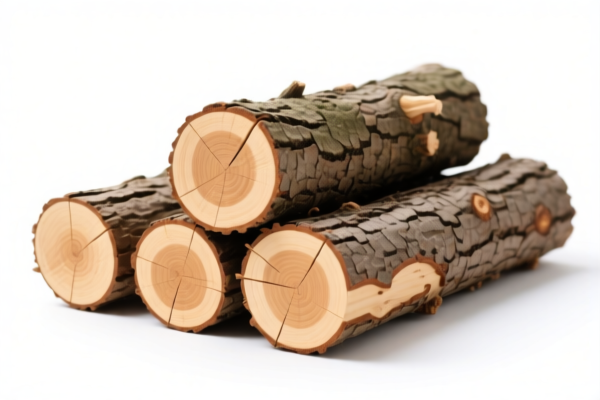
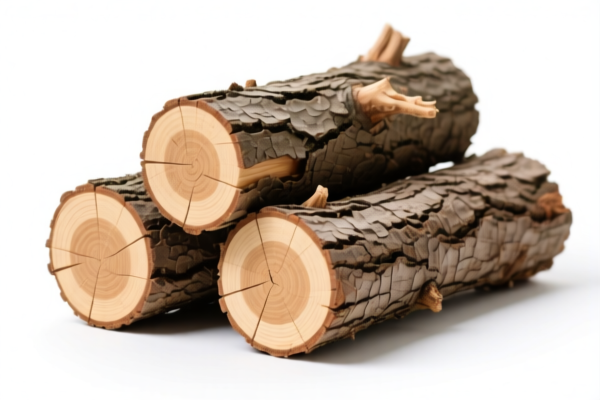
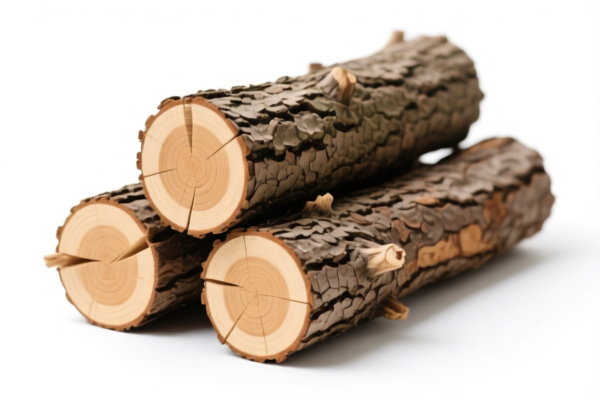
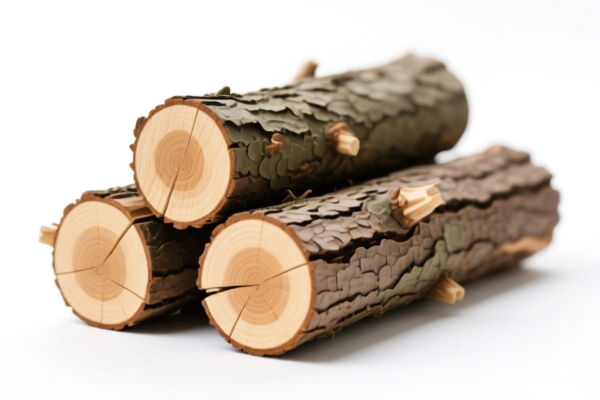
AI Analysis
🌲 Landscaping Wood Logs (Sawn Wood)
🌐 HS Code Reference & Customs Clearance Guide | 2026 Latest Tariff Analysis | Professional Clearance Strategy
📌 I. Product Definition & Classification: What Exactly Are "Landscaping Wood Logs"?
In international trade, "Landscaping Wood Logs" typically refer to wood that has been processed for aesthetic or structural purposes in gardens, parks, and outdoor projects. According to the provided data, these are classified under Chapter 44: Wood and articles of wood; wood charcoal.
Specifically, the logs fall under Heading 44.07: Wood sawn or chipped lengthwise, sliced or peeled, whether or not planed, sanded or end-jointed, of a thickness exceeding 6 mm.
⚠️ Key Classification Point:
- The wood must be Coniferous (softwood like pine, spruce, fir).
- The thickness must exceed 6 mm.
- The description distinguishes between "Rough" (unplaned/unfinished) and "Other" (planed, sanded, or end-jointed).
- Both categories listed below are "Not treated" (untreated/unpainted).
📦 II. HS Code Classification Details (2026 Latest Tariff Authority Comparison)
Based on the provided data, there are two distinct sub-categories for Coniferous Wood Logs under Heading 4407.19.00.9:
| HS Code | Product Description | Application Scenario | Treatment Status | Surface Finish |
|---|---|---|---|---|
4407.19.00.92 |
Coniferous Wood: Other: Not treated: Other: Rough | Natural garden edges, retaining walls, untreated decorative logs | ✅ Not Treated | Rough (Unplaned, unsanded, end-jointed only if specified, but primarily rough-cut) |
4407.19.00.93 |
Coniferous Wood: Other: Not treated: Other: Other | Planed decks, sanded furniture components, smooth landscape edging | ✅ Not Treated | Other (Planed, sanded, or end-jointed, but not painted/treated) |
🔍 Critical Distinction:
- "Rough" (92): The surface is natural, unplaned, and unsanded. Ideal for rustic landscaping, mulch logs, or naturalistic garden structures.
- "Other" (93): The wood has been mechanically finished (planed/sanded) for a smoother appearance, but has not been chemically treated (no preservatives, stains, or paints).
- ⚠️ Warning: If the wood is treated (e.g., with chromated copper arsenate), it does NOT fall under these codes. It would fall under different sub-headings for "treated wood."
💰 III. 2026 Latest Tariff Rate Details (Including Surcharges)
✅ Applicable Country: United States (US)
✅ Origin: China (CN) (Implied by the 25% additional tariff structure typical of US-China trade tensions)
✅ Effective Time: Current trade policies applicable to Chinese-origin goods
🎯 1. 4407.19.00.92 —— Coniferous Wood Logs (Rough, Not Treated)
| Item | Details |
|---|---|
| Base Tariff | 0.0% (ad valorem) |
| Additional Tariff (Section 301) | +25.0% |
| Total Tariff Rate | 25.0% |
| Tax Calculation | CIF Value × 25% |
| De Minimis Eligibility | ❌ No (Generally, wood products are subject to strict scrutiny and do not qualify for de minimis exemptions under current 301 tariff rules) |
| Legal Basis | USITC: 4407.19.00.92 → Section 301 Footnote |
📌 Explanation:
- The base Most Favored Nation (MFN) rate for many wood products is 0%.
- However, due to Section 301 trade measures, a 25% surcharge is applied to specific Chinese-origin goods, including certain processed wood products.
- Total Cost Impact: For every $10,000 CIF value, expect $2,500 in duties alone.
🎯 2. 4407.19.00.93 —— Coniferous Wood Logs (Planed/Sanded/End-Jointed, Not Treated)
| Item | Details |
|---|---|
| Base Tariff | 0.0% (ad valorem) |
| Additional Tariff (Section 301) | +25.0% |
| Total Tariff Rate | 25.0% |
| Tax Calculation | CIF Value × 25% |
| De Minimis Eligibility | ❌ No |
| Legal Basis | USITC: 4407.19.00.93 → Section 301 Footnote |
📌 Note:
- Even though this wood is "finished" (planed/sanded), it remains untreated regarding chemical preservation.
- The tariff rate is identical to the "Rough" version: 25%.
- Both codes are subject to the same 25% additional duty.
🛠️ IV. Customs Clearance Practical Advice (Avoiding Pitfalls)
✅ 1. Required Documentation Checklist
| Document | Mandatory? | Notes |
|---|---|---|
| ✅ Commercial Invoice | ✔️ | Must clearly state "Wood Logs," "Coniferous," "Not Treated," and precise HS Code. |
| ✅ Packing List | ✔️ | Detailed weight (Gross/Net) and volume (CBM). |
| ✅ Phytosanitary Certificate | ✔️ | CRITICAL: Issued by the exporting country's plant protection agency to confirm freedom from pests/diseases. |
| ✅ ISPM 15 Marking | ✔️ | If the wood is in solid wood packaging (pallets/crates), it must bear the ISPM 15 stamp. The logs themselves do not need ISPM 15 if they are sawn wood >6mm, but packaging does. |
| ✅ Bill of Lading/Air Waybill | ✔️ | Standard shipping document. |
| ✅ Certificate of Origin | ✔️ | To prove origin (China) and apply correct tariff rates. |
✅ 2. Declaration Tips (Key Mantra)
🔥 "Specify Treatment, Define Roughness, Ensure Phytosanitary!"
| Scenario | Correct Declaration | Incorrect Practice |
|---|---|---|
| Surface Finish | Clearly state "Rough" (for .92) or "Planed/Sanded" (for .93). |
Vague terms like "Wood Pieces" → High risk of reclassification or delay. |
| Treatment Status | Explicitly state "Not Treated" or "Untreated". | If treated, declare as such. Misdeclaring treated wood as untreated leads to penalties. |
| Species | Specify "Coniferous" (e.g., Pine, Spruce). | General "Wood" → May require more detailed species identification. |
| Thickness | Confirm > 6 mm. | If ≤ 6 mm, it falls under Chapter 44.08, not 44.07. |
✅ 3. Special Circumstances & Handling
| Situation | Handling Advice |
|---|---|
| Wood Packaging Materials | Ensure pallets/crates have ISPM 15 marks. Non-compliant packaging leads to rejection or fumigation costs. |
| Chemical Treatment | If logs are pressure-treated with preservatives, they cannot use these codes. They may be classified under 4407.90 or other treated wood codes, potentially with different tariffs. |
| Pest Inspection | CBP and USDA APHIS may conduct physical inspections. Ensure logs are clean, free of bark, soil, and insects to avoid delays. |
| Duty Mitigation | Since the rate is 25%, consider supply chain adjustments. However, wood logs rarely qualify for duty-free exemptions unless originating from specific FTA countries (e.g., Canada/Mexico under USMCA, but data implies China origin). |
🌍 V. Global Market Comparison (2026 Latest)
| Country/Region | Recommended HS Code | Tariff (China Origin) | Certification Requirements | Notes |
|---|---|---|---|---|
| 🇺🇸 USA | 4407.19.00.92 / .93 |
25.0% | Phytosanitary Cert + ISPM 15 (packaging) | High duty due to Section 301. |
| 🇨🇳 China | 4407.19.00.92 / .93 |
Varies (Import Duty) | Phytosanitary Cert | Domestic consumption vs. Import. |
| 🇪🇺 EU | 4407.19.10 (approx) |
0% - 5% | ISPM 15 (packaging) + Fytosanitary | Generally lower duties than US. |
| 🇬🇧 UK | 4407.19.10 (approx) |
0% - 5% | ISPM 15 (packaging) + Fytosanitary | Post-Brexit rules apply. |
| 🇦🇺 Australia | 4407.19.10 (approx) |
5% | Biosecurity strictness | High biosecurity checks for wood. |
📌 Conclusion:
- The USA imposes a significant 25% additional tariff on these wood products from China.
- Phytosanitary compliance is as critical as tariff compliance. Failure here leads to immediate rejection, regardless of correct HS coding.
📌 VI. Common Mistakes & Pitfalls (Lessons Learned)
❌ Mistake 1: Declaring "Treated" wood as "Not Treated"
👉 Consequence: Fraud accusation, fines, and seizure. Treated wood has different chemical profiles and tariffs.
❌ Mistake 2: Ignoring Phytosanitary Certificates
👉 Consequence: Goods held at port, fumigation costs, or return shipment. USDA APHIS is strict on wood imports.
❌ Mistake 3: Using vague descriptions like "Decorative Wood"
👉 Consequence: Customs delay for clarification. Must specify "Sawn, Coniferous, Rough/Planed, Not Treated."
❌ Mistake 4: Confusing Wood Logs with Wood Chips
👉 Consequence: Wrong HS Code. Wood chips (<6mm or un-sawn) fall under different codes (e.g., 4401). This data specifies >6mm sawn wood.
✅ Correct Practice:
"Coniferous Wood Logs, Sawn, Thickness >6mm, Rough Surface, Untreated, Model LG-001, Phytosanitary Cert No. XXX, ISPM 15 Packaging"
🎯 VII. Conclusion: Professional Declaration, Smooth Clearance
🎯 Remember the Mantra:
🔹 "Rough vs. Planed defines the Subcode (92 vs. 93)."
🔹 "Not Treated means 0% Base + 25% Surcharge = 25% Total."
🔹 "Phytosanitary is Non-Negotiable for Wood."
📌 Pro Tip:
If you are importing large volumes, consider applying for a Customs Ruling from CBP to confirm the "Rough" vs. "Planed" classification based on physical samples. This provides legal certainty against the 25% tariff.
📣 Immediate Action:
📞 Verify surface finish (Rough/Planed) → Check Phytosanitary Certificate → Confirm ISPM 15 on packaging → Declare Correct HS Code (
4407.19.00.92or.93).
🚀 Avoid delays, avoid penalties, save 25% duty awareness!
✨ Professional Clearance Starts with Accurate Classification!
💼 Every percentage point counts in landscaping wood logistics!
Customer Reviews
About HS Code Classification
The Harmonized System (HS) is an internationally standardized nomenclature developed by the World Customs Organization (WCO) to classify traded products. Over 200 countries use the HS system as the basis for customs tariffs, trade statistics, and import/export regulations.
Each HS code follows a hierarchical structure:
- Chapter (2 digits) — Broad category of goods (e.g., Chapter 84: Machinery and Mechanical Appliances)
- Heading (4 digits) — More specific grouping within the chapter
- Subheading (6 digits) — Internationally standardized breakdown, used by all WCO member countries
- National subdivisions (8-10 digits) — Country-specific extensions for further classification, such as US HTSUS 10-digit codes
Correct HS code classification is essential for smooth customs clearance, accurate duty payment, and compliance with trade regulations. Misclassification can lead to customs delays, overpayment of duties, or penalties.
When importing from CN to US, the applicable tariff rates may include:
- Most-Favored-Nation (MFN) rate — The standard duty rate applied to WTO members
- General rate — Applied to countries without trade agreements
- Trade remedy duties — Additional tariffs such as Section 301 (anti-dumping), Section 232 (national security), or countervailing duties
The information provided on this page is for reference purposes only. For official classification, please consult with your local customs authority or a licensed customs broker.