Lanyards
CN → US| HS Code | Tariff Rate | Origin | Destination | Doc |
|---|---|---|---|---|
| 7117192000 | 28.5% | CN | US | Official Doc |
| 7117191500 | 25.5% | CN | US | Official Doc |
| 5609001000 | 37.9% | CN | US | Official Doc |
| 5609003000 | 39.5% | CN | US | Official Doc |
| 5609003000 | 39.5% | CN | US | Official Doc |
Product Images
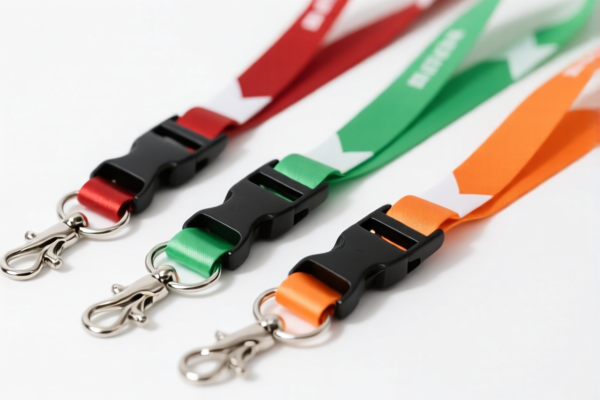

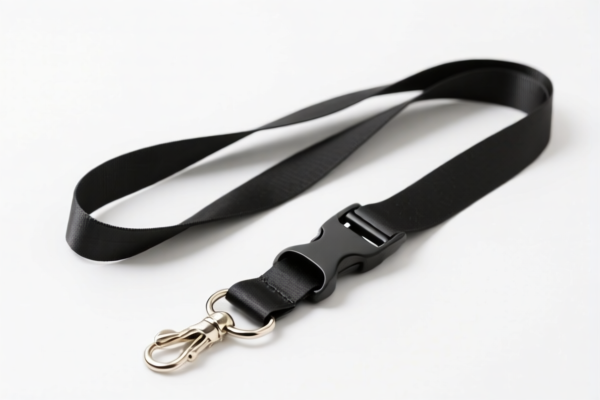
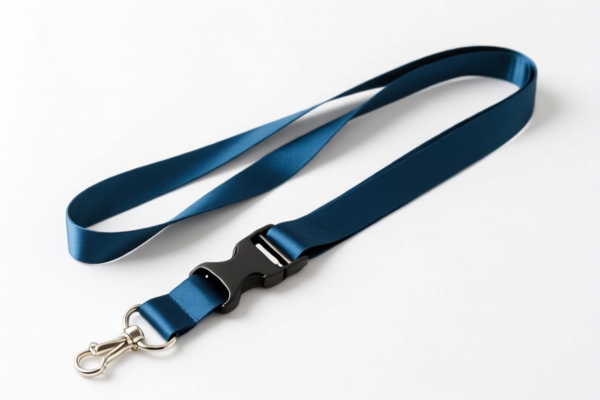
AI Analysis
🎗️ Lanyards & Straps (Lanyards, Leashes, and Similar Articles)
🌐 HS Code Reference & Customs Clearance Guide | 2024/2025 Latest Tariff Analysis | Professional通关 Strategies
📌 Part 1: Product Definition & Classification: What Exactly is a "Lanyard"?
In international trade, "Lanyards" are broadly defined as cords, cords, strings, or tapes woven, plaited, or braided into a rope, cord, or braid, or made up of such ropes, cords, or braids. However, they are also classified based on their material and intended use.
Key Distinctions:
- Textile/Synthetic Fibre Lanyards: Made from nylon, polyester, cotton, or other textile materials. Used for ID badges, promotional items, or general utility. → Classified under Chapter 56 or 58.
- Imitation Jewelry Lanyards: Made of base metals, plastic, or glass beads, designed for aesthetic purposes (fashion accessories). → Classified under Chapter 71.
- Leashes/Trailing Ropes: Specifically designed for animals or heavy-duty pulling. → Classified under Chapter 56.
⚠️ Critical Classification Point:
- If the material is not explicitly specified in documentation, customs may default to the "catch-all" textile category (5609.00.10.00).
- If identified as artificial fibers (e.g., nylon/polyester), it falls under 5609.00.30.00.
- If it resembles imitation jewelry (e.g., decorative beads, metal chains), it falls under 7117.19.
- If made of base metal (e.g., steel/iron chains), it falls under 7117.19.15.
📦 Part 2: HS Code Classification Details (Latest Tariff Schedule)
| HS Code | Product Description | Applicable Scenario | Material/Feature |
|---|---|---|---|
5609.00.10.00 |
Articles of rope, cordage, plaiting or braiding, not elsewhere specified or included | Generic lanyards, unspecified material; catch-all for rope-like items | ✅ Unspecified/Textile |
5609.00.30.00 |
Lanyards, leashes, and similar articles of artificial textile materials | Synthetic lanyards (Nylon, Polyester) used for ID cards, bags, or pets | ✅ Artificial Fibers |
7117.19.20.00 |
Imitation jewelry: Other, of base metal or glass | Decorative lanyards, fashion chains, bead-style lanyards | ✅ Imitation Jewelry |
7117.19.15.00 |
Imitation jewelry: Of base metal, other | Metal chain lanyards, industrial-grade metal straps | ✅ Base Metal |
5609.00.10.00 |
Leashes, based on rope morphology and catch-all principle | Animal leashes, generic pulling ropes without specific material ID | ✅ Rope Form |
🔍 Important Note:
- 5609.00.10.00 is often the fallback classification when the exact fiber type is unknown. It has a higher total tax rate due to the lack of specific material identification.
- 5609.00.30.00 is the most common for promotional ID lanyards made of polyester/nylon.
- 7117 series applies only if the item is primarily decorative/fashionable and resembles jewelry.
💰 Part 3: 2024/2025 Latest Tariff Rates Detail (Including Surtaxes & Policy Add-ons)
✅ Applicable Country: United States (US)
✅ Country of Origin: China (CN)
✅ Effective Date: Ongoing (as of current data)
🎯 1. 5609.00.10.00 —— Articles of Rope/Cordage (Unspecified Material / Catch-All)
| Item | Detail |
|---|---|
| Basic Tariff Rate | 2.9% (ad valorem) |
| Section 301 Surtax | +25.0% (Targeting Chinese goods) |
| 122 Clause Surtax | +10.0% (Specific provision for certain textile/rope items) |
| Total Effective Tax Rate | 37.9% |
| Tax Calculation | CIF Value × 37.9% |
| De Minimis Exemption | ❌ Not Eligible (Due to Section 301 and 122 clauses) |
| Legal Basis Path | USITC:5609.00.10.00 → Section 301: Footnote 9903.88.01 → 122 Clause: Specific Provision |
📌 Explanation:
- This classification carries a high total tax burden because it is treated as a generic Chinese import without material-specific advantages.
- The 122 Clause adds an extra 10%, making this one of the costliest classifications for simple lanyards.
🎯 2. 5609.00.30.00 —— Lanyards/Leashes (Artificial Fibers)
| Item | Detail |
|---|---|
| Basic Tariff Rate | 4.5% (ad valorem) |
| Section 301 Surtax | +25.0% (Targeting Chinese goods) |
| 122 Clause Surtax | +10.0% |
| Total Effective Tax Rate | 39.5% |
| Tax Calculation | CIF Value × 39.5% |
| De Minimis Exemption | ❌ Not Eligible |
| Legal Basis Path | USITC:5609.00.30.00 → Section 301 → 122 Clause |
📌 Note:
- Even with identified synthetic materials, the Section 301 and 122 Clause taxes still apply, resulting in a 39.5% total rate.
- This is the standard rate for most promotional lanyards.
🎯 3. 7117.19.20.00 —— Imitation Jewelry Lanyards
| Item | Detail |
|---|---|
| Basic Tariff Rate | 11.0% (ad valorem) |
| Section 301 Surtax | +7.5% (Lower surtax rate for certain jewelry items) |
| 122 Clause Surtax | +10.0% |
| Total Effective Tax Rate | 28.5% |
| Tax Calculation | CIF Value × 28.5% |
| De Minimis Exemption | ❌ Not Eligible |
| Legal Basis Path | USITC:7117.19.20.00 → Section 301 → 122 Clause |
📌 Insight:
- If your lanyard is decorative (e.g., beaded, styled like a necklace), classifying it as Imitation Jewelry can lower the Section 301 surtax from 25% to 7.5%.
- This results in a significant savings (28.5% vs. 37.9%+).
🎯 4. 7117.19.15.00 —— Imitation Jewelry Lanyards (Base Metal)
| Item | Detail |
|---|---|
| Basic Tariff Rate | 8.0% (ad valorem) |
| Section 301 Surtax | +7.5% |
| 122 Clause Surtax | +10.0% |
| Total Effective Tax Rate | 25.5% |
| Tax Calculation | CIF Value × 25.5% |
| De Minimis Exemption | ❌ Not Eligible |
| Legal Basis Path | USITC:7117.19.15.00 → Section 301 → 122 Clause |
📌 Insight:
- Metal chain lanyards designed as fashion accessories qualify for the lowest total tax rate (25.5%).
- Ensure the product is marketed as jewelry/accessory, not utility rope, to justify this classification.
🛠️ Part 4: Customs Clearance Practical Advice (Battle-Tested Pitfall Avoidance)
✅ 1. Documentation Checklist (Missing Items = Delays)
| Document | Required | Notes |
|---|---|---|
| ✅ Product Specification Sheet | ✔️ | Must specify material (e.g., "100% Polyester," "Base Metal Chain") |
| ✅ Product Photos | ✔️ | Clear images showing hooks, clasps, and any decorative elements |
| ✅ Commercial Invoice | ✔️ | Use precise terminology: "Promotional Lanyard" vs. "Fashion Chain Lanyard" |
| ✅ HS Code Pre-Ruling | ✔️ | Highly Recommended for large shipments to confirm classification |
| ✅ Origin Certificate | ✔️ | Confirm CN origin to apply correct surtaxes |
✅ 2. Declaration Strategy (Key Tips)
🔥 “Material First, Function Second, Jewelry Angle Saves Tax!”
| Scenario | Correct Declaration | Wrong Declaration |
|---|---|---|
| Standard Promotional Lanyard (Nylon/Poly) | 5609.00.30.00 - "Lanyard, Artificial Fibers" |
Misdeclare as "Jewelry" → Audit Risk |
| Beaded/Decorative Lanyard | 7117.19.20.00 - "Imitation Jewelry Lanyard" |
Misdeclare as "Rope" → 37.9% Tax |
| Metal Chain Lanyard (Fashion Style) | 7117.19.15.00 - "Base Metal Jewelry Lanyard" |
Misdeclare as "Rope" → 37.9% Tax |
| Unspecified Material | 5609.00.10.00 - "Rope Article" |
Ambiguous description → Customs Discretion |
📌 Warning:
- Do not misclassify a nylon lanyard as "Jewelry" unless it has significant decorative elements (beads, gems, complex metalwork).
- Do not split shipments to avoid tariffs; customs tracks consistent patterns.
✅ 3. Special Cases
| Situation | Handling Advice |
|---|---|
| OEM Custom Lanyards | Provide client specs + material composition to justify 5609.00.30.00 |
| Animal Leashes | Classify under 5609.00.10.00 or 5609.00.30.00 depending on material. Avoid "Jewelry" classification. |
| Hybrid Materials (e.g., Fabric + Metal Clasp) | If fabric >50% by weight/value, likely 5609. If metal clasp is dominant, consider 7117. |
| Samples | Even samples are subject to tariffs if declared as "Goods." Use "Free Sample" status carefully, but taxes still apply on CIF value. |
🌍 Part 5: Global Market Comparison (2024/2025)
| Country/Region | Recommended HS Code | Tariff (China Origin) | Notes |
|---|---|---|---|
| 🇺🇸 USA | 5609.00.30.00 |
39.5% | High surtax due to Section 301 & 122 |
| 🇺🇸 USA | 7117.19.15.00 |
25.5% | Lower tax if classified as jewelry |
| 🇨🇳 China | 5609.00.30.00 |
4.5% | No additional surtaxes for import |
| 🇪🇺 EU | 5609.00.30.00 |
4.5% | No Section 301 equivalent |
| 🇬🇧 UK | 5609.00.30.00 |
4.5% | Post-Brexit tariffs align with EU |
📌 Conclusion:
- The USA is the most challenging market due to Section 301 and 122 Clause taxes.
- Classification Strategy is critical: "Jewelry" classification can save up to 12% in total taxes.
📌 Part 6: Common Mistakes & Pitfalls (Lessons Learned)
❌ Mistake 1: Describing all lanyards as "Rope" → Leads to 5609.00.10.00 (37.9%)
👉 Fix: Specify material. Use "Artificial Fibers" for polyester/nylon.
❌ Mistake 2: Calling a beaded chain "Lanyard" but classifying as Rope → 37.9%
👉 Fix: If decorative, classify as Imitation Jewelry (7117) to reduce surtax.
❌ Mistake 3: Ignoring the 122 Clause → Unexpected 10% tax addition
👉 Fix: Always check for 122 Clause applicability for textile/rope items from China.
❌ Mistake 4: Splitting shipments to avoid de minimis → Customs flags patterns
👉 Fix: Declare accurately. Use Advance Rulings for clarity.
✅ Correct Practice:
"Polyester ID Lanyard, 25mm width, with plastic hook" → 5609.00.30.00
"Decorative Beaded Chain Necklace with Lanyard Hook" → 7117.19.20.00
🎯 Part 7: Conclusion: Smart Classification, Cost Savings!
🎯 Key Takeaway:
🔹 "Material Matters!" Nylon/Poly →
5609.00.30.00(39.5%)
🔹 "Jewelry Angle!" Beaded/Metal Fashion Chain →7117.19.15.00(25.5%)
🔹 "Catch-All Penalty!" Unspecified Material →5609.00.10.00(37.9%)📌 Pro Tip:
For metal or beaded lanyards, consider repackaging and marketing as fashion accessories to qualify for Chapter 71 classification. This can save up to 14% in total taxes compared to standard rope classification.
📣 Immediate Action:
📞 Consult a Customs Broker: Provide product photos and material specs for HS Code Pre-Ruling.
🚀 Optimize Supply Chain: If volume is high, consider shifting decorative items to jewelry classification to reduce tariff burden.
✨ Professional Clearance Starts with Accurate Classification!
💼 Every Percent Saved is Pure Profit!
Customer Reviews
About HS Code Classification
The Harmonized System (HS) is an internationally standardized nomenclature developed by the World Customs Organization (WCO) to classify traded products. Over 200 countries use the HS system as the basis for customs tariffs, trade statistics, and import/export regulations.
Each HS code follows a hierarchical structure:
- Chapter (2 digits) — Broad category of goods (e.g., Chapter 84: Machinery and Mechanical Appliances)
- Heading (4 digits) — More specific grouping within the chapter
- Subheading (6 digits) — Internationally standardized breakdown, used by all WCO member countries
- National subdivisions (8-10 digits) — Country-specific extensions for further classification, such as US HTSUS 10-digit codes
Correct HS code classification is essential for smooth customs clearance, accurate duty payment, and compliance with trade regulations. Misclassification can lead to customs delays, overpayment of duties, or penalties.
When importing from CN to US, the applicable tariff rates may include:
- Most-Favored-Nation (MFN) rate — The standard duty rate applied to WTO members
- General rate — Applied to countries without trade agreements
- Trade remedy duties — Additional tariffs such as Section 301 (anti-dumping), Section 232 (national security), or countervailing duties
The information provided on this page is for reference purposes only. For official classification, please consult with your local customs authority or a licensed customs broker.