Laptop Bag
CN → US| HS Code | Tariff Rate | Origin | Destination | Doc |
|---|---|---|---|---|
| 3926909989 | 22.8% | CN | US | Official Doc |
| 4202923120 | 52.6% | CN | US | Official Doc |
| 4202128920 | 52.6% | CN | US | Official Doc |
Product Images
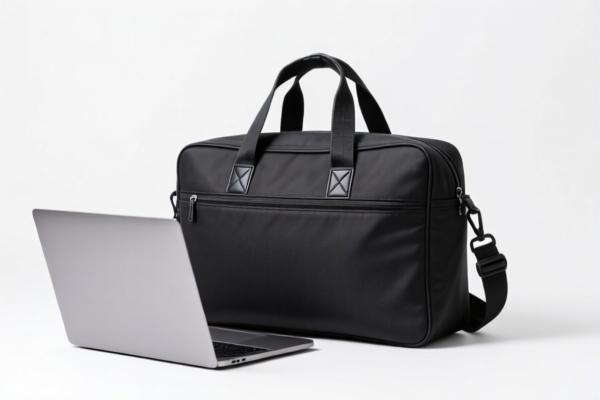

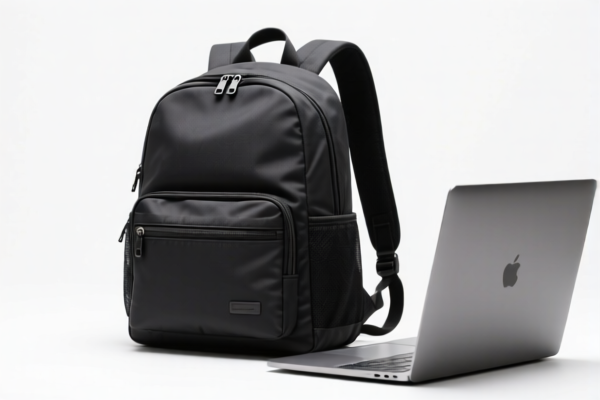
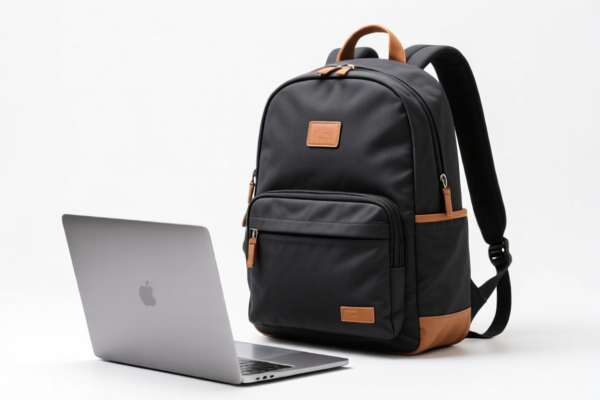
AI Analysis
🎒 Laptop Bags: Ultimate HS Code & Tax Guide (2026 Edition)
🌐 Global Trade Compliance Hub | High-Risk Classification Alert | Smart Customs Strategy
📌 I. What is a "Laptop Bag" Really? (Beyond the Basics)
A "Laptop Bag" is not a single category—it's a classification minefield. In international trade, the difference between paying 22.8% tax and 52.6% tax often comes down to material composition and specific design intent.
- 👜 Category A: Specialized Tech Carriers (Textile/Plastic)
Bags designed specifically for carrying laptops, tablets, or hard drives, often with padded compartments. These usually fall under Chapter 42 (Leather/Travel Goods). - 📦 Category B: General Purpose Containers (Misc. Plastic/Fiber)
Bags made of plastic sheets, synthetic fibers, or leather that can hold a laptop but aren't uniquely designed for it, or lack the specific "bag" structure in Chapter 42. These fall under Chapter 39 (Plastics) or other miscellaneous headings.
⚠️ Critical Distinction:
- If the bag is explicitly "for carrying documents, laptops, or portable computers" with a structured form → HS 4202 (High Tax).
- If the bag is a generic "plastic sheet container" or "other article of plastic" → HS 3926 (Lower Tax, but rare for actual laptop bags).
Note: Most commercial laptop bags are caught in HS 4202 due to specific design intent.
📦 II. HS Code Breakdown & Tax Reality Check (2026 Data)
Based on current trade data, here is the precise classification for Laptop Bags. WARNING: US tariffs on Chinese-origin textile/plastic bags are extremely aggressive.
🎯 Scenario 1: Textile/Plastic Laptop Bags (The Most Common)
HS Code: 4202.12.89.20 or 4202.92.31.20
| Attribute | Detail |
|---|---|
| Product Description | Travel, sports, or similar containers (bags). Outer surface: Textile materials or Plastic sheeting. |
| Specific Sub-Category | 4202.12.89.20 (Other containers, outer surface textile) OR 4202.92.31.20 (Other bags, plastic surface). |
| Material Reality | Nylon, Polyester, Canvas, or PVC/Plastic film. |
| Base Tariff (MFN) | 17.6% |
| Section 301 (Additional) | 25.0% (The "Trump Tariff" / Section 301 surcharge) |
| Section 122 | 10.0% (Newest "Section 122" punitive tariff on specific Chinese goods) |
| 🚨 TOTAL TAX RATE | 52.6% (Base + 25% + 10%) |
💡 The Math:
17.6% (Base) + 25.0% (Section 301) + 10.0% (Section 122) = 52.6%
If your bag is made of textile or plastic film, you are paying over 50% tax on the CIF value.
🎯 Scenario 2: Misclassified "Misc. Plastic/Leather Items" (Rare for Laptop Bags)
HS Code: 3926.90.99.89
| Attribute | Detail |
|---|---|
| Product Description | Other articles of plastics; or articles of leather/synthetic materials not specified elsewhere. |
| Logic | Used only if the item is a generic container made of plastic sheets or synthetic leather that does NOT fit the strict definition of a "travel bag" in Chapter 42. (e.g., a simple plastic pouch not shaped like a bag). |
| Base Tariff | 5.3% |
| Section 301 (Additional) | 7.5% (Lower surcharge for specific non-textile categories) |
| Section 122 | 10.0% |
| ✅ TOTAL TAX RATE | 22.8% |
⚠️ Risk Alert:
Customs officers often reject3926.90.99.89for laptop bags if the bag has straps, handles, zippers, and a padded interior. They will reclassify it to 4202, doubling your tax bill overnight.
💰 III. 2026 Tax Breakdown: Why 52.6%?
📉 The "52.6%" Trap (Chapter 42 Goods)
If you are importing a Textile or Plastic Laptop Bag from China to the US:
- Base Duty (17.6%): The standard Most Favored Nation (MFN) rate for "Articles of Leather, Saddlery, etc." (Chapter 42).
- Section 301 Surcharge (25.0%): A massive penalty imposed by the US Trade Representative (USTR) on Chinese goods. This applies to 85% of consumer bags.
- Section 122 Tariff (10.0%): A newer, specific punitive tariff targeting Chinese manufacturing sectors, applied on top of the above.
- Result: 17.6 + 25.0 + 10.0 = 52.6%
📉 The "22.8%" Exception (Chapter 39 Goods)
If you somehow classify as 3926.90.99.89 (e.g., a very generic plastic item):
1. Base Duty (5.3%): Lower base rate for "Other articles of plastic."
2. Section 301 Surcharge (7.5%): A reduced surcharge for non-textile plastic goods.
3. Section 122 Tariff (10.0%): Still applies.
4. Result: 5.3 + 7.5 + 10.0 = 22.8%
💡 Key Takeaway: The material (Textile vs. Plastic) and the specific description (Bag vs. Other Article) dictate a 29.8% tax difference. Getting this wrong costs you $30,000 per $100,000 shipment.
🛠️ IV. Customs Clearance & Compliance Strategy
✅ 1. Documentation Checklist (Must-Haves)
| Document | Why It Matters |
|---|---|
| Product Photos (360°) | Must show straps, handles, zippers, and interior padding. This proves it is a "Bag" (4202) and not a "Sheet" (3926). |
| Material Composition Certificate | Explicitly state: "Outer: 600D Nylon, Lining: Polyester, Padding: EVA". |
| Design Sketch / CAD | Prove the bag is designed specifically for laptops (padded sleeve). |
| Function Statement | "Intended solely for the transport of portable computers." |
| Origin Declaration | Must clearly state "Made in China" to verify the Section 301/122 applicability. |
✅ 2. Classification Strategy (The "Don't Get Caught" Rule)
🔥 The Golden Rule: "If it has a strap and a padded sleeve, it is 4202. Don't try to fake it as 3926!"
| Situation | Recommended HS Code | Risk Level |
|---|---|---|
| Padded Laptop Sleeve + Shoulder Strap | 4202.12.89.20 or 4202.92.31.20 | ✅ Safe (But high tax) |
| Plain Plastic Folder in a Ziploc | 3926.90.99.89 | ✅ Safe (Low tax, but likely not a "bag") |
| Leather Briefcase | 4202.11.xxxx (Higher Tax!) | ⚠️ High Risk (Check leather rules) |
| Attempted Misclassification | 3926.90.99.89 (for a real bag) | ❌ HIGH PENALTY (Customs will reclassify) |
✅ 3. Cost Optimization Tips
- Bundle with "Free" Components: Ensure the padding is part of the main structure, not an add-on that changes the classification.
- Origin Diversification: If possible, source bags from Vietnam, Mexico, or Malaysia. While Section 301 may still apply, Section 122 and some 301 exclusions might not apply depending on the latest 2026 rulings.
- Pre-Ruling Request: File for an Advance Ruling with US Customs (CBP) before shipping. This locks in the 52.6% rate or proves if a lower rate applies, avoiding surprise fines.
🌍 V. Global Market Comparison (Laptop Bags)
| Destination | Typical HS Code | Base Tax | US Section 301 | Section 122 | Total Tax (China) |
|---|---|---|---|---|---|
| 🇺🇸 USA | 4202.92/12 | 17.6% | 25.0% | 10.0% | 52.6% |
| 🇪🇺 EU | 4202.92 | 3.0% - 4.0% | N/A | N/A | ~4.0% |
| 🇨🇦 Canada | 4202.92 | 0% - 5% | N/A | N/A | ~5.0% |
| 🇯🇵 Japan | 4202.92 | 5.5% | N/A | N/A | 5.5% |
🌟 Insight: The US is uniquely punitive with its 52.6% combined rate. If you are exporting to the US, your profit margin on laptop bags must be >55% just to break even on customs costs!
📌 VI. Common Mistakes & Pitfalls (Don't Fail!)
❌ Mistake 1: Calling it a "Pouch" to avoid Chapter 42
Result: If it has a structured shape, padding, and straps, CBP will reclassify it as a Bag (4202) anyway and charge 52.6% + penalties for under-declaration.
❌ Mistake 2: Ignoring the "Section 122" Clause
Result: Many importers see the 25% Section 301 tax and forget the extra 10% Section 122 tax. They think 42.6% is the max, but it's actually 52.6%.
❌ Mistake 3: Assuming Plastic = Low Tax
Result: Even if the bag is 100% PVC/Plastic, if it is a "Travel Bag" (4202), you pay 52.6%, not 22.8%. The "Bag" status overrides the material.
✅ Correct Approach:
"Laptop Backpack, 15.6-inch, Nylon Exterior, EVA Padded Sleeve, Shoulder Straps, Model X100." → Declare as 4202.92.31.20.
🎯 VII. Final Verdict: The "Laptop Bag" Tax Trap
| HS Code | Description | Total Tax | Verdict |
|---|---|---|---|
| 4202.92.31.20 | Travel/Plastic Bag | 52.6% | ✅ Correct (But expensive) |
| 4202.12.89.20 | Travel/Textile Bag | 52.6% | ✅ Correct (Most common) |
| 3926.90.99.89 | Misc. Plastic Item | 22.8% | ⚠️ Only if NOT a bag |
🚀 Strategic Advice:
1. Verify Material: Is it truly textile/plastic? Yes → 52.6%.
2. Verify Design: Does it have a specific laptop compartment? Yes → 4202.
3. Plan Margins: Factor 52.6% into your FOB/CIF pricing immediately.
4. Check Exclusions: Look for any "Exclusion List" updates for 2026 to see if your specific model qualifies for a 301 exemption (rare but possible).
📢 Ready to Ship?
📞 Consult a Customs Broker before your first shipment.
📝 Get an Advance Ruling to lock in the HS Code.
💰 Adjust Pricing to survive the 52.6% tariff wall.
✨ Precision in Classification = Profit in Your Pocket!
💼 Don't let a "Laptop Bag" bag your business.
Customer Reviews
About HS Code Classification
The Harmonized System (HS) is an internationally standardized nomenclature developed by the World Customs Organization (WCO) to classify traded products. Over 200 countries use the HS system as the basis for customs tariffs, trade statistics, and import/export regulations.
Each HS code follows a hierarchical structure:
- Chapter (2 digits) — Broad category of goods (e.g., Chapter 84: Machinery and Mechanical Appliances)
- Heading (4 digits) — More specific grouping within the chapter
- Subheading (6 digits) — Internationally standardized breakdown, used by all WCO member countries
- National subdivisions (8-10 digits) — Country-specific extensions for further classification, such as US HTSUS 10-digit codes
Correct HS code classification is essential for smooth customs clearance, accurate duty payment, and compliance with trade regulations. Misclassification can lead to customs delays, overpayment of duties, or penalties.
When importing from CN to US, the applicable tariff rates may include:
- Most-Favored-Nation (MFN) rate — The standard duty rate applied to WTO members
- General rate — Applied to countries without trade agreements
- Trade remedy duties — Additional tariffs such as Section 301 (anti-dumping), Section 232 (national security), or countervailing duties
The information provided on this page is for reference purposes only. For official classification, please consult with your local customs authority or a licensed customs broker.