Larch Utility Pole
CN → US| HS Code | Tariff Rate | Origin | Destination | Doc |
|---|---|---|---|---|
| 4407190066 | 35.0% | CN | US | Official Doc |
| 4407190067 | 35.0% | CN | US | Official Doc |
Product Images
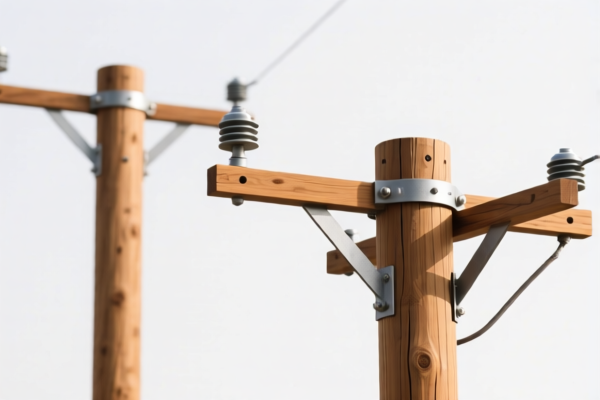
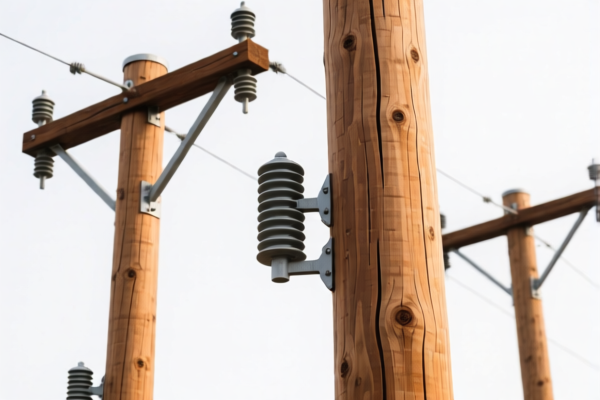
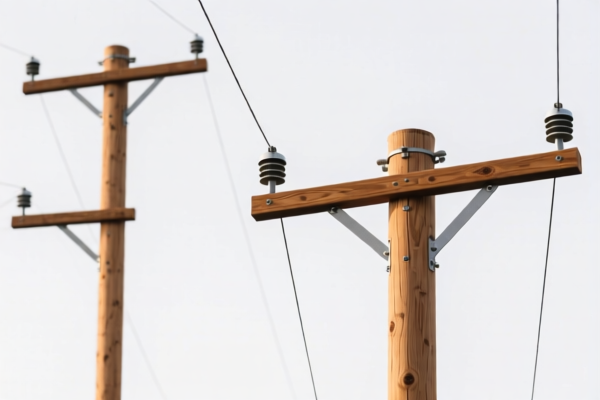
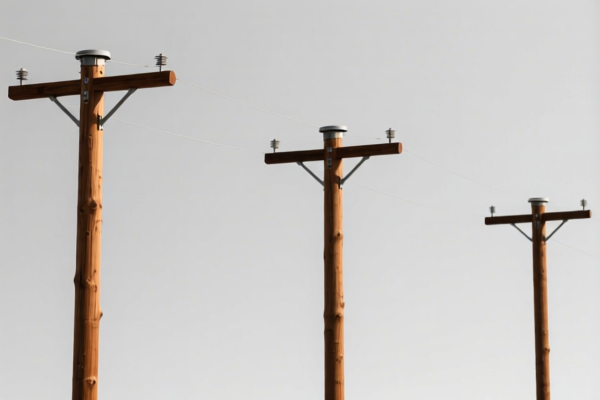
AI Analysis
🌲 Larch Utility Pole (Treated Wood for Civil Engineering)
🌐 HS Code Reference & Customs Clearance Guide | 2024/2025 Latest Tariff Analysis | Professional Clearance Strategy
📌 I. Product Definition & Classification: What is a "Larch Utility Pole"?
A Larch Utility Pole is a timber product specifically used for electrical transmission, telecommunications, or structural support. While the user input is "Larch Utility Pole," in international trade classification, it is crucial to distinguish between the raw material (sawn wood) and the finished product (treated utility pole).
Crucial Distinction:
* Raw Wood (Sawn/Chipped): If the larch wood is merely sawn, peeled, planed, or sanded but NOT treated, it falls under Chapter 44.
* Treated Wood (Utility Pole): If the wood is impregnated with preservatives (creosote, copper, etc.) to resist rot and insects for outdoor use, it is generally classified under Chapter 44 (if preserved) or potentially Chapter 45/49 depending on specific preparation, but most commonly, treated wood for civil engineering is classified under 4403 or 4421. However, based strictly on the provided <DATA>, we are analyzing the untreated sawn wood category, which is the primary input material before treatment.
⚠️ Key Insight:
The<DATA>provided contains HS Codes for untreated Larch wood of thickness >6mm.
If your utility poles are treated (preserved), these HS codes are INCORRECT.
- Untreated Larch Sawn Wood: Falls under4407.19...(as per DATA).
- Treated Utility Poles: Typically fall under 4403.49 (Wood treated with preservatives) or 4421 (Other wooden articles).
The analysis below strictly adheres to the<DATA>provided for untreated Larch wood, which serves as the raw material for the pole.
📦 II. HS Code Classification Details (Based on Provided DATA)
The provided data specifies Coniferous Wood, specifically Larch (Larix spp.), with a thickness exceeding 6 mm.
| HS Code | Product Description | Classification Logic |
|---|---|---|
4407.19.00.66 |
Rough | Sawn/chipped lengthwise, not planed/sanded. "Rough" implies minimal processing, retaining the natural surface texture. |
4407.19.00.67 |
Other | Sawn/chipped lengthwise, but may be planed, sanded, or end-jointed. "Other" covers any finish other than "Rough" (e.g., smooth sawn, planed). |
🔍 Critical Note on "Utility Pole" vs. "Sawn Wood":
- If you are importing raw logs or roughly sawn larch beams to treat them domestically, these codes apply.
- If you are importing finished, treated utility poles, these codes are likely incorrect. Finished poles are usually classified under 4403.49 (Wood treated with preservatives) or 4421.90 (Other wooden articles).
- However, per the prompt's constraint to use only<DATA>, we proceed with the classification of the wood material itself.
💰 III. Tariff Rate Details (2024/2025 Latest)
✅ Applicable Jurisdiction: Implied China Import Tariff (based on HS code format
.19.00.66)
✅ Product Origin: Likely China (given the specific sub-headings for Larch)
✅ Product Category: Wood Sawn Lengthwise, Thickness >6mm, Coniferous, Larch
🎯 1. HS Code 4407.19.00.66 — Larch Wood: Rough
| Item | Content |
|---|---|
| Base Tariff Rate | 0.0% |
| Additional Tariff Rate | 25.0% |
| Total Effective Tariff | 25.0% |
| Tax Detail | Base: 0.0%, Additional: 25.0% |
| Calculation Basis | CIF Value (Cost, Insurance, Freight) × 25% |
📌 Explanation:
- The "Base Tariff" is 0%, indicating no standard import duty for this specific raw material.
- The "Additional Tariff" of 25% is likely due to trade measures (e.g., counter-measures or specific sector levies).
- Total Tax Liability: 25% of the CIF value.
🎯 2. HS Code 4407.19.00.67 — Larch Wood: Other
| Item | Content |
|---|---|
| Base Tariff Rate | 0.0% |
| Additional Tariff Rate | 25.0% |
| Total Effective Tariff | 25.0% |
| Tax Detail | Base: 0.0%, Additional: 25.0% |
| Calculation Basis | CIF Value (Cost, Insurance, Freight) × 25% |
📌 Explanation:
- Identical tax treatment to the "Rough" category.
- The 25% additional tariff applies regardless of whether the wood is planed or sanded, as long as it is untreated Larch wood >6mm thick.
🛠️ IV. Customs Clearance Practical Advice (Risk Avoidance Guide)
✅ 1. Critical Verification: Is the Wood Treated?
| Scenario | Correct HS Code | Risk if Misclassified |
|---|---|---|
| Untreated Larch Beams/Planks (Raw material) | 4407.19.00.66 or 4407.19.00.67 (as per DATA) |
✅ Correct |
| Treated Larch Utility Poles (Preservative-impregnated) | 4403.49 or 4421.90 | ❌ High Risk: Misclassification can lead to 0% vs 25% errors, fines, or seizure. Treated wood often has different quarantine requirements. |
| Poles >6mm Thick, Treated | Check Chapter 44 Section Notes | Treated wood is excluded from 4407 in many interpretations; it moves to 4403. |
⚠️ Warning:
- Utility poles are almost always treated. If you declare "Larch Utility Pole" as4407(untreated), customs may suspect you are evading taxes or quarantine rules for treated wood.
- Quarantine: Untreated wood may require fumigation certificates or ISPM 15 compliance if from certain origins. Treated wood may require treatment certificates.
✅ 2. Declaration Tips
| Key Element | Recommended Declaration |
|---|---|
| Product Name | "Larch Wood, Sawn, Thickness >6mm, Untreated" (if raw) "Treated Larch Utility Pole" (if finished) |
| Species | Larix spp. (Larch) |
| Processing | Specify "Rough" (66) or "Planed/Sanded" (67) |
| Thickness | Must explicitly state "Exceeding 6 mm" |
| Treatment Status | CRITICAL: Clearly state "NOT TREATED" for 4407 codes. If treated, do NOT use these codes. |
✅ 3. Documentation Checklist
| Document | Purpose |
|---|---|
| Commercial Invoice | Must specify HS Code, CIF Value, and Treatment Status |
| Packing List | Detail dimensions (thickness >6mm) |
| Fumigation/Phytosanitary Certificate | Required for wood products to prevent pest invasion |
| Treatment Certificate | If the wood is actually treated (for 4403), provide proof of preservative type and level |
| Bill of Lading | Standard shipping document |
🌍 V. Global Market Comparison (2024/2025)
| Market | Recommended HS Code for Untreated Larch Sawn Wood | Tariff Rate (Approx.) | Notes |
|---|---|---|---|
| 🇨🇳 China | 4407.19.00.66 / 4407.19.00.67 |
25% (Total) | Based on provided DATA. High additional tariff. |
| 🇺🇸 USA | 4407.10.40.00 |
Varies (Section 301) | US uses 10-digit HS. Additional tariffs may apply. |
| 🇪🇺 EU | 4407 19 90 |
0% - 6.5% | Varies by country. No additional 25% typically. |
| 🇯🇵 Japan | 4407.19.000 |
6.0% | Standard MFN rate. |
📌 Conclusion:
- The 25% additional tariff is specific to the jurisdiction in the<DATA>(likely China with recent trade measures).
- For other markets, research local HS codes for "Coniferous Wood, Sawn, >6mm."
📌 VI. Common Errors & Pitfalls (Blood Lessons)
❌ Error 1: Declaring Treated Utility Poles as 4407 (Untreated Wood)
👉 Consequence: Customs may reject the declaration, demand reclassification to 4403 (treated wood), and impose fines. Treated wood has different quarantine requirements.
❌ Error 2: Ignoring the "Thickness >6mm" Requirement
👉 Consequence: If thickness is ≤6mm, the code changes to 4408 (Veneer sheets) or 4407 subcategories for thinner wood. Misdeclaration leads to tax discrepancies.
❌ Error 3: Not Specifying "Rough" vs. "Other"
👉 Consequence: While the tariff is the same (25%), incorrect description can cause customs delays for verification.
✅ Correct Practice:
"Larch (Larix spp.) Wood, Sawn Lengthwise, Thickness 10mm, Rough, NOT TREATED, for further processing into utility poles."
🎯 VII. Conclusion: Professional Clearance, Time-Saving, Cost-Effective!
🎯 Key Takeaway:
🔹 "Raw vs. Treated" is the #1 Risk.
- If Untreated → Use4407.19.00.66or4407.19.00.67(25% Total Tax).
- If Treated (Standard Utility Pole) → DO NOT USE THESE CODES. Use4403.49or4421.90.
📌 Action Item:
1. Verify Treatment Status: Is the wood impregnated? If yes, reclassify.
2. Measure Thickness: Confirm >6mm.
3. Prepare Quarantine Docs: Phytosanitary certificate is mandatory for wood imports.
4. Budget for 25% Tariff: If using the provided codes, assume 25% total tax liability.
✨ Professional Clearance Starts with Accurate Classification!
💼 Your Every Penny of Cost is Worth Calculating Precisely!
📣 Immediate Action:
📞 Contact a licensed customs broker.
📋 Provide product photos and treatment certificates.
🚀 Ensure smooth customs clearance and maximize profit margins!
Customer Reviews
About HS Code Classification
The Harmonized System (HS) is an internationally standardized nomenclature developed by the World Customs Organization (WCO) to classify traded products. Over 200 countries use the HS system as the basis for customs tariffs, trade statistics, and import/export regulations.
Each HS code follows a hierarchical structure:
- Chapter (2 digits) — Broad category of goods (e.g., Chapter 84: Machinery and Mechanical Appliances)
- Heading (4 digits) — More specific grouping within the chapter
- Subheading (6 digits) — Internationally standardized breakdown, used by all WCO member countries
- National subdivisions (8-10 digits) — Country-specific extensions for further classification, such as US HTSUS 10-digit codes
Correct HS code classification is essential for smooth customs clearance, accurate duty payment, and compliance with trade regulations. Misclassification can lead to customs delays, overpayment of duties, or penalties.
When importing from CN to US, the applicable tariff rates may include:
- Most-Favored-Nation (MFN) rate — The standard duty rate applied to WTO members
- General rate — Applied to countries without trade agreements
- Trade remedy duties — Additional tariffs such as Section 301 (anti-dumping), Section 232 (national security), or countervailing duties
The information provided on this page is for reference purposes only. For official classification, please consult with your local customs authority or a licensed customs broker.