Larch Wooden Pile
CN → US| HS Code | Tariff Rate | Origin | Destination | Doc |
|---|---|---|---|---|
| 4403990128 | 35.0% | CN | US | Official Doc |
| 4407190066 | 35.0% | CN | US | Official Doc |
| 4407190067 | 35.0% | CN | US | Official Doc |
Product Images
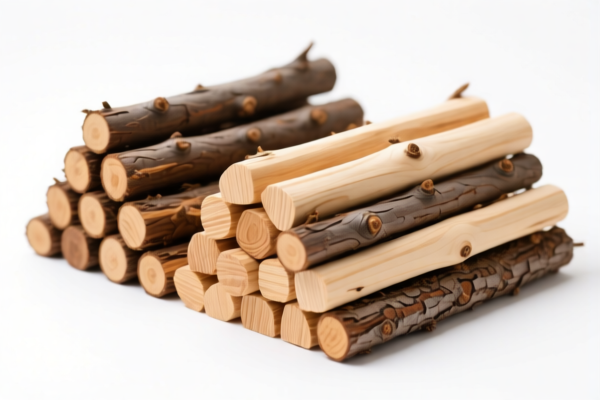
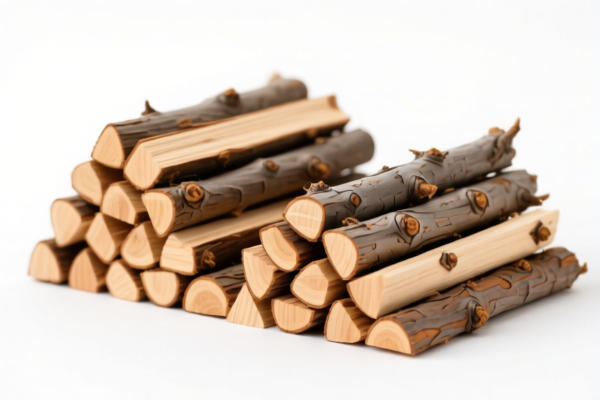
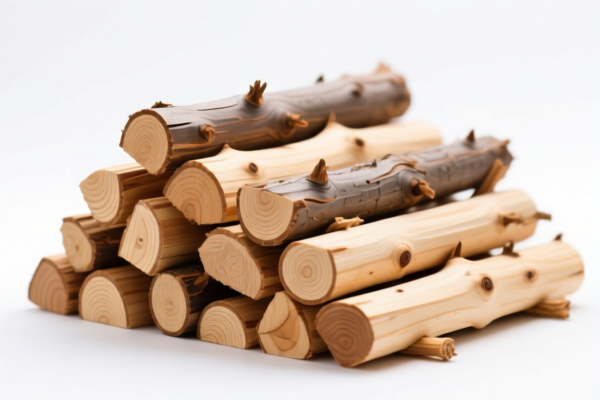
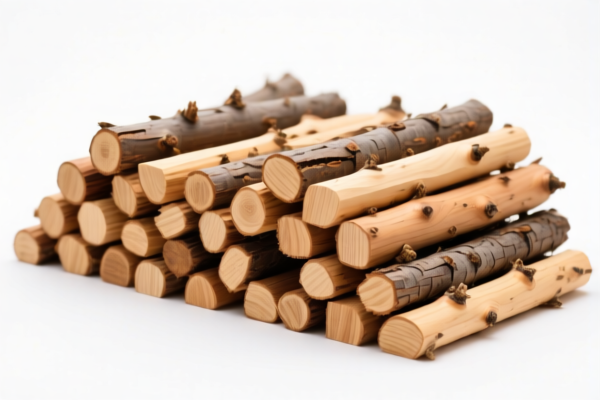
AI Analysis
🌲 Larch Wooden Pile (Larch Wooden Piling)
🌐 HS Code Reference & Customs Clearance Guide | 2026 Latest Tariff Analysis | Professional Entry Strategy
📌 I. Product Definition & Classification: Do You Really Understand "Larch Piles"?
Larch wooden piles are heavy-duty timber structures used primarily in civil engineering, foundation support, marine construction, and landscaping. They consist of the trunk or major branches of Larch trees, processed into specific shapes (posts or piles) for structural integrity.
In international trade, they are distinguished by their physical state and processing level:
- Raw Piles/Posts (Piling): Logs or branches cut to length, often with bark, intended for direct insertion into the ground. They retain the natural cylindrical shape of the tree.
- Sawn/Planed Larch Timber: Larch wood that has been sawn, shaped, or planed, regardless of whether it is intended for piles or other uses. The key distinction here is the manufacturing process (sawing/planing) versus the natural form (pile/post).
⚠️ Critical Distinction Point:
- If the wood is in its natural cylindrical form, cut to length as a "pile" or "post" (even if debarked, if it hasn't been sawn into rectangular dimensions), it typically falls under Chapter 44, Heading 44.03 (Wood treated/preserved, though here classified by form as piles/posts in many jurisdictions' sub-headings for raw timber forms). Note: In the provided data, HS 4403 is linked to the "Pile/Post" form.
- If the wood has been sawn, planed, or shaped into boards, beams, or specific profiles (even if intended for pile use, but processed into rectangular prisms), it falls under Chapter 44, Heading 44.07 (Wood sawn/chipped lengthwise). Note: In the provided data, HS 4407 is linked to "Sawn/Planed" forms.
📦 II. HS Code Classification Details (2026 Latest Tariff Authoritative Comparison)
| HS Code | Product Description | Application Scenario | Processing State |
|---|---|---|---|
4403.99.01.28 |
Larch Wooden Pile: Matches the form of raw logs, piles, and posts; material is Larch wood. | Foundation piles, retaining wall supports, garden landscaping. | ✅ Raw Form (Natural/Cylindrical) |
4407.19.00.66 |
Larch Timber: Material matches, thickness and processing state not explicitly defined (implies generic sawn timber). | General construction lumber, unspecified thickness. | ✅ Sawn/Planed (Ambiguous) |
4407.19.00.67 |
Larch Timber: Explicitly matches material and form, meets classification requirements (Sawn/Planed). | Specific sawn larch products, beams, boards. | ✅ Sawn/Planed (Defined) |
🔍 Key Reminder:
- HS 4403 is the correct classification for wood in the form of piles/posts (natural or roughly trimmed but not sawn into standard rectangular timber).
- HS 4407 is the correct classification for sawn or chipped lengthwise wood (beams, planks, boards). If your "pile" has been milled into a square or rectangular cross-section, it must be declared as 4407, not 4403.
- Misclassifying a sawn beam as a "natural pile" (4403) can lead to customs audits and penalties.
💰 III. 2026 Latest Tariff Rate Details (Including Surcharges & Policy Add-ons)
✅ Applicable Country: United States (US)
✅ Origin: China (CN)
✅ Effective Date: From November 10, 2025 (including subsequent imports)
🎯 1. 4403.99.01.28 —— Larch Wooden Pile (Raw Form)
| Item | Content |
|---|---|
| Base Tariff Rate | 0.0% (ad valorem) |
| Section 301 Surcharge | +25.0% |
| Section 122 Tariff | +10.0% (Specific provision for certain Chinese goods) |
| Total Tariff Rate | 35.0% |
| Tax Calculation | CIF Value × 35% |
| De Minimis Exemption | ❌ Not Applicable (deny_de_minimis) |
| Legal Basis Path | Section 301: USITC Footnote → Section 122: IEEPA/USITC → HS: 4403.99.01.28 |
📌 Explanation:
- The 25% surcharge is levied under Section 301 of the Trade Act of 1974, targeting specific Chinese wood products.
- The 10% surcharge is under "Section 122" (often related to national security or emergency powers, specifically cited in the data).
- Total 35% is a significant cost factor. This applies to raw larch piles with a cylindrical or natural post shape.
🎯 2. 4407.19.00.66 —— Larch Timber (Unspecified Form/Thickness)
| Item | Content |
|---|---|
| Base Tariff Rate | 0.0% |
| Section 301 Surcharge | +25.0% |
| Section 122 Tariff | +10.0% |
| Total Tariff Rate | 35.0% |
| Tax Calculation | CIF Value × 35% |
| De Minimis Exemption | ❌ Not Applicable |
| Legal Basis Path | Section 301 → Section 122 → HS: 4407.19.00.66 |
📌 Note:
- Same tariff structure as 4403. The risk here is ambiguous description. If the product is clearly sawn, but you use this code for generic "Larch," customs may request detailed specs.
🎯 3. 4407.19.00.67 —— Larch Timber (Explicitly Matched Form)
| Item | Content |
|---|---|
| Base Tariff Rate | 0.0% |
| Section 301 Surcharge | +25.0% |
| Section 122 Tariff | +10.0% |
| Total Tariff Rate | 35.0% |
| Tax Calculation | CIF Value × 35% |
| De Minimis Exemption | ❌ Not Applicable |
| Legal Basis Path | Section 301 → Section 122 → HS: 4407.19.00.67 |
📌 Note:
- Identical tax burden. The distinction lies in documentation clarity. This code implies that the material and form have been explicitly matched to the tariff description. Use this when you have precise specifications for sawn larch.
🛠️ IV. Customs Clearance Practical Advice (Avoiding Pitfalls)
✅ 1. Preparation Checklist (Essential Documents)
| Document | Required | Description |
|---|---|---|
| ✅ Product Specification Sheet | ✔️ | Must state: Material (Larch), Form (Pile/Post vs. Sawn), Dimensions (Length, Diameter/Thickness), Treatment (if any). |
| ✅ Photos (Including Labels) | ✔️ | Clear images showing the natural cylindrical shape (for 4403) OR sawn edges (for 4407). |
| ✅ Commercial Invoice | ✔️ | Clearly state "Larch Wooden Pile" or "Larch Sawn Timber." Avoid vague terms like "Wood." |
| ✅ Packing List | ✔️ | Detail quantity, weight, and packaging. |
| ✅ Phytosanitary Certificate | ✔️ | Critical for wood products. Must confirm no pests/diseases. |
| ✅ Fumigation Certificate | ✔️ | Often required alongside Phytosanitary cert for ISPM 15 compliance. |
✅ 2. Declaration Strategy (Key Mantra)
🔥 "Shape Determines Code: Raw/Cylindrical is 4403, Sawn/Rectangular is 4407."
| Scenario | Correct Declaration | Wrong Practice |
|---|---|---|
| Natural Larch Trunk/Branch, cut to length | 4403.99.01.28 |
Misclassifying as 4407 → Delayed Inspection |
| Sawn Larch Beams/Planks (Rectangular) | 4407.19.00.67 |
Misclassifying as 4403 → Customs Rejection |
| Larch Poles with Bark Intact | 4403.99.01.28 |
Declaring as "Processed Lumber" |
| Ambiguous "Larch Wood" | 4407.19.00.66 (with full specs) |
Vague description → High Risk of Audit |
✅ 3. Special Situations Handling
| Situation | Handling Advice |
|---|---|
| Treated/Preserved Larch | If chemically treated, ensure this is disclosed. Some treatments may affect HS classification (e.g., Heading 44.03 sometimes covers treated wood, but 4407 is for sawn. Check specific treatment labels). |
| Mixed Containers | If a container has both piles (4403) and sawn timber (4407), declare separately. Do not lump them under one code. |
| Origin Marking | Ensure wood is marked "Made in China" for Section 301/122 applicability. |
| Phytosanitary | Non-compliance leads to quarantine, fumigation charges, or rejection. Always include valid certificates. |
🌍 V. Global Market Comparison (2026 Latest)
| Country/Region | Recommended HS Code | Tariff (CN Origin) | Certification Requirement | Notes |
|---|---|---|---|---|
| 🇺🇸 USA | 4403.99.01.28 (Pile) 4407.19.00.67 (Sawn) |
35% (25% Sec 301 + 10% Sec 122) | Phytosanitary + Fumigation | High tariff. Ensure accurate form description. |
| 🇨🇳 China | 4403 or 4407 |
0% - 5% (Import Duty) | ISPM 15 | No additional surcharges for domestic trade. |
| 🇪🇺 EU | 4403 or 4407 |
0% - 4% | EUTR (Due Diligence) | No Section 301/122. Focus on legality. |
| 🇬🇧 UK | 4403 or 4407 |
0% - 4% | UKTR | Post-Brexit rules apply. |
📌 Conclusion:
- USA is the most challenging market due to 35% total tariff.
- Accuracy is paramount: Declaring a sawn beam as a "pile" to avoid 4407 scrutiny is risky. Both codes carry the same 35% tariff, so there is no tax advantage to misclassification, only risk.
- Focus on documentation: Phytosanitary and precise physical description are your best tools for smooth clearance.
📌 VI. Common Errors & Pitfall Guide (Lessons Learned)
❌ Error 1: Confusing "Pile" (structural post) with "Plywood" or "Veneer"
👉 Consequence: Wrong HS Code → High penalties.
👉 Fix: Ensure description says "Solid Wood" or "Timber."
❌ Error 2: Ignoring the "Section 122" 10% surcharge
👉 Consequence: Underquoting costs → Profit loss.
👉 Fix: Calculate total CIF × 35%, not just CIF × 25%.
❌ Error 3: Missing Phytosanitary Certificate
👉 Consequence: Goods held at port, fumigated at owner’s expense, or returned.
👉 Fix: Require supplier to provide valid ISPM 15 stamped certificate.
❌ Error 4: Vague Description "Wooden Pile" without form detail
👉 Consequence: Customs officer may choose the less favorable code or request clarification → Delay.
👉 Fix: Specify "Larch, Sawn, Rectangular" or "Larch, Round, Natural Form."
✅ Correct Approach:
"Larch Wooden Pile, Natural Cylindrical Form, Length: 3m, Diameter: 20cm, Untreated, Phytosanitary Certified, Country of Origin: China"
🎯 VII. Conclusion: Precision in Classification, Efficiency in Clearance
🎯 Remember the Mantra:
🔹 "Cylindrical = 4403, Rectangular = 4407. Both carry 35% US Tariff."
🔹 "No Tax Benefit for Misclassification, Only Risk of Delay."
🔹 "Phytosanitary is King for Wood Products."
📌 Pro Tip:
If your larch piles are treated with preservatives, ensure the treatment is declared, as some treatments may trigger additional regulatory checks (e.g., EPA regulations in the US for antiseptics).
📣 Immediate Action:
📞 Consult a licensed customs broker to confirm the final HS Code based on physical samples.
📄 Request Phytosanitary & Fumigation Certificates from the supplier before shipment.
🚀 Ensure your commercial invoice clearly states the physical form to prevent customs queries.
✨ Professional Clearance Starts with Accurate Classification!
💼 Your bottom line depends on precise tariff calculation!
Customer Reviews
About HS Code Classification
The Harmonized System (HS) is an internationally standardized nomenclature developed by the World Customs Organization (WCO) to classify traded products. Over 200 countries use the HS system as the basis for customs tariffs, trade statistics, and import/export regulations.
Each HS code follows a hierarchical structure:
- Chapter (2 digits) — Broad category of goods (e.g., Chapter 84: Machinery and Mechanical Appliances)
- Heading (4 digits) — More specific grouping within the chapter
- Subheading (6 digits) — Internationally standardized breakdown, used by all WCO member countries
- National subdivisions (8-10 digits) — Country-specific extensions for further classification, such as US HTSUS 10-digit codes
Correct HS code classification is essential for smooth customs clearance, accurate duty payment, and compliance with trade regulations. Misclassification can lead to customs delays, overpayment of duties, or penalties.
When importing from CN to US, the applicable tariff rates may include:
- Most-Favored-Nation (MFN) rate — The standard duty rate applied to WTO members
- General rate — Applied to countries without trade agreements
- Trade remedy duties — Additional tariffs such as Section 301 (anti-dumping), Section 232 (national security), or countervailing duties
The information provided on this page is for reference purposes only. For official classification, please consult with your local customs authority or a licensed customs broker.