Large Capacity Silk Cosmetic Organizer Bag
CN → US| HS Code | Tariff Rate | Origin | Destination | Doc |
|---|---|---|---|---|
| 4202328500 | 35.0% | CN | US | Official Doc |
| 4202929310 | 52.6% | CN | US | Official Doc |
Product Images
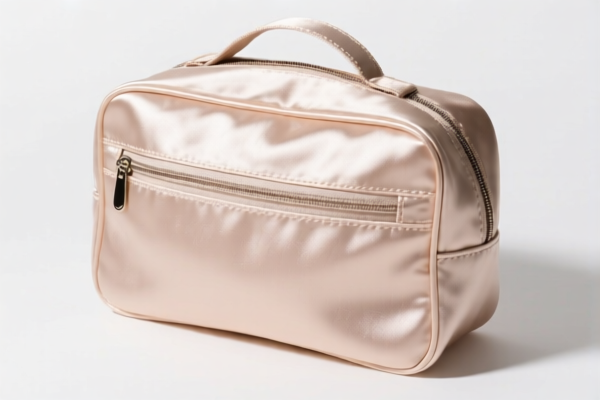
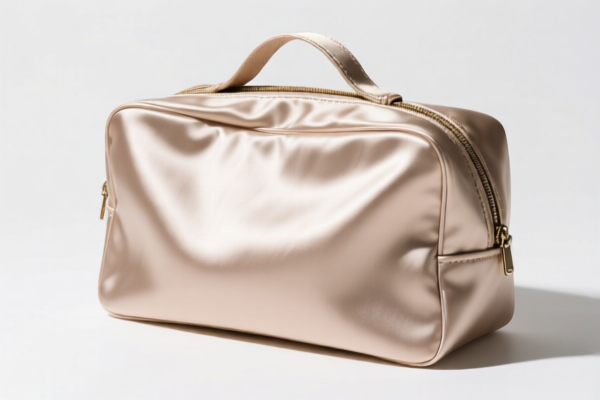
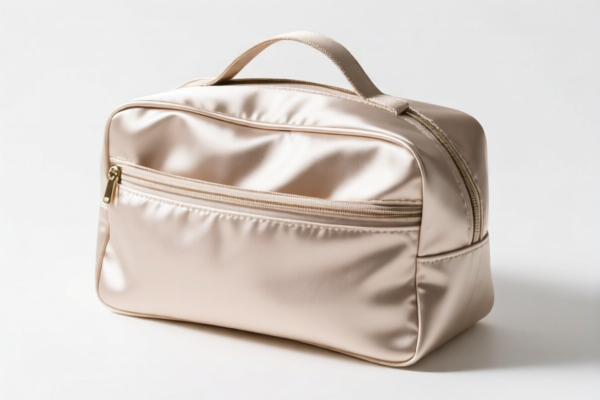
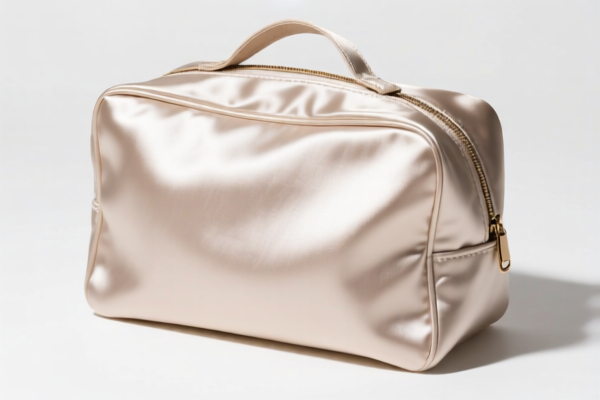
AI Analysis
👜 Large Capacity Silk Cosmetic Organizer Bag (Silk Vanity Cases & Toiletry Bags)
🌐 HS Code Reference & Customs Clearance Guide | 2026 Latest Tariff Analysis | Professional-Level Entry Strategy
📌 I. Product Definition & Classification: Do You Truly Understand "Silk Cosmetic Organizers"?
This product belongs to the category of traveling bags, toiletry bags, and similar containers, specifically designed for storing cosmetics and personal care items. In international trade, the classification hinges on two critical factors: 1. Material Composition: The outer surface must be textile material, and specifically, it must contain 85% or more by weight of silk or silk waste. 2. Form Factor: It is a bag/container (not a rigid box), typically carried in a handbag or used as a standalone toiletry/vanity bag.
⚠️ Key Distinction:
- If the silk content is < 85%, it falls under different subheadings (e.g., "Other" of textile material).
- If the outer surface is plastic sheeting (even if lined with silk), it falls under "With outer surface of sheeting of plastics".
- This guide strictly covers items with an outer surface of TEXTILE MATERIAL containing ≥85% Silk.
📦 II. HS Code Classification Details (2026 Latest Tariff Authority Comparison)
Based on the provided data, there are two relevant HS Codes depending on whether the item is classified as a "Handbag/Vanity Case" (Chapter 42, Heading 4202) or a "Other Container" (also Chapter 42, but different subheading structure for specific use).
| HS Code | Product Description | Applicable Scenario | Silk Content Requirement |
|---|---|---|---|
4202.32.85.00 |
Articles of a kind normally carried in the pocket or in the handbag; With outer surface of textile materials; Containing ≥85% silk | Vanity cases, toiletry bags, small cosmetic organizers intended to fit inside a larger handbag or be carried by hand. | ✅ ≥85% Silk |
4202.92.93.10 |
Other containers of textile materials; Containing ≥85% silk | Larger traveling bags, specialized silk storage cases, or items not fitting the "pocket/handbag" definition but still falling under Chapter 42. | ✅ ≥85% Silk |
🔍 Critical Note:
- Both codes require the outer surface to be textile. If the bag has a plastic coating or is made of synthetic silk (polyester), it does not qualify for these specific silk subheadings and will face higher tariffs.
- The phrase "Containing 85 percent or more by weight of silk or silk waste" is the legal threshold for the 0% total tax rate.
💰 III. 2026 Latest Tariff Rate Breakdown (Detailed Tax Terms)
✅ Applicable Country: United States (US)
✅ Origin: China (CN)
✅ Effective Time: Current Trade Terms (Check specific footnote updates)
🎯 1. 4202.32.85.00 —— Large Capacity Silk Cosmetic Organizer (Handbag/Vanity Type)
| Item | Content |
|---|---|
| Base Tariff | 0.0% (ad valorem) |
| Section 301 Additional Tariff | +25.0% |
| Total Tax Rate | 25.0% |
| Tax Calculation | CIF Value × 25% |
| De Minimis Exemption | ❌ Not Eligible (If applicable under US regulations for high-value or restricted categories, but generally 301 tariffs apply fully). |
| Legal Basis Path | HTSUS:4202.32.85.00 → USITC:301-List-4 → Total: 25% |
📌 Explanation:
- The Base Tariff is 0%, which is highly advantageous for luxury textile goods.
- However, the 25% Section 301 tariff applies to most Chinese-origin articles of Chapter 42 (handbags, luggage).
- Total Duty: 25%. This is a significant cost factor that must be priced into the CIF value.
🎯 2. 4202.92.93.10 —— Other Silk Containers (Traveling/Storage Type)
| Item | Content |
|---|---|
| Base Tariff | 0.0% (ad valorem) |
| Section 301 Additional Tariff | 0.0% |
| Total Tax Rate | 0.0% |
| Tax Calculation | $0 |
| De Minimis Exemption | ✅ Eligible (Potentially, depending on value and current de minimis rules). |
| Legal Basis Path | HTSUS:4202.92.93.10 → Exempt from 301 List |
📌 Explanation:
- This code offers a 0% total tax rate, including no additional 301 tariffs.
- Crucial Strategy: This classification is often used for bulkier or non-handbag-sized silk containers that don't fit the "pocket/handbag" definition.
- WARNING: Misclassification is risky. If U.S. Customs and Border Protection (CBP) determines the item is "normally carried in a handbag," they may reclassify it to4202.32.85.00, triggering the 25% tariff.
🛠️ IV. Customs Clearance Operational Advice (Practical Pitfall Avoidance)
✅ 1. Documentation Checklist (Essential for Smooth Clearance)
| Document | Required | Purpose |
|---|---|---|
| ✅ Commercial Invoice | ✔️ | Must explicitly state: "Silk Cosmetic Organizer Bag, Outer Surface: 100% Silk, Silk Content ≥85%" |
| ✅ Packing List | ✔️ | Details item count, weight, and dimensions. |
| ✅ Material Test Report | ✔️ | Critical: Must prove silk content is ≥85% by weight. Without this, CBP may assume synthetic fibers and apply higher tariffs. |
| ✅ Product Photos | ✔️ | Show outer texture, lining, and structure to prove it is a textile bag, not plastic. |
| ✅ Certificate of Origin | ✔️ | Proof of Chinese origin (triggers 301 analysis). |
✅ 2. Declaration Tips (Key Mnemonics)
🔥 "Silk ≥85%, Textile Outer Surface, Choose Code Wisely: Handbag Type = 25%, Other Type = 0%!"
| Scenario | Recommended HS Code | Risk Level |
|---|---|---|
| Small, hand-held cosmetic pouch/vanity case | 4202.32.85.00 |
⚠️ High (25% duty) |
| Large, bulky silk travel organizer or non-portable vanity kit | 4202.92.93.10 |
✅ Low (0% duty) |
| Bag with plastic coating/waterproof layer | ❌ Do Not Use silk codes | 🚫 High Risk (Wrong classification) |
| Polyester/Synthetic "Silk" Bag | ❌ Do Not Use silk codes | 🚫 High Risk (Correct code has higher duty) |
✅ 3. Special Handling Instructions
| Situation | Advice |
|---|---|
| Mixed Materials | If the bag has leather handles, metal zippers, or cotton lining, ensure the outer surface is still defined as textile and silk content by weight is calculated correctly. |
| OEM Private Label | Ensure the invoice description matches the physical product. Vague terms like "Fashion Bag" can lead to delays. Use "Silk Cosmetic Organizer." |
| Value Declaration | Ensure the declared value includes freight and insurance (CIF) to avoid under-valuation penalties. |
🌍 V. Global Market Comparison (2026 Context)
| Market | Recommended HS Code | Est. Duty | Notes |
|---|---|---|---|
| 🇺🇸 USA | 4202.32.85.00 or 4202.92.93.10 |
0% or 25% | Depends on strict "handbag" definition. |
| 🇨🇳 China (Import) | 4202.32.85.00 |
~10-13% | Standard import duty + VAT. |
| 🇪🇺 EU | 4202.32.80 (Similar) |
~12% | No anti-dumping, but strict textile labeling laws (Eur2 label). |
| 🇯🇵 Japan | 4202.32.00 |
~5-10% | Liberal trade agreement (JTEPA) may reduce duty. |
📌 Conclusion:
- The USA is the most complex market due to the bifurcation between 0% and 25% duties based on functional classification.
- Strategy: If the product is clearly a small, portable organizer, expect 25%. If it is a larger, less "handbag-like" container, argue for4202.92.93.10(0%) with strong evidence.
📌 VI. Common Errors & Pitfalls (Lessons Learned)
❌ Error 1: Claiming "Silk" for Polyester Blends
👉 Consequence: If silk content <85%, CBP will classify under "Other" textile bags, potentially leading to different (often higher) duties and fines for misdeclaration.
✅ Fix: Provide lab test reports proving ≥85% silk.
❌ Error 2: Misclassifying "Plastic-Coated" Bags as Textile
👉 Consequence: If the outer surface is plastic, it falls under 4202.32.15 or similar, which has different tax rates.
✅ Fix: Ensure the primary outer material is textile.
❌ Error 3: Ignoring the "Handbag" Definition
👉 Consequence: Using 4202.92.93.10 (0%) for a tiny makeup pouch that clearly fits in a handbag. CBP may reassess to 4202.32.85.00 (25%).
✅ Fix: Only use the 0% code for items that are not "normally carried in the pocket or handbag" (e.g., large travel cases).
🎯 VII. Conclusion: Professional Declaration, Cost Optimization!
🎯 Remember the Mantra:
🔹 "Silk ≥85% is Key; Textile Outer Surface is Mandatory."
🔹 "Handbag-Size = 25% Duty; Other-Size = 0% Duty."
🔹 "Test Reports Save Money: Prove Your Silk Content!"
📌 Pro Tip:
If you are shipping large volumes, consider pre-classification rulings from CBP for borderline items. For the 0% code (4202.92.93.10), ensure the product's size and structure clearly distinguish it from typical handbag accessories.
📣 Immediate Action:
📞 Verify Silk Content with your supplier.
📝 Draft Invoice with precise material breakdown.
🚀 Choose the Correct HS Code based on size and portability to optimize tax liability.
✨ Professional Customs Clearance Starts with Accurate Classification!
💼 Every Percent of Duty Saved is Pure Profit!
Customer Reviews
About HS Code Classification
The Harmonized System (HS) is an internationally standardized nomenclature developed by the World Customs Organization (WCO) to classify traded products. Over 200 countries use the HS system as the basis for customs tariffs, trade statistics, and import/export regulations.
Each HS code follows a hierarchical structure:
- Chapter (2 digits) — Broad category of goods (e.g., Chapter 84: Machinery and Mechanical Appliances)
- Heading (4 digits) — More specific grouping within the chapter
- Subheading (6 digits) — Internationally standardized breakdown, used by all WCO member countries
- National subdivisions (8-10 digits) — Country-specific extensions for further classification, such as US HTSUS 10-digit codes
Correct HS code classification is essential for smooth customs clearance, accurate duty payment, and compliance with trade regulations. Misclassification can lead to customs delays, overpayment of duties, or penalties.
When importing from CN to US, the applicable tariff rates may include:
- Most-Favored-Nation (MFN) rate — The standard duty rate applied to WTO members
- General rate — Applied to countries without trade agreements
- Trade remedy duties — Additional tariffs such as Section 301 (anti-dumping), Section 232 (national security), or countervailing duties
The information provided on this page is for reference purposes only. For official classification, please consult with your local customs authority or a licensed customs broker.