Large Engineering Vehicle Pneumatic Tires
CN → US| HS Code | Tariff Rate | Origin | Destination | Doc |
|---|---|---|---|---|
| 4012198000 | 20.9% | CN | US | Official Doc |
| 4012208000 | 35.0% | CN | US | Official Doc |
| 4011808020 | 38.4% | CN | US | Official Doc |
| 4011808010 | 38.4% | CN | US | Official Doc |
| 4013100020 | 38.7% | CN | US | Official Doc |
Product Images
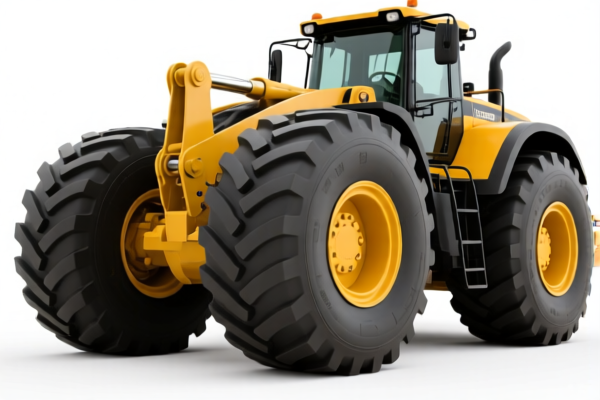
AI Analysis
🚜 Large Engineering Vehicle Pneumatic Tires (Heavy-Duty Off-the-Road Tires)
🌐 HS Code Reference & Customs Clearance Guide | 2026 Latest Tariff Analysis | Professional通关 Strategy
📌 I. Product Definition & Classification: Do You Really Understand "Engineering Vehicle Tires"?
Large engineering vehicle pneumatic tires are critical components for heavy-duty machinery such as excavators, wheel loaders, dump trucks, and mining vehicles. In international trade, they are classified primarily under Chapter 40 (Rubber and Articles Thereof), specifically within heading 40.11 (Pneumatic Tires of Rubber).
However, precise classification depends on three key factors: 1. Tire Type: Is it a standard radial/pneumatic tire or an inner tube? 2. Application: Is it for construction, mining, or industrial handling (e.g., forklifts)? 3. Wheel Rim Size: Does it exceed 61 cm in external diameter?
⚠️ Key Distinction Point:
- If it is a complete pneumatic tire for off-road vehicles → Generally falls under 4011 or 4012.
- If it is an inner tube → Falls under 4013.
- Misclassification leads to significant tariff disparities (from ~20% to ~38%+).
📦 II. HS Code Classification Details (2026 Latest Tariff Authority Comparison)
Based on the provided data, here are the applicable HS Codes and their specific scenarios:
| HS Code | Product Description | Application Scenario | Key Classification Criteria |
|--------|--------------------------|-------------------------------------|
| 4012.19.80.00 | Other pneumatic tires (Catch-all category) | Large engineering vehicles, where specific subheading doesn't fit perfectly. | Based on the "catch-all" principle for pneumatic tires not specifically listed elsewhere. |
| 4012.20.80.00 | Pneumatic tires of rubber (General) | Large engineering vehicles, specifically defined as pneumatic and made of rubber. | Fits the general definition of pneumatic tires for vehicles, subject to specific trade remedies. |
| 4011.80.80.20 | Pneumatic tires for construction/mining/industrial handling | Construction sites, mining operations, industrial material handling. | Wheel rim size > 61cm inferred. Specific use in heavy industry. |
| 4011.80.80.10 | Pneumatic tires for construction/mining/industrial handling | Construction, mining, or industrial handling vehicles. | Material is rubber. Matches specific end-use categories for heavy machinery. |
| 4013.10.00.20 | Inner Tubes (of rubber) | Associated with large engineering vehicle tires. | Functional attribute: Inner tubes for medium/large vehicles. Note: This is for inner tubes, not the tire itself. |
🔍 Critical Reminder:
-4011.xxxxis the most common for complete pneumatic tires for heavy equipment.
-4012.xxxxacts as a residual category but is subject to different trade policy interpretations.
-4013.xxxxis only for inner tubes. Do not misclassify the outer tire as an inner tube!
💰 III. 2026 Latest Tariff Rate Breakdown (Including Additional Duties & Policy Surcharges)
✅ Applicable Country: United States (US)
✅ Origin: China (CN)
✅ Effective Date: Current trade policies apply (Section 301 & Section 232/122 implications)
🎯 1. 4012.19.80.00 – Pneumatic Tires (Catch-all)
| Item | Detail |
|---|---|
| Base Tariff | 3.4% |
| Section 301 Additional Duty | 7.5% |
| Section 122 Tariff | 10.0% |
| Total Effective Rate | 20.9% |
| Tax Calculation | CIF Value × 20.9% |
| De Minimis Exemption | ❌ Not Applicable (De minimis thresholds do not apply to goods subject to Section 301/122 tariffs) |
| Legal Basis Path | HTSUS:4012.19.80.00 → Section 301 List 4 → Section 122 Authority |
📌 Explanation:
- This code attracts a moderate total duty compared to other engineering tire codes.
- The 7.5% is a specific Section 301 rate, while 10% is under Section 122 (which may be temporary or subject to change).
- Cost Advantage: Among the listed codes, this has the lowest total tax burden (20.9%).
🎯 2. 4012.20.80.00 – Pneumatic Tires of Rubber
| Item | Detail |
|---|---|
| Base Tariff | 0.0% |
| Section 301 Additional Duty | 25.0% |
| Section 122 Tariff | 10.0% |
| Total Effective Rate | 35.0% |
| Tax Calculation | CIF Value × 35.0% |
| De Minimis Exemption | ❌ Not Applicable |
| Legal Basis Path | HTSUS:4012.20.80.00 → Section 301 List 3 → Section 122 Authority |
📌 Explanation:
- Despite a 0% base tariff, the high Section 301 duty (25%) and Section 122 (10%) push the total to 35%.
- This is a high-cost classification. Avoid if a4011code is more accurate, as it may not be cheaper overall due to the high surcharges.
🎯 3. 4011.80.80.20 & 4011.80.80.10 – Pneumatic Tires for Construction/Mining
| Item | Detail |
|---|---|
| Base Tariff | 3.4% |
| Section 301 Additional Duty | 25.0% |
| Section 122 Tariff | 10.0% |
| Total Effective Rate | 38.4% |
| Tax Calculation | CIF Value × 38.4% |
| De Minimis Exemption | ❌ Not Applicable |
| Legal Basis Path | HTSUS:4011.80.80.xx → Section 301 List 3 → Section 122 Authority |
📌 Explanation:
- Highest Total Tax (38.4%) among the complete tire options.
- These codes are for specific heavy-duty applications (mining/construction).
- Caution: Ensure the wheel rim size and usage are explicitly documented to justify this code. Misclassification here leads to the highest duty burden.
🎯 4. 4013.10.00.20 – Inner Tubes for Large Vehicles
| Item | Detail |
|---|---|
| Base Tariff | 3.7% |
| Section 301 Additional Duty | 25.0% |
| Section 122 Tariff | 10.0% |
| Total Effective Rate | 38.7% |
| Tax Calculation | CIF Value × 38.7% |
| De Minimis Exemption | ❌ Not Applicable |
| Legal Basis Path | HTSUS:4013.10.00.20 → Section 301 List 3 → Section 122 Authority |
📌 Explanation:
- Only for Inner Tubes. Do not use this for the outer tire.
- If you import tires with inner tubes, you must declare them separately. The tire goes to4011/4012, and the tube goes to4013.
- Total duty is 38.7%, the highest single item duty.
🛠️ IV. Customs Clearance Practical Advice (Battle-Tested Pitfall Guide)
✅ 1. Required Documentation Checklist (Non-Negotiable)
| Document | Mandatory? | Purpose |
|---|---|---|
| ✅ Product Specification Sheet | ✔️ | Must state: Outer Diameter, Rim Size, Ply Rating, Tread Pattern, Load Index. |
| ✅ Commercial Invoice | ✔️ | Clearly state "Pneumatic Tire for Engineering Vehicle" or "Inner Tube". No vague terms like "Rubber Part". |
| ✅ Packing List | ✔️ | Separate lines for Tires and Inner Tubes if both are present. |
| ✅ Origin Certificate (CO) | ✔️ | Essential for proving Chinese origin to apply correct Section 301/122 rates. |
| ✅ Technical Data Sheet | ✔️ | To prove wheel rim size (>61cm or <61cm) for 4011.80 vs other subheadings. |
✅ 2. Declaration Strategy (Key Mantra)
🔥 “Match Use, Check Rim Size, Separate Tubes, Avoid ‘Other’ Traps!”
| Scenario | Correct Declaration | Wrong Practice |
|---|---|---|
| Standard OTR Tire (Rim > 61cm) | 4011.80.80.10 or 4011.80.80.20 |
Misclassify as 4012 → Pay 38.4% vs potential lower base, but surcharges are same. However, 4011 is more accurate for OTR. |
| Tire with Inner Tube | Declare Tire as 4011.xx AND Tube as 4013.10.00.20 |
Lump sum as "Tire Set" → High risk of misclassification penalty. |
| General Purpose Pneumatic Tire | 4012.19.80.00 (if unsure of specific use) |
Use 4012.20.80.00 → Pay 35% instead of 20.9%. Always verify if 4012.19 applies. |
| Inner Tube Only | 4013.10.00.20 |
Declare as "Tire Accessory" → Delayed customs inspection. |
✅ 3. Special Cases Handling
| Situation | Handling Advice |
|---|---|
| Rim Size Just Over/Under 61cm | Measure precisely! The cutoff for 4011.80 vs other 4011 subheadings is critical. Provide proof of measurement. |
| Retreaded Tires | Not covered in this data (different HS: 40.12). Ensure you are declaring new tires. |
| Off-the-Road (OTR) vs On-Road | Engineering vehicles are OTR. Ensure description says "Off-the-Road" or "Construction Vehicle" to support 4011 or 4012. |
| Trade War Mitigation | Since Section 301 (25%) and 122 (10%) are high, consider Advance Ruling to confirm the HS Code before shipment. |
🌍 V. Global Market Clearance Comparison (2026 Update)
| Country/Region | Recommended HS Code | Base Tariff | Key Surcharge | Total Est. Rate | Notes |
|---|---|---|---|---|---|
| 🇺🇸 USA | 4011.80.80.10/20 |
3.4% | 35% (301+122) | 38.4% | High duty due to Section 301 & 122. |
| 🇺🇸 USA | 4012.19.80.00 |
3.4% | 17.5% (301+122) | 20.9% | Best Cost Option if applicable. |
| 🇨🇳 China | 4011.80.80 |
5% - 8% | 0% | ~6% | No Section 301. |
| 🇪🇺 EU | 4011.80 |
4.5% | 0% | 4.5% | No Section 301. |
| 🇲🇽 Mexico | 4011.80 |
5% | 0% | 5% | USMCA may apply. |
📌 Conclusion:
- USA is the most expensive market due to layered tariffs (Base + Section 301 + Section 122).
-4012.19.80.00offers the lowest duty (20.9%) but must be accurately justified as "Other Pneumatic Tires."
-4011codes are standard for OTR but carry a 38.4% total duty.
📌 VI. Common Errors & Pitfall Guide (Lessons Learned)
❌ Error 1: Declaring Tires as "Rubber Parts" (Chapter 40 generic)
👉 Consequence: Incorrect HS Code, potential 0% base but wrong surcharge application → Audit & Penalty.
❌ Error 2: Combining Tires and Inner Tubes into one line item
👉 Consequence: Customs cannot process → Hold/Inspection. Always split!
❌ Error 3: Ignoring Wheel Rim Size
👉 Consequence: Misclassification of 4011.80 (Rim >61cm) vs other 4011 subheadings → Tariff Dispute.
❌ Error 4: Assuming "Engineering Vehicle" automatically means 4011
👉 Consequence: If the tire doesn't fit 4011 criteria, 4012 may be more appropriate. Always check the legal text.
✅ Correct Practice:
"Pneumatic Tire, Off-the-Road, for Wheel Loader, Radial, 20.5-25, No Inner Tube Included, Model XYZ, Made in China."
🎯 VII. Conclusion: Professional Classification, Cost Control, Smooth Clearance!
🎯 Remember the Mantra:
🔹 “Tires vs Tubes: Split them! Rim Size Matters: Check it! Section 301: It’s 25%! Section 122: It’s 10%!”
🔹 “4012.19saves 17.5% vs4011if applicable. Always verify!”
📌 Pro Tip:
Given the 20.9% vs 38.4% disparity, consult with a customs broker to verify if your specific tire model qualifies for 4012.19.80.00. An Advance Ruling from US Customs and Border Protection (CBP) can lock in the lower rate.
📣 Immediate Action:
📞 Contact a licensed customs broker + Provide Tire Specs (Diameter, Rim, Use) + Apply for CBP Advance Ruling
🚀 Ensure accurate classification to save up to 17.5% on your cargo value!
✨ Professional Clearance Starts with Precise Classification!
💼 Every Percent Counts in Heavy Machinery Trade!
Customer Reviews
About HS Code Classification
The Harmonized System (HS) is an internationally standardized nomenclature developed by the World Customs Organization (WCO) to classify traded products. Over 200 countries use the HS system as the basis for customs tariffs, trade statistics, and import/export regulations.
Each HS code follows a hierarchical structure:
- Chapter (2 digits) — Broad category of goods (e.g., Chapter 84: Machinery and Mechanical Appliances)
- Heading (4 digits) — More specific grouping within the chapter
- Subheading (6 digits) — Internationally standardized breakdown, used by all WCO member countries
- National subdivisions (8-10 digits) — Country-specific extensions for further classification, such as US HTSUS 10-digit codes
Correct HS code classification is essential for smooth customs clearance, accurate duty payment, and compliance with trade regulations. Misclassification can lead to customs delays, overpayment of duties, or penalties.
When importing from CN to US, the applicable tariff rates may include:
- Most-Favored-Nation (MFN) rate — The standard duty rate applied to WTO members
- General rate — Applied to countries without trade agreements
- Trade remedy duties — Additional tariffs such as Section 301 (anti-dumping), Section 232 (national security), or countervailing duties
The information provided on this page is for reference purposes only. For official classification, please consult with your local customs authority or a licensed customs broker.