Large Format Photography Paper Roll Studio
CN → US| HS Code | Tariff Rate | Origin | Destination | Doc |
|---|---|---|---|---|
| 4811908030 | 35.0% | CN | US | Official Doc |
| 3703103060 | 38.7% | CN | US | Official Doc |
| 3703103090 | 38.7% | CN | US | Official Doc |
| 4811512020 | 35.0% | CN | US | Official Doc |
Product Images


AI Analysis
📸 Large Format Photography Paper Roll Studio
🌐 HS Code Reference & Customs Clearance Guide | 2026 Latest Tariff Analysis | Professional Clearance Strategy
📌 I. Product Definition & Classification: Do You Really Understand "Photo Paper"?
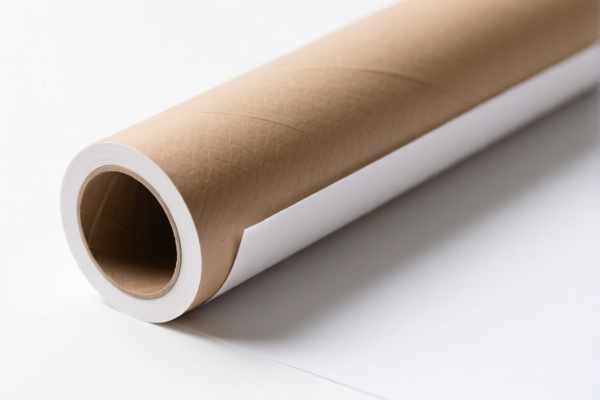
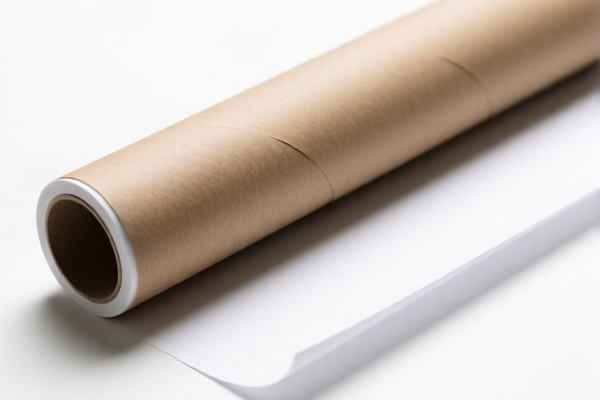
Large Format Photography Paper Rolls are specialized coated or photographic papers designed for high-resolution printing in professional studio environments. In international trade, distinguishing between coated paper (inkjet/laser compatible) and sensitized photographic paper (chemical development) is critical, as it determines the HS Code and tax liability.
⚠️ Key Distinction Point:
- If the paper is unexposed, coated for inkjet/laser, or general-purpose photographic base → It is often classified under Chapter 48 (Paper).
- If the paper is sensitized (contains light-sensitive chemicals like silver halides) intended for traditional darkroom use → It is classified under Chapter 37 (Photographic Goods).
- Note: The input "Large Format Photography Paper Roll Studio" implies a physical form ("Roll") and material ("Paper"). Without explicit mention of "light-sensitive chemicals," customs often default to paper classifications unless proven otherwise. However, ambiguity exists, leading to multiple potential classifications as shown below.
📦 II. HS Code Classification Details (2026 Latest Tariff Authority Reference)
Based on the provided data, there are four potential HS Codes. Here is the detailed breakdown of why each applies and the associated tax implications.
| HS Code | Product Description | Matching Logic & Summary | Total Tax Rate (China Origin → US) |
|---|---|---|---|
4811.90.80.30 |
Other coated papers, in rolls (Thermal or general coated) | Logic: Form is "Roll"; Material inferred as paper (glossy photo paper falls under coated paper范畴); Matches thermal/coated paper characteristics. No conflict. Summary: "Match basis: Product form is 'roll', material inferred as paper (photo paper belongs to coated paper category), fits the form and material characteristics of thermal coated paper, no obvious conflict." |
35.0% |
3703.10.30.60 |
Sensitized photographic paper, in rolls (Other) | Logic: Form "Roll" matches; "Photo paper" inferred as photosensitive material; No specific use mentioned, but fits the "fallback/residual" category with no material conflict. Summary: "Match basis: 'Roll' in product name corresponds to 'Roll format'; 'Photo paper' inferred as photosensitive paper material based on common sense; although specific use is not clear, it fits the residual category principle as there is no material or form conflict." |
38.7% |
3703.10.30.90 |
Sensitized photographic paper, in rolls (Other/Residual) | Logic: Same as above. Matches form (Roll) and material (Sensitized/Silver Halide paper inferred). No conflict. Summary: "Match form (Roll) and material (inferred as sensitizer paper/Silver Halide paper); although purpose is not specified, no material or form conflict exists, conforming to the residual category inference principle." |
38.7% |
4811.51.20.20 |
Paper coated, impregnated, covered, etc. (Folding carton base/Coated paper) | Logic: "Paper roll" fits the "Roll" shape of folding carton base paper; "Photo paper" is a coated paper type, fitting the coating/impregnation description. No material conflict. Summary: "Match basis: 'Paper roll' in product name fits the 'Roll' shape characteristic of folding carton base paper; 'Photo paper' belongs to coated paper, fitting the inference regarding coated/impregnated/covered materials, no obvious material conflict." |
35.0% |
🔍 Critical Note on Tax Discrepancy:
- Chapter 48 (Paper): Generally attracts 0% Base Tariff but incurs 25% Section 301 Tariff + 10% IEEPA Tariff = 35% Total.
- Chapter 37 (Photographic): Generally attracts 3.7% Base Tariff but incurs 25% Section 301 Tariff + 10% IEEPA Tariff = 38.7% Total.
- Recommendation: Verify if the paper is sensitized (Chapter 37) or unsensitized/coated (Chapter 48). If it is standard inkjet/glossy photo paper for digital studio use, Chapter 48 is more likely and cheaper (35% vs 38.7%).
💰 III. 2026 Latest Tariff Rate Breakdown (Including Surtaxes & Policy Add-ons)
✅ Applicable Country: United States (US)
✅ Origin: China (CN)
✅ Effective Date: November 10, 2025 onwards
🎯 1. 4811.90.80.30 & 4811.51.20.20 (Chapter 48 - Coated Paper)
| Item | Content |
|---|---|
| Base Tariff | 0.0% (Ad Valorem) |
| USITC Surtax | +25.0% (Section 301, Footnote 9903.88.01) |
| IEEPA Surtax | +10.0% (China/ HK specific, effective Nov 10, 2025) |
| Total Effective Rate | 35.0% |
| Tax Calculation | CIF Value × 35% |
| De Minimis Exemption | ❌ Not Eligible (Deny De Minimis for Section 301 goods) |
| Legal Basis Path | IEEPA:9903.01.25 → IEEPA:9903.01.24 → USITC:4811.90.80.30 → FOOTNOTE:9903.88.01 |
📌 Explanation:
- These codes fall under paper products. While the base tariff is low, the Section 301 and IEEPA surcharges apply heavily.
- Total tax burden is 35%. This is a significant cost factor.
🎯 2. 3703.10.30.60 & 3703.10.30.90 (Chapter 37 - Sensitized Paper)
| Item | Content |
|---|---|
| Base Tariff | 3.7% (Ad Valorem) |
| USITC Surtax | +25.0% (Section 301) |
| IEEPA Surtax | +10.0% (China/ HK specific) |
| Total Effective Rate | 38.7% |
| Tax Calculation | CIF Value × 38.7% |
| De Minimis Exemption | ❌ Not Eligible |
| Legal Basis Path | IEEPA:9903.01.25 → IEEPA:9903.01.24 → USITC:3703.10.30.60 → FOOTNOTE:9903.88.01 |
📌 Explanation:
- If classified as "sensitized" (chemical photo paper), the base rate is higher (3.7% vs 0%).
- Total tax burden is 38.7%.
- Risk: Misclassifying sensitized paper as regular coated paper can lead to back taxes + penalties.
🛠️ IV. Customs Clearance Practical Advice (Pitfall Avoidance Guide)
✅ 1. Preparation Checklist (Essential Documents)
| Document | Required | Explanation |
|---|---|---|
| ✅ Product Specification Sheet | ✔️ | Must state: Base material (Paper/Sensitized), Coating type (Glossy/Matte/Thermal), Format (Roll), Dimensions. |
| ✅ Product Photos | ✔️ | Clear images of the roll, packaging, and label indicating "Sensitized" or "Coated". |
| ✅ Commercial Invoice | ✔️ | Must match HS Code description precisely (e.g., "Coated Photo Paper Roll" vs "Sensitized Photographic Paper"). |
| ✅ Material Composition Statement | ✔️ | Crucial to distinguish between Chapter 48 (Paper) and Chapter 37 (Photographic Goods). |
| ✅ Packaging List | ✔️ | Confirm no other sensitive items (e.g., chemicals) are included unless declared. |
✅ 2. Declaration Tips (Key Mantras)
🔥 "Form Follows Function, Coating Determines Chapter!"
| Scenario | Correct Declaration | Common Error |
|---|---|---|
| Digital Inkjet Photo Paper (Unsensitized) | 4811.90.80.30 or 4811.51.20.20 |
Misclassifying as 3703 → Higher tax (38.7%) |
| Traditional Darkroom Paper (Sensitized) | 3703.10.30.60 or 3703.10.30.90 |
Misclassifying as 4811 → Smuggling Risk (if sensitized) |
| Roll Form | Ensure "Roll" is stated in description | Confusion with "Sheet" format (different codes) |
| Coated Paper | Specify "Glossy/Matte" | Vague terms like "Photo Paper" without material detail |
✅ 3. Special Situations
| Situation | Handling Advice |
|---|---|
| Hybrid Packaging (Paper + Chemical Kits) | Declare separately. Paper under 4811, Chemicals under appropriate chemical HS. |
| OEM Custom Roll | Provide custom order details to prove "Roll" format and specific coating. |
| Origin Marking | Ensure "Made in China" is clearly marked on product/packaging for IEEPA enforcement. |
🌍 V. Global Market Clearance Comparison (2026 Latest)
| Country/Region | Recommended HS Code | Tariff Rate | Certification | Notes |
|---|---|---|---|---|
| 🇺🇸 USA | 4811.90.80.30 (Coated) |
35.0% | No specific | 38.7% if Sensitized (3703) |
| 🇨🇳 China | 4811.90.80.30 |
5-8% | N/A | Lower base rate |
| 🇪🇺 EU | 4811.90.80.30 |
0-6.5% | CE (if mixed with electronics) | No Section 301 equivalent |
| 🇬🇧 UK | 4811.90.80.30 |
0-6.5% | UKCA | Post-Brexit rules apply |
| 🇦🇺 Australia | 4811.90.80.30 |
5% | ACCC | No major surtaxes |
📌 Conclusion:
- USA is the most expensive market due to Section 301 and IEEPA surcharges.
- Misclassification risk is high between Chapter 48 and 37.
- Cost Saving Tip: If the paper is unsensitized (standard inkjet/glossy), insist on Chapter 48 classification to save 3.7% on the base rate (Total 35% vs 38.7%).
📌 VI. Common Errors & Pitfalls (Lessons Learned)
❌ Error 1: Declaring "Sensitized Paper" as "Coated Paper"
👉 Consequence: Customs may classify it as 3703 (38.7%) and charge back taxes + penalties for under-declaration.
❌ Error 2: Vague Description "Photo Paper"
👉 Consequence: Customs broker guesses, leading to random audit or incorrect HS Code assignment.
❌ Error 3: Ignoring IEEPA 10% Surcharge
👉 Consequence: Underestimating total landed cost. Many traders forget the 10% IEEPA is added to top of the 301 tariff.
✅ Correct Practice:
"Large Format Glossy Photo Paper Roll, Unsensitized, Coated, 100% Wood Pulp, 44 Inches Width, For Inkjet Printer, HS 4811.90.80.30"
🎯 VII. Conclusion: Professional Classification Saves Money!
🎯 Remember the Mantra:
🔹 "Unsensitized = Paper (48%), Sensitized = Photo (37%), Total Tax = Base + 35%."
🔹 "Chapter 48 is Cheaper! Verify Coating, Not Just Name."💡 Pro Tip:
If you are importing standard digital studio paper (inkjet/laser), ensure the supplier confirms it is NOT sensitized. This allows you to use HS Code 4811 with a 35% total tax, saving 3.7% compared to the photographic chapter. Always request a Material Safety Data Sheet (MSDS) or Composition Statement to prove unsensitized status.
📣 Immediate Action:
📞 Contact Customs Broker + Provide Product Photos + Confirm Sensitized Status
🚀 Ensure Accurate HS Code, Avoid Audits, Maximize Profit!
✨ Professional Clearance Starts with Precise Classification!
💼 Every Cent Counts in International Trade!
Customer Reviews
About HS Code Classification
The Harmonized System (HS) is an internationally standardized nomenclature developed by the World Customs Organization (WCO) to classify traded products. Over 200 countries use the HS system as the basis for customs tariffs, trade statistics, and import/export regulations.
Each HS code follows a hierarchical structure:
- Chapter (2 digits) — Broad category of goods (e.g., Chapter 84: Machinery and Mechanical Appliances)
- Heading (4 digits) — More specific grouping within the chapter
- Subheading (6 digits) — Internationally standardized breakdown, used by all WCO member countries
- National subdivisions (8-10 digits) — Country-specific extensions for further classification, such as US HTSUS 10-digit codes
Correct HS code classification is essential for smooth customs clearance, accurate duty payment, and compliance with trade regulations. Misclassification can lead to customs delays, overpayment of duties, or penalties.
When importing from CN to US, the applicable tariff rates may include:
- Most-Favored-Nation (MFN) rate — The standard duty rate applied to WTO members
- General rate — Applied to countries without trade agreements
- Trade remedy duties — Additional tariffs such as Section 301 (anti-dumping), Section 232 (national security), or countervailing duties
The information provided on this page is for reference purposes only. For official classification, please consult with your local customs authority or a licensed customs broker.