Large Format Photosensitive Paper Roll
CN → US| HS Code | Tariff Rate | Origin | Destination | Doc |
|---|---|---|---|---|
| 3703103090 | 38.7% | CN | US | Official Doc |
| 4811908030 | 35.0% | CN | US | Official Doc |
| 3705000000 | 35.0% | CN | US | Official Doc |
| 4811909080 | 35.0% | CN | US | Official Doc |
| 3703103060 | 38.7% | CN | US | Official Doc |
Product Images
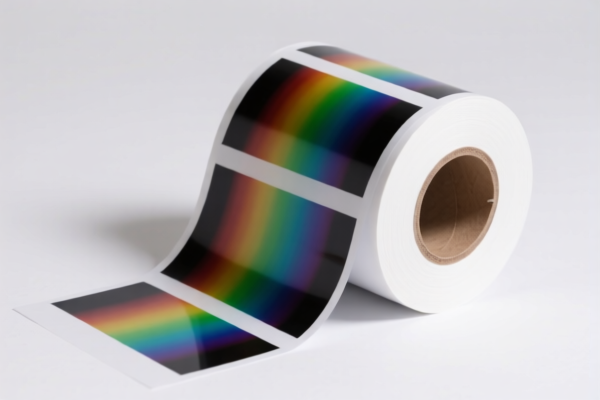
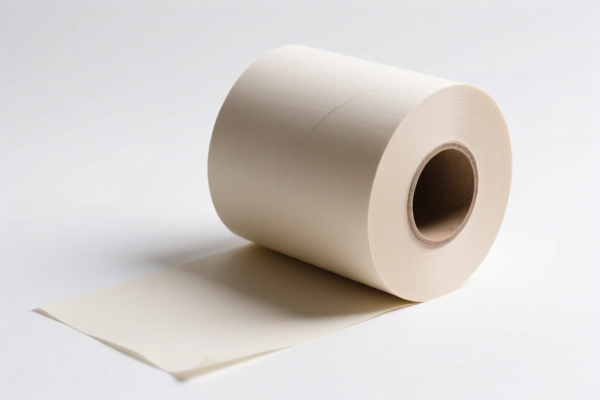
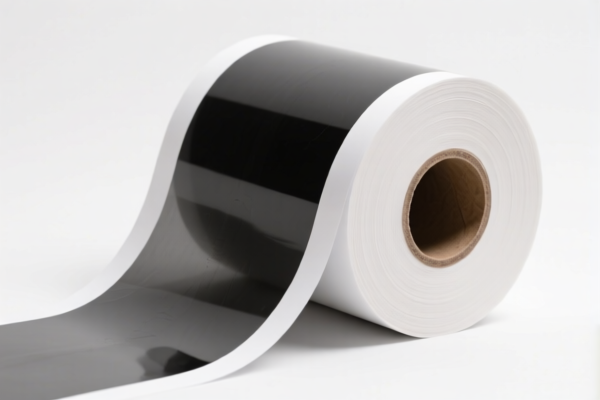
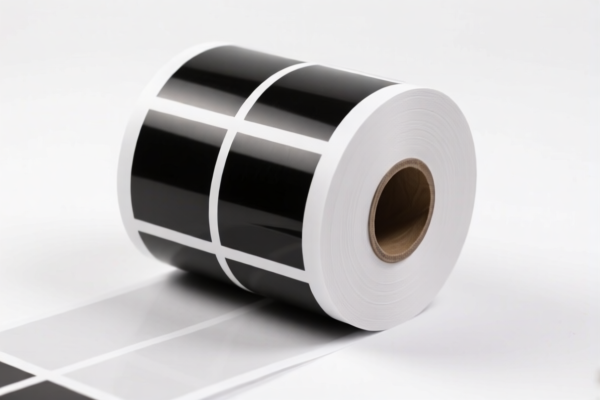
AI Analysis
📸 Large Format Photosensitive Paper Roll: HS Code Classification & Customs Clearance Strategy (2026)
🌐 HS Code Reference & Customs Guide | 2026 Latest Tariff Analysis | Professional Clearance Strategy 📌 I. Product Definition & Classification: Do You Truly Understand "Large Format Photosensitive Paper"?
Large Format Photosensitive Paper Roll is a critical material in technical photography, architectural reproduction, and industrial imaging. In international trade, its classification is highly sensitive and often disputed because it sits at the intersection of "Paper Products" and "Photographic Materials."
The classification depends strictly on: 1. Chemical Composition: Is it silver halide-based or thermal/copy-based? 2. Primary Function: Is it for final image capture (photography) or for document reproduction (copying)? 3. Physical Form: Is it a standalone roll or part of a larger photographic system?
⚠️ Key Distinction:
- If it is Silver Halide-based for continuous tone reproduction → Chapter 37 (Photographic Products)
- If it is Coated/Thermal-based for copying/drawing → Chapter 48 (Paper Products)
- Misclassification can lead to significant duty differences (35% vs. 38.7%) and customs delays.
📦 II. HS Code Classification Details (2026 Latest Tariff Authority)
| HS Code | Product Description | Application Scenario | Chemical/Functional Basis |
|---|---|---|---|
3703.10.30.90 |
Large format B&W sensitive paper roll, continuous tone, silver halide category, line reproduction class. | High-end architectural/blueprint printing, professional B&W photography. | ✅ Silver Halide (Chemical emulsion) |
3703.10.30.60 |
Large format B&W sensitive paper roll, continuous tone, silver halide category. | Similar to above, specific sub-classification for continuous tone usage. | ✅ Silver Halide (Chemical emulsion) |
3705.00.00.00 |
Large format B&W sensitive paper roll, functions/materials consistent with photographic plates/film, roll form. | Treated as "Photographic Plates/Films" rather than "Paper." | ✅ Photographic Film/Plate logic |
4811.90.80.30 |
Large format B&W sensitive paper roll, thermal-coated paper category. | Architectural copy paper, thermal imaging paper, drawing materials. | ✅ Thermal/Copy Coating (Physical/Thermal) |
4811.90.90.80 |
Large format B&W sensitive paper roll, other categories, paper/cellulose base, roll form. | Catch-all for sensitive papers not fitting other specific paper/photo codes. | ✅ Paper Base (General Coating) |
🔍 Key Reminder:
-3703.xxitems are treated as Photographic Products (higher duty due to 3.7% base + US tariffs).
-4811.xxand3705.00are treated as Paper/General Material (0% base, but still subject to US tariffs).
- The difference between3703.10.30.90and3703.10.30.60is often a fine-tuning sub-classification for continuous tone vs. line reproduction. Both incur the highest tax burden.
💰 III. 2026 Latest Tariff Rate Breakdown (Including Surtaxes & Policy Add-ons)
✅ Applicable Country: United States (US)
✅ Origin: China (CN)
✅ Effective Date: 2025 Nov 10 onwards (and subsequent imports)
🎯 1. Group A: Silver Halide / Photographic Paper (3703.10.30.90 & 3703.10.30.60)
These codes are classified under Section XVI, typically attracting higher base duties before US surcharges.
| Item | Content |
|---|---|
| Base Tariff | 3.7% (ad valorem) |
| Section 301 Surcharge | +25.0% (USITC Footnote) |
| Section 122 Surcharge | +10.0% (Specific US Trade Policy) |
| Total Tax Rate | 38.7% |
| Tax Calculation | CIF Value × 38.7% |
| De Minimis Exemption | ❌ NOT Available (deny_de_minimis) |
| Legal Basis Path | USITC:3703.10.30.xx → SECTION_301:25% → SECTION_122:10% |
📌 Explanation:
- The 3.7% base is the standard MFN rate for photographic paper.
- The 25% is the Section 301 tariff targeting Chinese goods.
- The 10% is the Section 122 tariff (often applied to specific industrial or strategic materials).
- Total: 38.7%. This is the most expensive classification for this product.
🎯 2. Group B: Thermal / Coated Paper / General Photosensitive (4811.90.80.30, 4811.90.90.80, 3705.00.00.00)
These codes are classified under Paper Products or General Photographic Materials, benefiting from 0% base duty.
| Item | Content |
|---|---|
| Base Tariff | 0.0% (ad valorem) |
| Section 301 Surcharge | +25.0% (USITC Footnote) |
| Section 122 Surcharge | +10.0% (Specific US Trade Policy) |
| Total Tax Rate | 35.0% |
| Tax Calculation | CIF Value × 35.0% |
| De Minimis Exemption | ❌ NOT Available (deny_de_minimis) |
| Legal Basis Path | USITC:4811.xx / 3705.00.00 → SECTION_301:25% → SECTION_122:10% |
📌 Note:
- The 0% base makes these codes 3.7% cheaper than the Silver Halide group.
-3705.00.00.00is tricky: it’s in Chapter 37 but has 0% base, likely because it’s classified as "Photographic plates/films" rather than "Paper."
- Total: 35.0%. This is the preferred classification if the product can be legally argued as thermal/coated rather than silver halide.
🛠️ IV. Customs Clearance Practical Advice (Battle-Tested Pitfall Avoidance)
✅ 1. Required Documentation Checklist (None Can Be Skipped)
| Document | Required? | Description |
|---|---|---|
| ✅ Product Specification Sheet | ✔️ | Must detail chemical composition (Silver Halide vs. Thermal). |
| ✅ Material Safety Data Sheet (MSDS) | ✔️ | Critical for customs to verify if it's hazardous or standard chemical. |
| ✅ Product Photos (Unboxed & Labeled) | ✔️ | Clear view of the roll, packaging, and any technical labels. |
| ✅ Commercial Invoice | ✔️ | Must explicitly state "Large Format Photosensitive Paper Roll" and HS Code. |
| ✅ Certificate of Origin (CO) | ✔️ | Proof of China origin triggers the surcharges. |
| ✅ Packing List | ✔️ | Weight, dimensions, and quantity per roll. |
✅ 2. Declaration Tips (Critical Keywords)
🔥 “Chemical Base Defines Duty, Thermal Saves 3.7%!”
| Scenario | Correct Declaration | Incorrect Practice |
|---|---|---|
| Silver Halide Paper | 3703.10.30.90 – "B&W Silver Halide Sensitive Paper" |
Calling it "Thermal Paper" → False Declaration Risk |
| Thermal/Copy Paper | 4811.90.80.30 – "Thermal Coated Paper Roll" |
Calling it "Photographic Film" → Misclassification |
| General Photosensitive | 3705.00.00.00 – "Photographic Plate/Film Roll" |
Vague description "Sensitive Paper" → Customs Hold |
📌 Warning:
- If you declare Silver Halide paper as Thermal, Customs will likely demand an MSDS or lab test. If the chemical makeup doesn't match, you face penalties + back-tariffs.
- If you declare Thermal paper as Silver Halide, you pay 38.7% instead of 35%. No harm, but lost profit.
✅ 3. Special Cases
| Situation | Handling Advice |
|---|---|
| OEM Custom Sizes | Provide customer PO + technical drawing. Ensure dimensions match the "Large Format" definition. |
| Mixed Bundles (Paper + Developer) | Do NOT mix. Declare paper and chemicals separately. Chemicals have different HS codes and hazard requirements. |
| Roll Length/Width | Specify clearly. If width > 30cm, it’s definitely "Large Format." Small rolls might be reclassified under "Roll Film" (different duty). |
| Pre-Coated vs. Blank | Pre-coated (sensitive) → Chapters 37/48. Blank paper → Chapter 48 (different duty). Ensure invoice says "Sensitive." |
🌍 V. Global Market Comparison (2026 Latest)
| Country/Region | Recommended HS Code | Tariff | Certification | Notes |
|---|---|---|---|---|
| 🇺🇸 USA | 3703.10.30.90 or 4811.90.80.30 |
35% - 38.7% | No special cert | High Surtax Environment |
| 🇨🇳 China | 3703.10 or 4811.90 |
0% - 6% | CCC (if applicable) | No US-style surcharges |
| 🇪🇺 EU | 3703.10 or 4811.90 |
0% - 5% | CE (if chemical) | Lower duties, strict REACH compliance |
| 🇦🇺 Australia | 3703.10 or 4811.90 |
5% | ACS | Moderate duties |
| 🇯🇵 Japan | 3703.10 or 4811.90 |
0% - 5% | PSE (if electronic) | Low duties, high quality control |
📌 Conclusion:
- The US market is the most expensive due to the Section 301 (25%) + Section 122 (10%)叠加.
- Choosing the correct HS code is critical: A 3.7% difference on high-value large rolls adds up significantly.
- No other major market applies these specific US surcharges.
📌 VI. Common Mistakes & Pitfall Guide (Lessons Learned)
❌ Mistake 1: Declaring "Sensitive Paper" as "Regular Paper" (4810.xx)
👉 Consequence: Customs will detect the sensitivity (via MSDS or sampling) and reclassify to 3703 or 4811, applying 35%+ duty + penalties.
❌ Mistake 2: Using "Photographic Film" for Paper Rolls
👉 Consequence: If the material is clearly paper-based (cellulose), not plastic film (3702), it’s a misclassification. Film has different duty rates.
❌ Mistake 3: Ignoring the "Large Format" Size
👉 Consequence: If the roll is small, it might be classified under "Roll Film" or "Small Format Paper," changing the duty base.
❌ Mistake 4: Not Providing MSDS for Chemical Sensitivity
👉 Consequence: Clearance Delay. Customs may detain the shipment for 2-4 weeks while awaiting chemical verification.
✅ Correct Practice:
"Large Format B&W Silver Halide Sensitive Paper Roll, 24" Width, Continuous Tone, Model XYZ, MSDS Provided, HS: 3703.10.30.90"
🎯 VII. Conclusion: Precision Classification, Cost Optimization!
🎯 Remember the Golden Rule:
🔹 "Silver Halide = 38.7%, Thermal/Coated = 35.0%"
🔹 "Check the Chemical Base First, Then Choose the Chapter"
🔹 "No De Minimis for Sensitive Paper, Always Declare Fully"
📌 Pro Tip:
- If you have large volumes, consider applying for an Advance Ruling from CBP to confirm whether your specific thermal paper qualifies for 4811.90.80.30 (35%) vs. 3703 (38.7%).
- Ensure your MSDS clearly states the coating type to support your HS Code claim.
📣 Immediate Action:
📞 Consult a licensed Customs Broker
📄 Prepare MSDS + Specification Sheet
🚀 Optimize your supply chain to save 3.7% on every shipment!
✨ Professional Clearance Starts with Accurate Classification!
💼 Every Percentage Point Counts in High-Volume Imports!
Customer Reviews
About HS Code Classification
The Harmonized System (HS) is an internationally standardized nomenclature developed by the World Customs Organization (WCO) to classify traded products. Over 200 countries use the HS system as the basis for customs tariffs, trade statistics, and import/export regulations.
Each HS code follows a hierarchical structure:
- Chapter (2 digits) — Broad category of goods (e.g., Chapter 84: Machinery and Mechanical Appliances)
- Heading (4 digits) — More specific grouping within the chapter
- Subheading (6 digits) — Internationally standardized breakdown, used by all WCO member countries
- National subdivisions (8-10 digits) — Country-specific extensions for further classification, such as US HTSUS 10-digit codes
Correct HS code classification is essential for smooth customs clearance, accurate duty payment, and compliance with trade regulations. Misclassification can lead to customs delays, overpayment of duties, or penalties.
When importing from CN to US, the applicable tariff rates may include:
- Most-Favored-Nation (MFN) rate — The standard duty rate applied to WTO members
- General rate — Applied to countries without trade agreements
- Trade remedy duties — Additional tariffs such as Section 301 (anti-dumping), Section 232 (national security), or countervailing duties
The information provided on this page is for reference purposes only. For official classification, please consult with your local customs authority or a licensed customs broker.