Large Plastic Handbag
CN → USProduct Images


AI Analysis
👜 Large Plastic Handbag (Fashion & Utility Accessories)
🌐 HS Code Reference & Customs Clearance Guide | 2026 Latest Tariff Analysis | Strategic通关 Strategy
📌 Section 1: Product Definition & Classification: Do You Know What a "Large Plastic Handbag" Really Is?
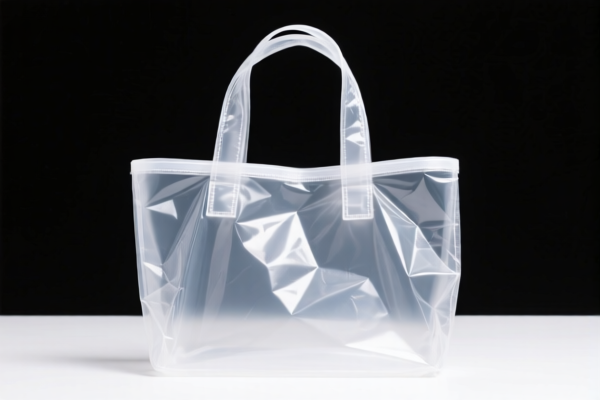
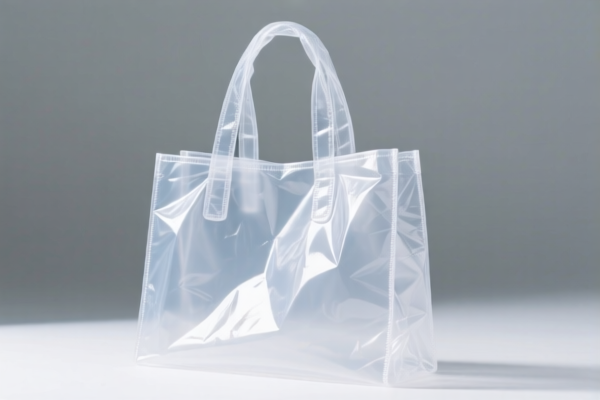
A Large Plastic Handbag is typically a non-fabric, non-leather bag made primarily from molded, woven, or laminated plastic materials (e.g., PVC, PE, PP, or acrylic). It is used for fashion, shopping, beach carry, or storage.
In international trade, it is classified based on material composition and primary function:
- Plastic Bags (Disposable/Shopping): Thin, single-use, or light-duty bags → Generally fall under Chapter 39 or Chapter 42 depending on construction.
- Fashion/Handheld Plastic Bags (Structured): Molded, rigid, or semi-rigid bags with handles, closures, and lining → Typically classified under Chapter 39 (Plastics) or Chapter 42 (if made of "plastic coated fabric" or similar).
⚠️ Critical Classification Point:
- If the bag is pure plastic (molded, thermoformed, or woven plastic strips) → HS Code 3926 (Plastic Articles).
- If the bag is made of plastic-coated fabric (e.g., PVC-coated polyester) → HS Code 4202 (Travel Goods/Suitcases).
- Note: "Large" size does not change the HS Code, but structural integrity and material layering do.
📦 Section 2: HS Code Classification Details (2026 Latest Tariff Authority)
| HS Code | Product Description | Applicable Scenario | Material Composition |
|---|---|---|---|
3926.90.99 |
Other articles of plastics (e.g., molded plastic handbags, rigid plastic bags) | Rigid, thermoformed, or woven plastic handbags (no fabric backing) | ❌ Pure Plastic |
4202.92.20 |
Trunks, suitcases, handbags, etc., with outer surface of plastics | PVC-coated fabric bags, laminated plastic bags, fashion handbags with plastic finish | ✅ Plastic-Coated Fabric |
4202.92.90 |
Other bags with outer surface of plastics | Durable, structured plastic handbags not specified above | ✅ Plastic-Coated Fabric |
3923.21.00 |
Sacks and bags (Plastic, >50g) | Heavy-duty plastic shopping bags (often "large" but disposable) | ❌ Thin Plastic Film |
6305.33.00 |
Sacks and bags (Plastic, not elsewhere) | Woven plastic sacks (e.g., PP woven bags) often used for storage | ❌ Woven Plastic |
🔍 Key Reminder:
- Structured Fashion Bags (with handles, zippers, lining) made of plastic-coated fabric usually fall under 4202.
- Molded/Rigid Plastic Bags (e.g., "clear rigid tote", "acrylic handbag") fall under 3926.90.99.
- Disposables (thin, crinkly, large shopping bags) fall under 3923.21.00 or 3926.90.99 depending on weight/thickness.
💰 Section 3: 2026 Latest Tariff Rate Details (US Market Focus)
✅ Applicable Country: United States (US)
✅ Origin: China (CN)
✅ Effective Date: November 10, 2025 (Including subsequent imports)
🎯 1. 3926.90.99 —— Other Plastic Articles (Rigid/Molded Handbags)
| Item | Content |
|---|---|
| Base Rate | 0% (ad valorem) |
| USITC Additional Duty | +25% (Footnote 9903.88.01) |
| IEEPA Additional Duty | +10% (China/HK, effective Nov 10, 2025) |
| Total Rate | 35% |
| Tax Calculation | CIF Value × 35% |
| De Minimis Exemption | ❌ No (deny_de_minimis) |
| Legal Path | IEEPA:9903.01.25 → USITC:3926.90.99 → Footnote:9903.88.01 |
📌 Explanation:
- USITC 25% is a Section 301 Additional Duty;
- IEEPA 10% is the China-specific Additional Duty;
- Total 35% is very high for plastic accessories! Must be budgeted in advance.
🎯 2. 4202.92.20 / 4202.92.90 —— Plastic-Coated Fabric Bags (Fashion Handbags)
| Item | Content |
|---|---|
| Base Rate | 0% |
| USITC Additional Duty | +25% (Footnote 9903.88.01) |
| IEEPA Additional Duty | +10% (China/HK) |
| Total Rate | 35% |
| Tax Calculation | CIF × 35% |
| De Minimis Exemption | ❌ No |
| Legal Path | IEEPA:9901.25 → USITC:4202.92.20 → Footnote:9903.88.01 |
📌 Note:
- Even if the bag is "fashionable" or "structured," if the outer surface is plastic-coated fabric, the 35% total duty applies.
- Same rate for both "handbags" and "suitcases" made of plastic materials.
🎯 3. 3923.21.00 —— Plastic Sacks/Shopping Bags (Disposables)
| Item | Content |
|---|---|
| Base Rate | 0% |
| USITC Additional Duty | +25% |
| IEEPA Additional Duty | +10% |
| Total Rate | 35% |
| Tax Calculation | CIF × 35% |
| De Minimis Exemption | ❌ No |
📌 Critical: Even "disposable" large plastic shopping bags face the same 35% duty if from China.
🛠️ Section 4: Customs Clearance Practical Advice (Pitfall Avoidance Guide)
✅ 1. Documentation Checklist (Must-Have)
| Document | Mandatory? | Purpose |
|---|---|---|
| ✅ Product Spec Sheet | ✔️ | Material type (PVC, PE, etc.), dimensions, weight, thickness |
| ✅ Material Composition Report | ✔️ | Confirm % of plastic vs. fabric coating (crucial for 3926 vs. 4202) |
| ✅ Product Photos (Front/Back/Inside) | ✔️ | Show structure, handles, closures, lining |
| ✅ Third-Party Test Report | ✔️ | FDA (if food contact), REACH, Prop 65 |
| ✅ Commercial Invoice | ✔️ | Must state "Plastic Handbag" + "Material: PVC/PE" |
| ✅ Certificate of Origin (CO) | ✔️ | For non-China origin (to seek IEEPA exemption) |
| ✅ Packing List | ✔️ | Show quantity, weight, packaging type |
✅ 2. Declaration Strategy (Key Mnemonic)
🔥 "Material First, Structure Second, Don't Call it 'Bag' Blindly!"
| Scenario | Correct Declaration | Wrong Approach |
|---|---|---|
| Rigid Plastic Bag (no fabric) | 3926.90.99 + "Molded Plastic Handbag" |
Calling it "Leather-style" → 45% |
| Plastic-Coated Fabric Bag | 4202.92.20 + "PVC-Coated Polyester Handbag" |
Calling it "Pure Plastic" → 35% (same, but wrong code) |
| Disposable Plastic Shopping Bag | 3923.21.00 + "Plastic Sack" |
Calling it "Handbag" → 35% (but may trigger "non-fabric" scrutiny) |
| Non-China Origin (Vietnam/MX) | 3926.90.99 + IEEPA Exempt |
Same code, no IEEPA tax! |
✅ 3. Special Situations
| Situation | Handling Advice |
|---|---|
| OEM Custom Bags | Provide design sketches + material specs to avoid "generic" classification |
| Bags with Metal Hardware | Still classified under 3926 or 4202; hardware is not the primary material |
| Eco-Friendly/Recycled Plastic | Same HS Code, but may qualify for Green Trade incentives in EU/Canada |
| Bags for Medical/Industrial Use | May need FDA/CE certification; tax remains 35% unless origin changes |
🌍 Section 5: Global Market Comparison (2026 Latest)
| Country/Region | Recommended HS Code | Tariff | Certification | Notes |
|---|---|---|---|---|
| 🇺🇸 USA | 3926.90.99 / 4202.92.20 |
35% (CN origin) | FDA + REACH | 35% is very high; consider Vietnam/MX |
| 🇨🇳 China | 3926.90.99 / 4202.92.20 |
5% | CCC + RoHS | No IEEPA; low tariff |
| 🇪🇺 EU | 3926.90.99 / 4202.92.20 |
0% (if CE) | CE + REACH | No additional duties if compliant |
| 🇦🇺 Australia | 3926.90.99 / 4202.92.20 |
5% | RCM | No IEEPA |
| 🇯🇵 Japan | 3926.90.99 / 4202.92.20 |
0% | PSE | No additional duties |
📌 Conclusion:
- USA is the only market with 35% duty on Chinese plastic handbags;
- China, EU, Japan, Australia offer 0%-5% rates if compliant;
- Shift production to Vietnam/Mexico to avoid IEEPA 10% duty.
📌 Section 6: Common Mistakes & Pitfalls (Blood-Tears Lesson)
❌ Mistake 1: Calling a plastic-coated fabric bag "Pure Plastic"
👉 Consequence: Correct code is 4202, but 3926 might be accepted → Audit risk + 35% tax
❌ Mistake 2: Calling a rigid plastic bag "Fashion Handbag" without material detail
👉 Consequence: Misclassification → 35% tax + fines
❌ Mistake 3: Not declaring China origin clearly
👉 Consequence: 10% IEEPA tax applies automatically if origin is ambiguous
❌ Mistake 4: Using "Bag" as generic term without specifying material
👉 Consequence: Customs delays while they investigate
✅ Correct Practice:
"Large Rigid Plastic Handbag, 20x15x10 cm, Molded PVC, Clear, Handles, 0.5kg, FDA Approved, Made in China"
🎯 Section 7: Conclusion: Precision Declaration Saves Money!
🎯 Remember the Mnemonic:
🔹 "Material First, 3926 or 4202, 35% if China, 0% if EU/JP, 35% if USA!"
🔹 "HS Code decides fate, 35% tax difference, one wrong word = thousands lost!"
📌 Tips:
- If your plastic handbag is originally from Vietnam, Mexico, Thailand, or Malaysia, you can apply for IEEPA exemption → Tax is 0%~5%;
- Apply for Advance Ruling before shipping to avoid clearance risks.
📣 Act Now:
📞 Contact professional customs brokers + Provide product photos + Apply for HS Code Advance Ruling
🚀 Let your Large Plastic Handbag clear customs smoothly, export efficiently, and double profits!
✨ Professional Clearance Starts with Accurate Classification!
💼 Every cent of your cost deserves precise calculation!
Customer Reviews
About HS Code Classification
The Harmonized System (HS) is an internationally standardized nomenclature developed by the World Customs Organization (WCO) to classify traded products. Over 200 countries use the HS system as the basis for customs tariffs, trade statistics, and import/export regulations.
Each HS code follows a hierarchical structure:
- Chapter (2 digits) — Broad category of goods (e.g., Chapter 84: Machinery and Mechanical Appliances)
- Heading (4 digits) — More specific grouping within the chapter
- Subheading (6 digits) — Internationally standardized breakdown, used by all WCO member countries
- National subdivisions (8-10 digits) — Country-specific extensions for further classification, such as US HTSUS 10-digit codes
Correct HS code classification is essential for smooth customs clearance, accurate duty payment, and compliance with trade regulations. Misclassification can lead to customs delays, overpayment of duties, or penalties.
When importing from CN to US, the applicable tariff rates may include:
- Most-Favored-Nation (MFN) rate — The standard duty rate applied to WTO members
- General rate — Applied to countries without trade agreements
- Trade remedy duties — Additional tariffs such as Section 301 (anti-dumping), Section 232 (national security), or countervailing duties
The information provided on this page is for reference purposes only. For official classification, please consult with your local customs authority or a licensed customs broker.