Large Rattan Fishing Basket
CN → US| HS Code | Tariff Rate | Origin | Destination | Doc |
|---|---|---|---|---|
| 4602120500 | 40.0% | CN | US | Official Doc |
| 4602121400 | 35.0% | CN | US | Official Doc |
Product Images
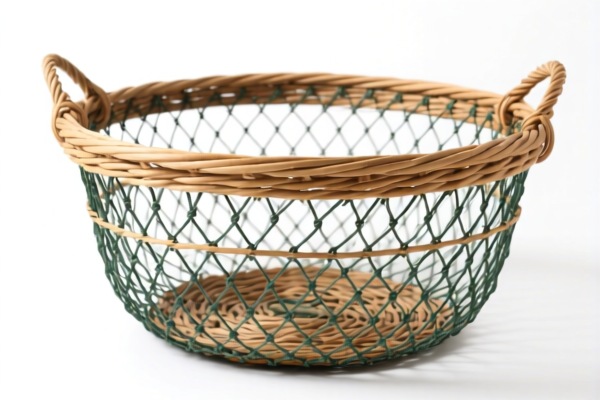
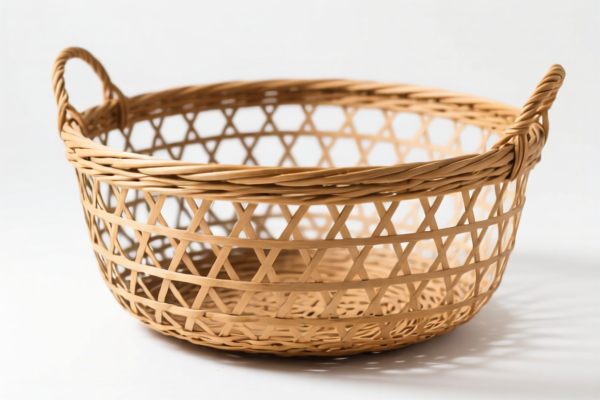
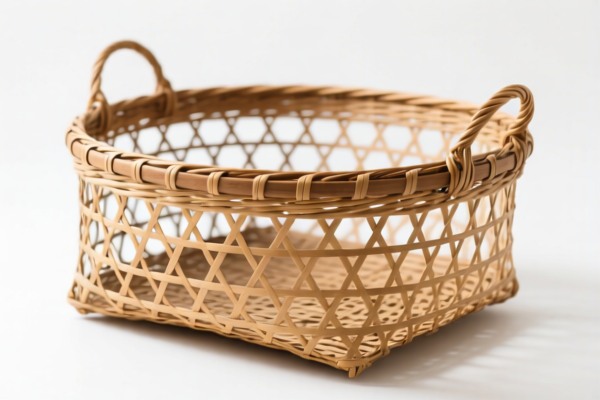
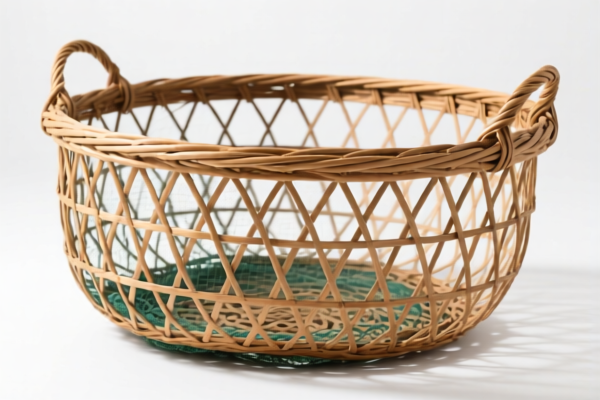
AI Analysis
🎣 Large Rattan Fishing Basket (and Wickerwork Articles)
🌐 HS Code Reference & Customs Clearance Guide | 2026 Latest Tariff Analysis | Professional Clearance Strategy
📌 Part 1: Product Definition & Classification: Do You Really Understand "Rattan Fishing Baskets"?
Rattan fishing baskets, often referred to as creels, traps, or pots, are essential tools in commercial and recreational fishing. In international trade, they are classified under Chapter 46 (Articles of vegetation plaiting materials; basketwork, wickerwork and other articles of plaiting materials).
The classification hinges on two critical factors: 1. Material: Must be made of vegetable plaiting materials, specifically Rattan (Heading 4602 covers "Of vegetable materials: Of rattan"). 2. Function/Shape: Must be "made directly to shape from plaiting materials" or "made up from articles of heading 4601."
⚠️ Key Distinction:
- If the item is a fishing creel/trap specifically shaped for holding fish, it falls under the specific subheading for fishing baskets.
- If it is a generic basket, bag, or container made of rattan but not exclusively for fishing, it falls under "Other baskets and bags."
📦 Part 2: HS Code Classification Details (2026 Latest Tariff Alignment)
Based on the provided , there are two primary HS Codes for Rattan Fishing/Plaiting Articles. The correct code depends on the specific design and intended use.
| HS Code | Product Description | Application Scenario | Key Characteristics |
|---|---|---|---|
| 4602.12.05.00 | Fishing baskets or creels | Specifically designed fishing traps, creels, or pots made of rattan. | 🎣 Exclusive Use: Designed for catching/holding fish. 🌿 Material: Rattan (Vegetable). 🏷️ Category: Specific functional basket. |
| 4602.12.14.00 | Other baskets and bags... Wickerwork | General-purpose rattan baskets, storage containers, or decorative wicker items. | 🧺 General Use: Storage, transport, decoration. 🌿 Material: Rattan/Wicker. 🏷️ Category: Non-specific basket/bag. |
🔍 Critical Note:
- Code 4602.12.05.00 is for FISHING specific baskets. If your product is a general storage basket made of rattan but not for fishing, it likely falls under 4602.12.14.00.
- Both codes fall under 4602.12 (Of vegetable materials: Of rattan).
- The data provided explicitly links these two codes to their respective descriptions and tax rates.
💰 Part 3: 2026 Latest Tariff Rate Details (Including Additional Duties & Policies)
✅ Applicable Country: United States (US)
✅ Origin: China (CN) (Inferred from the "Additional Tariff" structure typical of US-China trade data)
✅ Effective Time: Current 2025/2026 tariff regime
🎯 1. 4602.12.05.00 —— Fishing Baskets or Creels (Rattan)
| Item | Content |
|---|---|
| Base Tariff Rate | 5.0% (Ad Valorem) |
| Additional Tariff (Section 301) | +25.0% |
| Total Effective Tax Rate | 30.0% |
| Tax Calculation Basis | CIF Value × 30.0% |
| De Minimis Exemption | ❌ Not Applicable (High value threshold usually applies to Section 301 items; check specific CP rules) |
| Legal Basis Path | USITC:4602.12.05.00 → Footnote: 301 Section |
📌 Explanation:
- The 5% base rate reflects the general MFN (Most Favored Nation) duty for rattan basketry.
- The +25% additional tariff is applied under Section 301 of the Trade Act of 1974 for goods originating from China.
- Total Cost Impact: For every $1,000 CIF value, you pay $300 in duties. This is a significant cost driver compared to non-301 goods.
🎯 2. 4602.12.14.00 —— Other Baskets and Bags, Wickerwork (Rattan)
| Item | Content |
|---|---|
| Base Tariff Rate | 0.0% (Ad Valorem) |
| Additional Tariff (Section 301) | +25.0% |
| Total Effective Tax Rate | 25.0% |
| Tax Calculation Basis | CIF Value × 25.0% |
| De Minimis Exemption | ❌ Not Applicable |
| Legal Basis Path | USITC:4602.12.14.00 → Footnote: 301 Section |
📌 Explanation:
- The 0% base rate indicates that general wicker/rattan baskets are more favorably treated under the base schedule.
- However, the +25% additional tariff still applies due to the origin (China).
- Total Cost Impact: For every $1,000 CIF value, you pay $250 in duties.
- Comparison: This code is 5 percentage points cheaper than the fishing-specific basket code (4602.12.05.00). If the product can be legitimately classified as a general basket, this saves money.
🛠️ Part 4: Customs Clearance Practical Advice (Pitfall Avoidance Guide)
✅ 1. Document Checklist (Essential for Clearance)
| Document | Required? | Description |
|---|---|---|
| ✅ Product Specification Sheet | ✔️ | Must specify: Material (100% Rattan), Type (Fishing Creel vs. General Basket), Dimensions. |
| ✅ Product Photos | ✔️ | Clear images showing the item's shape, weaving pattern, and any labels. Crucial for distinguishing between "Fishing Basket" and "General Basket". |
| ✅ Commercial Invoice | ✔️ | Must clearly state: "Rattan Fishing Basket" or "Rattan Wicker Basket" with accurate HS Code. |
| ✅ Packing List | ✔️ | Details weight, dimensions, and quantity. |
| ✅ Proof of Origin | ✔️ | Certificate of Origin (if claiming any preferential treatment under other FTAs, though Section 301 usually negates this for China). |
✅ 2. Declaration Tips (Key Mantra)
🔥 "Material First, Function Second, Accurate Description Saves Money!"
| Scenario | Correct Declaration | Incorrect Action |
|---|---|---|
| Product is a fishing trap | Use 4602.12.05.00 + Declare "Fishing Creel" |
Misdeclare as "Storage Basket" to avoid 301? ❌ Risk of Penalty |
| Product is a general basket | Use 4602.12.14.00 + Declare "Wicker Basket" |
Declare as "Fishing Basket" to justify higher base duty? ❌ Unnecessary Cost |
| Mixed Materials | Declare primarily vegetable material | Mix with plastic frames without disclosure → Seizure Risk |
⚠️ Warning:
- Do Not attempt to misclassify a fishing basket as a general basket if it is clearly designed for fishing (e.g., has bait compartments, specific shape for fish). Customs officers can inspect and reclassify, leading to back taxes, penalties, and delays.
- Do Not under-declare value. The 25% additional tariff is applied on the CIF value.
✅ 3. Special Considerations
| Situation | Advice |
|---|---|
| Origin Change | If manufactured in Vietnam/Thailand/Malaysia, you may avoid the 25% Section 301 tariff. Ensure proper documentation of substantial transformation. |
| De Minimis (Section 321) | While $800 de minimis exists, Section 301 tariffs (25%) often DO NOT apply to de minimis shipments IF the value is under $800 and no other prohibitions exist. However, recent policy shifts suggest scrutiny. Always verify current CBP enforcement on Section 301 for low-value shipments. |
| Plastic Components | If the basket has plastic latches or handles, it may still be classified under 4602 if the rattan is the essential character. Disclose all materials. |
🌍 Part 5: Global Market Comparison (2026 Latest)
| Country/Region | Recommended HS Code | Base Duty | Additional Duty | Total Duty (China Origin) | Remarks |
|---|---|---|---|---|---|
| 🇺🇸 USA | 4602.12.05.00 |
5% | +25% | 30% | High tariff due to Section 301. |
| 🇺🇸 USA | 4602.12.14.00 |
0% | +25% | 25% | Slightly better than fishing baskets. |
| 🇨🇳 China | 4602.12.05.00 |
5% | 0% | 5% | Import duty only. |
| 🇪🇺 EU | 4602.11 |
4.5% | 0% | 4.5% | No Section 301 equivalent. |
| 🇬🇧 UK | 4602.11 |
4.5% | 0% | 4.5% | Post-Brexit tariff schedule. |
| 🇦🇺 Australia | 4602.11 |
5.0% | 0% | 5.0% | Generally low duties. |
📌 Conclusion:
- The US market is the most expensive for rattan products from China due to the 25% Section 301 tariff.
- Diversify Supply Chains: Consider sourcing from non-China origins (e.g., Vietnam, Indonesia) to eliminate the 25% surcharge.
- Classify Accurately: Ensure the product description matches the physical item. If it’s a general basket, use4602.12.14.00to save 5% vs. the fishing basket code.
📌 Part 6: Common Errors & Pitfalls (Lessons Learned)
❌ Error 1: Calling a general rattan storage basket a "Fishing Basket" to fit a different category without justification.
👉 Consequence: If Customs determines it’s not for fishing, they may penalize for misdeclaration. Conversely, using the wrong code can lead to underpayment if the fishing basket code has a different legal status (though here both have 301, the base rate differs).
❌ Error 2: Ignoring the 25% Additional Tariff.
👉 Consequence: Shippers often budget for the 5% base rate and are shocked by the total 30% cost. Always calculate total landed cost with Section 301 included.
❌ Error 3: Ambiguous Product Descriptions.
👉 Consequence: "Rattan Basket" is too vague. Use specific terms: "Hand-woven Rattan Fishing Creel, Model X" or "Rectangular Rattan Storage Basket."
✅ Correct Practice:
"100% Natural Ratan Fishing Creel, Hand-woven, Imported from China, HS Code 4602.12.05.00, Subject to Section 301 Tariff."
🎯 Part 7: Conclusion: Smart Classification, Lower Costs!
🎯 Remember These Tips:
🔹 "Check the Function: Fishing = 30%, General = 25% (China Origin)."
🔹 "Don't Ignore Section 301: It adds 25% on top of the base rate."
🔹 "Consider Origin Shifts: Vietnam/Indonesia can save you 25%."
🔹 "Describe Accurately: Vague descriptions lead to customs delays."
📌 Pro Tip:
If your "Large Rattan Fishing Basket" has non-rattan components (e.g., plastic hooks, metal handles), ensure the rattan remains the essential character for classification under 4602. If the plastic/metal dominates, it might fall under Plastic Baskets (3923) or Metal Containers (7310), which have different duty structures. Always verify with a customs broker if the composition is mixed.
📣 Immediate Action:
📞 Contact your customs broker to confirm the exact HS code based on product photos.
📉 Evaluate sourcing alternatives: Can you produce in a non-China country to save 25%?
📝 Prepare accurate documentation: Clear photos, specs, and origin proofs.
✨ Professional Clearance Starts with Precise Classification!
💼 Your bottom line depends on getting this right!
Customer Reviews
About HS Code Classification
The Harmonized System (HS) is an internationally standardized nomenclature developed by the World Customs Organization (WCO) to classify traded products. Over 200 countries use the HS system as the basis for customs tariffs, trade statistics, and import/export regulations.
Each HS code follows a hierarchical structure:
- Chapter (2 digits) — Broad category of goods (e.g., Chapter 84: Machinery and Mechanical Appliances)
- Heading (4 digits) — More specific grouping within the chapter
- Subheading (6 digits) — Internationally standardized breakdown, used by all WCO member countries
- National subdivisions (8-10 digits) — Country-specific extensions for further classification, such as US HTSUS 10-digit codes
Correct HS code classification is essential for smooth customs clearance, accurate duty payment, and compliance with trade regulations. Misclassification can lead to customs delays, overpayment of duties, or penalties.
When importing from CN to US, the applicable tariff rates may include:
- Most-Favored-Nation (MFN) rate — The standard duty rate applied to WTO members
- General rate — Applied to countries without trade agreements
- Trade remedy duties — Additional tariffs such as Section 301 (anti-dumping), Section 232 (national security), or countervailing duties
The information provided on this page is for reference purposes only. For official classification, please consult with your local customs authority or a licensed customs broker.