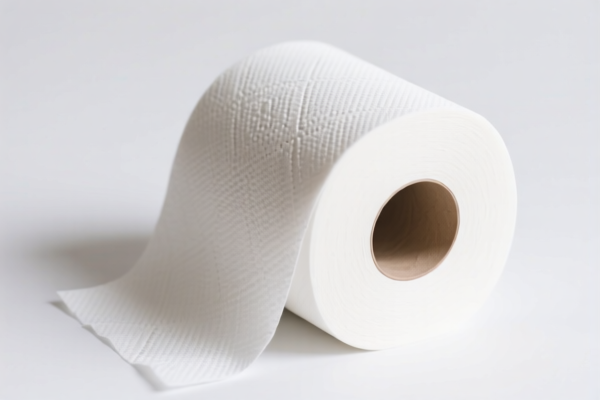
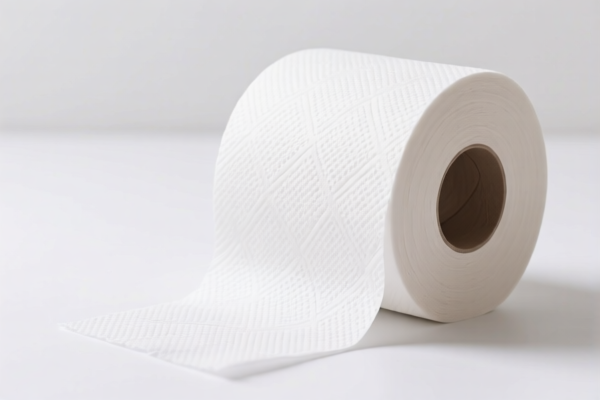
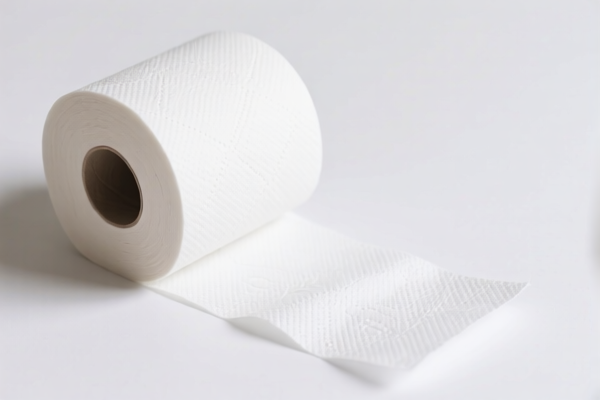
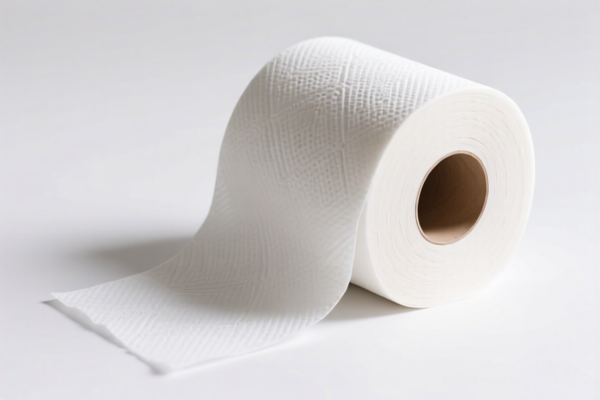
Large Roll Disinfectant Wipes
CN → USProduct Images
AI Analysis
🧻 Large Roll Disinfectant Wipes (Non-Woven Fabric with Biocide)
🌐 HS Code Reference & Clearance Guide | 2026 Latest Tariff Analysis | Professional Customs Strategy
📌 I. Product Definition & Classification: Do You Really Understand "Large Roll Wipes"?
Large roll disinfectant wipes are industrial or commercial cleaning products consisting of non-woven fabric or cellulose rolls saturated with an antimicrobial solution (e.g., ethanol, benzalkonium chloride, or quaternary ammonium compounds). In international trade, the classification depends critically on two factors:
1. The Base Material (Non-woven vs. Textile vs. Paper);
2. The Presence of Medicinal/Disinfectant Properties (Is it a "medical device," "cosmetic," or "sanitary product"?).
Key Distinction:
- If the wipes are impregnated with disinfectants intended for sanitation/cleaning of surfaces (not direct human medical use), they are generally classified under Chapter 59 (Impregnated Textiles/Non-wovens).
- If they are medical-grade (e.g., for surgical prep) or contain specific pharmaceutical ingredients, they may fall under Chapter 30 (Pharmaceuticals) or Chapter 38 (Miscellaneous Chemical Products).
- Crucial Note: Most commercial "disinfectant wipes" for surface cleaning are NOT classified as textiles (Chapter 60/61) but as impregnated non-wovens.
⚠️ Critical Classification Point:
- If primarily for sanitation/cleaning (e.g., factory floors, equipment, general hygiene) → HS 5911.90 or HS 3808.94 (depending on formulation).
- If primarily for personal hygiene (e.g., baby wipes, facial wipes) → HS 3307.90 or HS 3401.30.
- Assumption for this guide: We assume the standard commercial/industrial disinfectant wipe (non-medical, surface cleaning), which is most commonly classified under HS 5911.90.90.00 (Impregnated non-wovens) or HS 3808.94.00.00 (Sanitizers).
📦 II. HS Code Classification Details (2026 Latest Tariff Authority Cross-Reference)
| HS Code | Product Description | Application Scenario | Disinfectant Present? |
|---|---|---|---|
5911.90.90.00 |
Textile products and articles, for technical uses (incl. impregnated non-wovens) | Industrial surface disinfection, general sanitation wipes | ✅ Yes (Non-medical) |
3808.94.00.00 |
Insecticides, rodenticides, fungicides, herbicides, anti-sprouting agents, plant-growth regulators, disinfectants and similar products | Disinfectant solutions or wipes specifically labeled as "Disinfectant" | ✅ Yes (Primary function is disinfection) |
3401.30.00.00 |
Soap and organic surface-active products for washing skin (incl. medicated towels/washes) | Personal hygiene wipes (e.g., baby wipes, body wipes) | ✅ Yes (For skin contact) |
3004.90.99.90 |
Medicaments (not in doses or packaging for retail sale) | Medical-grade preoperative skin prep wipes | ✅ Yes (Pharmaceutical) |
5603.94.90.00 |
Non-woven fabrics, whether or not impregnated, coated, covered or laminated (Base material only) | Empty non-woven rolls without disinfectant | ❌ No |
🔍 Key Reminder:
- Do NOT classify as Chapter 60 (Knitted/Crocheted Fabrics) unless it is a specific textile article not impregnated for technical use.
- If the wipes are saturated (heavy liquid content), customs often prefer HS 3808 (Disinfectants) over HS 5911 (Textiles), especially if the primary purpose is disinfection.
- US Customs frequently classifies disinfectant wipes under HS 3808.94.00.00 if the label explicitly states "Disinfectant."
💰 III. 2026 Latest Tariff Rate Details (Including Surtaxes & Policy Add-ons)
✅ Applicable Country: United States (US)
✅ Country of Origin: China (CN)
✅ Effective Date: November 10, 2025 onwards (including subsequent imports)
🎯 1. 5911.90.90.00 – Impregnated Non-Woven Textiles (General Sanitation Wipes)
| Item | Details |
|---|---|
| Base Duty Rate | 4.5% (ad valorem) |
| USITC Surtax (Section 301) | +25% (from Footnote 9903.88.01) |
| IEEPA Surtax | +10% (For China/HK origin, effective Nov 10, 2025) |
| Total Duty Rate | 39.5% |
| Tax Calculation | CIF Value × 39.5% |
| De Minimis Eligibility | ❌ No (deny_de_minimis) |
| Legal Path | IEEPA:9903.01.25 → USITC:5911.90.90.00 → FOOTNOTE:9903.88.01 |
📌 Explanation:
- This category is often used for "non-medical, non-pharmaceutical" wipes.
- Total 39.5% is a significant cost burden.
- If the product is deemed a "sanitary article" rather than a "textile," customs might challenge this classification.
🎯 2. 3808.94.00.00 – Disinfectants (Including Wipes Impregnated with Disinfectant)
| Item | Details |
|---|---|
| Base Duty Rate | 0% (Many disinfectants have 0% base duty) |
| USITC Surtax (Section 301) | +25% (if listed in Chapter 38 surtax list) |
| IEEPA Surtax | +10% (For China/HK origin) |
| Total Duty Rate | 35% (If base is 0%) OR 39.5% (If base is 4.5%) |
| Tax Calculation | CIF Value × 35% or 39.5% |
| De Minimis Eligibility | ❌ No |
| Legal Path | IEEPA:9903.01.25 → USITC:3808.94.00.00 |
📌 Critical Note:
- The base rate for3808.94.00.00is often 0% in the US Harmonized Tariff Schedule (HTSUS) for general disinfectants.
- However, if classified under3808.94.00.00, the 25% + 10% surtaxes still apply.
- Result: 35% total duty. This is cheaper than the 39.5% for textile classification.
- Strategy: Argue for3808.94.00.00if the product is clearly labeled as a "Disinfectant" and not just a "cleaning cloth."
🎯 3. 3401.30.00.00 – Medicated Soap/Wipes for Skin
| Item | Details |
|---|---|
| Base Duty Rate | 6.5% |
| USITC Surtax | +25% |
| IEEPA Surtax | +10% |
| Total Duty Rate | 41.5% |
| De Minimis Eligibility | ❌ No |
📌 Warning:
- This applies only to personal hygiene wipes (e.g., baby wipes, body wipes).
- Do not use for industrial/disinfection wipes; it attracts higher duty and requires FDA/CDC compliance if claimed for medical use.
🛠️ IV. Customs Clearance Practical Advice (实战避坑指南)
✅ 1. Required Documentation Checklist (Non-Negotiable)
| Document | Must Provide | Description |
|---|---|---|
| ✅ Safety Data Sheet (SDS) | ✔️ | Must specify active disinfectant ingredients (e.g., Ethanol %). Critical for IECSC/Toxic Substances control. |
| ✅ Product Label Copy | ✔️ | Must clearly state "Disinfectant" or "Sanitary Wipe." Avoid ambiguous terms like "Cleaning Cloth." |
| ✅ Composition Statement | ✔️ | Percentage of non-woven fabric vs. liquid solution. |
| ✅ EPA Registration Number (if US) | ✔️ | If sold in the US, disinfectants must be EPA-registered. Provide the EPA Reg. No. |
| ✅ Commercial Invoice | ✔️ | Clear description: "Disinfectant Wipes, Non-Woven, Impregnated with [Chemical Name]" |
| ✅ Origin Certificate | ✔️ | To prove Chinese origin for surtax calculation. |
✅ 2. Declaration Strategy (Key Mantra)
🔥 "Disinfectant First, Textile Second; Label Clearly, Duty Lowered!"
| Scenario | Correct Declaration | Wrong Practice |
|---|---|---|
| Industrial/Commercial Wipes | HS 3808.94.00.00 (Disinfectant) | Declaring as "Textile Wipes" (HS 5911) → Higher Duty (39.5%) |
| Personal Care Wipes | HS 3401.30.00.00 (Soap/Skin Wash) | Declaring as "Disinfectant" → FDA/EPA rejection |
| Empty Non-Woven Rolls | HS 5603.94.90.00 (Non-woven) | Declaring as "Wipes" → Wrong classification |
| Medical Prep Wipes | HS 3004.90.99.90 (Medicament) | Declaring as "General Wipes" → FDA/Customs seizure |
✅ 3. Special Cases Handling
| Situation | Handling Advice |
|---|---|
| High Alcohol Content (>70%) | Classified as Hazardous Material (HazMat). Requires proper UN packaging and MSDS. |
| EPA-Registered Product | Must provide EPA Registration Number. Failure to do so may lead to refusal of entry. |
| OEM/Private Label | Ensure the label matches the EPA registration if applicable. Private labels still need the same chemical disclosure. |
| Small Rolls vs. Large Rolls | Size does not change HS code, but "Large Roll" implies industrial use. Ensure documentation reflects industrial/commercial use. |
🌍 V. Global Market Clearance Comparison (2026 Latest)
| Country/Region | Recommended HS Code | Duty Rate | Certification Requirements | Remarks |
|---|---|---|---|---|
| 🇺🇸 USA | 3808.94.00.00 |
35% | EPA Registration + SDS | 39.5% if misclassified as textile |
| 🇨🇳 China | 3808.94.00.00 |
5% | No special permit for export | Low duty, easy clearance |
| 🇪🇺 EU | 3808.94.00.00 |
0% | ECHA/CLP Compliance | Free trade if origin is non-EU |
| 🇬🇧 UK | 3808.94.00.00 |
0% | UKCA/REACH | Post-Brexit alignment with EU |
| 🇦🇺 Australia | 3808.94.00.00 |
5% | AICIS Registration | Chemical inventory check required |
📌 Conclusion:
- USA is the most complex market due to EPA requirements and high surtaxes.
- EU/UK offer 0% duty, making them cost-effective for exports, but chemical compliance (REACH/CLP) is strict.
- China exports have low duty (5%), but must comply with US/EU standards for final sale.
📌 VI. Common Errors & Pitfalls (Blood & Tears Lessons)
❌ Error 1: Classifying Disinfectant Wipes as Chapter 56 (Non-Woven Fabrics)
👉 Consequence: Customs reclassifies to HS 3808 or HS 5911, leading to duty difference + penalties.
👉 Solution: Always declare based on function (Disinfection) not just material (Non-woven).
❌ Error 2: Missing EPA Registration Number for US Market
👉 Consequence: Detention at Customs, return to origin, or destruction.
👉 Solution: Ensure every batch has a valid EPA Reg. No. on the label.
❌ Error 3: Ignoring HazMat Classification for High-Alcohol Wipes
👉 Consequence: Shipping rejection (Air/Sea). Airlines reject Class 3 Flammable Liquids without proper documentation.
👉 Solution: Provide MSDS and declare as Limited Quantity or Excepted Quantity if applicable.
❌ Error 4: Using "Cleaning Wipes" as Generic Description
👉 Consequence: Customs may apply anti-dumping duties or higher general rates.
👉 Solution: Be specific: "Disinfectant Wipes Impregnated with Ethanol."
✅ Correct Declaration Example:
"Disinfectant Wipes, Non-Woven Fabric, Impregnated with 70% Ethanol, for Surface Sanitation, EPA Reg. No. 12345-67, 10 Rolls per Carton"
🎯 VII. Conclusion: Professional Declaration, Save Time, Cut Costs!
🎯 Remember the Mantra:
🔹 "Disinfectant over Textile, EPA over MSDS, Label over Guess!"
🔹 "HS Code 3808 saves 4.5%, Misclassification Costs Thousands!"
📌 Pro Tip:
If your disinfectant wipes are originating from Vietnam or Malaysia, you may still face surtaxes if the transshipment is not genuine. Ensure substantial transformation occurs.
For US exports, consider applying for an Exclusion under Section 301 if your product is not available in the US, though this is difficult for common disinfectants.
📣 Immediate Action:
📞 Contact your freight forwarder + Provide SDS + Verify EPA Registration
🚀 Ensure smooth customs clearance, avoid detention, maximize profit margins!
✨ Professional Customs Clearance Starts with Precise Classification!
💼 Every Cent of Duty You Save Is Pure Profit!
Customer Reviews
About HS Code Classification
The Harmonized System (HS) is an internationally standardized nomenclature developed by the World Customs Organization (WCO) to classify traded products. Over 200 countries use the HS system as the basis for customs tariffs, trade statistics, and import/export regulations.
Each HS code follows a hierarchical structure:
- Chapter (2 digits) — Broad category of goods (e.g., Chapter 84: Machinery and Mechanical Appliances)
- Heading (4 digits) — More specific grouping within the chapter
- Subheading (6 digits) — Internationally standardized breakdown, used by all WCO member countries
- National subdivisions (8-10 digits) — Country-specific extensions for further classification, such as US HTSUS 10-digit codes
Correct HS code classification is essential for smooth customs clearance, accurate duty payment, and compliance with trade regulations. Misclassification can lead to customs delays, overpayment of duties, or penalties.
When importing from CN to US, the applicable tariff rates may include:
- Most-Favored-Nation (MFN) rate — The standard duty rate applied to WTO members
- General rate — Applied to countries without trade agreements
- Trade remedy duties — Additional tariffs such as Section 301 (anti-dumping), Section 232 (national security), or countervailing duties
The information provided on this page is for reference purposes only. For official classification, please consult with your local customs authority or a licensed customs broker.