Large Size Acrylic Transparent Sheet
CN → US| HS Code | Tariff Rate | Origin | Destination | Doc |
|---|---|---|---|---|
| 3906902000 | 41.3% | CN | US | Official Doc |
| 3920511000 | 41.0% | CN | US | Official Doc |
| 3906100000 | 41.3% | CN | US | Official Doc |
| 3921110000 | 40.3% | CN | US | Official Doc |
| 3921190090 | 41.5% | CN | US | Official Doc |
Product Images

AI Analysis
🧊 Large Size Acrylic Transparent Sheet (PMMA Plate)
🌐 HS Code Reference & Customs Clearance Guide | 2026 Latest Tariff Analysis | Professional Clearance Strategy 📌 I. Product Definition & Classification: Do You Really Understand "Acrylic"?
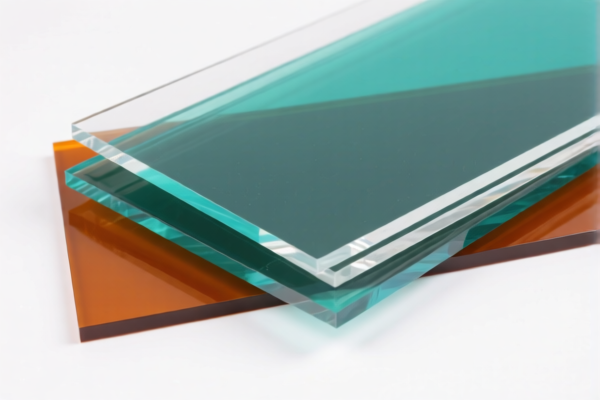
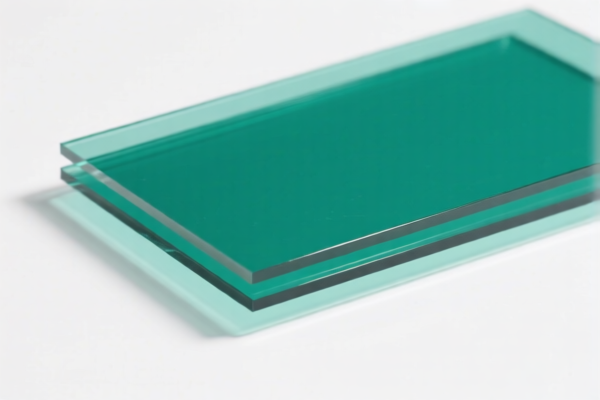
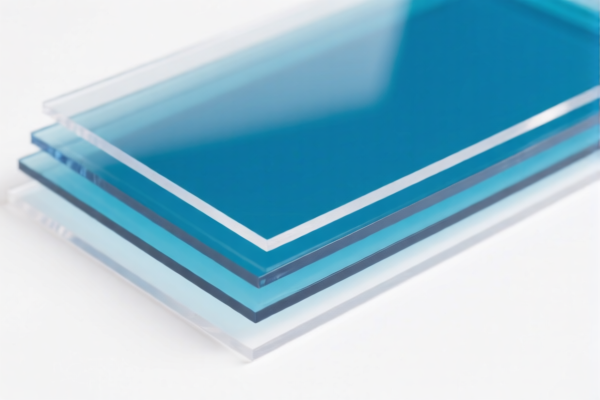
Large Size Acrylic Transparent Sheet refers to solid plates made of Polymethyl Methacrylate (PMMA), a transparent thermoplastic often known by trade names like Plexiglas or Lucite. In international trade, the classification depends heavily on whether the acrylic is in its primary form (raw material) or processed into a finished sheet/plate.
Key Distinction: - Primary Form (Intermediate): Raw blocks, semi-finished plates intended for further processing (cutting, shaping) by the end-user. → Often falls under Chapter 3906. - Finished Sheet/Plate: Ready-to-use sheets in standard sizes, categorized as other plastic plates. → Often falls under Chapter 3920 or 3921.
⚠️ Critical Classification Point:
- If the item is a semi-finished raw block or "primary shape" intended for manufacturing → 3906.10 or 3906.90.
- If the item is a finished plate/sheet (cut to size, polished edges) → 3920.51 or 3921.11/19.
- Note: Misclassification here can lead to significant tariff differences due to "122 Clause" taxes.
📦 II. HS Code Classification Details (2026 Latest Tariff Authority Comparison)
Based on the provided data, here are the 5 possible HS Codes for Large Size Acrylic Sheets, categorized by their physical state and regulatory treatment.
| HS Code | Product Description | Application Scenario | Key Feature |
|---|---|---|---|
3906.90.20.00 |
Acrylic (PMMA) - Semi-finished | Raw blocks, intermediate forms before final cutting | Primary/Semi-finished form |
3920.51.10.00 |
PMMA Plates/Sheets (Specific) | Finished transparent sheets, standard commercial grade | Plate/Sheet category |
3906.10.00.00 |
PMMA - Primary Form | Raw polymer in primary shapes (blocks/bloks) | Primary form intermediate |
3921.11.00.00 |
Other Plastic Plates (Non-porous) | Polymers not elsewhere specified, non-cellular | Other plastic plate features |
3921.19.00.90 |
Other Plastic Plates/Sheets | Non-porous films, foils, strips not elsewhere specified | Non-cellular, general plate |
🔍 Focus Reminder:
- 3906 Codes treat the product as a raw/semi-finished polymer.
- 3920/3921 Codes treat the product as a manufactured plastic plate/sheet.
- All categories listed are subject to additional US tariffs (Section 122 and Trade War surcharges).
💰 III. 2026 Latest Tariff Rate Breakdown (Including Surcharges & Policy Add-ons)
✅ Applicable Country: United States (US)
✅ Origin: China (CN)
✅ Effective Date: Current Trade War & Section 122 Regulations
🎯 1. 3906.90.20.00 —— Acrylic (PMMA), Semi-finished
| Item | Content |
|---|---|
| Base Tariff | 6.3% |
| Trade War Surcharge (Section 301) | +25.0% |
| Section 122 Surcharge | +10.0% |
| Total Tariff Rate | 41.3% |
| Tax Calculation | CIF Value × 41.3% |
| De Minimis Exemption | ❌ Not Eligible |
| Legal Basis Path | Base Tariff → Section 301 → Section 122 |
📌 Explanation:
- This code applies to PMMA in a semi-finished state.
- The 41.3% total rate is a combination of the base duty (6.3%) and two major surcharges: 25% (US-China trade war) and 10% (Section 122 specific to certain plastics/polymers).
🎯 2. 3920.51.10.00 —— PMMA Plates/Sheets (Specific Subheading)
| Item | Content |
|---|---|
| Base Tariff | 6.0% |
| Trade War Surcharge (Section 301) | +25.0% |
| Section 122 Surcharge | +10.0% |
| Total Tariff Rate | 41.0% |
| Tax Calculation | CIF Value × 41.0% |
| De Minimis Exemption | ❌ Not Eligible |
| Legal Basis Path | Base Tariff → Section 301 → Section 122 |
📌 Note:
- This code is for finished plates/sheets specifically identified as PMMA.
- The base tariff is slightly lower (6.0% vs 6.3%), resulting in a 41.0% total rate. Still extremely high due to mandatory surcharges.
🎯 3. 3906.10.00.00 —— PMMA, Primary Form
| Item | Content |
|---|---|
| Base Tariff | 6.3% |
| Trade War Surcharge (Section 301) | +25.0% |
| Section 122 Surcharge | +10.0% |
| Total Tariff Rate | 41.3% |
| Tax Calculation | CIF Value × 41.3% |
| De Minimis Exemption | ❌ Not Eligible |
| Legal Basis Path | Base Tariff → Section 301 → Section 122 |
📌 Note:
- Applies if the product is considered primary shape (e.g., large blocks).
- Same tax burden as3906.90.20.00. Ensure your product definition matches "primary form" to avoid misdeclaration.
🎯 4. 3921.11.00.00 —— Other Plastic Plates (Non-cellular)
| Item | Content |
|---|---|
| Base Tariff | 5.3% |
| Trade War Surcharge (Section 301) | +25.0% |
| Section 122 Surcharge | +10.0% |
| Total Tariff Rate | 40.3% |
| Tax Calculation | CIF Value × 40.3% |
| De Minimis Exemption | ❌ Not Eligible |
| Legal Basis Path | Base Tariff → Section 301 → Section 122 |
📌 Note:
- This code is for polymers not elsewhere specified but fitting the "plate" description.
- Offers the lowest base tariff (5.3%) among the options, resulting in 40.3% total.
- Risk: If customs determines the item is specifically PMMA (Chapter 3906/3920), using this code may be flagged as misclassification.
🎯 5. 3921.19.00.90 —— Other Plastic Plates/Sheets (General)
| Item | Content |
|---|---|
| Base Tariff | 6.5% |
| Trade War Surcharge (Section 301) | +25.0% |
| Section 122 Surcharge | +10.0% |
| Total Tariff Rate | 41.5% |
| Tax Calculation | CIF Value × 41.5% |
| De Minimis Exemption | ❌ Not Eligible |
| Legal Basis Path | Base Tariff → Section 301 → Section 122 |
📌 Note:
- A catch-all for plastic plates/sheets not fitting other specific subheadings (e.g., non-cellular, not PMMA-specific).
- Has the highest total rate (41.5%) due to the higher base tariff (6.5%). Use only if the product does not fit the specific PMMA descriptions above.
🛠️ IV. Customs Clearance Practical Advice (Real-World Pitfall Guide)
✅ 1. Preparation Checklist (Must-Haves)
| Document | Required | Description |
|---|---|---|
| ✅ Product Specification Sheet | ✔️ | Must specify material (PMMA), dimensions, thickness, transparency level. |
| ✅ Material Safety Data Sheet (MSDS) | ✔️ | Proves chemical composition (Polymethyl Methacrylate). |
| ✅ Commercial Invoice | ✔️ | Clearly state "Acrylic Sheet" or "PMMA Plate," NOT just "Plastic." |
| ✅ Packing List | ✔️ | Detail weight, volume, and packaging type (crated to prevent breakage). |
| ✅ Photos of Product | ✔️ | Show labels, edges, and any markings indicating grade or manufacturer. |
✅ 2. Declaration Tips (Key Mnemonics)
🔥 "Material Specifics Matter! Don't Use 'Plastic' Alone!"
| Situation | Correct Declaration | Incorrect Practice |
|---|---|---|
| Standard PMMA Sheet | 3920.51.10.00 or 3906.90.20.00 |
Using generic "Plastic Sheet" → 41.5% |
| Raw PMMA Block | 3906.10.00.00 |
Declaring as "Finished Plate" → Misclassification Risk |
| Non-Cellular Acrylic | 3921.11.00.00 (if eligible) |
Using 3921.19.00.90 → Higher Tax (41.5%) |
| Importing for Resale | Provide End-Use Statement | Hiding end-use → Audits & Penalties |
✅ 3. Special Handling Cases
| Scenario | Handling Advice |
|---|---|
| OEM Custom Sizes | Clearly state "Custom Cut PMMA Sheet" on invoice. Avoid "General Plastic." |
| High Optical Grade | Provide optical clarity specs (e.g., >92% light transmission) to justify PMMA classification. |
| Re-export from Mexico/Vietnam | Check Rules of Origin! If processed in third country, may avoid Section 122/301. Requires proper Certificate of Origin. |
| Small Samples | No De Minimis! Section 122 and Trade War tariffs often bypass the $800 de minimis exemption for Chinese goods. |
🌍 V. Global Market Comparison (2026 Snapshot)
| Region | Recommended HS Code | Approx. Total Duty (China Origin) | Key Requirement |
|---|---|---|---|
| 🇺🇸 USA | 3920.51.10.00 / 3906.90.20.00 |
40.3% - 41.5% | Strict Section 122 & 301 enforcement |
| 🇨🇳 China | 3920.51.10.00 |
~5-6% | Standard Import Duty |
| 🇪🇺 EU | 3920.51.00.00 |
~6.5% | CE Marking (if applicable), REACH Compliance |
| 🇬🇧 UK | 3920.51.00.00 |
~6.5% | Post-Brexit Import Declarations |
📌 Conclusion:
- USA is the highest-cost market due to additive tariffs.
- No Duty-Free Options exist for Chinese-origin acrylic sheets under current trade policies.
- Cost Management: Consider supply chain diversification if volume is high.
📌 VI. Common Mistakes & Pitfall Guide (Lessons Learned)
❌ Mistake 1: Declaring as "Plastic Sheet" without specifying PMMA.
👉 Consequence: Customs may classify under the highest general plastic code (3921.19.00.90 → 41.5%) or flag for detailed examination.
❌ Mistake 2: Ignoring Section 122 Surcharges.
👉 Consequence: Budget shortfall. The 10% surcharge is automatic and non-negotiable for many polymers.
❌ Mistake 3: Assuming De Minimis applies.
👉 Consequence: Packages under $800 from China are NOT exempt from Section 122 and Section 301 tariffs in many cases. Expect full duty payment.
❌ Mistake 4: Confusing "Semi-finished" with "Finished."
👉 Consequence: If you declare a finished sheet as "semi-finished" (3906) but it's clearly ready-to-use, customs may reclassify and penalize.
✅ Correct Practice:
"Transparent Polymethyl Methacrylate (PMMA) Sheet, Size: 1220x2440mm, Thickness: 3mm, Gloss Finish, Model: ACRYLIC-3030"
🎯 VII. Conclusion: Precision Classification Saves Money!
🎯 Remember the Mantra:
🔹 "PMMA is Specific! Don't Be Generic!"
🔹 "Base + 25% + 10% = ~41%! Budget for It!"
🔹 "Section 122 is Real! De Minimis is a Myth for CN!"
📌 Pro Tip:
If your acrylic sheets are sourced from Vietnam, Thailand, or Malaysia and meet Rules of Origin, you may qualify for tariff exemptions on Section 301 and Section 122 duties.
Action: Always request a Certificate of Origin from your supplier and verify with a customs broker.
📣 Immediate Action:
📞 Contact a licensed customs broker for Pre-Ruling (Binding Ruling) if shipping large volumes.
🚀 Ensure your invoices clearly state "PMMA/Acrylic" to avoid ambiguous "Plastic" classifications.
✨ Professional Clearance Starts with Accurate Classification!
💼 Every Percentage Point of Tax Impacts Your Bottom Line!
Customer Reviews
About HS Code Classification
The Harmonized System (HS) is an internationally standardized nomenclature developed by the World Customs Organization (WCO) to classify traded products. Over 200 countries use the HS system as the basis for customs tariffs, trade statistics, and import/export regulations.
Each HS code follows a hierarchical structure:
- Chapter (2 digits) — Broad category of goods (e.g., Chapter 84: Machinery and Mechanical Appliances)
- Heading (4 digits) — More specific grouping within the chapter
- Subheading (6 digits) — Internationally standardized breakdown, used by all WCO member countries
- National subdivisions (8-10 digits) — Country-specific extensions for further classification, such as US HTSUS 10-digit codes
Correct HS code classification is essential for smooth customs clearance, accurate duty payment, and compliance with trade regulations. Misclassification can lead to customs delays, overpayment of duties, or penalties.
When importing from CN to US, the applicable tariff rates may include:
- Most-Favored-Nation (MFN) rate — The standard duty rate applied to WTO members
- General rate — Applied to countries without trade agreements
- Trade remedy duties — Additional tariffs such as Section 301 (anti-dumping), Section 232 (national security), or countervailing duties
The information provided on this page is for reference purposes only. For official classification, please consult with your local customs authority or a licensed customs broker.