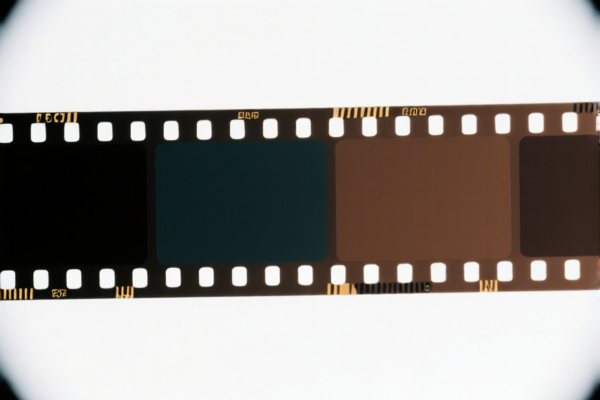
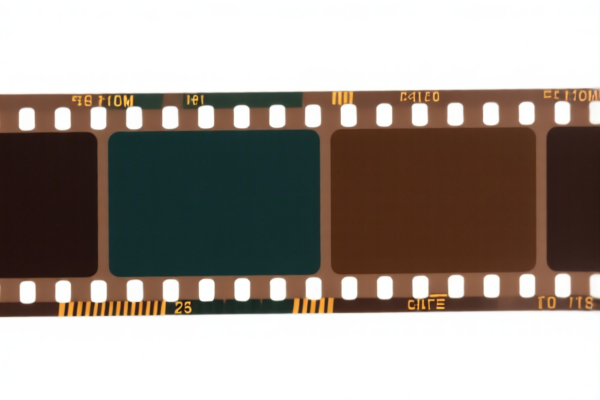
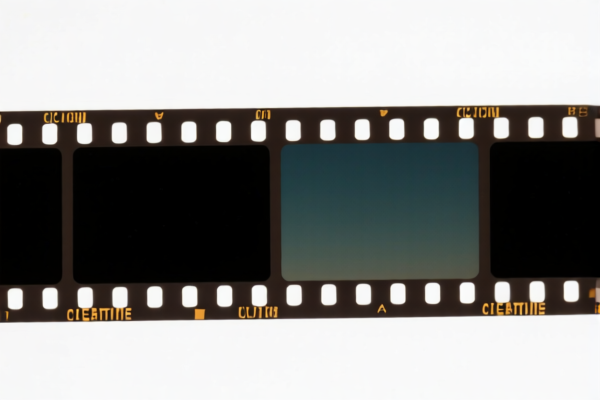
Large format color film for exposure and printing
CN → US| HS Code | Tariff Rate | Origin | Destination | Doc |
|---|---|---|---|---|
| 3703203030 | 38.7% | CN | US | Official Doc |
| 3703203060 | 38.7% | CN | US | Official Doc |
Product Images

AI Analysis
🎞️ Large Format Color Film (Exposure & Printing)
🌐 HS Code Reference & Clearance Guide | 2026 Latest Tariff Analysis | Professional Customs Strategy
📌 I. Product Definition & Classification: What is "Large Format Color Film"?
In international trade, "Large Format Color Film" refers to sensitized photographic materials used for high-resolution color photography (polychrome) and subsequent printing or pictorial use. These are not standard roll films for consumer cameras, but rather professional-grade sheets or large rolls used by studio photographers, scientific imaging, or archival printing.
The key distinction lies in the emulsion type (Silver Halide) and the application (Pictorial/Continuous Tone vs. Line Reproduction).
⚠️ Key Distinction Point:
- If the film is Silver Halide based and intended for continuous tone/pictorial color photography → It falls under 3703.20.30.30.
- If the film is Silver Halide based but used for line reproduction (e.g., technical drawing, text-heavy scans) → It falls under 3703.20.30.60.
📦 II. HS Code Classification Details (2026 Latest Tariff Authority Comparison)
| HS Code | Product Description | Application Scenario | Emulsion Type |
|---|---|---|---|
3703.20.30.30 |
Silver halide papers for pictorial use (continuous tone): For color photography | Professional color portraits, landscape photography, high-end art prints, large format color negatives/positives | ✅ Silver Halide |
3703.20.30.60 |
Silver halide papers other (line reproduction) | Technical documents, architectural blueprints, text-heavy scanning, line-art reproduction | ✅ Silver Halide |
🔍 Critical Reminder:
- Both codes belong to Chapter 37 (Photographic or Cinematographic Goods).
- The primary differentiator is "Pictorial/Continuous Tone" vs. "Line Reproduction."
- "Large Format" does not automatically change the HS code; the content and usage determine the classification.
💰 III. 2026 Latest Tariff Rate Details (Including Additional Taxes & Policy Add-ons)
✅ Applicable Country: United States (US)
✅ Country of Origin: China (CN) (Note: If origin is non-China, rates may differ significantly)
✅ Effective Date: 2025-11-10 onwards (Including subsequent imports)
🎯 1. 3703.20.30.30 —— Silver Halide Papers for Pictorial Color Photography
| Item | Content |
|---|---|
| Basic Tariff Rate | 0.0% (ad valorem) |
| Section 301 Additional Tariff | 0.0% |
| IEEPA Additional Tariff | 0.0% |
| Total Tariff Rate | 0.0% |
| Tax Calculation | CIF Value × 0.0% = $0 |
| De Minimis Eligibility | ✅ Yes (Generally eligible if value is low, but verify carrier policies) |
| Legal Basis Path | HTSUS:3703.20.30.30 → USITC:3703.20.30 → No Footnote 9903.88.01 applies |
📌 Explanation:
- Unlike electronics or steel, professional photographic materials (specifically silver halide films/papers for pictorial use) are NOT subject to the 25% Section 301 tariffs or the 10% IEEPA surcharges currently applied to many Chinese imports.
- Total Tax Burden is 0%, making this a highly favorable classification for cost control.
🎯 2. 3703.20.30.60 —— Silver Halide Papers for Line Reproduction
| Item | Content |
|---|---|
| Basic Tariff Rate | 0.0% (ad valorem) |
| Section 301 Additional Tariff | 0.0% |
| IEEPA Additional Tariff | 0.0% |
| Total Tariff Rate | 0.0% |
| Tax Calculation | CIF Value × 0.0% = $0 |
| De Minimis Eligibility | ✅ Yes |
| Legal Basis Path | HTSUS:3703.20.30.60 → USITC:3703.20.30 → No Footnote 9903.88.01 applies |
📌 Note:
- Same tariff treatment as pictorial films.
- Even if classified as "line reproduction," it retains the 0% total tax rate.
- No additional surcharges apply to these specific photographic subheadings.
🛠️ IV. Clearance Practical Advice (Avoid Pitfalls Guide)
✅ 1. Preparation Checklist (Essential Documents)
| Document | Must Provide | Notes |
|---|---|---|
| ✅ Product Specification Sheet | ✔️ | Must clearly state: "Silver Halide," "Color Photography," "Large Format," "Unexposed/Sensitized." |
| ✅ Commercial Invoice | ✔️ | Description must match HS Code exactly (e.g., "Silver Halide Color Film for Pictorial Use"). |
| ✅ HS Code Pre-Ruling | ⚠️ Recommended | Though rates are 0%, misclassification can lead to audits. |
| ✅ Safety Data Sheet (SDS) | ✔️ | Photographic chemicals may require hazardous material declaration depending on packaging. |
| ✅ Photo of Product/Packaging | ✔️ | To prove it is indeed photographic film, not plastic sheets or general paper. |
✅ 2. Declaration Tips (Key Mantras)
🔥 “Chemical Sensitivity, Not Electronics! Silver Halide, Not Plastic!”
| Scenario | Correct Declaration | Incorrect Practice |
|---|---|---|
| Color Film for Portraits | 3703.20.30.30 – "Silver Halide Color Film, Pictorial Use" |
Declaring as "Plastic Sheet" or "Printing Material" |
| Technical Line Film | 3703.20.30.60 – "Silver Halide Film, Line Reproduction" |
Declaring as "Paper Products" (may attract wrong duties) |
| Raw Chemical Emulsion | Chapter 38 (Not 37) | Confusing film with loose chemicals |
📌 Warning:
- Do NOT declare as general "Photographic Paper" if it is clearly Film. While HS codes are similar, specificity helps customs officers.
- Ensure the description explicitly mentions "Sensitized" and "Unexposed" to fit Chapter 37 precisely.
✅ 3. Special Cases Handling
| Situation | Handling Advice |
|---|---|
| Mixed Orders (Film + Equipment) | Declare separately. Film goes to 3703; cameras/lenses go to 9006. Do not lump into one line if values differ significantly. |
| Exposure Risk During Shipping | Ensure proper cooling/insulation if required by manufacturer. Customs may inspect for damage if packaging looks compromised. |
| Non-China Origin | If from Japan, Germany, etc., still 0% basic, but verify if any FTA benefits apply (though already 0%, documentation helps). |
🌍 V. Global Major Market Comparison (2026 Latest)
| Country/Region | Recommended HS Code | Tariff (CN Origin) | Certification Requirements | Notes |
|---|---|---|---|---|
| 🇺🇸 United States | 3703.20.30.30 / .60 |
0.0% | No special certs needed for import (FCC not required) | Best Market: 0% total tax |
| 🇪🇺 European Union | 3703.20 |
~1.7% | CE (for equipment, not film), REACH compliance | Slightly higher base duty |
| 🇨🇳 China | 3703.20.30 |
~6% - 10% | CCC (if applicable to components) | Higher import duty |
| 🇯🇵 Japan | 3703.20 |
0% - 3% | PSE (for related devices) | Low duty, strict labeling |
| 🇬🇧 UK | 3703.20 |
0% - 4% | UKCA (post-Brexit rules apply) | Stable 0% base |
📌 Conclusion:
- USA is the most tax-friendly market for this specific HS code, with 0% total tax despite current trade tensions.
- Unlike electronics or steel, photographic materials are largely exempt from Section 301 and IEEPA tariffs.
📌 VI. Common Errors & Pitfalls (Blood & Tears Lessons)
❌ Error 1: Declaring as "General Purpose Paper"
👉 Consequence: Misclassification penalty, potential 20-25% duty if deemed non-photographic.
❌ Error 2: Omitting "Silver Halide" in description
👉 Consequence: Customs may classify under generic "Other Photographic Goods" (3703.90), leading to delays and verification requests.
❌ Error 3: Confusing "Film" with "Printed Photographs"
👉 Consequence: Printed photos fall under different subheadings. Unexposed/Sensitized is key for 3703.
❌ Error 4: Ignoring "Pictorial" vs. "Line" distinction
👉 Consequence: Minor risk, but if audited, incorrect subheading may trigger additional documentation requirements.
✅ Correct Practice:
"Large Format Silver Halide Color Film, Sensitized, Unexposed, for Pictorial Photography (Continuous Tone), 8x10 inches, Model XYZ"
🎯 VII. Conclusion: Precise Classification, Zero Tax Burden
🎯 Remember Mantra:
🔹 "Silver Halide, Pictorial Use: 0% Tax in USA!"
🔹 "Line Reproduction Also 0%, Don't Pay Extra!"
🔹 "Declare Sensitized, Unexposed, Film, Not Paper!"
📌 Pro Tip:
- Although the tax is 0%, accuracy in description is vital. Use terms like "Sensitized," "Unexposed," and "Silver Halide" to ensure smooth customs clearance.
- Keep sample photos and technical sheets ready for potential customs inspection.
📣 Immediate Action:
📞 Contact your freight forwarder with the exact HS Codes:
-3703.20.30.30(Pictorial Color)
-3703.20.30.60(Line Reproduction)
🚀 Enjoy 0% Duty Advantage and Fast Clearance!
✨ Professional Clearance, Start with Accurate Classification!
💼 Your Cost Efficiency is Worth Every Detail!
Customer Reviews
About HS Code Classification
The Harmonized System (HS) is an internationally standardized nomenclature developed by the World Customs Organization (WCO) to classify traded products. Over 200 countries use the HS system as the basis for customs tariffs, trade statistics, and import/export regulations.
Each HS code follows a hierarchical structure:
- Chapter (2 digits) — Broad category of goods (e.g., Chapter 84: Machinery and Mechanical Appliances)
- Heading (4 digits) — More specific grouping within the chapter
- Subheading (6 digits) — Internationally standardized breakdown, used by all WCO member countries
- National subdivisions (8-10 digits) — Country-specific extensions for further classification, such as US HTSUS 10-digit codes
Correct HS code classification is essential for smooth customs clearance, accurate duty payment, and compliance with trade regulations. Misclassification can lead to customs delays, overpayment of duties, or penalties.
When importing from CN to US, the applicable tariff rates may include:
- Most-Favored-Nation (MFN) rate — The standard duty rate applied to WTO members
- General rate — Applied to countries without trade agreements
- Trade remedy duties — Additional tariffs such as Section 301 (anti-dumping), Section 232 (national security), or countervailing duties
The information provided on this page is for reference purposes only. For official classification, please consult with your local customs authority or a licensed customs broker.