Laser Heart Die
CN → US| HS Code | Tariff Rate | Origin | Destination | Doc |
|---|---|---|---|---|
| 8207306032 | 37.9% | CN | US | Official Doc |
| 8207303020 | 40.7% | CN | US | Official Doc |
| 8480410000 | 13.1% | CN | US | Official Doc |
| 8480490090 | 13.1% | CN | US | Official Doc |
| 9013200000 | 35.0% | CN | US | Official Doc |
| 9013809100 | 22.0% | CN | US | Official Doc |
Product Images
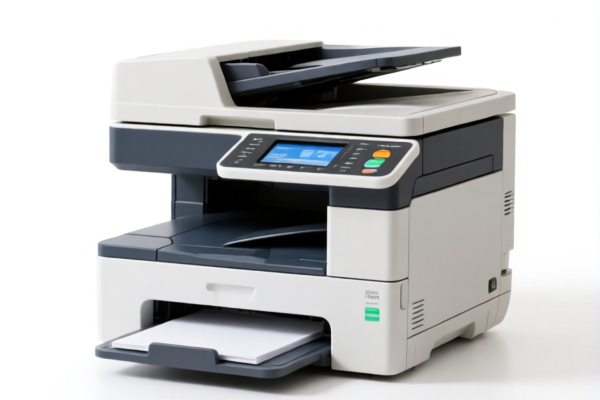
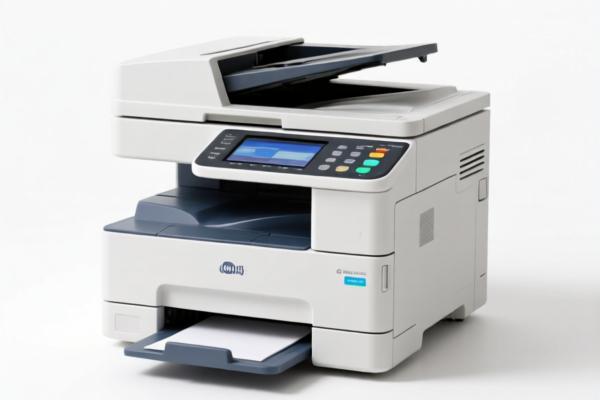
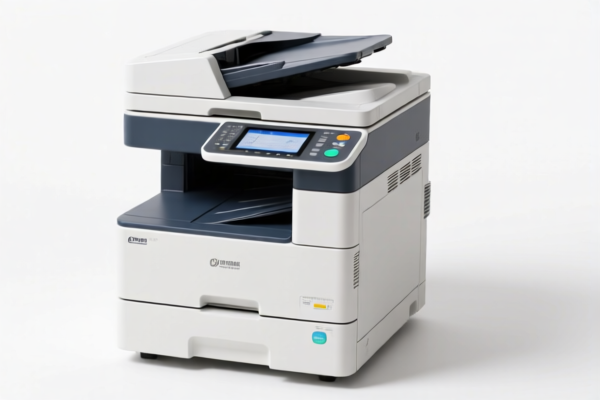

AI Analysis
🔥 Laser Heart Die – Precision Optical Tool for Industrial & Medical Applications
🌐 HS Code & Tariff Guide | 2026 Customs Classification & Duty Breakdown | Expert Compliance Strategy
📌 One Product, One Correct HS Code – Avoid 25%+ Penalties!
📌 一、Product Definition & Classification: What Exactly Is a "Laser Heart Die"?
The term "Laser Heart Die" is not a standard product name in international trade. However, based on context and technical usage, it likely refers to a specialized laser tool or optical component used in precision manufacturing, particularly in medical device production, micro-machining, or high-precision stamping.
⚠️ Critical Clarification:
- If this is a laser device (e.g., a non-diode laser used for cutting, engraving, or medical procedures), it falls under optical instruments.
- If it’s a metal die or mold (e.g., a stamping tool shaped like a heart, used with lasers or presses), it belongs to machine tools or interchangeable tools.
- No such product exists under “Laser Heart Die” as a standalone HS Code — classification depends on function and design.
📦 二、HS Code Classification Breakdown (2026 Official Tariff Schedule)
| HS Code | Product Description | Applicable Scenario | Key Feature |
|---|---|---|---|
9013.20.00.00 |
Lasers, other than laser diodes | Non-laser-diode lasers used in industrial, medical, or scientific applications | Not for cutting metal, but for precision beam delivery |
9013.80.91.00 |
Other devices, appliances, and instruments (not elsewhere specified) | Custom optical tools, laser-assisted machining tools, or non-standard laser components | General-purpose optical device |
8207.30.60.32 |
Stamping dies not suitable for cutting metal | Dies used for forming, pressing, or shaping metal (e.g., heart-shaped parts) | No cutting edge, used in cold forming |
8207.30.30.20 |
Tools suitable for cutting metal | Dies with sharp edges for piercing, cutting, or trimming metal | High-precision cutting tools |
🔍 Key Insight:
- If it’s a laser device → Use9013.20.00.00or9013.80.91.00
- If it’s a metal die (even if used with lasers) → Use8207.30.60.32or8207.30.30.20
- Do NOT combine both — misclassification = 25%+ penalties
💰 三、2026 Tariff Rate Analysis (US Import Focus – China Origin)
✅ Applicable Country: United States (US)
✅ Origin: China (CN)
✅ Effective Date: November 10, 2025 (inclusive)
✅ Legal Basis: USITC Section 301, IEEPA (International Emergency Economic Powers Act)
🎯 1. 9013.20.00.00 – Lasers, Other Than Laser Diodes
| Item | Detail |
|---|---|
| Base Duty Rate | 0.0% (ad valorem) |
| USITC Additional Duty | +25.0% (Section 301) |
| IEEPA Additional Duty | +0.0% (not applicable to this code) |
| Total Effective Duty | 25.0% |
| Tax Calculation | CIF Value × 25.0% |
| De Minimis Threshold | ❌ Not applicable (denied under US law) |
| Legal Pathway | USITC:9013.20.00.00 → FOOTNOTE:9903.88.01 → 301 Tariff List |
📌 Explanation:
- This code applies to non-laser-diode lasers (e.g., CO₂, Nd:YAG, fiber lasers) used in industrial or medical systems.
- Even if the laser is used to shape metal or create "heart" patterns, it’s still classified as a laser, not a die.
- 25% tariff is mandatory — no exceptions for medical or R&D use.
🎯 2. 9013.80.91.00 – Other Devices, Appliances, Instruments
| Item | Detail |
|---|---|
| Base Duty Rate | 4.5% |
| USITC Additional Duty | +7.5% (Section 301) |
| IEEPA Additional Duty | +0.0% |
| Total Effective Duty | 12.0% |
| Tax Calculation | CIF Value × 12.0% |
| De Minimis Threshold | ❌ Not applicable |
| Legal Pathway | USITC:9013.80.91.00 → FOOTNOTE:9903.88.01 → 301 Tariff List |
📌 Explanation:
- Applies to custom optical tools not covered elsewhere — e.g., laser-assisted forming jigs, alignment fixtures, or non-laser optical components.
- If the "Laser Heart Die" is a mechanical die used in conjunction with a laser system, but not a laser itself, this code may apply.
- 12% is significantly lower than 25%, so correct classification saves money.
🎯 3. 8207.30.60.32 – Stamping Dies (Not Suitable for Cutting Metal)
| Item | Detail |
|---|---|
| Base Duty Rate | 0.0% |
| USITC Additional Duty | +0.0% |
| IEEPA Additional Duty | +0.0% |
| Total Effective Duty | 0.0% |
| Tax Calculation | CIF Value × 0.0% |
| De Minimis Threshold | ✅ Applicable (but not needed — 0% duty) |
| Legal Pathway | USITC:8207.30.60.32 → FOOTNOTE:9903.88.01 |
📌 Explanation:
- Applies to metal dies used for forming, pressing, or shaping (e.g., heart-shaped metal parts).
- If the die does not cut metal (no sharp edge), this is the correct code.
- Zero tariff — ideal for cost-sensitive manufacturing.
🎯 4. 8207.30.30.20 – Tools Suitable for Cutting Metal
| Item | Detail |
|---|---|
| Base Duty Rate | 0.0% |
| USITC Additional Duty | +0.0% |
| IEEPA Additional Duty | +0.0% |
| Total Effective Duty | 0.0% |
| Tax Calculation | CIF Value × 0.0% |
| De Minimis Threshold | ✅ Applicable |
| Legal Pathway | USITC:8207.30.30.20 → FOOTNOTE:9903.88.01 |
📌 Explanation:
- Applies to sharp-edged dies used to pierce, cut, or trim metal.
- If the "Laser Heart Die" has a cutting edge (e.g., to punch heart shapes from metal), this code applies.
- Still 0% duty, but must prove it’s a cutting tool.
🛠️ 四、Customs Clearance Best Practices (Pro Tips to Avoid Delays & Fines)
✅ 1. Documentation Checklist (Mandatory)
| Document | Required? | Why It Matters |
|---|---|---|
| ✅ Product Technical Specs | ✔️ | Prove function: laser vs. die vs. tool |
| ✅ CAD Drawings / 3D Models | ✔️ | Show edge type (cutting vs. forming) |
| ✅ Product Photos (Clear, with label) | ✔️ | Show shape, material, edge type |
| ✅ Commercial Invoice | ✔️ | Must state correct HS Code & description |
| ✅ Certificate of Origin (CO) | ✔️ | Required for tariff eligibility |
| ✅ Test Reports (FCC, CE, RoHS) | ✔️ | If applicable (e.g., laser safety) |
| ✅ Packing List | ✔️ | Avoid split申报 (splitting into multiple items) |
✅ 2.申报技巧(Key Rules)
🔥 "Laser ≠ Die, Cut ≠ Form, Label = Liability!"
| Scenario | Correct HS Code | Common Mistake |
|---|---|---|
| Laser used to engrave heart shape | 9013.20.00.00 |
Misclassified as 8207.30.60.32 → 25% vs 0% |
| Metal die for pressing heart shapes (no cut) | 8207.30.60.32 |
Misclassified as 9013.80.91.00 → 12% vs 0% |
| Metal die with sharp edge (cutting) | 8207.30.30.20 |
Misclassified as 8207.30.60.32 → 0% vs 0% (same, but risk) |
| Custom optical jig for laser alignment | 9013.80.91.00 |
Misclassified as 9013.20.00.00 → 12% vs 25% |
✅ 3. Special Cases & Solutions
| Situation | Recommended Action |
|---|---|
| "Laser Heart Die" is a prototype | Apply for Advance Ruling (Pre-Approval) from U.S. CBP |
| Used in medical device manufacturing | Submit medical device exemption request (if applicable) |
| OEM product for a U.S. client | Use U.S.-origin tooling to avoid tariffs |
| Shipping to EU or Japan | No 301 tariffs — check local rules (e.g., CE, PSE) |
🌍 五、Global Market Tariff Comparison (2026)
| Country | Recommended HS Code | Duty Rate | Certification | Notes |
|---|---|---|---|---|
| 🇺🇸 USA | 9013.20.00.00 or 8207.30.60.32 |
25% / 0% | FCC, RoHS | High risk if misclassified |
| 🇨🇳 China | 9013.20.00.00 |
5% | CCC | No 301 tariff |
| 🇪🇺 EU | 9013.20.00.00 |
0% (if CE) | CE | No 301 tariff |
| 🇯🇵 Japan | 9013.80.91.00 |
0% | PSE | No 301 tariff |
| 🇦🇺 Australia | 8207.30.60.32 |
5% | RCM | No 301 tariff |
📌 Insight:
- Only the U.S. imposes 25% tariffs on lasers — China-origin lasers are hit hardest.
- Dies (8207.30.xxxx) are 0% in the U.S., making them ideal for cost control.
📌 六、Common Mistakes & How to Avoid Them
❌ Mistake 1: Calling a laser die "Laser Heart Die" and declaring it as a laser
👉 Result: 25% duty instead of 0% — $10,000+ extra cost per shipment
❌ Mistake 2: Using 9013.80.91.00 for a cutting die
👉 Result: 12% duty vs 0% — unnecessary cost
❌ Mistake 3: Not providing edge photos or CAD files
👉 Result: CBP delays, random audit, or rejection
❌ Mistake 4: Splitting die + laser into two shipments
👉 Result: Each item taxed at 25% or 12% → Total 37%+
✅ Correct Approach:
“Precision Metal Stamping Die, Heart-Shaped, Non-Cutting, for Use with Laser Systems, Made of Stainless Steel, 3D CAD Attached, HS: 8207.30.60.32”
🎯 七、Final Verdict: Know Your Product, Know Your Code
🔹 If it emits laser light →
9013.20.00.00→ 25% duty
🔹 If it’s a non-cutting die →8207.30.60.32→ 0% duty
🔹 If it’s a cutting die →8207.30.30.20→ 0% duty
🔹 If it’s a custom optical tool →9013.80.91.00→ 12% duty📌 Golden Rule:
"Don’t label it — define it. Don’t guess — prove it."
📣 Act Now!
📞 Contact a CBP-licensed customs broker + Submit product images + CAD + technical specs
🚀 Apply for Advance Ruling (Pre-Approval) to lock in the correct HS Code
💼 Save 25% on your next shipment — just by classifying right!
✨ Professional Compliance Starts Here!
💼 Your product’s future depends on one correct code.
🎯 One mistake → 25% extra cost. One right choice → massive savings.
Customer Reviews
About HS Code Classification
The Harmonized System (HS) is an internationally standardized nomenclature developed by the World Customs Organization (WCO) to classify traded products. Over 200 countries use the HS system as the basis for customs tariffs, trade statistics, and import/export regulations.
Each HS code follows a hierarchical structure:
- Chapter (2 digits) — Broad category of goods (e.g., Chapter 84: Machinery and Mechanical Appliances)
- Heading (4 digits) — More specific grouping within the chapter
- Subheading (6 digits) — Internationally standardized breakdown, used by all WCO member countries
- National subdivisions (8-10 digits) — Country-specific extensions for further classification, such as US HTSUS 10-digit codes
Correct HS code classification is essential for smooth customs clearance, accurate duty payment, and compliance with trade regulations. Misclassification can lead to customs delays, overpayment of duties, or penalties.
When importing from CN to US, the applicable tariff rates may include:
- Most-Favored-Nation (MFN) rate — The standard duty rate applied to WTO members
- General rate — Applied to countries without trade agreements
- Trade remedy duties — Additional tariffs such as Section 301 (anti-dumping), Section 232 (national security), or countervailing duties
The information provided on this page is for reference purposes only. For official classification, please consult with your local customs authority or a licensed customs broker.