Laser Lens
CN → US| HS Code | Tariff Rate | Origin | Destination | Doc |
|---|---|---|---|---|
| 8542390090 | 60.0% | CN | US | Official Doc |
| 8542900000 | 60.0% | CN | US | Official Doc |
| 9001904000 | 10.0% | CN | US | Official Doc |
| 9001909000 | 35.0% | CN | US | Official Doc |
Product Images
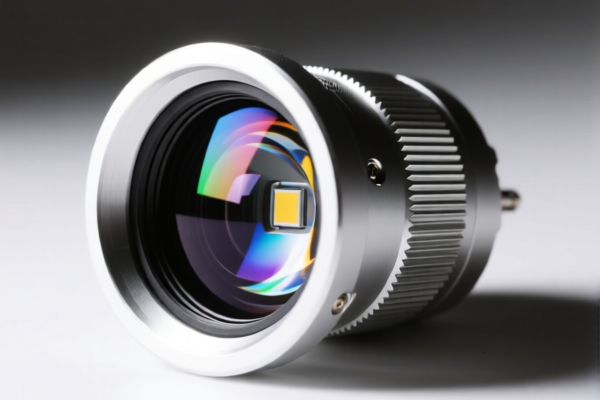
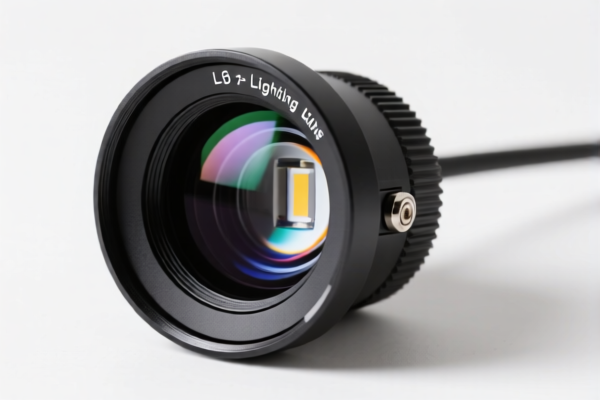
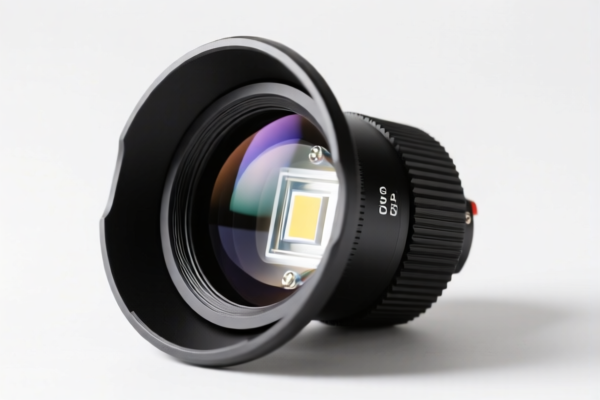

AI Analysis
🔭 Laser Lens (Optical Elements for Lasers)
🌐 HS Code Reference & Customs Clearance Guide | 2026 Latest Tariff Analysis | Professional Clearance Strategy
📌 I. Product Definition & Classification: Do You Really Understand "Laser Lens"?
Laser Lens, in the context of international trade and optical components, refers to unmounted optical elements specifically designed to focus, collimate, or direct laser beams. In global customs classification, these are primarily categorized under Heading 9001, which covers optical fibers, cables, and various optical elements (lenses, prisms, mirrors) that are unmounted and not specifically worked as glass (in the non-optical sense).
These components are critical in laser marking, cutting, welding, medical lasers, and semiconductor manufacturing.
⚠️ Key Distinction Point:
- If the lens is unmounted (bare glass/crystal/plastic element without a housing) → It falls under HS Code 9001 series.
- If the lens is part of a larger, pre-assembled laser module with electronics and housing → It may fall under HS Code 8542 (Integrated Circuits) or 8543 (Electrical Machines/Apparatus), depending on the primary function.
- For this guide, we strictly focus on the unmounted lens components as per the provided data.
📦 II. HS Code Classification Details (2026 Latest Tariff Authority Comparison)
Based on the provided data, Laser Lenses are classified into two primary HS Codes under Chapter 90. Both items are subject to significant US tariffs.
| HS Code | Product Description | Application Scenario | Mounting Status | Tax Rate (China Origin) |
|---|---|---|---|---|
9001.90.40.00 |
Optical Elements: Lenses | Focusing lenses, collimating lenses for laser machines, optical instrument components | Unmounted | 25.0% |
9001.90.90.00 |
Optical Elements: Other | Non-lens optical elements (prisms, mirrors, polarizers) or lenses that do not fit the specific "Lenses" sub-category if excluded by local interpretation (though rare for standard lenses) | Unmounted | 25.0% |
🔍 Critical Analysis:
- Primary Classification: Standard Laser Lenses (spherical, cylindrical, aspheric) are predominantly classified under9001.90.40.00because the heading explicitly lists "Lenses" as a sub-category under "Other."
- Secondary Classification: If a specific optical component is not a "lens" (e.g., a beam splitter prism or a polarizing sheet), it falls under9001.90.90.00.
- Tax Parity: Both codes carry the same total tariff rate of 25.0% for goods originating from China (assuming standard US import rules for Chapter 90 optics).
💰 III. 2026 Latest Tariff Rate Details (Including Additional Taxes)
✅ Applicable Country: United States (US)
✅ Origin: China (CN)
✅ Effective Time: Current rates apply (Subject to USITC adjustments)
🎯 1. 9001.90.40.00 —— Lenses (Optical Elements)
| Item | Detail |
|---|---|
| Base Tariff | 0.0% (Ad Valorem) |
| Section 301 / Additional Tariff | +25.0% |
| Total Tax Rate | 25.0% |
| Tax Calculation | CIF Value × 25% |
| De Minimis Exemption | ❌ Not Applicable (Section 301 goods are generally excluded from de minimis if over threshold, but for optics, usually full duty applies) |
| Legal Basis Path | HTSUS:9001.90.40.00 → USITC Footnote for China |
📌 Explanation:
- Base Rate: Optical components often enjoy a low base tariff (0%) to encourage high-tech manufacturing imports.
- Additional Tariff: The 25% rate is the standard additional tariff applied to many Chinese-origin goods under US trade policies.
- No Breakdown: The provided data groups the total tax as 25.0%, implying the base 0% + additional 25%. This is a high-cost item for importers.
🎯 2. 9001.90.90.00 —— Other Optical Elements
| Item | Detail |
|---|---|
| Base Tariff | 0.0% |
| Section 301 / Additional Tariff | +25.0% |
| Total Tax Rate | 25.0% |
| Tax Calculation | CIF Value × 25% |
| De Minimis Exemption | ❌ Not Applicable |
| Legal Basis Path | HTSUS:9001.90.90.00 → USITC Footnote for China |
📌 Note:
- Same tariff structure as9001.90.40.00.
- Even if classified as "Other," the cost impact is identical.
- Warning: Misclassifying a lens as "Other" to try a different code is risky if it clearly fits "Lenses." Customs may audit and penalize for misdeclaration.
🛠️ IV. Customs Clearance Practical Advice (Pitfall Avoidance Guide)
✅ 1. Preparation Checklist (Must-Haves)
| Document | Required? | Explanation |
|---|---|---|
| ✅ Product Specification Sheet | ✔️ | Must include: Diameter, Focal Length, Material (Glass/Quartz/Plastic), Coating Details (AR coating wavelength). |
| ✅ Technical Drawing | ✔️ | Shows dimensions and tolerance. Critical for proving it's an "unmounted optical element." |
| ✅ Product Photos | ✔️ | Clear images of the lens (bare, unmounted). Avoid photos with housing if claiming HS 9001. |
| ✅ Commercial Invoice | ✔️ | Must state: "Unmounted Optical Lens for Laser System." Do not just write "Lens." |
| ✅ Packing List | ✔️ | Detail the quantity and weight. Ensure no accessories (like mounts) are included if declaring only the lens. |
✅ 2. Declaration Tips (Key Mnemonics)
🔥 “Unmounted is Key, Coating is Detail, Label ‘Optical Lens’ Clearly!”
| Scenario | Correct Declaration | Wrong Action |
|---|---|---|
| Bare laser lens | 9001.90.40.00 |
Declaring as "Lens Mount" or "Part of Machine" |
| Lens + Metal Housing | 9001.90.40.00 (if housing is minor) OR 9001.90.90.00 (if complex assembly) |
Claiming as "Electronic Component" |
| Laser Lens in Kit | Split Declaration | Bundling lenses with electronic controllers without separate valuation |
| Imported by End-User | Full Duty Paid | Assuming "Business Use" exempts from tariff (it does not) |
✅ 3. Special Cases Handling
| Situation | Handling Advice |
|---|---|
| Anti-Reflective Coating | Still classified under 9001.90.40.00. Coating does not change the base HS code. |
| Aspheric Lenses | Still classified under 9001.90.40.00. |
| Lens with Mount | If the mount is essential and sold together, ensure the invoice clearly values the lens and mount separately, or declare as a complete optical assembly. Risk of reclassification exists. |
| Laser Module (with electronics) | NOT a laser lens. Should be classified under 8542.39.00.90 or 8542.90.00.00 (Integrated Circuits/Parts) → 50% Tax Rate! |
🌍 V. Global Market Comparison (2026 Latest)
| Country/Region | Recommended HS Code | Tariff (China Origin) | Certification | Notes |
|---|---|---|---|---|
| 🇺🇸 USA | 9001.90.40.00 |
25% (Total) | None specific for optics | High tariff, strict documentation |
| 🇨🇳 China | 9001.90.40.00 |
0% (Import Duty) | None | Exporting from China to US faces 25% |
| 🇪🇺 EU | 9001.90.40.00 |
0% | CE (if part of machinery) | Favorable tariff for optics |
| 🇯🇵 Japan | 9001.90.40.00 |
0% | PSE (if part of electrical device) | Free trade agreement benefits may apply |
| 🇬🇧 UK | 9001.90.40.00 |
0% | UKCA | Post-Brexit, maintains favorable rates |
📌 Conclusion:
- The US is the primary market with high tariffs (25%) for optical lenses from China.
- EU, Japan, and UK offer 0% duty, making them more attractive for cost-sensitive exports.
- Supply Chain Strategy: Consider routing through non-China origins (e.g., Vietnam, Thailand) to avoid the 25% US additional tariff, if compliant with rules of origin.
📌 VI. Common Mistakes & Pitfall Guide (Blood & Tears Lessons)
❌ Mistake 1: Declaring "Laser Lens" as "Part of Laser Machine" (HS 8477/8486)
👉 Consequence: If cleared as machine parts, the tariff might be different, but if found to be a standalone optical component, customs will reclassify to 9001.90.40.00 and charge 25%. Plus, potential penalties for misdeclaration.
❌ Mistake 2: Including Electronic Controllers in the same shipment without separating value
👉 Consequence: The entire shipment may be scrutinized. If the controller is an IC, it falls under 8542.39.00.90 with a 50% tariff. Mixed shipments increase risk and cost.
❌ Mistake 3: Failing to specify "Unmounted" on the Invoice
👉 Consequence: Customs may assume it's a mounted component or part of a device, leading to delays and requests for additional documentation.
❌ Mistake 4: Confusing "Lenses" with "Prisms/Mirrors"
👉 Consequence: While both are 9001.90, mislabeling can trigger audits. Be precise: "Lens" for focusing/refracting elements; "Prism" for reflecting/deviating elements.
✅ Correct Declaration Example:
"Unmounted Optical Glass Lens, AR Coated for 1064nm Laser, Focal Length 100mm, Diameter 25mm, HS 9001.90.40.00"
🎯 VII. Conclusion: Precision Classification for Cost Efficiency
🎯 Remember the Mantra:
🔹 "Unmounted Lenses = 9001.90.40.00 = 25% Tax"
🔹 "Lenses + Electronics = 8542 Series = 50% Tax (Watch Out!)"
🔹 "Clear Separation of Parts is Key to Avoiding 50% Pitfalls!"
📌 Pro Tip:
If your laser lens is integrated into a module with driving circuits, it likely becomes an Integrated Circuit (HS 8542) or a Electrical Machine (HS 8543), subject to 50% tariff.
Strategy: If possible, export lenses and controllers separately to allow for different classification treatments, or negotiate pricing to absorb the 50% duty if bundled.
📣 Immediate Action:
📞 Contact a licensed customs broker for a Pre-Classification Ruling if the lens is part of a complex module.
🚀 Ensure your Invoice clearly states "Optical Lens, Unmounted" to secure the 25% rate, not the 50% rate for electronic parts.
✨ Professional Clearance Starts with Accurate Classification!
💼 Every 25% Matters in Optical Trade!
Customer Reviews
About HS Code Classification
The Harmonized System (HS) is an internationally standardized nomenclature developed by the World Customs Organization (WCO) to classify traded products. Over 200 countries use the HS system as the basis for customs tariffs, trade statistics, and import/export regulations.
Each HS code follows a hierarchical structure:
- Chapter (2 digits) — Broad category of goods (e.g., Chapter 84: Machinery and Mechanical Appliances)
- Heading (4 digits) — More specific grouping within the chapter
- Subheading (6 digits) — Internationally standardized breakdown, used by all WCO member countries
- National subdivisions (8-10 digits) — Country-specific extensions for further classification, such as US HTSUS 10-digit codes
Correct HS code classification is essential for smooth customs clearance, accurate duty payment, and compliance with trade regulations. Misclassification can lead to customs delays, overpayment of duties, or penalties.
When importing from CN to US, the applicable tariff rates may include:
- Most-Favored-Nation (MFN) rate — The standard duty rate applied to WTO members
- General rate — Applied to countries without trade agreements
- Trade remedy duties — Additional tariffs such as Section 301 (anti-dumping), Section 232 (national security), or countervailing duties
The information provided on this page is for reference purposes only. For official classification, please consult with your local customs authority or a licensed customs broker.