Laser cut Template
CN → US| HS Code | Tariff Rate | Origin | Destination | Doc |
|---|---|---|---|---|
| 8205595560 | 40.3% | CN | US | Official Doc |
| 8205598000 | 38.7% | CN | US | Official Doc |
| 4421999880 | 38.3% | CN | US | Official Doc |
| 4421919880 | 38.3% | CN | US | Official Doc |
| 3926100000 | 15.3% | CN | US | Official Doc |
| 3926909989 | 22.8% | CN | US | Official Doc |
Product Images
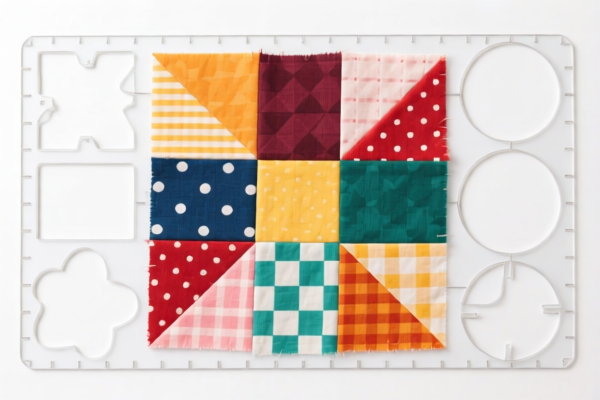
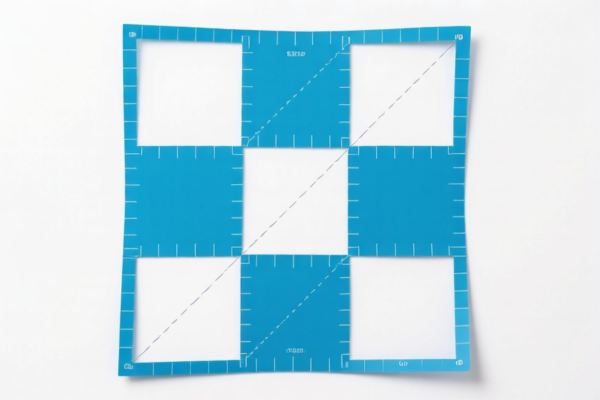
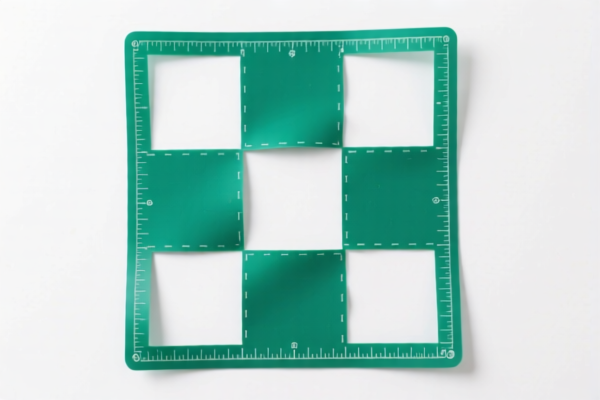
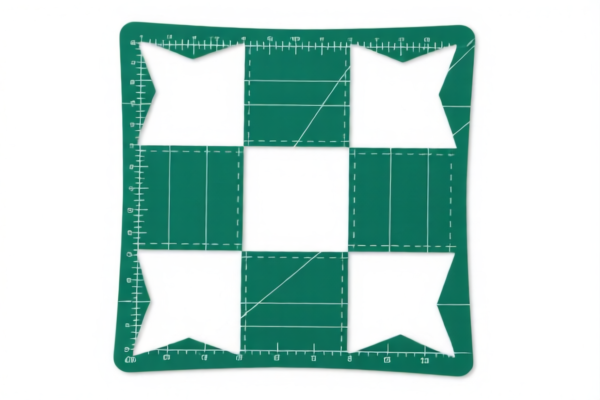
AI Analysis
📐 Laser Cut Template (Wood, Plastic, Handtools)
🌐 HS Code Reference & Customs Clearance Guide | 2026 Latest Tariff Analysis | Professional Strategy
📌 I. Product Definition & Classification: What Exactly is a "Laser Cut Template"?
A "Laser Cut Template" is a general term that varies wildly in customs classification depending on its material and intended function. In international trade, there is no single HS Code for "templates." Instead, customs officials classify them based on what they are made of and whether they are considered tools or finished goods.
⚠️ Key Distinction:
- If the template is made of Wood or Plastics → It is classified as an "Article of [Material]" under Chapter 44 or 39.
- If the template is part of a Handtool Kit (e.g., a jig for hammering) → It might be classified under Handtools (Chapter 82).
- Crucial Note: In the provided data, "Wood" and "Plastic" templates fall under "Other articles," while specific handtool components fall under "Handtools."
📦 II. HS Code Classification Details (Based on Provided Data)
| HS Code | Product Description | Material / Type | Applicable Scenario |
|---|---|---|---|
4421.99.98.80 |
Other articles of wood: Other: Other: Other: Other Other | Wood | Wooden stencils, jigs, or templates for crafts/furniture. |
4421.91.98.80 |
Other articles of wood: Other: Of bamboo: Other: Other Other | Bamboo | Bamboo-based laser-cut templates or jigs. |
3926.10.00.00 |
Other articles of plastics...: Office or school supplies | Plastic (Functional) | Plastic rulers, stencils, or templates used in office/school settings. |
3926.90.99.89 |
Other articles of plastics...: Other: Other Other | Plastic (General) | Decorative plastic stencils, non-office plastic templates, or generic jigs. |
8205.59.55.60 |
Handtools: Other: Other: Of iron or steel Other Other (including parts) | Metal Part | If the "template" is a metal guide/part of a handtool kit. |
8205.59.80.00 |
Handtools: Other: Other: Other | Metal Handtool | If the template is considered a standalone handtool or part thereof. |
🔍 重点提醒 (Key Warning):
- Wood vs. Bamboo: Ensure accurate material declaration.4421.99is for general wood;4421.91is specifically for bamboo. Misclassification leads to delays.
- Plastic Use Case:3926.10is for "Office or school supplies" (e.g., geometry sets).3926.90is for "Other plastics" (e.g., decorative stencils).
- Metal Components: If the laser-cut item is a metal guide for a tool, it falls under8205. However, most consumer laser templates are wood/plastic, making Chapters 39 and 44 more common.
💰 III. 2026 Latest Tariff Rate Details (Detailed Tax Breakdown)
✅ Applicable Country: United States (US)
✅ Origin: China (CN)
✅ Effective Time: Current rates applied (Subject to 301/Tariff adjustments)
🎯 1. Wood & Bamboo Templates (HS 4421)
| Item | Details |
|---|---|
| HS Code | 4421.99.98.80 (Wood) / 4421.91.98.80 (Bamboo) |
| Base Tariff (MFN) | 3.3% |
| Section 301 Additional Tariff | +25.0% |
| Total Tariff Rate | 28.3% |
| Tax Calculation | CIF Value × 28.3% |
| De Minimis Exemption | ❌ Not Applicable (Generally, Section 301 duties do not apply to de minimis imports in the same way, but high value shipments are strictly scrutinized). |
| Legal Basis | HTSUS 4421 + USITC Footnote 301 (Section 301 Trade Action) |
📌 Explanation:
- Wood and bamboo articles are subject to the 25% additional duty under Section 301.
- Combined with the 3.3% base rate, the total landed duty cost is 28.3%.
- Risk: High. This is a significant cost factor for wooden crafts and jigs.
🎯 2. Plastic Templates (HS 3926)
A. Office/School Supplies (e.g., Plastic Stencils)
| Item | Details |
|---|---|
| HS Code | 3926.10.00.00 |
| Base Tariff | 0.0% |
| Additional Tariff | 0.0% |
| Total Tariff Rate | 0.0% |
| Tax Calculation | CIF Value × 0% = $0 Duty |
| De Minimis Exemption | ✅ Applicable (If value < $800) |
| Legal Basis | HTSUS 3926.10 (No Section 301 list for this specific subheading) |
📌 Explanation:
- Plastic articles classified as "Office or school supplies" enjoy 0% duty.
- This is a low-risk, low-cost category for clearance.
B. Other Plastic Articles (Decorative/General)
| Item | Details |
|---|---|
| HS Code | 3926.90.99.89 |
| Base Tariff | 5.3% |
| Additional Tariff | +7.5% |
| Total Tariff Rate | 12.8% |
| Tax Calculation | CIF Value × 12.8% |
| De Minimis Exemption | ❌ Not Applicable for Section 301 duties. |
| Legal Basis | HTSUS 3926.90 + USITC Footnote 301 |
📌 Explanation:
- If the plastic template is not for office/school use (e.g., craft stencils, decorative patterns), it falls under "Other."
- Base rate is 5.3%, with an additional 7.5% (Section 301 adjustment).
- Total 12.8% is moderate but significantly cheaper than wood (28.3%).
🎯 3. Metal Handtool Parts (HS 8205)
| Item | Details |
|---|---|
| HS Code | 8205.59.55.60 / 8205.59.80.00 |
| Base Tariff | 0.0% |
| Additional Tariff | 0.0% |
| Total Tariff Rate | 0.0% |
| Tax Calculation | CIF Value × 0% = $0 Duty |
| De Minimis Exemption | ✅ Applicable (If value < $800) |
| Legal Basis | HTSUS 8205 (No Section 301 list for these specific subheadings) |
📌 Explanation:
- Handtools and their parts (including metal guides) often have 0% duty.
- Caution: You must prove the item is a "handtool" or part thereof. A standalone metal template might be reclassified as "Metal Articles" (Chapter 73) if customs disagrees, which could carry higher duties.
🛠️ IV. Customs Clearance Practical Advice (Pitfall Avoidance Guide)
✅ 1. Preparation Checklist (Non-Negotiable)
| Document | Required | Notes |
|---|---|---|
| ✅ Product Specification Sheet | ✔️ | Detail material (Wood/Bamboo/Plastic/Metal), dimensions, and usage. |
| ✅ Material Composition Certificate | ✔️ | Crucial for distinguishing Wood vs. Bamboo vs. Plastic. |
| ✅ Photos (Labeled) | ✔️ | Clear images showing the item alone and in use. |
| ✅ Commercial Invoice | ✔️ | Must explicitly state "Laser Cut Template" and material type. |
| ✅ Packing List | ✔️ | Item weight and volume. |
✅ 2. Declaration Tips (Key Mantra)
🔥 "Material First, Function Second, Code Accurate, Duties Reduced!"
| Scenario | Correct Declaration | Wrong Declaration | Consequence |
|---|---|---|---|
| Wooden Template | "Wooden Laser Cut Template" + HS 4421.99.98.80 |
"Craft Kit" | Risk of misclassification → 28.3% vs. higher penalties. |
| Plastic Stencil (Office) | "Plastic Office Stencil" + HS 3926.10.00.00 |
"Plastic Art Supply" | 0% vs. 12.8% duty. |
| Plastic Stencil (Craft) | "Plastic Decorative Stencil" + HS 3926.90.99.89 |
"Plastic Office Supply" | 12.8% vs. potential duty evasion audit. |
| Metal Guide | "Metal Handtool Guide" + HS 8205.59.80.00 |
"Metal Part" | 0% vs. potential Chapter 73 classification (higher duty). |
✅ 3. Special Cases
| Situation | Handling Advice |
|---|---|
| Mixed Materials | If a template is wood with plastic edges, declare the principal material. If indistinguishable, customs may choose the higher-duty code. |
| Kit Sales | If sold as a "DIY Kit" with templates + glue + tools, declare the main component. If templates are the bulk, classify as templates. |
| Bamboo vs. Wood | Bamboo is taxed differently (4421.91). Ensure your supplier labels it correctly. Do not declare Bamboo as "Wood" to save time; discrepancies trigger audits. |
🌍 V. Global Market Comparison (2026)
| Country/Region | Recommended HS Code | Tariff (China Origin) | Certification | Notes |
|---|---|---|---|---|
| 🇺🇸 USA | 4421.99.98.80 (Wood) |
28.3% | None | Section 301 is the killer. |
| 🇺🇸 USA | 3926.10.00.00 (Plastic) |
0.0% | None | Best for plastic office supplies. |
| 🇺🇸 USA | 3926.90.99.89 (Plastic) |
12.8% | None | Moderate cost for crafts. |
| 🇨🇳 China | 4421 / 3926 |
5-13% | CCC (if applicable) | Lower duties than US. |
| 🇪🇺 EU | 4421 / 3926 |
0-5% | CE/RoHS | No Section 301 equivalent. |
📌 Conclusion:
- US Market: Wood templates are expensive to import (28.3%). Plastic office supplies are free (0%).
- Strategy: If possible, shift wooden templates to plastic (if durable) or metal (if functional) to reduce duty.
- Plastic Office Supplies (3926.10) offer the best duty rate (0%).
📌 VI. Common Mistakes & Pitfalls (Lessons Learned)
❌ Mistake 1: Declaring all "Templates" as one generic code.
👉 Consequence: Customs rejects the entry due to lack of specificity. Delay + Storage Fees.
❌ Mistake 2: Mislabeling Bamboo as Wood.
👉 Consequence: 301 duties may apply differently. Audit risk.
❌ Mistake 3: Ignoring "Office vs. Other" for Plastics.
👉 Consequence:
- 3926.10 (Office) = 0%
- 3926.90 (Other) = 12.8%
- Saving: 12.8% on every shipment if correctly classified as office supplies.
❌ Mistake 4: Assuming Metal Templates are always Handtools.
👉 Consequence: If not a tool, it may be "Metal Articles" (Chapter 73), which could have different duties. Verify with a customs broker.
✅ Correct Approach:
"Laser Cut Wooden Template for Jig Making, 12x12 inches, Plywood"
vs.
"Plastic Office Stencil, Set of 10, for Drafting"
🎯 VII. Conclusion: Precision in Classification Saves Money!
🎯 Key Takeaway:
🔹 Wood/Bamboo: High duty (28.3%).
🔹 Plastic (Office): 0% Duty.
🔹 Plastic (Other): 12.8% Duty.
🔹 Metal Handtools: 0% Duty.
📌 Action Plan:
1. Identify Material: Wood, Plastic, or Metal?
2. Identify Use: Office/School or General/Craft?
3. Select HS Code: Use the table above.
4. Declare Precisely: Avoid vague terms like "Art Supply." Use specific material and function.
📣 Immediate Action:
📞 Consult your customs broker for Advance Ruling if importing high-volume wooden templates.
🚀 Consider shifting to Plastic Office Supplies classification if your product fits, to achieve 0% Duty.
✨ Smart Classification, Smarter Profits!
💼 Every percentage point saved is pure profit!
Customer Reviews
About HS Code Classification
The Harmonized System (HS) is an internationally standardized nomenclature developed by the World Customs Organization (WCO) to classify traded products. Over 200 countries use the HS system as the basis for customs tariffs, trade statistics, and import/export regulations.
Each HS code follows a hierarchical structure:
- Chapter (2 digits) — Broad category of goods (e.g., Chapter 84: Machinery and Mechanical Appliances)
- Heading (4 digits) — More specific grouping within the chapter
- Subheading (6 digits) — Internationally standardized breakdown, used by all WCO member countries
- National subdivisions (8-10 digits) — Country-specific extensions for further classification, such as US HTSUS 10-digit codes
Correct HS code classification is essential for smooth customs clearance, accurate duty payment, and compliance with trade regulations. Misclassification can lead to customs delays, overpayment of duties, or penalties.
When importing from CN to US, the applicable tariff rates may include:
- Most-Favored-Nation (MFN) rate — The standard duty rate applied to WTO members
- General rate — Applied to countries without trade agreements
- Trade remedy duties — Additional tariffs such as Section 301 (anti-dumping), Section 232 (national security), or countervailing duties
The information provided on this page is for reference purposes only. For official classification, please consult with your local customs authority or a licensed customs broker.