Lathe Accessory Fixture
CN → US| HS Code | Tariff Rate | Origin | Destination | Doc |
|---|---|---|---|---|
| 8466208035 | 38.7% | CN | US | Official Doc |
| 7326190080 | 87.9% | CN | US | Official Doc |
| 8466208020 | 38.7% | CN | US | Official Doc |
| 7326908688 | 87.9% | CN | US | Official Doc |
| 8466100175 | 38.9% | CN | US | Official Doc |
Product Images
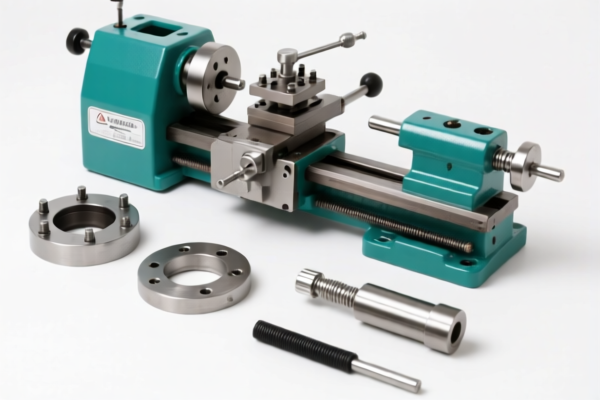
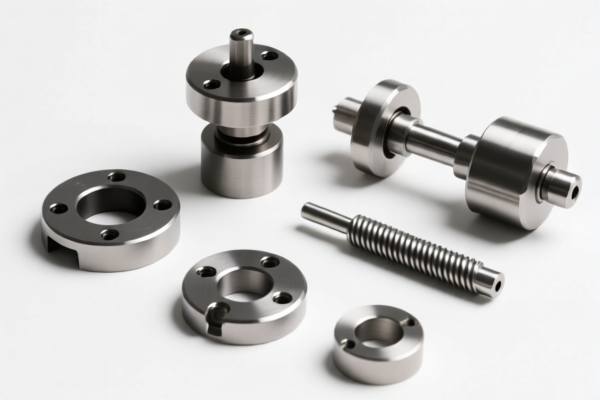
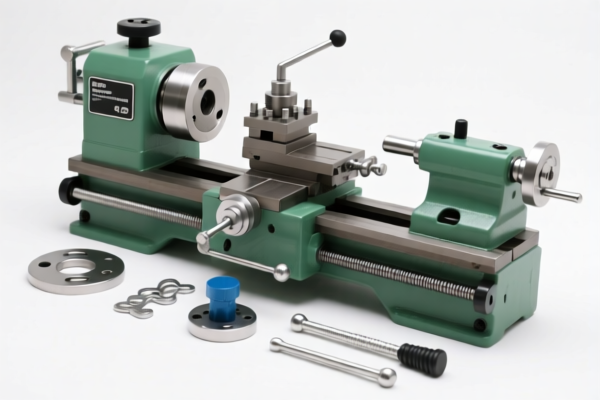

AI Analysis
🏭 Lathe Accessory Fixture (Machine Tool Clamping & Fixing Devices)
🌐 HS Code Reference & Customs Clearance Guide | 2026 Latest Tariff Analysis | Professional Compliance Strategy
📌 Part I: Product Definition & Classification: What Exactly is a "Lathe Accessory"?
A Lathe Accessory Fixture generally refers to devices used to hold, position, or secure workpieces or cutting tools on a lathe (a type of machine tool). In international trade, these are categorized based on their function (clamping vs. structural support) and material.
Key Distinctions: * Functional Fixtures (Clamping/Gripping): Devices like chucks, collets, jaws, and vises that directly interact with the machine’s spindle or carriage to hold the workpiece. These fall under Chapter 84 (Machinery). * Structural/General Accessories: Items that are essentially metal parts (steel/iron) without complex mechanical clamping functions, or generic fasteners. These often fall under Chapter 73 (Articles of Iron or Steel).
⚠️ Critical Classification Point:
- If the item is a specialized clamping device (chuck, collet, vise) designed for a machine tool → It is typically classified under HS 8466 (Parts and accessories for machine tools).
- If the item is a generic steel part or a fixture that doesn't have specific machine-tool clamping mechanisms, it may be classified under HS 7326 (Other articles of iron or steel).
- Misclassification Risk: Classifying a functional lathe chuck as a "steel article" (7326) instead of a "machine tool part" (8466) can lead to severe tariff discrepancies due to different additional duties.
📦 Part II: HS Code Classification Details (2026 Latest Tariff Alignment)
Based on the provided data, the following HS codes are the primary candidates for "Lathe Accessory Fixture."
| HS Code | Product Description | Application Scenario | Classification Logic |
|---|---|---|---|
8466.20.80.35 |
Lathe Accessory (Machine Tool Part) | General lathe accessories not specifically listed elsewhere. | Default倾向: Machine tool category. |
7326.19.00.80 |
Lathe Accessory (Metalworking Part) | Metalworking machine parts not elsewhere specified. | Default倾向: Other category. High tariff due to material. |
8466.20.80.20 |
Lathe Accessory (Clamping Device) | Clamps, vises, and fixing devices for metal machining. | Specific function: Metalworking machine clamping. |
7326.90.86.88 |
Other Articles of Iron/Steel | Generic steel/iron fixtures. | Material-based: Iron/Steel generic goods. |
8466.10.01.75 |
Milling Machine Accessories (Chuck/Collet) | Chucks and collets for milling machines (often cross-used or confused with lathes). | Specific function: Tool holder for machine tools. |
🔍 Key Insight:
- HS 8466 codes (8466.20.80.35, 8466.20.80.20, 8466.10.01.75) are for functional machine tool parts. They generally incur lower base tariffs (3.7%-3.9%) but face heavy additional duties.
- HS 7326 codes (7326.19.00.80, 7326.90.86.88) are for metal products. They incur very high total tariffs (87.9%) because they are subject to a 50% additional duty on steel/aluminum/copper products, stacked on top of other taxes.
💰 Part III: 2026 Latest Tariff Rate Breakdown (Including Surcharges)
✅ Applicable Country: United States (US)
✅ Origin: China (CN)
✅ Effective Date: 2025/2026 Period (Current Policy)
🎯 1. 8466.20.80.35 & 8466.20.80.20 —— Machine Tool Accessories / Clamping Devices
These two codes represent the most accurate classifications for functional lathe fixtures (chucks, vises, clamps).
| Item | Detail |
|---|---|
| Base Tariff | 3.7% (ad valorem) |
| Section 301 Additional Duty | +25.0% |
| Section 122 Duty | +10.0% |
| Total Tariff Rate | 38.7% |
| Calculation Basis | CIF Value × 38.7% |
| De Minimis Exemption | ❌ Not Eligible (Deny de minimis) |
| Legal Basis Path | USITC:8466.20.80.xx → Sec301:25% → Sec122:10% |
📌 Explanation:
- The 3.7% base tariff is standard for machine tool parts.
- The 25% Section 301 tariff applies to most Chinese machinery parts.
- The 10% Section 122 tariff is a specific levy often applied to certain industrial components.
- Total: 38.7%. This is the preferred classification for functional fixtures because it avoids the punitive 50% material-based surcharge.
🎯 2. 8466.10.01.75 —— Milling Machine Accessories (Chuck/Collet)
Note: While labeled "Milling," chucks and collets are often functionally similar to lathe accessories and may be declared under this code if specific to tool holders.
| Item | Detail |
|---|---|
| Base Tariff | 3.9% (ad valorem) |
| Section 301 Additional Duty | +25.0% |
| Section 122 Duty | +10.0% |
| Total Tariff Rate | 38.9% |
| Calculation Basis | CIF Value × 38.9% |
| De Minimis Exemption | ❌ Not Eligible |
| Legal Basis Path | USITC:8466.10.01.75 → Sec301:25% → Sec122:10% |
📌 Explanation:
- Slightly higher base rate (3.9% vs 3.7%) but otherwise identical to the 8466.20 series.
- Use this if the fixture is strictly a tool-holding device (chuck/collet) rather than a workpiece-holding device (vise/fixture).
🚨 3. 7326.19.00.80 & 7326.90.86.88 —— Articles of Iron or Steel (High Risk)
These codes apply if the fixture is considered a generic metal part rather than a specialized machine tool component. This is often a misclassification trap for functional fixtures.
| Item | Detail |
|---|---|
| Base Tariff | 2.9% (ad valorem) |
| Section 301 Additional Duty | +25.0% |
| Section 122 Duty | +10.0% |
| Steel/Aluminum/Copper Surcharge | +50.0% |
| Total Tariff Rate | 87.9% |
| Calculation Basis | CIF Value × 87.9% |
| De Minimis Exemption | ❌ Not Eligible |
| Legal Basis Path | USITC:7326.xx.xx.xx → Sec301:25% → Sec122:10% → Steel Surcharge:50% |
📌 Critical Warning:
- The 50% surcharge is applied specifically to steel, aluminum, and copper products.
- If you classify a functional lathe chuck as a "steel article" (7326), you will pay 87.9% instead of 38.7%.
- This is a 49.2% extra cost! Customs may challenge this if the item has clear machine-tool functionality.
🛠️ Part IV: Customs Clearance Practical Advice (Avoiding Pitfalls)
✅ 1. Preparation Checklist (Non-Negotiable)
| Document | Required | Explanation |
|---|---|---|
| ✅ Product Specification Sheet | ✔️ | Must detail: Clamping mechanism, compatibility (e.g., "Fits 6-inch lathe chuck"), max load. |
| ✅ Technical Drawings | ✔️ | Show functional parts (jaws, screws, spindle interface) to prove it's a machine tool part, not a generic steel bracket. |
| ✅ Product Photos (with Label) | ✔️ | Clearly show branding, model, and function. Avoid photos that look like simple brackets. |
| ✅ Commercial Invoice | ✔️ | Description must be precise: "Lathe Chuck, Functional Clamping Device, Model XYZ" — NOT "Steel Fixture Part." |
| ✅ Country of Origin Certificate | ✔️ | Required for calculating Section 301 and 122 duties. |
✅ 2. Declaration Strategy (Key Tactics)
🔥 "Function First, Material Second, Name Precise!"
| Scenario | Correct Declaration | Wrong Declaration |
|---|---|---|
| Functional Chuck/Vise | 8466.20.80.20 (Clamping Device) |
"Steel Clamp" → Risk of 7326 classification → 87.9% |
| Generic Steel Bracket | 7326.90.86.88 |
"Lathe Accessory" → Risk of audit/reclassification |
| Collet/Tool Holder | 8466.10.01.75 |
"Steel Tool" → Risk of 7326 classification |
| Mixed Shipment | Split by function: Parts vs. Steel Goods | Mixed description → Customs delay |
✅ 3. Special Cases
| Situation | Handling Advice |
|---|---|
| Custom-Made Fixtures | Provide design drawings proving specific use with a lathe. If it can be used as a general-purpose steel holder, it may be classified as 7326. |
| OEM Parts | Ensure the supplier’s invoice matches the functional description. |
| Steel vs. Iron | Even if "iron," if it’s a functional machine tool part, it still falls under 8466, not 7326. The material surcharge (50%) applies to Chapter 73 items, not Chapter 84 parts. |
🌍 Part V: Global Market Comparison (2026)
| Country/Region | Recommended HS Code | Total Tariff (CN Origin) | Notes |
|---|---|---|---|
| 🇺🇸 USA | 8466.20.80.20 |
38.7% | Avoid 7326 (87.9%)! |
| 🇨🇳 China | 8466.20.80.20 |
~5-10% | Lower base rates, no Section 301/122. |
| 🇪🇺 EU | 8466.20.80.20 |
~3-5% | CE marking required for machinery parts. |
| 🇬🇧 UK | 8466.20.80.20 |
~3-5% | Post-Brexit trade agreements may apply. |
| 🇯🇵 Japan | 8466.20.80.20 |
~0-5% | JIS standards may apply. |
📌 Conclusion:
- The USA is the most expensive market for lathe accessories due to Section 301 and 122 duties.
- Classification is everything: Choosing 8466 over 7326 saves nearly 50% in duties.
- Never describe a functional chuck as a "steel part" to try to lower the base rate; the total cost will skyrocket.
📌 Part VI: Common Errors & Pitfalls (Blood & Tears)
❌ Error 1: Classifying a functional lathe chuck as 7326.90.86.88 (Steel Article).
👉 Consequence: Pay 87.9% instead of 38.7%. Loss: ~49.2% extra.
❌ Error 2: Using vague terms like "Metal Fixture" in the commercial invoice.
👉 Consequence: Customs officers may default to the highest-tariff code (7326) or delay shipment for inspection.
❌ Error 3: Ignoring the Section 122 Duty.
👉 Consequence: Underestimating total landed cost by 10%.
❌ Error 4: Assuming "Lathe Accessory" automatically means 8466.
👉 Consequence: If the item is a simple non-functional bracket, it might be 7326. But if it’s clamping, it’s 8466. Function determines code.
✅ Correct Practice:
"Lathe Chuck, 3-Jaw, Functional Clamping Device, For 10-inch Lathe, Model ABC, Made in China"
🎯 Part VII: Conclusion: Precision Classification Saves Money!
🎯 Remember the Golden Rule:
🔹 "Function Over Material! Clamping Device = 8466 (38.7%). Steel Part = 7326 (87.9%)."
🔹 "A 1% difference in description can mean a 50% difference in cost!"
📌 Pro Tip:
- If your fixtures are made in Vietnam, Mexico, or Thailand, you may qualify for tariff exemptions or lower rates under USMCA or other FTAs.
- Always apply for an Advance Ruling from CBP (U.S. Customs and Border Protection) if the classification is ambiguous. It provides legal certainty.
📣 Immediate Action:
📞 Consult a licensed customs broker.
📤 Provide detailed technical specs to prove functional clamping use.
🚀 Clear the way for smooth customs clearance and max profit!
✨ Professional customs clearance starts with accurate classification!
💼 Every cent counts in global trade!
Customer Reviews
About HS Code Classification
The Harmonized System (HS) is an internationally standardized nomenclature developed by the World Customs Organization (WCO) to classify traded products. Over 200 countries use the HS system as the basis for customs tariffs, trade statistics, and import/export regulations.
Each HS code follows a hierarchical structure:
- Chapter (2 digits) — Broad category of goods (e.g., Chapter 84: Machinery and Mechanical Appliances)
- Heading (4 digits) — More specific grouping within the chapter
- Subheading (6 digits) — Internationally standardized breakdown, used by all WCO member countries
- National subdivisions (8-10 digits) — Country-specific extensions for further classification, such as US HTSUS 10-digit codes
Correct HS code classification is essential for smooth customs clearance, accurate duty payment, and compliance with trade regulations. Misclassification can lead to customs delays, overpayment of duties, or penalties.
When importing from CN to US, the applicable tariff rates may include:
- Most-Favored-Nation (MFN) rate — The standard duty rate applied to WTO members
- General rate — Applied to countries without trade agreements
- Trade remedy duties — Additional tariffs such as Section 301 (anti-dumping), Section 232 (national security), or countervailing duties
The information provided on this page is for reference purposes only. For official classification, please consult with your local customs authority or a licensed customs broker.