Lathe Machine
CN → US| HS Code | Tariff Rate | Origin | Destination | Doc |
|---|---|---|---|---|
| 8458190090 | 39.4% | CN | US | Official Doc |
| 8458110030 | 39.4% | CN | US | Official Doc |
| 4417008090 | 40.1% | CN | US | Official Doc |
| 8465990220 | 37.4% | CN | US | Official Doc |
| 8458190090 | 39.4% | CN | US | Official Doc |
Product Images
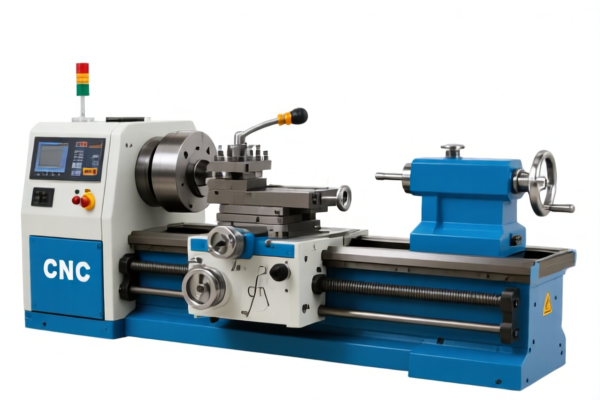
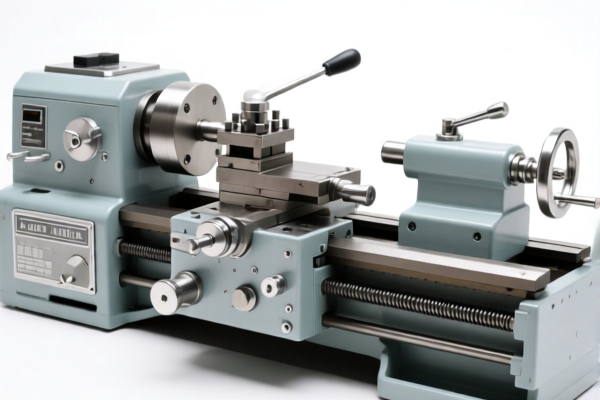
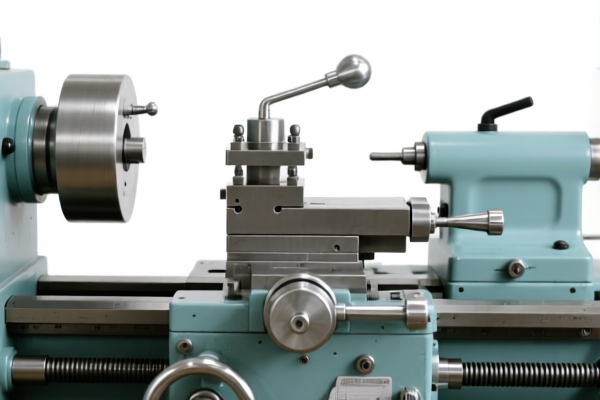
AI Analysis
🏭 Lathe Machines: The Ultimate Global Trade & Tax Guide (2026 Edition)
🌐 HS Code Reference & Customs Clearance Strategy | 2026 Tax Rules Breakdown | Professional Compliance Protocol
📌 I. Product Definition: Are You Exporting "Metal" or "Wood"?
The Lathe Machine is the "mother of all machine tools," used to shape materials by rotating them against a cutting tool. In international trade, the distinction between Metal Lathes and Wood Lathes is the single most critical factor determining your tariff burden.
Two Main Categories:
- Metal Cutting Lathes (Horizontal/Vertical): Designed for steel, iron, and alloys. These are the heavy hitters of the industrial world.
- Key Trap: These face the harshest US tariffs due to "Section 232" and "122 Section" trade policies.
- Wood Working Lathes: Designed for timber, furniture, and woodworking.
- Key Distinction: Even if they look like metal machines, if the primary function is wood, they often fall under different subheadings with different tax profiles.
⚠️ Critical Distinction: * HS Code 8458: Metal Cutting Lathes (High Risk, High Tax). * HS Code 4417 / 8465: Wooden Tools or Wood Working Machines (Varies, but often distinct from metal lathes).
📦 II. HS Code Classification Details (Based on Provided Data)
Based on the 2026 data provided for your specific queries, here is the exact classification breakdown:
| HS Code | Product Description | Material/Use Case | Tax Profile Summary |
|---|---|---|---|
8458.19.00.90 |
Metal Cutting Lathe (Other) | Metal cutting, unspecified specs, classified as "Others" | 39.4% (Heavy) |
8458.11.00.30 |
Metal Cutting Lathe (Other) | Metal cutting, power/specific form not stated, "Others" | 39.4% (Heavy) |
4417.00.80.90 |
Wooden Lathe (Tool/Equip) | Made of wood, falls under "Wooden Tools/Equipment" | 40.1% (Very High) |
8465.99.02.20 |
Wood Lathe (Machine Tool) | Woodworking machine tool, specific material/usage reqs | 37.4% (High) |
🔍 Analysis: * Metal Lathes (
8458) consistently attract a 39.4% total tax burden due to the specific combination of tariffs. * Wooden/Woodworking Lathes are slightly more complex: If classified strictly as "Wooden Tools" (4417), the rate hits 40.1%. If classified as a "Wood Working Machine Tool" (8465), it drops slightly to 37.4%.
💰 III. 2026 Tariff Rate Breakdown (The "Total Tax" Secret)
✅ Origin: China (CN)
✅ Destination: United States (US)
✅ Effective: Current Trade Policy (2026 Projection)
🎯 1. 8458.19.00.90 & 8458.11.00.30 (Metal Cutting Lathes)
Total Tax Rate: 39.4%
| Component | Rate | Legal Basis / Description |
|---|---|---|
| Base Duty | 4.4% | Standard Most-Favored-Nation (MFN) rate for lathes. |
| Add'l Duty (301/Section 232) | 25.0% | "Add'l Duty" imposed under Section 301 & Section 232 (Steel/Aluminum/Manufacturing). |
| Section 122 Duty | 10.0% | Crucial: Additional 10% tax specifically for China under Section 122 (Trade Act). |
| Total | 39.4% | Base + Add'l + Section 122 |
📌 Explanation: The 39.4% is not a single tax; it is a stack. 1. You pay the normal 4.4% to the US government. 2. You pay an extra 25% because these are industrial machines from China (Section 301/232). 3. You pay an extra 10% specifically due to Section 122 trade restrictions. Result: Almost 40% of the machine's value is tax before it even hits your warehouse.
🎯 2. 4417.00.80.90 (Wooden Lathe - Tool Category)
Total Tax Rate: 40.1%
| Component | Rate | Legal Basis / Description |
|---|---|---|
| Base Duty | 5.1% | Standard rate for wooden tools. |
| Add'l Duty | 25.0% | Section 301/232 "Add'l Duty" applies broadly. |
| Section 122 Duty | 10.0% | Section 122 specific surcharge. |
| Total | 40.1% | Highest in this dataset |
📌 Note: Why is this higher? Because the Base Duty is slightly higher (5.1% vs 4.4%), and the surcharges are applied on top, pushing the total over 40%.
🎯 3. 8465.99.02.20 (Wood Lathe - Machine Tool Category)
Total Tax Rate: 37.4%
| Component | Rate | Legal Basis / Description |
|---|---|---|
| Base Duty | 2.4% | Significantly Lower! Base rate for "Other Wood Working Machines". |
| Add'l Duty | 25.0% | The standard 25% surcharge applies. |
| Section 122 Duty | 10.0% | The standard 10% surcharge applies. |
| Total | 37.4% | Slightly better than others, but still high |
📌 Optimization: If you can prove the machine is a "Wood Working Machine Tool" (
8465) rather than a "Wooden Tool" (4417), you save 2.7% by lowering the Base Duty from 5.1% to 2.4%.
🛠️ IV. Customs Clearance & Strategic Recommendations
✅ 1. Material & Function Declaration Strategy
- For Metal Lathes: You cannot avoid the 39.4%. The policy is strict.
- Action: Ensure your invoice clearly states "Metal Cutting Lathe, Horizontal/Vertical". Do not try to misclassify as "Wood Lathe" to save tax; this leads to audits and penalties.
- For Wood Lathes: The classification battle is real.
- Action: If the machine is a full machine tool with a motor, chuck, and tool holder for wood, argue for
8465.99.02.20. - Avoid: Classifying it as
4417(Wooden Tool) unless it is a purely manual, handheld wooden device, which will trigger the higher 40.1% tax.
- Action: If the machine is a full machine tool with a motor, chuck, and tool holder for wood, argue for
✅ 2. Documentation Checklist (Mandatory)
| Document | Why It Matters |
|---|---|
| Technical Specification Sheet | Must explicitly state: "Material: Metal" OR "Material: Wood" and "Function: Cutting Metal/Wood". |
| Photographs of Machine | Must show the chuck, bed, and motor to prove it's a "Machine" (8465) vs a "Tool" (4417). |
| Commercial Invoice | Must list HS Codes clearly. Avoid vague terms like "Lathe"; use "Metal Cutting Lathe, Model XYZ". |
| Certificate of Origin | Proves origin is China. Note: Originating from Vietnam/Mexico might bypass Section 122, but verify supply chain. |
✅ 3. Cost Calculation Example (Metal Lathe)
If you import a $10,000 Metal Cutting Lathe (8458.19.00.90):
* Base Duty: $440
* Add'l Duty (25%): $2,500
* Section 122 Duty (10%): $1,000
* Total Tax Payable: $3,940
* Landed Cost: $13,940
🚨 Warning: The 10% Section 122 tax is often the most overlooked. Do not budget assuming only the 25% tariff.
🌍 V. Market Comparison & Risk Alert
| Market | HS Code (Metal) | Tax Rate | Risk Level |
|---|---|---|---|
| 🇺🇸 USA | 8458.19.00.90 |
39.4% | 🔴 CRITICAL (Section 301 + 122) |
| 🇪🇺 EU | 8458.19.00 |
~5-8% | 🟢 Low (No Section 122) |
| 🇨🇳 China | 8458.19.00 |
~5-10% | 🟢 Low (Imported to China) |
📌 Strategic Conclusion: Importing lathes from China to the USA is currently a high-cost activity due to the "Base + 25% + 10%" formula. * Recommendation: If your business relies on US imports of lathes, consider third-party assembly in Vietnam or Mexico to bypass the Section 122 (10%) and Section 301 (25%) surcharges, provided the rules of origin are strictly met.
📌 VI. Common Pitfalls & "Don't Do This" List
❌ Mistake 1: Calling a "Metal Lathe" a "Wood Lathe" to save tax. 👉 Consequence: Customs audit, seizure, and back taxes + penalty (3x the tax owed).
❌ Mistake 2: Ignoring the "Section 122" line item. 👉 Consequence: Budgeting only for 29.4% (4.4+25) and facing a cash flow crisis when the 10% is due.
❌ Mistake 3: Misidentifying a "Wood Machine" as a "Wooden Tool". 👉 Consequence: Paying 40.1% instead of 37.4% due to a higher base rate (5.1% vs 2.4%).
✅ Correct Action:
Be Precise: "Horizontal Metal Cutting Lathe, CNC, 22kW, Cast Iron Bed, HS 8458.19.00.90". Be Realistic: Budget for ~40% total tax on all lathe machines from China to the US.
🎯 VII. Final Verdict
Lathe Machines are a "Red Zone" for US Importers in 2026.
- Metal Lathes (
8458): 39.4% (Unavoidable unless changing origin). - Wood Lathes: 37.4% - 40.1% (Depends on whether it's a tool or machine).
🚀 Pro Tip: If your margins are tight on lathes, do not ship from China. Look into Vietnam-based assembly or Mexico-based distribution centers to mitigate the Section 122 (10%) and Section 301 (25%) risks.
📌 Disclaimer: Tariff rates are subject to change based on US Trade Policy adjustments. Always verify with a Customs Broker before shipping.
🌟 Smart Trade: Know your HS Code, calculate the 122% stack, and plan your logistics today!
Customer Reviews
About HS Code Classification
The Harmonized System (HS) is an internationally standardized nomenclature developed by the World Customs Organization (WCO) to classify traded products. Over 200 countries use the HS system as the basis for customs tariffs, trade statistics, and import/export regulations.
Each HS code follows a hierarchical structure:
- Chapter (2 digits) — Broad category of goods (e.g., Chapter 84: Machinery and Mechanical Appliances)
- Heading (4 digits) — More specific grouping within the chapter
- Subheading (6 digits) — Internationally standardized breakdown, used by all WCO member countries
- National subdivisions (8-10 digits) — Country-specific extensions for further classification, such as US HTSUS 10-digit codes
Correct HS code classification is essential for smooth customs clearance, accurate duty payment, and compliance with trade regulations. Misclassification can lead to customs delays, overpayment of duties, or penalties.
When importing from CN to US, the applicable tariff rates may include:
- Most-Favored-Nation (MFN) rate — The standard duty rate applied to WTO members
- General rate — Applied to countries without trade agreements
- Trade remedy duties — Additional tariffs such as Section 301 (anti-dumping), Section 232 (national security), or countervailing duties
The information provided on this page is for reference purposes only. For official classification, please consult with your local customs authority or a licensed customs broker.