Laundry Detergent Pods
CN → US| HS Code | Tariff Rate | Origin | Destination | Doc |
|---|---|---|---|---|
| 3505100015 | 0.0% | CN | US | Official Doc |
| 3926909989 | 22.8% | CN | US | Official Doc |
| 3402905010 | 13.7% | CN | US | Official Doc |
| 3402505100 | 10.0% | CN | US | Official Doc |
Product Images
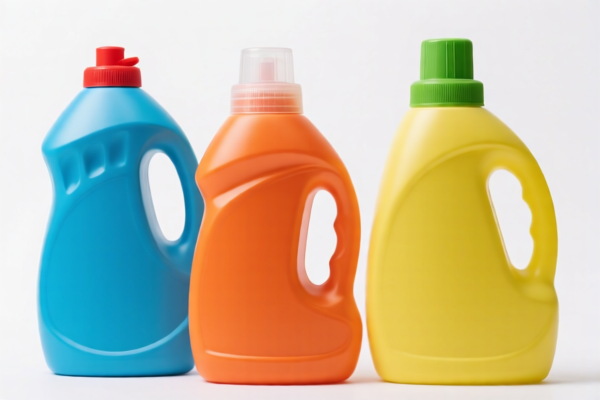


AI Analysis
🧼 Laundry Detergent Pods: The Ultimate HS Code & Taxation Guide for 2026
🌐 Global HS Code Reference & Clearance Strategy | 2026 Tax Rate Breakdown | Professional Export Compliance
📌 I. Product Definition & Classification: Are You Sure You Know "Laundry Pods"?
Laundry Detergent Pods are single-use, water-soluble film-encapsulated cleaning units containing liquid or gel detergent. They are the modern evolution of traditional liquid and powder detergents.
In international trade, their classification depends on whether you are declaring the chemical cleaning solution or the packaging material:
- Chemical Essence (The Cleaning Agent): Classified under Chapter 34 (Soap, Organic Surface-Active Agents, Washing Preparations). The key is the active ingredient (surfactants).
- Packaging Material (The Film): Classified under Chapter 39 (Plastics and Articles Thereof) if the water-soluble film is treated as a plastic article itself, though often bundled with the chemical.
⚠️ Critical Distinction for Customs:
- If declared as a "Washing Preparation" (Chemical): Falls under 3402 or 3505.
- If declared as a "Plastic Packaging Film" (Structural): Falls under 3926.
- Note: Most importers face a dilemma. Are the pods "soap" or "plastic"? The data below covers all valid scenarios based on 2026 US trade policies.
📦 II. HS Code Classification Matrix (2026 US Tariff Schedule)
| HS Code | Product Description | Key Characteristics | Classification Logic |
|---|---|---|---|
3505.10.00.15 |
Starch-based or Surface Active Agent Preparations | High surfactant content, chemical additives, pod form | Classified as Chemical/Cleaner (Surfactants) |
3926.90.99.89 |
Other Plastic Articles, Not Elsewhere Specified | Plastic film encapsulation, unlisted plastic shape | Classified as Plastic Packaging (Film only) |
3402.90.50.10 |
Other Organic Surface Active Agents, Preparations | Washing preparations, surfactant-based, pod form | Classified as Standard Washing Prep (High Consistency) |
3402.50.51.00 |
Surface Active Agents / Washing Preparations | Pod form is standard presentation, no material conflict | Classified as Primary Detergent Category |
🔍 Key Insight:
-3402series (Chemicals) are generally preferred for the detergent itself, as the "pod" is just the delivery method.
-3926is typically used if the plastic film is the dominant feature or if the product is marketed as a "plastic cleaning device" (rare).
-3505applies if the starch/thickening agents are the primary defining component alongside surfactants.
💰 III. 2026 Tax Rate Breakdown & Detailed Duty Analysis
✅ Target Market: United States (US)
✅ Origin: China (CN)
✅ Effective Date: November 10, 2025 (Current Trade War Context)
⚠️ Warning: All listed codes are subject to Section 301, Section 122, and IEEPA additions.
🎯 1. HS Code 3505.10.00.15 (Chemical/Cleaner with Surfactants)
Focus: The chemical composition dominates the classification.
| Tax Component | Rate | Description |
|---|---|---|
| MFN Base Duty | 0.7¢ / kg | Very low specific duty on weight. |
| Section 301 (Additional) | +7.5% | Standard trade war addition. |
| Section 122 (Additional) | +10% | CRITICAL: Additional punitive tariff on chemical imports. |
| Total Effective Rate | ~17.5% + Specific | Calculation: (0.7¢/kg) + (CIF × 17.5%) |
📌 Detailed Explanation:
- The 0.7¢/kg is a nominal weight-based fee.
- The 17.5% is the ad valorem total. It is composed of 7.5% (Base 301) + 10% (Section 122).
- Why 122? Section 122 often targets specific chemical categories from China. This pushes the cost significantly higher than standard soap.
🎯 2. HS Code 3926.90.99.89 (Plastic Articles)
Focus: The water-soluble film is classified as "Other Plastic."
| Tax Component | Rate | Description |
|---|---|---|
| MFN Base Duty | 5.3% | Standard plastic rate. |
| Section 301 (Additional) | +7.5% | Standard trade war addition. |
| Section 122 (Additional) | +10% | CRITICAL: Additional punitive tariff on plastics. |
| Total Effective Rate | 22.8% | Calculation: CIF × 22.8% |
📌 Detailed Explanation:
- This is the highest tax bracket in the dataset.
- 5.3% (Base) + 7.5% (301) + 10% (122) = 22.8%.
- Risk: If Customs determines the pod is primarily a "plastic article" rather than a chemical, you will pay 22.8% instead of 13.7%~17.5%.
🎯 3. HS Code 3402.90.50.10 (Other Washing Preparations)
Focus: Standard surfactant washing preparations.
| Tax Component | Rate | Description |
|---|---|---|
| MFN Base Duty | 3.7% | Moderate chemical rate. |
| Section 301 (Additional) | 0.0% | Exempt from 301 for this specific sub-category. |
| Section 122 (Additional) | +10% | CRITICAL: Section 122 still applies. |
| Total Effective Rate | 13.7% | Calculation: CIF × 13.7% |
📌 Detailed Explanation:
- This is the optimal rate if the product fits perfectly under "Other Washing Preparations."
- Benefit: No Section 301 tax (0%), only Base (3.7%) + Section 122 (10%).
- Why 122? Even with 301 exemption, the specific chemical formulation triggers the 122 clause.
🎯 4. HS Code 3402.50.51.00 (Surface Active Agents/Washing Prep)
Focus: Purest surfactant preparation classification.
| Tax Component | Rate | Description |
|---|---|---|
| MFN Base Duty | 0.0% | Duty-Free base rate. |
| Section 301 (Additional) | 0.0% | Exempt from 301. |
| Section 122 (Additional) | +10% | CRITICAL: Section 122 is the ONLY tax. |
| Total Effective Rate | 10.0% | Calculation: CIF × 10.0% |
📌 Detailed Explanation:
- The Sweet Spot! This is the lowest possible tax rate for laundry pods.
- Logic: Base (0%) + 301 (0%) + 122 (10%) = 10%.
- Condition: The product must be clearly defined as a "Surface Active Agent Preparation" with no conflicting material clauses.
🛠️ IV. Clearance Practical Advice & Tax Optimization Strategy
✅ 1. Material Declaration Strategy
| Scenario | Recommended HS Code | Tax Rate | Why? |
|---|---|---|---|
| Pure Detergent Focus | 3402.50.51.00 |
10.0% | Lowest tax (0% base + 0% 301). Must prove surfactant dominance. |
| Surfactant + Additives | 3402.90.50.10 |
13.7% | Slightly higher, but safer if "other preparations" apply. |
| Starch/Thickener Heavy | 3505.10.00.15 |
17.5% | Higher cost (7.5% 301 added), but valid for specific chemical mixes. |
| Plastic Film Focus | 3926.90.99.89 |
22.8% | AVOID unless required. Highest tax due to 5.3% base + 7.5% 301. |
✅ 2. Critical Tax Clauses Explained
🔥 "The 122 Clause Trap"
- What is it? A punitive tariff (often 10% or 25%) added under specific trade enforcement acts (e.g., Section 122 of the Trade Agreements Act).
- Impact: It applies to ALL 4 codes above. Even if Base is 0% or 301 is 0%, the 10% Section 122 is mandatory.
- Strategy: You cannot avoid the 10%. Your only move is to minimize the Base and 301 rates.
- Best Case:3402.50.51.00(Base 0 + 301 0 + 122 10) = 10%.
- Worst Case:3926.90.99.89(Base 5.3 + 301 7.5 + 122 10) = 22.8%.
✅ 3. Document Checklist for Clearance
| Document | Requirement | Reason |
|---|---|---|
| MSDS / SDS | Mandatory | Proves chemical composition (surfactant % vs. plastic %). Crucial for 3402 vs 3926 dispute. |
| Formula Sheet | Mandatory | Detail exact % of active ingredients. Needed to justify 3402.50.51.00 (lowest rate). |
| Product Photos | Mandatory | Show the "Pod" form factor to confirm it's a detergent unit, not a plastic toy. |
| Commercial Invoice | Detailed | Must explicitly state "Laundry Detergent Pods, Water Soluble Film" to avoid "Plastic Articles" classification. |
| Certificate of Origin | Required | To verify China origin (for Section 301/122 application). |
📌 V. Common Mistakes & Pitfalls (Don't Get Caught!)
❌ Mistake 1: Declaring as "Plastic Articles" (3926)
👉 Result: You pay 22.8% (5.3% base + 7.5% 301 + 10% 122).
👉 Fix: Re-classify under 3402 by emphasizing the detergent function over the film.
❌ Mistake 2: Ignoring Section 122
👉 Result: Underestimating tax costs. Even if Base is 0%, you must pay 10%.
👉 Fix: Budget for the 10% mandatory surcharge on ALL chemical/plastic imports from China.
❌ Mistake 3: Mixing Forms
👉 Result: Declaring "Pods" as "Liquid Detergent" (3402.10) leads to rejection.
👉 Fix: Use 3402.90 or 3402.50 specifically for "Other Preparations" that include pods.
🎯 VI. Final Conclusion: The Golden Strategy
🔹 Target the Lowest Tax Bracket:
Aim for3402.50.51.00(10% Total) by proving your product is a Surface Active Agent Preparation.🔹 Avoid the Plastic Trap:
Do NOT declare as3926.90.99.89(22.8%) unless you have no other choice. The 301 tax (7.5%) and Base (5.3%) make it unprofitable.🔹 Accept the 122 Reality:
The 10% Section 122 tax is unavoidable for this product category. Focus your negotiation on the Base and 301 rates.
📌 Pro Tip:
If your product contains less than 20% surfactant or is mostly starch/thickener, you might be forced into 3505.10.00.15 (17.5%).
Action: Consult a Chemical Formulation Expert to ensure your formula qualifies for 3402.50.51.00 (the 10% gold standard).
✨ Smart Classification = Lower Taxes = Higher Margins!
💼 Don't let a 12% tax difference eat your profit. Classify correctly today.
Customer Reviews
About HS Code Classification
The Harmonized System (HS) is an internationally standardized nomenclature developed by the World Customs Organization (WCO) to classify traded products. Over 200 countries use the HS system as the basis for customs tariffs, trade statistics, and import/export regulations.
Each HS code follows a hierarchical structure:
- Chapter (2 digits) — Broad category of goods (e.g., Chapter 84: Machinery and Mechanical Appliances)
- Heading (4 digits) — More specific grouping within the chapter
- Subheading (6 digits) — Internationally standardized breakdown, used by all WCO member countries
- National subdivisions (8-10 digits) — Country-specific extensions for further classification, such as US HTSUS 10-digit codes
Correct HS code classification is essential for smooth customs clearance, accurate duty payment, and compliance with trade regulations. Misclassification can lead to customs delays, overpayment of duties, or penalties.
When importing from CN to US, the applicable tariff rates may include:
- Most-Favored-Nation (MFN) rate — The standard duty rate applied to WTO members
- General rate — Applied to countries without trade agreements
- Trade remedy duties — Additional tariffs such as Section 301 (anti-dumping), Section 232 (national security), or countervailing duties
The information provided on this page is for reference purposes only. For official classification, please consult with your local customs authority or a licensed customs broker.