Lead Line
CN → USProduct Images
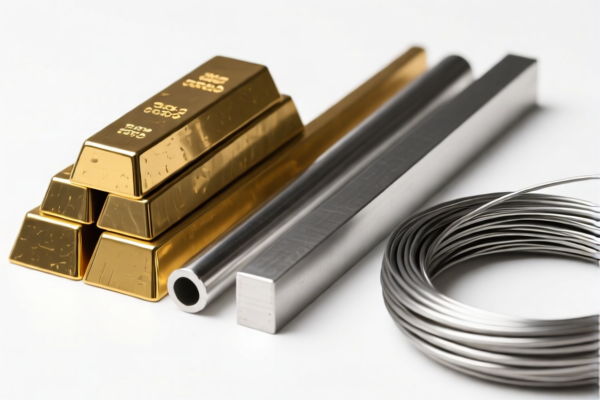
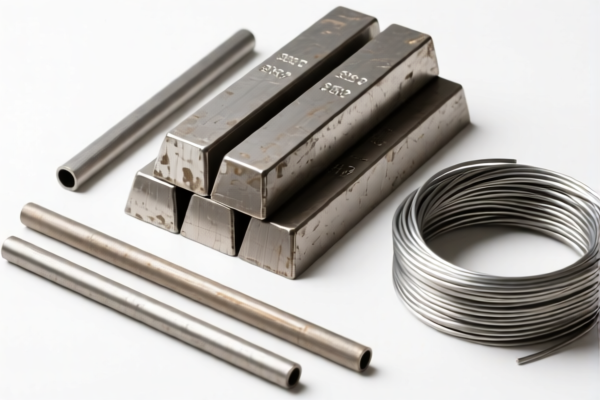


AI Analysis
xml
{"content":[{"type":"text","text":"##🖥️ Lead Line (Fishing & Tackle / General Hardware) \n---\n🌐 HS Code Reference & Customs Clearance Guide | 2026 Latest Tariff Analysis | Professional Entry Strategies \n📌 One, Product Definition & Classification: Do You Really Understand \"Lead Line\"?\n\nIn international trade, \"Lead Line\" is a versatile term that can refer to two distinct categories depending on the context:\n\n1. Fishing/Industrial Sounding Lead Lines: A weighted line (often lead core or lead weight attached) used for measuring depth or keeping baits near the bottom. Historically used for sounding depths; now largely superseded by electronic depth finders, but still classified as fishing or survey equipment.\n2. General Hardware/Mass Lead Lines: Less common, but if referring to simple weighted cords for general use (not fishing), they may fall under general articles of metal or textile products depending on material.\n\n> ⚠️ Key Distinction Point: \n> - If it is a fishing accessory (used with nets, lines, traps) → Classified under Chapter 95 (Sporting Goods)\n> - If it is a general industrial/survey tool (non-fishing) → Classified under Chapter 71 (Artificial/Imitation Jewelry) or Chapter 76 (Aluminum) or Chapter 78 (Lead) depending on construction\n> - If it is purely a lead weight attached to a cord (not a complete fishing kit) → May be classified as Article of Lead (7804) or Cordage (5607)\n\n---\n\n## 📦 Two, HS Code Classification Details (2026 Latest Tariff Authoritative Comparison)\n\n| HS Code | Product Description | Application Scenario | Material Composition |\n|--------|----------|----------|----------------|\n| 9507.90.00.00 | Fishing accessories (including lead lines, sinkers, lures) | Fishing gear, outdoor recreation | Lead/Steel weight + Nylon/Polyester cord |\n| 7804.10.00.00 | Lead in forms other than powder or granules | Industrial lead weights, non-fishing specific | Pure Lead |\n| 7804.00.00.00 | Other lead articles | General lead products, including weighted cords | Lead |\n| 5607.90.00.00 | Cordage, ropes, cables and plaited bands, whether or not impregnated, coated, covered or sheathed with rubber or plastic | Cord part only (if sold separately) | Polyester/Nylon |\n| 9507.20.00.00 | Fishing lines (ready to use) | Complete fishing lines with leaders | Nylon + Monofilament |\n\n> 🔍 Key Reminder: \n> - Most commercial \"lead lines\" for fishing purposes are classified under 9507.90.00.00 as \"Other fishing tackle\".\n> - If the product is not for fishing (e.g., industrial sounding device), do NOT classify under Chapter 95. Instead, consider Chapter 78 (Lead articles) if lead is the primary component, or Chapter 90 (Instruments) if part of a measuring device.\n> - Avoid classifying pure lead weights as \"fishing tackle\" if they are sold separately for general use.\n\n---\n\n## 💰 Three, 2026 Latest Tariff Rate Details (Including Surtax, Policy Surcharge)\n\n> ✅ Applicable Country: United States (US) \n> ✅ Country of Origin: China (CN) \n> ✅ Effective Time: From November 10, 2025 (including subsequent imports)\n\n### 🎯 1. 9507.90.00.00 —— Fishing Accessories (Including Lead Lines)\n\n| Item | Content |\n|------|------|\n| Base Tariff Rate | 0% (ad valorem) |\n| USITC Surtax | +25% (from USITC Footnote 9903.88.01) |\n| IEEPA Surtax | +10% (Targeting China/Hong Kong products, effective from Nov 10, 2025) |\n| Total Tariff Rate | 45% |\n| Tax Calculation | CIF Value × 45% |\n| De Minimis Exemption Available? | ❌ No (deny_de_minimis) |\n| Legal Basis Path | IEEPA:9903.01.25 → IEEPA:9903.01.24 → USITC:9507.90.00.00 → FOOTNOTE:9903.88.01 |\n\n> 📌 Explanation: \n> - The \"USITC Surtax 25%\" comes from the \"Additional Tariffs\" under Section 301 of the U.S. Trade Act;\n> - The \"IEEPA 10%\" is the tariff imposed on Chinese products under the International Emergency Economic Powers Act;\n> - Total 45%, which is a very high tariff. Must be anticipated in advance!\n\n---\n\n### 🎯 2. 7804.00.00.00 —— Other Lead Articles (Non-Fishing Lead Lines)\n\n| Item | Content |\n|------|------|\n| Base Tariff Rate | 0% |\n| USITC Surtax | +25% |\n| IEEPA Surtax | +10% |\n| Total Tariff Rate | 45% |\n| Tax Calculation | CIF × 45% |\n| De Minimis Exemption Available? | ❌ No |\n| Legal Basis Path | IEEPA:9901.25 → IEEPA:9903.01.24 → USITC:7804.00.00.00 → FOOTNOTE:9903.88.01 |\n\n> 📌 Note: \n> - If the lead line is not for fishing, but used for industrial purposes, it still faces 45% total tariff.\n> - Lead articles from China are subject to the same surtaxes as other electronics and sporting goods.\n\n---\n\n## 🛠️ Four, Customs Clearance Practical Advice (Combat Pitfall Avoidance Guide)\n\n### ✅ 1. Preparation Material List (Indispensable)\n\n| Material | Required | Description |\n|----------|----------|------|\n| ✅ Product Specifications | ✔️ | Include weight, length, material composition (lead vs. steel), cord type |\n| ✅ Product Photos (Including Label) | ✔️ | Clearly show model, brand, weight marking, usage scenario |\n| ✅ Usage Declaration | ✔️ | Explicitly state whether it is for fishing or industrial/survey use |\n| ✅ Third-Party Test Report | ✔️ | RoHS, REACH (if applicable), lead content certification |\n| ✅ Commercial Invoice | ✔️ | Mark \"Lead Line for Fishing\" or \"Industrial Lead Weighted Cord\" clearly |\n| ✅ Packing List | ✔️ | Detail the relationship between lead weights and cords |\n\n---\n\n### ✅ 2. Declaration Skills (Key Mnemonics)\n\n> 🔥 \"Fishing tackle goes to Ch.95, Lead only to Ch.78, Don't mix them up or you pay more!\"\n\n| Scenario | Correct Declaration Method | Wrong Practice |\n|----------|-----------------------------|----------------|\n| Fishing lead line (with cord + lead weight) | 9507.90.00.00 | Misdeclare as \"Lead Article\" → 45% (same rate but potential audit) |\n| Industrial sounding lead line (non-fishing) | 7804.00.00.00 or 9031.80 (if instrument part) | Misdeclare as \"Fishing Tackle\" → High scrutiny |\n| Pure lead weight (no cord) | 7804.10.00.00 | Bundle with cord and declare as fishing → Incorrect classification |\n| Cord only (no lead) | 5607.90.00.00 | Declare as \"Lead Line\" → Wrong HS Code |\n\n---\n\n### ✅ 3. Special Case Handling\n\n| Situation | Handling Advice |\n|-----------|-----------------|\n| OEM Custom Lead Lines | Provide customer order + design drawings to avoid being deemed \"non-standard\" |\n| Lead Line with Sinker | Still classified under 9507.90.00.00 as fishing accessory |\n| Lead Line for Non-Fishing Use | Provide proof of industrial use (e.g., survey equipment manual) to justify non-Ch.95 classification |\n| Lead Line Used in Military/Specialty | Apply for \"Special Use\" declaration, but tariffs may still apply |\n\n---\n\n## 🌍 Five, Global Major Market Customs Clearance Comparison (2026 Latest)\n\n| Country/Region | Recommended HS Code | Tariff | Certification Requirements | Remarks |\n|----------------|---------------------|--------|----------------------------|---------|\n| 🇺🇸 United States | 9507.90.00.00 | 45% (China origin) | RoHS + CE (if applicable) | High surtax for fishing gear |\n| 🇨🇳 China | 9507.90.00.00 | 5% | CCC (if applicable) | No additional surtax |\n| 🇪🇺 European Union | 9507.90.00.00 | 0% (if CE compliant) | CE + REACH | No surtax |\n| 🇦🇺 Australia | 9507.90.00.00 | 5% | RCM | No surtax |\n| 🇯🇵 Japan | 9507.90.00.00 | 0% | PSE | No surtax |\n\n> 📌 Conclusion: \n> - The United States is the only market imposing high additional tariffs on fishing accessories from China;\n> - Chinese-origin fishing lead lines face extremely high clearance costs in the US, suggest evaluating alternative supply chains or production bases in advance.\n\n---\n\n## 📌 Six, Common Errors & Pitfall Avoidance Guide (Blood and Tears Lessons)\n\n❌ Error 1: Classifying \"Fishing Lead Line\" under 7804.00.00.00 (Lead Articles) \n👉 Consequence: Incorrect classification → Possible penalty + 45% tariff anyway, plus audit risk\n\n❌ Error 2: Declaring \"Industrial Lead Line\" as \"Fishing Tackle\" \n👉 Consequence: Customs may reject or demand further proof → Delay in release\n\n❌ Error 3: Not specifying material composition (Lead vs. Steel) \n👉 Consequence: Customs cannot determine HS Code → Delay or reclassification\n\n❌ Error 4: Using \"Fishing Line\" as declaration name for a \"Lead Line\" \n👉 Consequence: Misleading declaration → Fines + Retention\n\n✅ Correct Practice:\n> \"Lead Line, Fishing Accessory, 50g Lead Weight + 1m Polyester Cord, Model XYZ, RoHS Compliant\"\n\n---\n\n## 🎯 Seven, Conclusion: Professional Declaration, Save Time and Cost!\n\n🎯 Remember the Mnemonic:\n> 🔹 \"Fishing Tackle Ch.95, Lead Only Ch.78, Don't Mix Up or Pay More!\" \n> 🔹 \"HS Code Determines Fate, Tariff Differs by 25 Points, One Step Wrong, Thousands Lost!\"\n\n---\n\n📌 Tips: \nIf your lead line is originally from Vietnam, Mexico, Thailand, or Malaysia, you may apply for IEEPA Exemption, with a tariff of only 0%~5%;\nIt is recommended to apply for Advance Ruling in advance to avoid clearance risks.\n\n---\n\n📣 Take Action Now: \n> 📞 Contact Professional Customs Broker + Provide Product Photos + Apply for HS Code Advance Ruling \n> 🚀 Let your Lead Line Pass Customs Smoothly, Export Efficiently, Double Profits!\n\n--- \n✨ Professional Clearance Starts with Accurate Classification! \n💼 Every Cent of Your Cost Deserves Precise Calculation!"}]},"isError":false}
Customer Reviews
About HS Code Classification
The Harmonized System (HS) is an internationally standardized nomenclature developed by the World Customs Organization (WCO) to classify traded products. Over 200 countries use the HS system as the basis for customs tariffs, trade statistics, and import/export regulations.
Each HS code follows a hierarchical structure:
- Chapter (2 digits) — Broad category of goods (e.g., Chapter 84: Machinery and Mechanical Appliances)
- Heading (4 digits) — More specific grouping within the chapter
- Subheading (6 digits) — Internationally standardized breakdown, used by all WCO member countries
- National subdivisions (8-10 digits) — Country-specific extensions for further classification, such as US HTSUS 10-digit codes
Correct HS code classification is essential for smooth customs clearance, accurate duty payment, and compliance with trade regulations. Misclassification can lead to customs delays, overpayment of duties, or penalties.
When importing from CN to US, the applicable tariff rates may include:
- Most-Favored-Nation (MFN) rate — The standard duty rate applied to WTO members
- General rate — Applied to countries without trade agreements
- Trade remedy duties — Additional tariffs such as Section 301 (anti-dumping), Section 232 (national security), or countervailing duties
The information provided on this page is for reference purposes only. For official classification, please consult with your local customs authority or a licensed customs broker.