Lead based Fuel Anti knock Agent
CN → US| HS Code | Tariff Rate | Origin | Destination | Doc |
|---|---|---|---|---|
| 3811115000 | 35.0% | CN | US | Official Doc |
| 3811111000 | 35.0% | CN | US | Official Doc |
| 7801100000 | 0.0% | CN | US | Official Doc |
| 7801999030 | 0.0% | CN | US | Official Doc |
| 3824840000 | 41.5% | CN | US | Official Doc |
Product Images
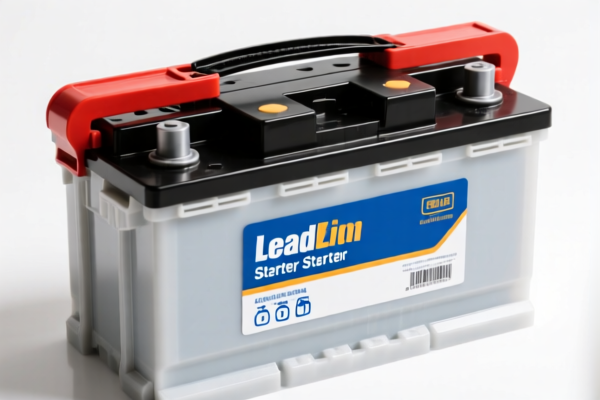
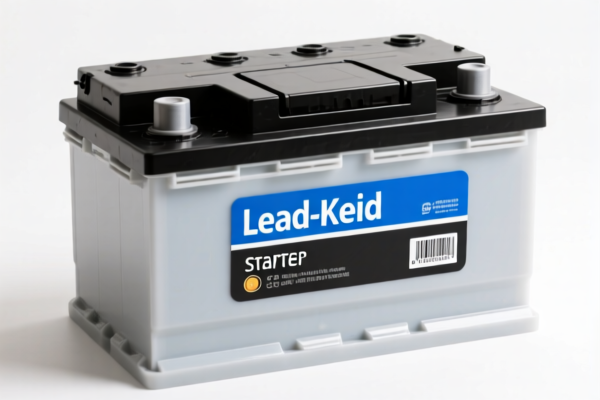
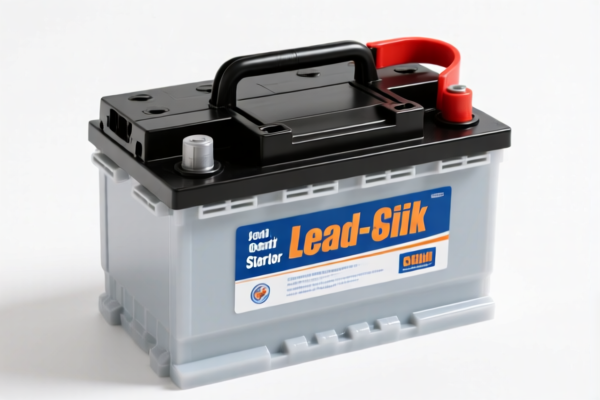
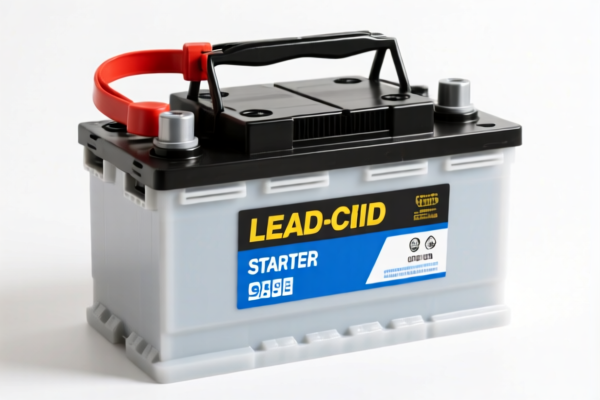
AI Analysis
🚗 Lead-Based Fuel Anti-Knock Agent (Ethyl Fluid)
🌐 HS Code Classification & Customs Clearance Guide | 2026 Latest Tariff Analysis | Professional Strategy
📌 I. Product Definition & Classification: What is "Lead-Based Fuel Anti-Knock Agent"?
Lead-based anti-knock agents (commonly known as Ethyl Fluid) are chemical additives used in gasoline to increase the octane rating and prevent engine "knocking" or pinging during combustion.
In international trade, these products are NOT classified as raw lead or simple lead alloys. Instead, they are classified as chemical preparations and mixtures containing lead compounds (such as Tetraethyl lead or Tetramethyl lead).
⚠️ Critical Distinction:
- If the product is pure refined lead with additives specifically for anti-knock purposes → It may fall under Chapter 78 (Lead and Articles Thereof).
- If the product is a chemical mixture/preparation where lead compounds are the active ingredient for anti-knock functionality → It falls under Chapter 38 (Miscellaneous Chemical Products).
- Most commercial "Anti-Knock Agents" are chemical preparations and should be classified under 3811 or 3824, NOT raw lead codes.
📦 II. HS Code Classification Details (2026 Latest Tariff Matrix)
Based on the provided data, here are the applicable HS Codes for Lead-Based Anti-Knock Agents and related lead materials:
| HS Code | Product Description | Key Characteristics | Primary Use |
|---|---|---|---|
| 3811.11.50.00 | Lead-based anti-knock agent, based on lead compounds | Chemical preparation; active ingredient is lead compound | Added to gasoline to prevent knocking |
| 3811.11.10.00 | Lead-based anti-knock agent, based on lead compounds | Similar to above; specific sub-category under 3811.11 | Same as above |
| 7801.10.00.00 | Refined lead containing gasoline anti-knock agents | Refined lead (metallic state); unformed shape | Industrial lead metal with anti-knock additive |
| 7801.99.90.30 | Refined lead, lead alloy category, containing additives | Lead alloy; contains anti-knock additives | Structural/industrial lead products |
| 3824.84.00.00 | Lead-containing anti-explosion/delayed-release agent | Chemical preparation; broader "anti-explosion" category | Industrial chemical mixtures |
🔍 Key Insight:
- If you are importing a liquid or powder additive to be mixed into fuel → Use 3811.11.xxxxx or 3824.84.00.00.
- If you are importing solid lead ingots or metal that already contain anti-knock agents → Use 7801.10.00.00 or 7801.99.90.30.
- Misclassification Risk: Declaring a chemical anti-knock agent as "Lead Metal" (7801) will likely result in rejection, as it does not fit the definition of metallic lead.
💰 III. 2026 Latest Tariff Rate Breakdown (Detailed Tax Clauses)
✅ Applicable Country: United States (US)
✅ Origin: China (CN)
✅ Effective Date: From November 10, 2025 onwards (for subsequent imports)
🎯 1. 3811.11.50.00 & 3811.11.10.00 — Lead-Based Anti-Knock Agents
| Item | Content |
|---|---|
| Base Tariff | 0.0% |
| Additional Tariff (Section 301) | +25.0% |
| 122 Clause Tariff | +10.0% |
| Total Tariff Rate | 35.0% |
| Tax Calculation | CIF Value × 35.0% |
| De Minimis Eligibility | ❌ Not Eligible (High-value chemical imports) |
| Legal Basis | Base Tariff: 0% → USITC Footnote (Section 301) → IEEPA 122 Clause (10%) |
📌 Explanation:
- These are classified as chemical preparations.
- The 35% total tax is composed of:
- 0% Base MFN rate (due to specific trade agreements or tariff schedules for certain chemicals).
- 25% added under Section 301 (US trade remedy against China).
- 10% added under 122 Clause (likely referring to specific national security or emergency provisions, e.g., IEEPA).
- Total: 35% applies to the CIF value.
🎯 2. 7801.10.00.00 — Refined Lead with Anti-Knock Agents
| Item | Content |
|---|---|
| Base Tariff | 2.5% (on the value of the lead content) |
| Additional Tariff (Section 301) | 0.0% |
| 122 Clause Tariff | +10.0% |
| Total Tariff Rate | 2.5% (on lead value) + 10.0% |
| Tax Calculation | (CIF Lead Content Value × 2.5%) + (CIF Total Value × 10%) |
| De Minimis Eligibility | ❌ Not Eligible |
| Legal Basis | Base: 2.5% on lead value → 122 Clause: 10% on total value |
📌 Explanation:
- This code applies to refined lead metal (unformed) that contains anti-knock agents.
- The base tax is ad valorem on the lead content (not total product value).
- No Section 301 tariff (0%) applies, but 122 Clause (10%) does.
- Complex Calculation: You must isolate the value of the lead content for the 2.5% tax, and apply 10% to the entire shipment value.
🎯 3. 7801.99.90.30 — Lead Alloy with Anti-Knock Additives
| Item | Content |
|---|---|
| Base Tariff | 2.5% (on the value of the lead content) |
| Additional Tariff (Section 301) | +25.0% |
| 122 Clause Tariff | +10.0% |
| Total Tariff Rate | 2.5% (on lead value) + 35.0% |
| Tax Calculation | (CIF Lead Content Value × 2.5%) + (CIF Total Value × 35%) |
| De Minimis Eligibility | ❌ Not Eligible |
| Legal Basis | Base: 2.5% on lead value → Section 301: 25% → 122 Clause: 10% |
📌 Explanation:
- Applies to lead alloys containing anti-knock agents.
- Combines Section 301 (25%) and 122 Clause (10%) on top of the base lead-content tax.
- High Impact: The additional 35% is applied to the total CIF value, not just lead content.
🎯 4. 3824.84.00.00 — Lead-Containing Anti-Explosion/Delayed-Release Agent
| Item | Content |
|---|---|
| Base Tariff | 6.5% |
| Additional Tariff (Section 301) | +25.0% |
| 122 Clause Tariff | +10.0% |
| Total Tariff Rate | 41.5% |
| Tax Calculation | CIF Value × 41.5% |
| De Minimis Eligibility | ❌ Not Eligible |
| Legal Basis | Base: 6.5% → Section 301: 25% → 122 Clause: 10% |
📌 Explanation:
- This is a chemical preparation under Chapter 38.
- Highest Total Tax (41.5%) among all options.
- Applies to broader "anti-explosion" or delayed-release chemical agents containing lead.
- Note: If your product is strictly an "anti-knock agent" for fuel, 3811.11 is more accurate. If it’s a general industrial chemical, this may apply.
🛠️ IV. Customs Clearance Practical Advice (Avoid Pitfalls)
✅ 1. Documentation Checklist (Essential)
| Document | Required | Notes |
|---|---|---|
| ✅ Safety Data Sheet (SDS) | ✔️ | Must confirm chemical composition and lead content. |
| ✅ Product Specification Sheet | ✔️ | Clearly state: "Lead-based anti-knock agent for gasoline" or "Refined lead alloy." |
| ✅ Formula/Composition Analysis | ✔️ | Critical for distinguishing between 3811 (chemical prep) and 7801 (metal). |
| ✅ Commercial Invoice | ✔️ | Must specify HS Code, CIF value, and country of origin. |
| ✅ Certificate of Origin (CO) | ✔️ | For verifying Chinese origin and applying correct tariffs. |
| ✅ Lead Content Declaration | ✔️ | Required for 7801 codes to calculate base tax on lead value. |
| ✅ Import License (if applicable) | ✔️ | Some lead-containing chemicals may require EPA or other regulatory approvals. |
✅ 2. Declaration Tips (Key Rules)
🔥 "Chemical Prep vs. Metal: Choose Wisely!"
| Scenario | Correct HS Code | Incorrect HS Code | Consequence |
|---|---|---|---|
| Liquid/Powder additive for fuel | 3811.11.xxxxx or 3824.84.00.00 |
7801.xxxxx |
Rejection, penalty, higher tax |
| Solid lead ingots with additives | 7801.10.00.00 or 7801.99.90.30 |
3811.11.xxxxx |
Misclassification, audit risk |
| General chemical mixture | 3824.84.00.00 |
3811.11.xxxxx |
Slightly higher tax (41.5% vs 35%) |
📌 Golden Rule:
- If it’s a chemical reaction mixture designed to boost octane → 3811.
- If it’s metallic lead with additives → 7801.
- Never declare chemical anti-knock agents as "Lead Metal" to avoid Section 301 tariffs.
✅ 3. Special Cases
| Case | Handling Advice |
|---|---|
| Lead Content in 7801 Codes | You must provide a breakdown of lead content value to calculate the 2.5% base tax correctly. |
| EPA Regulatory Compliance | Lead-based fuels are restricted in many jurisdictions. Ensure the product is for export-only or meets EPA exemptions for off-road/industrial use. |
| 122 Clause Application | The 10% tariff is mandatory for Chinese-origin goods under this clause. No exemptions available. |
| Section 301 Exclusions | Check if your specific product has been excluded from Section 301 tariffs. Most lead chemicals are not excluded. |
🌍 V. Global Customs Comparison (2026 Latest)
| Country/Region | Recommended HS Code | Total Tariff | Key Requirements | Notes |
|---|---|---|---|---|
| 🇺🇸 USA | 3811.11.50.00 |
35.0% | SDS, CO, EPA Compliance | High tariff due to 301 + 122 clauses |
| 🇨🇳 China | 3811.11.50.00 |
0%~6.5% | Import License, Environmental Permit | Domestic production may be cheaper |
| 🇪🇺 EU | 3811.10.00 |
Varies | REACH Registration | Lead restrictions apply under REACH |
| 🇬🇧 UK | 3811.10.00 |
Varies | UK REACH | Post-Brexit regulations apply |
| 🇦🇺 Australia | 3811.10.00 |
Varies | AICIS Registration | Chemical inventory listing required |
📌 Conclusion:
- The USA has the highest combined tariff (35%~41.5%) due to trade restrictions.
- EU/UK/Australia have stricter environmental regulations (REACH/AICIS) rather than high tariffs.
- Lead-based anti-knock agents are declining globally due to environmental concerns; ensure compliance with local environmental laws.
📌 VI. Common Mistakes & Pitfalls (Lessons Learned)
❌ Mistake 1: Declaring chemical anti-knock agents as "Lead Metal" (7801) to avoid 25% Section 301 tariff.
👉 Result: Customs will reject the declaration, demand correct HS code, and apply 35%~41.5% tariff plus penalties.
❌ Mistake 2: Ignoring the 122 Clause 10% tariff.
👉 Result: Underpayment of taxes, leading to back taxes + interest + fines.
❌ Mistake 3: Failing to provide Lead Content Breakdown for 7801 codes.
👉 Result: Customs will estimate lead content, potentially applying higher base taxes.
❌ Mistake 4: Not checking EPA/Environmental Regulations.
👉 Result: Seizure of goods for non-compliance with environmental standards, even if tariffs are paid.
✅ Correct Approach:
"Lead-based Anti-Knock Agent, Chemical Preparation, Tetraethyl Lead Content 50%, for Industrial Use Only, CIF $10,000, Origin China."
🎯 VII. Conclusion: Professional Declaration, Cost Optimization!
🎯 Remember This Rule:
🔹 "Chemical Prep = 3811/3824; Metal = 7801. Don't Mix Them!"
🔹 "35% or 41.5% Tax? Check Your HS Code!"
🔹 "122 Clause 10% is Mandatory for China Origin!"
📌 Pro Tip:
If you are importing lead-based anti-knock agents for the US market:
1. Confirm Product Form: Is it a chemical preparation or lead metal?
2. Calculate Total Tax: Include 35% (3811) or 2.5%+35% (7801).
3. Check EPA Compliance: Ensure legal use in the destination country.
4. Apply for Advance Ruling: To confirm HS Code and avoid customs delays.
📣 Immediate Action:
📞 Consult a licensed customs broker + Provide SDS + Apply for HS Code Advance Ruling
🚀 Ensure smooth clearance, avoid penalties, and manage costs effectively!
✨ Professional Customs Clearance Starts with Accurate Classification!
💼 Every Percentage Point Counts in Global Trade!
Customer Reviews
About HS Code Classification
The Harmonized System (HS) is an internationally standardized nomenclature developed by the World Customs Organization (WCO) to classify traded products. Over 200 countries use the HS system as the basis for customs tariffs, trade statistics, and import/export regulations.
Each HS code follows a hierarchical structure:
- Chapter (2 digits) — Broad category of goods (e.g., Chapter 84: Machinery and Mechanical Appliances)
- Heading (4 digits) — More specific grouping within the chapter
- Subheading (6 digits) — Internationally standardized breakdown, used by all WCO member countries
- National subdivisions (8-10 digits) — Country-specific extensions for further classification, such as US HTSUS 10-digit codes
Correct HS code classification is essential for smooth customs clearance, accurate duty payment, and compliance with trade regulations. Misclassification can lead to customs delays, overpayment of duties, or penalties.
When importing from CN to US, the applicable tariff rates may include:
- Most-Favored-Nation (MFN) rate — The standard duty rate applied to WTO members
- General rate — Applied to countries without trade agreements
- Trade remedy duties — Additional tariffs such as Section 301 (anti-dumping), Section 232 (national security), or countervailing duties
The information provided on this page is for reference purposes only. For official classification, please consult with your local customs authority or a licensed customs broker.