Lead containing Anti explosion Agent Premixed Solution
CN → US| HS Code | Tariff Rate | Origin | Destination | Doc |
|---|---|---|---|---|
| 3811115000 | 35.0% | CN | US | Official Doc |
| 3811111000 | 35.0% | CN | US | Official Doc |
| 3824840000 | 41.5% | CN | US | Official Doc |
| 3824850000 | 41.5% | CN | US | Official Doc |
| 3811115000 | 35.0% | CN | US | Official Doc |
Product Images
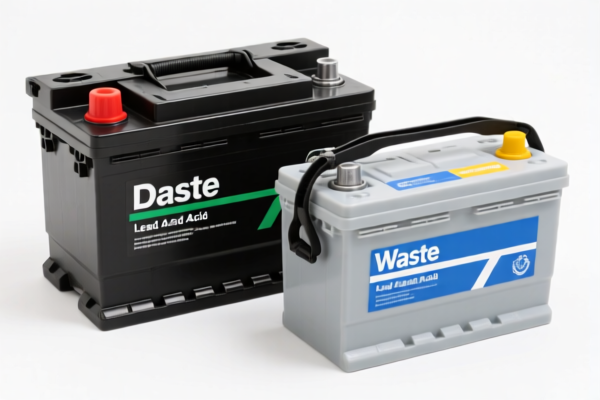
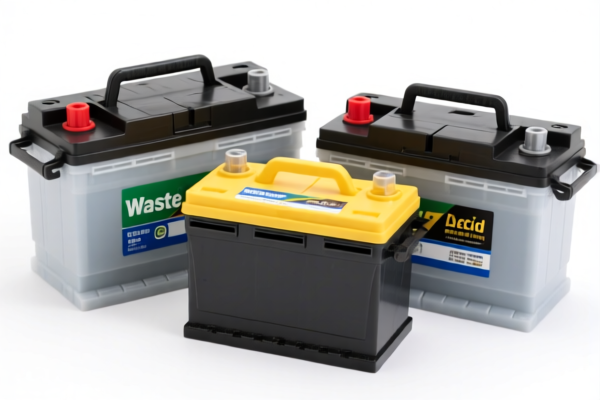
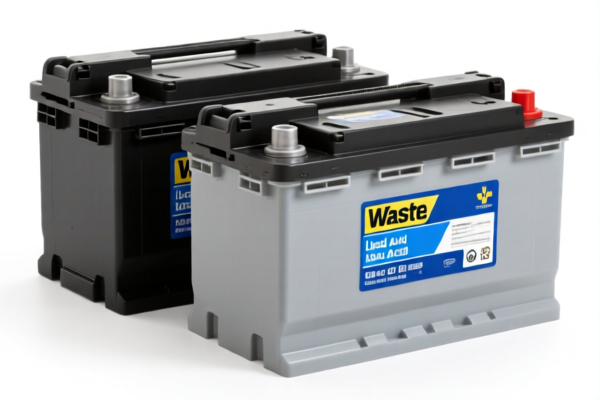
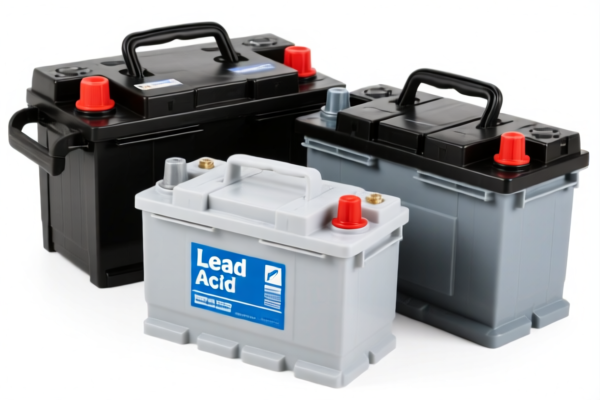
AI Analysis
🧪 Lead-Based Anti-Explosion Agent Premixed Solution (Lead-Containing Anti-Explosion Agent Premixed Solution)
🌐 HS Code Reference & Customs Clearance Guide | 2026 Latest Tariff Full Analysis | Professional Clearance Strategy
📌 I. Product Definition & Classification: Do You Really Understand "Lead-Based Anti-Explosion Agents"?
Lead-based anti-explosion agents are specialized chemical additives used primarily in fuel systems (historically in gasoline, though largely phased out in many regions for environmental reasons) to prevent engine knocking (premature combustion). In international trade, these products are strictly categorized based on their chemical composition, physical state (premixed solution vs. solid), and specific active ingredient (e.g., Tetraethyl Lead vs. other lead compounds).
Two Main Categories in Customs Classification:
- Tetraethyl Lead-Based Premixes (
3811.11.10.00): Specific mixtures where Tetraethyl Lead (TEL) is the primary anti-knock agent. These are often highly regulated due to toxicity. - General Lead-Compound Anti-Knock Agents (
3811.11.50.00): Broader category for lead-based anti-explosion agents that do not fall specifically under the Tetraethyl Lead premix classification, or are classified as general lead compounds.
⚠️ Key Distinction:
- If the product is explicitly described as a "Premixed Solution" containing Tetraethyl Lead → It typically falls under3811.11.10.00.
- If it is a Lead-Based Anti-Explosion Agent (generic lead compound) or a Premix not specified as TEL → It often falls under3811.11.50.00.
- Products labeled as "Explosion-Preventing Agents" or "Sustained-Release Agents" (even if lead-containing) may be misclassified. If they are chemical preparations for general industrial use (not specifically for fuel anti-knock), they might be pushed to3824.84.00.00or3824.85.00.00, but this requires careful justification to avoid penalties.
📦 II. HS Code Classification Details (2026 Latest Tariff Authority Comparison)
| HS Code | Product Description | Application Scenario | Tax Rate (China Origin to US) | Key Classification Criteria |
|---|---|---|---|---|
3811.11.10.00 |
Tetraethyl Lead-Based Anti-Explosion Agent Premixed Solution | Fuel additives, specifically containing Tetraethyl Lead (TEL) | 45% (0% Base + 25% Section 301 + 10% IEEPA) | Specific material: Tetraethyl Lead; Use: Anti-knock agent; Form: Premixed solution |
3811.11.50.00 |
Lead-Based Anti-Explosion Agent / Premixed Solution | General lead-compound anti-knock agents, not strictly TEL premix | 45% (0% Base + 25% Section 301 + 10% IEEPA) | Material: Lead compound; Use: Anti-knock/anti-explosion; Fits general lead category |
3824.84.00.00 |
Lead-Containing Explosion-Preventing Agent Sustained-Release Agent | Chemical preparations for general industrial explosion prevention, not fuel anti-knock | 51.5% (6.5% Base + 25% Section 301 + 10% IEEPA) | Material: Chemical preparation; Use: Explosion prevention (general); Fits Chapter 38 miscellaneous |
3824.85.00.00 |
Lead-Containing Explosion-Preventing Agent Sustained-Release Agent (Sustained-Release) | Chemical preparations designed for sustained release of active ingredients | 51.5% (6.5% Base + 25% Section 301 + 10% IEEPA) | Material: Chemical preparation; Use: Sustained-release agent; Fits Chapter 38 miscellaneous |
🔍 Critical Reminder:
-3811.11is the specific heading for "Anti-knock preparations" (fuel additives).
-3824.84/85is for "Other chemical products" (miscellaneous). Misclassifying a fuel anti-knock agent as a general chemical preparation to lower duties is a common customs violation. The US Customs and Border Protection (CBP) strictly enforces the functional use.
- If the product is for fuel, it MUST be under3811. If it is for industrial explosion prevention in machinery/construction,3824might apply, but "Lead-Based" and "Anti-Explosion" are strong indicators of fuel additives historically.
💰 III. 2026 Latest Tariff Rate Details (Including Surcharges, Policy Surcharges)
✅ Applicable Country: United States (US)
✅ Origin: China (CN)
✅ Effective Date: November 10, 2025 onwards
🎯 1. 3811.11.10.00 & 3811.11.50.00 —— Lead-Based Anti-Explosion Agents
| Item | Content |
|---|---|
| Base Tariff Rate | 0% (ad valorem) |
| USITC Supplementary Tariff (Section 301) | +25% (From USITC Footnote for Chapter 38 chemicals) |
| IEEPA Supplementary Tariff | +10% (Targeting China/HK products, effective Nov 10, 2025) |
| Total Tariff Rate | 35% (Base 0% + 25% + 10% = 35%) (Note: The data shows 35% total tax, which aligns with 0% + 25% + 10%) |
| Tax Calculation | CIF Value × 35% |
| De Minimis Exemption Eligibility | ❌ No (deny_de_minimis) Chemical products, especially hazardous ones, are excluded. |
| Legal Basis Path | IEEPA:9903.01.25 → IEEPA:9903.01.24 → USITC:3811.11.10.00 / 3811.11.50.00 → FOOTNOTE:301 |
📌 Explanation:
- "USITC Supplementary Tariff 25%": From the "Section 301" tariffs on Chinese goods.
- "IEEPA 10%": Additional tariff under the International Emergency Economic Powers Act.
- Total 35%: This is a high tariff for chemical additives. The base rate is 0%, but the surcharges make it expensive.
🎯 2. 3824.84.00.00 & 3824.85.00.00 —— General Chemical Explosion-Preventing Agents
| Item | Content |
|---|---|
| Base Tariff Rate | 6.5% |
| USITC Supplementary Tariff (Section 301) | +25% |
| IEEPA Supplementary Tariff | +10% |
| Total Tariff Rate | 41.5% (6.5% + 25% + 10% = 41.5%) |
| Tax Calculation | CIF Value × 41.5% |
| De Minimis Exemption Eligibility | ❌ No (deny_de_minimis) |
| Legal Basis Path | IEEPA:9903.01.25 → IEEPA:9903.01.24 → USITC:3824.84.00.00 / 3824.85.00.00 → FOOTNOTE:301 |
📌 Note:
- If misclassified under3824instead of3811, the base rate is higher (6.5% vs 0%), leading to a higher total tariff (41.5% vs 35%).
- Do not attempt to reclassify3811goods as3824to save money; the risk of penalties and back-taxes is extreme.
🛠️ IV. Customs Clearance Practical Advice (Combat Pitfall Avoidance Guide)
✅ 1. Preparation Material Checklist (All Required)
| Material | Must Provide | Explanation |
|---|---|---|
| ✅ Product Specification Sheet | ✔️ | Must detail active ingredients (e.g., % Tetraethyl Lead), CAS numbers, and physical state (liquid/solution). |
| ✅ Safety Data Sheet (SDS) | ✔️ | Critical for hazardous chemicals. Must classify under GHS standards. |
| ✅ Product Photos (Clear Label) | ✔️ | Show "Anti-Knock Agent," "Fuel Additive," or "Explosion Preventer." |
| ✅ Third-Party Test Report | ✔️ | Purity analysis, lead content verification. |
| ✅ Commercial Invoice | ✔️ | Must explicitly state "For Use in Fuel" if 3811, or "Industrial Chemical" if 3824. |
| ✅ Original Certificate of Origin (CO) | ✔️ | Required for proving China origin (to apply 301/IEEPA tariffs correctly). |
✅ 2. Declaration Tips (Key Mantra)
🔥 "Functional Use Defines HS Code! Fuel Anti-Knock = 3811; General Chemical = 3824."
| Scenario | Correct Declaration | Wrong Practice |
|---|---|---|
| Product is a fuel additive with Tetraethyl Lead | 3811.11.10.00 |
Declare as "Industrial Chemical" → Risk of Audit |
| Product is a lead compound for anti-knock (generic) | 3811.11.50.00 |
Declare as 3824.84 → Higher Tax (41.5% vs 35%) |
| Product is for explosion proofing in construction (not fuel) | 3824.84.00.00 |
Declare as 3811 → Wrong Use Classification |
| Leaded Fuel Additive | Never use De Minimis | Attempting to use $800 de minimis → Seizure! |
✅ 3. Special Situation Handling
| Situation | Handling Advice |
|---|---|
| OEM Fuel Additives | Provide end-user agreement proving "Fuel Use" to justify 3811. |
| High Lead Content | Ensure SDS is accurate. Lead is a restricted substance. Some markets may ban entry entirely. |
| "Premixed" vs. "Solid" | Premixed solutions are liquid. Solids may have different subheadings, but 3811.11 covers preparations. |
| Environmental Compliance | US has strict EPA regulations. Ensure the product is registered with EPA if it's a fuel additive. |
🌍 V. Global Market Customs Comparison (2026 Latest)
| Country/Region | Recommended HS Code | Tariff (China Origin) | Certification Requirements | Notes |
|---|---|---|---|---|
| 🇺🇸 USA | 3811.11.10.00 / 3811.11.50.00 |
35% | EPA Registration + SDS | High risk of seizure if not EPA compliant |
| 🇨🇳 China | 3811.11.00.00 |
Varies (Import) | HS Code Match | Domestic production dominates |
| 🇪🇺 EU | 3811.11 |
0-6.5% | REACH Registration | REACH compliance is mandatory and costly |
| 🇦🇺 Australia | 3811.11 |
5% | AICIS Registration | Chemical inventory compliance |
| 🇯🇵 Japan | 3811.11 |
6% | JIS Standards | Strict purity testing |
📌 Conclusion:
- USA is the most tariff-sensitive market for these goods due to Section 301 + IEEPA.
- EPA Registration is non-negotiable for fuel additives in the US.
- Lead content is a major red flag globally. Many countries ban or restrict leaded fuels entirely. Ensure your product meets the destination country's environmental laws.
📌 VI. Common Errors & Pitfall Guide (Blood & Tears Lessons)
❌ Error 1: Declaring a Fuel Anti-Knock Agent as a "General Chemical" (3824)
👉 Consequence: CBP may assess higher duties (41.5%) or flag for fraud. If proven, penalties + back taxes.
❌ Error 2: Attempting to ship via De Minimis (Section 321)
👉 Consequence: Immediate Seizure. Chemicals, especially hazardous ones like lead compounds, are excluded from de minimis.
❌ Error 3: Failing to provide EPA Registration Number (for US imports)
👉 Consequence: Refusal of Entry. The product cannot be legally sold or imported as a fuel additive without EPA approval.
❌ Error 4: Vague Description: "Anti-Explosion Agent"
👉 Consequence: Customs cannot determine if it's for fuel (3811) or industrial (3824). Delays, inspections, and potential misclassification.
✅ Correct Practice:
"Tetraethyl Lead Premixed Solution, CAS No. 78-00-2, For Use as Fuel Anti-Knock Agent, EPA Registration No. XXXXX, Hazmat Class 9"
🎯 VII. Conclusion: Professional Declaration Saves Time and Money!
🎯 Remember the Mantra:
🔹 "Fuel Additive = 3811 (35%); Industrial Chem = 3824 (41.5%); No De Minimis; EPA is Key!"
🔹 "Lead is Restricted, Tariffs are High, Classification is Precise!"
📌 Pro Tip:
If your product is not for fuel but for industrial explosion prevention, ensure you have technical documentation proving its non-fuel use to justify 3824. However, be aware that lead-based compounds are heavily scrutinized globally. Consider non-lead alternatives if targeting environmentally strict markets.
📣 Immediate Action:
📞 Contact a specialized chemical customs broker + Provide SDS & EPA Docs + Apply for Pre-Ruling if unsure.
🚀 Ensure your Lead-Based Anti-Explosion Agent clears customs legally, safely, and efficiently.
✨ Professional Clearance Starts with Precise Classification!
💼 Every cent in tariffs is worth calculating precisely!
Customer Reviews
About HS Code Classification
The Harmonized System (HS) is an internationally standardized nomenclature developed by the World Customs Organization (WCO) to classify traded products. Over 200 countries use the HS system as the basis for customs tariffs, trade statistics, and import/export regulations.
Each HS code follows a hierarchical structure:
- Chapter (2 digits) — Broad category of goods (e.g., Chapter 84: Machinery and Mechanical Appliances)
- Heading (4 digits) — More specific grouping within the chapter
- Subheading (6 digits) — Internationally standardized breakdown, used by all WCO member countries
- National subdivisions (8-10 digits) — Country-specific extensions for further classification, such as US HTSUS 10-digit codes
Correct HS code classification is essential for smooth customs clearance, accurate duty payment, and compliance with trade regulations. Misclassification can lead to customs delays, overpayment of duties, or penalties.
When importing from CN to US, the applicable tariff rates may include:
- Most-Favored-Nation (MFN) rate — The standard duty rate applied to WTO members
- General rate — Applied to countries without trade agreements
- Trade remedy duties — Additional tariffs such as Section 301 (anti-dumping), Section 232 (national security), or countervailing duties
The information provided on this page is for reference purposes only. For official classification, please consult with your local customs authority or a licensed customs broker.