Lead containing Anti explosive Agent Colorant
CN → US| HS Code | Tariff Rate | Origin | Destination | Doc |
|---|---|---|---|---|
| 3811111000 | 35.0% | CN | US | Official Doc |
| 3811115000 | 35.0% | CN | US | Official Doc |
| 3824840000 | 41.5% | CN | US | Official Doc |
| 3824850000 | 41.5% | CN | US | Official Doc |
| 7801100000 | 0.0% | CN | US | Official Doc |
Product Images
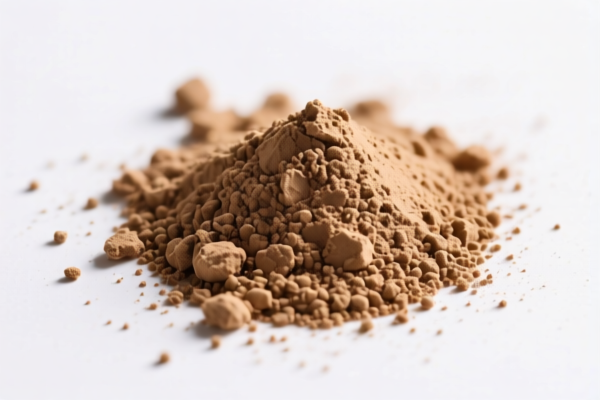
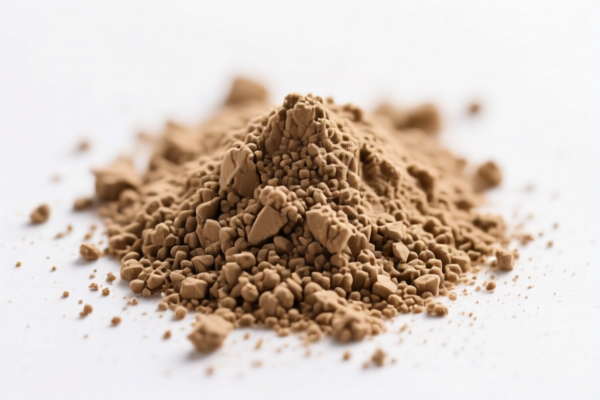
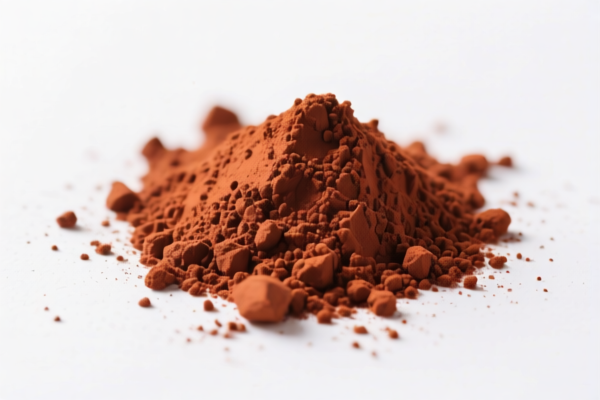
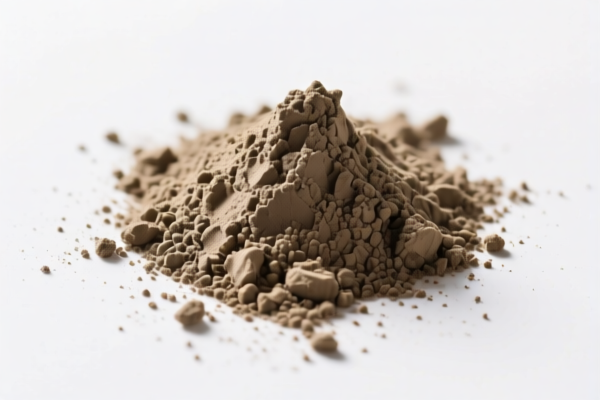
AI Analysis
🧪 Lead-Containing Anti-Explosive Agent / Colorant (Pb-Based Anti-Knock Additives)
🌐 HS Code Reference & Customs Clearance Guide | 2026 Latest Tariff Analysis | Professional Compliance Strategy
📌 I. Product Definition & Classification: What Exactly Is This?
This product refers to chemical preparations containing lead compounds used primarily as anti-knock agents (anti-explosives) in fuel, or potentially as colorants/pigments. In international trade, the classification depends heavily on the primary function and chemical composition.
Key Distinction: * Anti-Knock Agents (Anti-Explosives): Specifically designed to prevent engine knocking in combustion engines. These fall under Chapter 38 (Miscellaneous Chemical Products). * Refined Lead: If the product is essentially pure or refined lead metal with anti-knock properties derived solely from the metal itself, it may fall under Chapter 78 (Lead and Articles Thereof).
⚠️ Critical Classification Point:
- If it is a chemical preparation (mixtures, solutions, or compound-based additives) →归入 3811.11 or 3824.84/85.
- If it is refined lead metal (e.g., lead ingots used for anti-knock purposes) →归入 7801.10.
📦 II. HS Code Classification Details (2026 Latest Tariff Authority Comparison)
| HS Code | Product Description | Application Scenario | Lead Form/State |
|---|---|---|---|
3811.11.10.00 |
Anti-knock preparations, based on lead compounds; specifically classified as Lead-Based Anti-Knock Agents | Fuel additives for gasoline engines | ✅ Chemical Compound |
3811.11.50.00 |
Containing lead-based anti-knock agents; material and usage fully match | General fuel anti-knock preparations | ✅ Chemical Compound |
3824.84.00.00 |
Lead-containing anti-explosive/retardant agents; classified as Chemical Industry Preparations | Specialized chemical mixtures,缓释 (slow-release) agents | ✅ Chemical Mixture |
3824.85.00.00 |
Lead-containing anti-explosive/retardant agents; fits within Chemical Products and Preparations | General chemical additives for industrial use | ✅ Chemical Mixture |
7801.10.00.00 |
Refined lead containing gasoline anti-knock agents; material is Refined Lead | Lead metal ingots/bars used as anti-knock source | ⚠️ Metallic Lead |
🔍 Key Reminder:
- Most commercial "lead anti-knock agents" are chemical preparations (like Tetraethyl Lead or methylcyclopentadienyl manganese tricarbonyl mixed with lead carriers), which fall under 3811 or 3824.
- Only pure/refined lead metal products fall under 7801. Misclassification here leads to significant tariff differences (e.g., 35% vs. 12.5% on lead value).
💰 III. 2026 Latest Tariff Rate Details (Including Surtaxes, Policy Additions)
✅ Applicable Country: United States (US)
✅ Origin: China (CN)
✅ Effective Date: From November 10, 2025 (including subsequent imports)
🎯 1. 3811.11.10.00 & 3811.11.50.00 —— Lead-Based Anti-Knock Agents
| Item | Content |
|---|---|
| Basic Duty Rate | 0% (ad valorem) |
| Section 301 Surtax | +25% (Added tariff for China-origin goods) |
| Section 122 Tariff | +10% (Specific 122-clause tariff for certain chemical/industrial goods) |
| Total Duty Rate | 35.0% |
| Tax Calculation | CIF Value × 35% |
| De Minimis Exemption | ❌ Not Applicable (deny_de_minimis) |
| Legal Basis Path | USITC:3811.11.10.00 → SECTION_301:Footnote → SECTION_122 |
📌 Explanation:
- "Basic Tariff 0%" means the standard MFN rate is zero; however, US trade policies heavily impact Chinese goods.
- "Section 301: 25%" is the core surtax for industrial chemicals from China.
- "Section 122: 10%" applies to specific chemical preparations related to national security or industrial supply chain controls.
- Total 35% is a fixed rate on the total CIF value.
🎯 2. 3824.84.00.00 & 3824.85.00.00 —— Lead-Containing Chemical Preparations (Anti-Explosive/Retardant)
| Item | Content |
|---|---|
| Basic Duty Rate | 6.5% (ad valorem) |
| Section 301 Surtax | +25% |
| Section 122 Tariff | +10% |
| Total Duty Rate | 41.5% |
| Tax Calculation | CIF Value × 41.5% |
| De Minimis Exemption | ❌ Not Applicable |
| Legal Basis Path | USITC:3824.84.00.00 → SECTION_301:Footnote → SECTION_122 |
📌 Note:
- These codes fall under "Miscellaneous Chemical Products." The basic rate is 6.5%, not 0%.
- With 25% + 10% surtaxes, the total burden is 41.5%.
- This is 6.5% higher than the anti-knock specific codes (3811), making accurate classification critical.
🎯 3. 7801.10.00.00 —— Refined Lead (Metallic)
| Item | Content |
|---|---|
| Basic Duty Rate | 2.5% on the value of the lead content |
| Section 301 Surtax | 0% (Exempted for base metals in some contexts, or structured differently) |
| Section 122 Tariff | +10% |
| Total Duty Rate | 2.5% (on lead value) + 10% flat |
| Tax Calculation | (CIF Lead Content Value × 2.5%) + (CIF Total Value × 10%) |
| De Minimis Exemption | ❌ Not Applicable |
| Legal Basis Path | USITC:7801.10.00.00 → SECTION_122 |
📌 Critical Distinction:
- If classified as metal, the 2.5% applies only to the lead value, not the total CIF.
- However, the 10% Section 122 still applies.
- Risk: If customs determines the product is a chemical mixture (not pure metal), they may reclassify to3824, jumping from ~10-12% effective rate to 41.5%.
🛠️ IV. Customs Clearance Practical Advice (Real-World Pitfall Avoidance)
✅ 1. Required Documentation Checklist (Non-Negotiable)
| Document | Mandatory? | Explanation |
|---|---|---|
| ✅ Technical Data Sheet (TDS) | ✔️ | Must specify chemical composition, % of lead compounds, and primary function (anti-knock vs. retardant). |
| ✅ Safety Data Sheet (SDS) | ✔️ | Critical for hazardous material handling; confirms lead content classification. |
| ✅ Product Photographs | ✔️ | Show packaging, labeling (e.g., "Lead-Based Anti-Knock Agent"), and physical state (liquid/solid/powder). |
| ✅ Commercial Invoice | ✔️ | Must clearly state HS Code description, e.g., "Anti-Knock Additive, Lead Compound Based." |
| ✅ Certificate of Analysis (COA) | ✔️ | Proves lead content percentage and purity; vital for 7801 vs. 3811 dispute. |
| ✅ Bill of Lading | ✔️ | Consistent description with invoice. |
✅ 2. Declaration Strategy (Key Mantra)
🔥 "Function Defines Code, Composition Defines Tax!"
| Scenario | Correct Declaration | Wrong Practice | Consequence |
|---|---|---|---|
| Liquid Fuel Additive | 3811.11.10.00 or 3811.11.50.00 |
Declaring as "Metal Lead" | 41.5% Tax (if misclassified as chemical) or Rejection |
| Powder/Pigment Mix | 3824.84.00.00 |
Declaring as "General Chemical" | 41.5% Tax + Penalties |
| Lead Ingot/Bar | 7801.10.00.00 |
Declaring as "Chemical Preparation" | 41.5% Tax (if reclassified) |
| Mixture with Solvents | 3824 (Preparation) |
Declaring as "Pure Lead" | High Risk of Audit & Back Taxes |
📌 Warning:
- Do NOT declare lead-based additives as "General Chemicals" (3824.90) to seek lower basic rates if they fit3811. Customs will check function.
- For7801, you must prove it is refined metal, not an alloy or compound with solvents.
✅ 3. Special Handling Cases
| Case | Handling Advice |
|---|---|
| OEM Fuel Additives | Provide client formula sheets. Ensure "Anti-Knock" function is explicitly stated. |
| Slow-Release Lead Agents | Likely 3824.84/85. Ensure SDS highlights "Retardant/Anti-Explosive" function. |
| Lead Content Variance | If lead content < 90% and mixed with organics, it is NOT 7801. It is a Chemical Preparation. |
| Hazardous Material | Lead compounds are often hazardous. Ensure proper IMCO/ADR labeling for ocean/air freight. |
🌍 V. Global Market Comparison (2026 Update)
| Country/Region | Recommended HS Code | Tariff Rate (China Origin) | Certification | Notes |
|---|---|---|---|---|
| 🇺🇸 USA | 3811.11.10.00 / 3824.84.00.00 |
35% - 41.5% | EPA Registration, SDS | High tariffs due to Section 301 & 122. |
| 🇨🇳 China | 3811.11.10.00 |
5% - 10% | REACH (if exporting to EU) | Domestic consumption has lower barriers. |
| 🇪🇺 EU | 3811.11.10 |
0% - 4.5% | REACH, CLP | Strict lead restrictions; may be banned for consumer fuels. |
| 🇦🇺 Australia | 3811.11.10 |
5% | AICIS | Import permit required for lead compounds. |
| 🇯🇵 Japan | 3811.11.10 |
0% - 3.8% | JIS Standards | Low basic tariff, but strict safety checks. |
📌 Conclusion:
- USA is the most expensive market due to layered surtaxes (35-41.5%).
- EU/Australia have low basic rates but strict environmental regulations that may effectively ban lead-based anti-knock agents for certain uses.
📌 VI. Common Errors & Pitfalls (Lessons Learned)
❌ Error 1: Declaring lead-based fuel additive as "General Oil Additive" (3811.90)
👉 Consequence: Customs reclassifies to 3811.11 (specific for lead) → 35% Tax + Penalty for incorrect declaration.
❌ Error 2: Declaring a lead-compound mixture as "Refined Lead" (7801)
👉 Consequence: Customs performs chemical analysis, finds organics/solvents, reclassifies to 3824 → 41.5% Tax instead of ~12.5%. Loss of $0.5-$1 per gallon equivalent.
❌ Error 3: Ignoring Section 122 (10% Surtax)
👉 Consequence: Underpayment at border → Hold at Port + Daily Storage Fees + Back Taxes.
❌ Error 4: Missing SDS/CoA
👉 Consequence: Customs lab test required → Delay of 2-4 weeks.
✅ Correct Declaration Example:
"Chemical Preparation, Lead-Based Anti-Knock Agent for Gasoline, CAS No. XXX-XX-XX, Pure Lead Content: Y%, Package: 200L Drum, HS Code: 3811.11.10.00"
🎯 VII. Conclusion: Professional Declaration, Cost Efficiency, Risk Mitigation
🎯 Remember the Mantra:
🔹 "Function First: Anti-Knock is 3811, Retardant is 3824, Metal is 7801."
🔹 "US Tariff: 35-41.5%, No De Minimis. Prepare SDS & CoA."
📌 Pro Tip:
If your lead content is very low or the product is non-leaded anti-knock (e.g., MTBE, ETBE), the HS code changes entirely (
3814.00). Ensure you are not misdeclaring non-leaded products as lead-based.
For US imports, consider Advance Ruling from CBP to lock in the HS code and avoid surprise audits.
📣 Immediate Action:
📞 Consult a licensed customs broker
📄 Prepare SDS, CoA, and Technical Data
🚀 Clear Customs Smoothly, Avoid Delays, Protect Margins!
✨ Professional Compliance Starts with Accurate Classification!
💼 Every percent of tariff counts in the lead industry!
Customer Reviews
About HS Code Classification
The Harmonized System (HS) is an internationally standardized nomenclature developed by the World Customs Organization (WCO) to classify traded products. Over 200 countries use the HS system as the basis for customs tariffs, trade statistics, and import/export regulations.
Each HS code follows a hierarchical structure:
- Chapter (2 digits) — Broad category of goods (e.g., Chapter 84: Machinery and Mechanical Appliances)
- Heading (4 digits) — More specific grouping within the chapter
- Subheading (6 digits) — Internationally standardized breakdown, used by all WCO member countries
- National subdivisions (8-10 digits) — Country-specific extensions for further classification, such as US HTSUS 10-digit codes
Correct HS code classification is essential for smooth customs clearance, accurate duty payment, and compliance with trade regulations. Misclassification can lead to customs delays, overpayment of duties, or penalties.
When importing from CN to US, the applicable tariff rates may include:
- Most-Favored-Nation (MFN) rate — The standard duty rate applied to WTO members
- General rate — Applied to countries without trade agreements
- Trade remedy duties — Additional tariffs such as Section 301 (anti-dumping), Section 232 (national security), or countervailing duties
The information provided on this page is for reference purposes only. For official classification, please consult with your local customs authority or a licensed customs broker.