Lead containing Transparent Acrylic Sheet
CN → US| HS Code | Tariff Rate | Origin | Destination | Doc |
|---|---|---|---|---|
| 3906100000 | 41.3% | CN | US | Official Doc |
| 3921110000 | 40.3% | CN | US | Official Doc |
| 3921190090 | 41.5% | CN | US | Official Doc |
| 3920515090 | 41.5% | CN | US | Official Doc |
| 3906902000 | 41.3% | CN | US | Official Doc |
Product Images
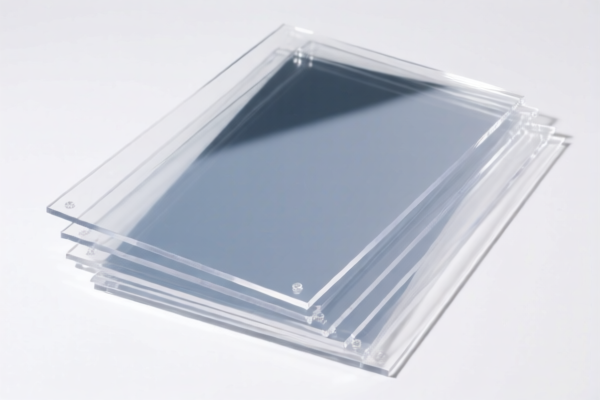
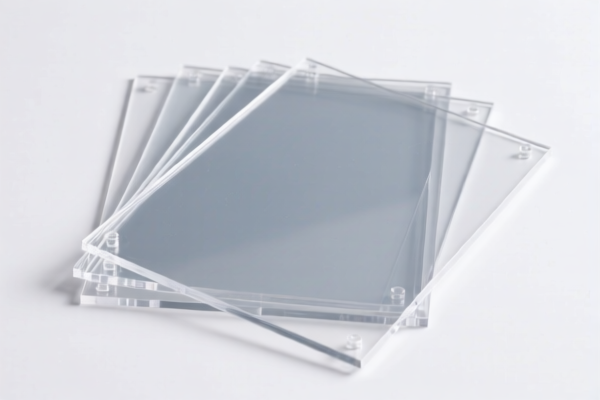
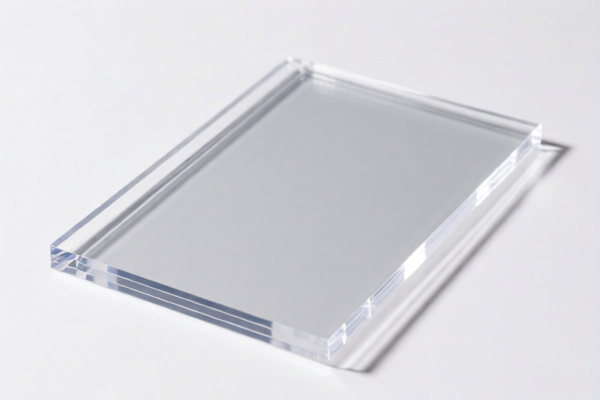
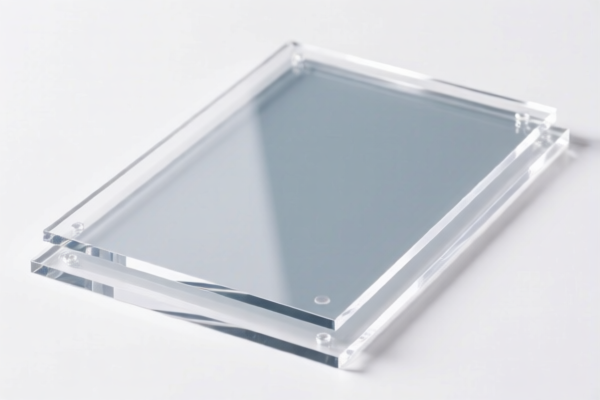
AI Analysis
🔮 Lead-Containing Transparent Acrylic Sheets (Polymethyl Methacrylate)
🌐 HS Code Reference & Customs Clearance Guide | 2026 Latest Tariff Analysis | Specialized Compliance Strategy for Radiation-Protected Materials
📌 I. Product Definition & Classification: What Exactly is "Lead-Acrylic"?
Lead-containing transparent acrylic sheets (often referred to as Lead Plexiglass or Radiation Shielding Acrylic) are composite materials made primarily from Polymethyl Methacrylate (PMMA) resin, embedded with heavy metal compounds (such as lead oxide) to provide X-ray and gamma-ray shielding. They are widely used in medical imaging rooms (X-ray, CT, MRI), nuclear facilities, and industrial radiation protection zones.
In international trade, these sheets are not classified as "lead products" (Chapter 78) nor as simple "plastics" without special consideration. Their classification hinges on whether they are considered "in primary forms" (semi-finished raw materials) or "finished/semi-finished plates" with specific structural characteristics.
⚠️ Key Distinction:
- If the material is a raw block or ingot of PMMA with lead additives, before being cut or processed into sheets → It may fall under Primary Forms.
- If the material is already formed into plates/sheets (cut to size or in large slabs), it falls under Plastic Plates/Sheets.
- Crucial Note: The presence of lead does not change the base HS Code to Chapter 78; it remains under Chapter 39 (Plastics), but the specific subheading depends on the physical form.
📦 II. HS Code Classification Details (Based on Provided Data)
| HS Code | Product Description | Application Scenario | Physical Form |
|---|---|---|---|
3906.10.00.00 |
Acrylic (PMMA) sheets, semi-finished in primary form | Raw PMMA blocks/billets with lead additive, not yet cut into final plate dimensions | ✅ Primary Form / Semi-finished |
3921.11.00.00 |
Other plastic plates, including those of polymethyl methacrylate | Final radiation shielding sheets/plates, cut to size, ready for installation in medical rooms | ✅ Finished/Semi-finished Plate |
3921.19.00.90 |
Plates of other plastics, non-cellular | Non-cellular lead-acrylic sheets that do not fit specific PMMA plate codes (less common for pure PMMA) | ✅ Non-cellular Plate |
3920.51.50.90 |
Polymethyl methacrylate plates, within the category of plates/sheets | Specific sub-category for PMMA plates not classified elsewhere in Chapter 39 | ✅ Specific PMMA Plate |
3906.90.20.00 |
Other acrylic polymers, sheet-like semi-finished | Other forms of acrylic polymers (non-PMMA specific or mixed polymer) in sheet-like semi-finished state | ✅ Sheet-like Semi-finished |
🔍 Important Clarification:
-3906.10.00.00is for raw/primary PMMA material. If your lead-acrylic is sold as large uncut blocks or raw resin sheets before final fabrication, use this code.
-3921.11.00.00is the most common code for finished shielding plates (e.g., 6mm, 10mm, 20mm thick sheets cut to standard sizes).
- The presence of lead increases the total tax burden significantly due to US trade remedies.
💰 III. 2026 Latest Tariff Rate Breakdown (Including Additional Taxes)
✅ Applicable Country: United States (US)
✅ Origin: China (CN)
✅ Effective Date: November 10, 2025 onwards
🎯 1. 3906.10.00.00 – Acrylic (PMMA) Sheets, Primary Form
| Item | Details |
|---|---|
| Base Duty | 6.3% (ad valorem) |
| Section 301 Additional Duty | +25.0% |
| Section 122 Additional Duty | +10.0% |
| Total Effective Rate | 41.3% |
| Tax Calculation | CIF Value × 41.3% |
| De Minimis Exemption? | ❌ No (Deny De Minimis) |
| Legal Pathway | Base Tariff → Section 301 → Section 122 → HS 3906.10.00.00 |
📌 Explanation:
- This code applies to raw/semi-finished PMMA containing lead.
- The 41.3% rate is extremely high, making raw material imports costly.
- Ensure the product is clearly described as "PMMA-based" to avoid misclassification as "lead alloys."
🎯 2. 3921.11.00.00 – Other Plastic Plates, Including PMMA
| Item | Details |
|---|---|
| Base Duty | 5.3% (ad valorem) |
| Section 301 Additional Duty | +25.0% |
| Section 122 Additional Duty | +10.0% |
| Total Effective Rate | 40.3% |
| Tax Calculation | CIF Value × 40.3% |
| De Minimis Exemption? | ❌ No (Deny De Minimis) |
| Legal Pathway | Base Tariff → Section 301 → Section 122 → HS 3921.11.00.00 |
📌 Explanation:
- This is the most likely code for finished lead-acrylic shielding sheets.
- Slightly lower total rate (40.3%) compared to primary forms (41.3%).
- Use this for plates/sheets ready for installation in hospitals or industrial facilities.
🎯 3. 3921.19.00.90 – Plates of Other Plastics, Non-Cellular
| Item | Details |
|---|---|
| Base Duty | 6.5% (ad valorem) |
| Section 301 Additional Duty | +25.0% |
| Section 122 Additional Duty | +10.0% |
| Total Effective Rate | 41.5% |
| Tax Calculation | CIF Value × 41.5% |
| De Minimis Exemption? | ❌ No (Deny De Minimis) |
| Legal Pathway | Base Tariff → Section 301 → Section 122 → HS 3921.19.00.90 |
📌 Explanation:
- Use if the acrylic sheet does not strictly meet the "PMMA" definition in 3921.11 (e.g., mixed polymer).
- Highest total rate among plate codes (41.5%).
🎯 4. 3920.51.50.90 – PMMA Plates, Specific Category
| Item | Details |
|---|---|
| Base Duty | 6.5% (ad valorem) |
| Section 301 Additional Duty | +25.0% |
| Section 122 Additional Duty | +10.0% |
| Total Effective Rate | 41.5% |
| Tax Calculation | CIF Value × 41.5% |
| De Minimis Exemption? | ❌ No (Deny De Minimis) |
| Legal Pathway | Base Tariff → Section 301 → Section 122 → HS 3920.51.50.90 |
📌 Explanation:
- Another specific code for PMMA plates.
- Rate is identical to3921.19.00.90.
- Select based on specific USITC notes for PMMA plates.
🎯 5. 3906.90.20.00 – Other Acrylic Polymers, Sheet-like Semi-finished
| Item | Details |
|---|---|
| Base Duty | 6.3% (ad valorem) |
| Section 301 Additional Duty | +25.0% |
| > Section 122 Additional Duty | +10.0% |
| Total Effective Rate | 41.3% |
| Tax Calculation | CIF Value × 41.3% |
| De Minimis Exemption? | ❌ No (Deny De Minimis) |
| Legal Pathway | Base Tariff → Section 301 → Section 122 → HS 3906.90.20.00 |
📌 Explanation:
- For non-PMMA acrylics or mixed acrylics in sheet form.
- Same rate as primary PMMA forms.
🛠️ IV. Customs Clearance Practical Advice (Risk Avoidance Guide)
✅ 1. Required Documentation Checklist
| Document | Mandatory | Notes |
|---|---|---|
| ✅ Product Specification Sheet | ✔️ | Must state: "PMMA with Lead Oxide," lead content %, radiation shielding effectiveness (e.g., "equivalent to 1mm Pb") |
| ✅ Composition Certificate | ✔️ | Detailed chemical composition, proving it is primarily PMMA (plastic) and not a metal alloy |
| ✅ Product Photos | ✔️ | Clear images of the sheet, edges, and any labeling |
| ✅ Commercial Invoice | ✔️ | Must specify "Radiation Shielding Acrylic Sheet" and HS Code |
| ✅ Packing List | ✔️ | Weight and dimensions of each sheet |
| ✅ Certificate of Origin | ✔️ | Required for duty assessment |
| ✅ FCC/CE Reports (if applicable) | ✔️ | Not always required for plastic, but helpful if electronic components are integrated |
✅ 2. Declaration Tips (Key Mnemonic)
🔥 “Lead in Plastic, Don’t Call It Metal!”
| Scenario | Correct Declaration | Incorrect Declaration | Consequence |
|---|---|---|---|
| Finished lead-acrylic shield | 3921.11.00.00 – "PMMA Plates" |
"Lead Sheet" or "X-ray Shield" | Misclassification → Higher scrutiny, potential penalty |
| Raw PMMA block with lead | 3906.10.00.00 – "Acrylic in Primary Form" |
"Plastic Raw Material" | Vague description → Delays |
| Mixed polymer shield | 3921.19.00.90 |
"Acrylic" | If not pure PMMA, 3921.11 may be rejected |
📌 Critical Note:
- Do NOT declare as "Lead Products" (Chapter 78). This will trigger unnecessary inspections and potential misclassification penalties.
- Emphasize "PMMA" or "Acrylic" as the primary material.
- Specify "Radiation Shielding" as the function, not the material.
✅ 3. Special Cases
| Scenario | Handling Advice |
|---|---|
| OEM Custom Sizes | Provide cut lists and dimensions. Ensure HS Code matches the form (plate vs. primary). |
| Lead Content Verification | Be prepared to provide a lab report showing lead is embedded in plastic, not a surface coating or metal sheet. |
| Multiple Layers | If lead is a layer between PMMA sheets, still classify as PMMA plates (3921.11.00.00). |
| Small Samples | Still subject to 40.3%-41.5% duty. No de minimis exemption. |
🌍 V. Global Market Comparison (2026)
| Country/Region | Recommended HS Code | Duty Rate | Notes |
|---|---|---|---|
| 🇺🇸 USA | 3921.11.00.00 |
40.3% | High due to Sec 301 & Sec 122 |
| 🇨🇳 China | 3921.11.00.00 |
~5-6% | Low import duty |
| 🇪🇺 EU | 3921.11.00.00 |
~3-5% | No additional tariffs |
| 🇦🇺 Australia | 3921.11.00.00 |
~5% | No additional tariffs |
📌 Conclusion:
- USA has the highest effective duty rate for lead-acrylic sheets due to multiple附加 taxes.
- Consider supply chain diversification (e.g., production in Vietnam or Mexico) to seek duty exemptions if applicable.
📌 VI. Common Mistakes & Pitfalls (Lessons Learned)
❌ Mistake 1: Declaring as "Lead Sheet" (Chapter 78)
👉 Consequence: Wrong chapter classification, potential seizure, fines, and retroactive duties.
❌ Mistake 2: Using "Plastic Sheet" without specifying PMMA/Lead content
👉 Consequence: Customs may assign a higher default rate or request extensive documentation, causing delays.
❌ Mistake 3: Ignoring Section 122 Tariffs
👉 Consequence: Underpayment of duties, leading to audits and back taxes with penalties.
❌ Mistake 4: Splitting shipments to avoid thresholds
👉 Consequence: De minimis exemption is denied for these HS codes. Small shipments still incur full duty.
✅ Correct Practice:
"Transparent Acrylic Sheet (PMMA) with Lead Oxide, 10mm Thick, Radiation Shielding, 100% PMMA Base, for Medical X-Ray Room Use"
🎯 VII. Conclusion: Professional Declaration, Cost Control
🎯 Key Takeaway:
🔹 "Lead in Acrylic, HS Code 39; Don’t say Lead, Say PMMA!"
🔹 "US Duty is 40.3%+; Plan Your Supply Chain Accordingly!"
🔹 "No De Minimis for These Codes; Every Dollar Counts!"
📌 Pro Tip:
If your lead-acrylic sheets are originating from Vietnam, Mexico, Thailand, or Malaysia, you may be eligible for IEEPA exemptions or lower Section 301 rates.
Recommendation:
- Apply for Advance Rulings from US CBP to confirm HS Code.
- Consult with a licensed customs broker to verify Section 122 applicability.
- Consider supply chain restructuring to mitigate high US tariffs.
📣 Immediate Action:
📞 Contact a Professional Customs Broker + Provide Product Specs + Apply for Advance Ruling
🚀 Ensure Smooth Customs Clearance, Avoid Penalties, Maximize Profit Margins!
✨ Professional Customs Clearance Starts with Accurate Classification!
💼 Every Dollar of Duty Saved is a Dollar of Profit Gained!
Customer Reviews
About HS Code Classification
The Harmonized System (HS) is an internationally standardized nomenclature developed by the World Customs Organization (WCO) to classify traded products. Over 200 countries use the HS system as the basis for customs tariffs, trade statistics, and import/export regulations.
Each HS code follows a hierarchical structure:
- Chapter (2 digits) — Broad category of goods (e.g., Chapter 84: Machinery and Mechanical Appliances)
- Heading (4 digits) — More specific grouping within the chapter
- Subheading (6 digits) — Internationally standardized breakdown, used by all WCO member countries
- National subdivisions (8-10 digits) — Country-specific extensions for further classification, such as US HTSUS 10-digit codes
Correct HS code classification is essential for smooth customs clearance, accurate duty payment, and compliance with trade regulations. Misclassification can lead to customs delays, overpayment of duties, or penalties.
When importing from CN to US, the applicable tariff rates may include:
- Most-Favored-Nation (MFN) rate — The standard duty rate applied to WTO members
- General rate — Applied to countries without trade agreements
- Trade remedy duties — Additional tariffs such as Section 301 (anti-dumping), Section 232 (national security), or countervailing duties
The information provided on this page is for reference purposes only. For official classification, please consult with your local customs authority or a licensed customs broker.