Leak proof textile outer packaging beverage bag
CN → US| HS Code | Tariff Rate | Origin | Destination | Doc |
|---|---|---|---|---|
| 6307909891 | 24.5% | CN | US | Official Doc |
| 4202920809 | 42.0% | CN | US | Official Doc |
| 6305900000 | 23.7% | CN | US | Official Doc |
| 6305390000 | 25.9% | CN | US | Official Doc |
| 4202920807 | 42.0% | CN | US | Official Doc |
Product Images
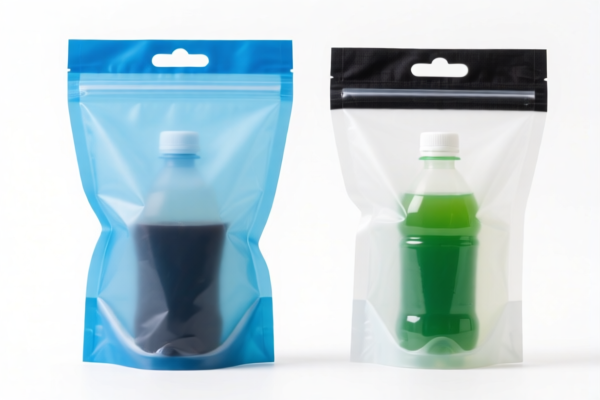
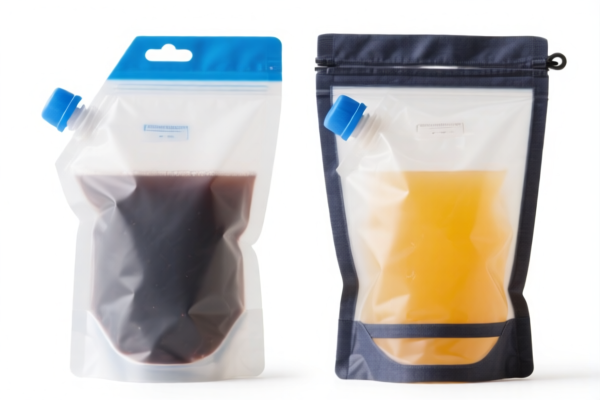
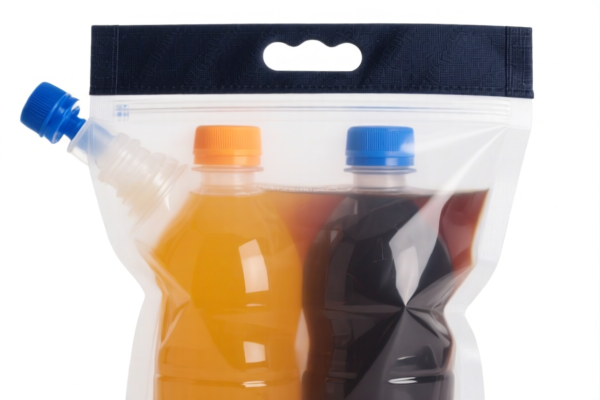
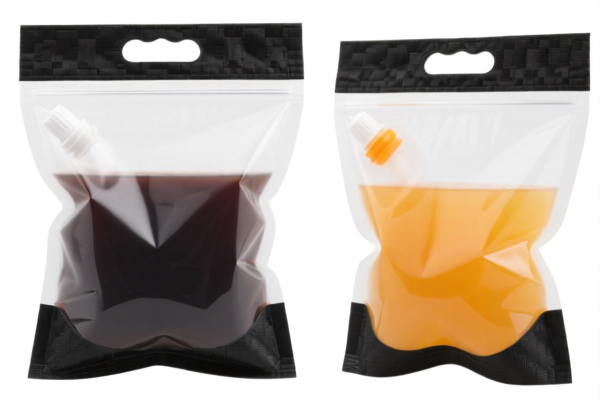
AI Analysis
🎒 Leak-Proof Textile Outer Packaging Beverage Bag
🌐 HS Code Reference & Customs Clearance Guide | 2026 Latest Tariff Analysis | Professional Clearance Strategy
📌 Part 1: Product Definition & Classification: Do You Really Understand "Beverage Bags"?
A leak-proof textile outer beverage bag is a finished good designed to hold drinks. In international trade, its classification depends heavily on whether it is viewed as a general "bag" or a specialized "insulated container." The core debate lies in distinguishing between general textile packaging (Chapter 63) and specific insulated food/drink containers (Chapter 42).
⚠️ Key Distinction Point:
- If classified as a general textile sack/bag → Falls under Heading 6305.
- If classified as a specialized insulated container (like a thermos bag) → Falls under Heading 4202.
📦 Part 2: HS Code Classification Details (2026 Latest Tariff Authority Comparison)
| HS Code | Product Description | Applicability Scenario | Tax Rate (Total) |
|---|---|---|---|
6307.90.98.91 |
Other made-up textile articles (General Finished Good) | Fits "Other made-up articles" category; material is textile. | 24.5% |
4202.92.08.09 |
Travel, sports, and similar bags (Textile Outer, Insulated) | Explicitly contains textile outer layer AND beverage bag purpose; fits textile material insulated food/drink bag classification. | 42.0% |
6305.90.00.00 |
Sacks and bags (Other textile materials) | "Textile" corresponds to other textile materials; "Bag" corresponds to Sacks and bags; fits packaging commodity bag attribute. | 23.7% |
6305.39.00.00 |
Sacks and bags (Man-made textile materials) | "Textile" corresponds to man-made textile materials; "Bag" corresponds to bag category; fits packaging scope. | 25.9% |
4202.92.08.07 |
Travel, sports, and similar bags (Man-made Fiber) | Textile outer layer and beverage bag purpose fit classification form and purpose; inferred as man-made fiber material. | 42.0% |
🔍 Key Reminder:
- Chapter 42 (4202) typically applies to bags with specific shapes or insulated properties for carrying food/drink, often attracting higher tariffs due to "specialized use."
- Chapter 63 (6305/6307) applies to general textile sacks or other made-up articles, generally attracting lower base tariffs.
- Misclassification Risk: Classifying a specialized insulated bag as a general sack can lead to penalties; conversely, classifying a general sack as an insulated bag leads to overpayment.
💰 Part 3: 2026 Latest Tariff Rate Details (Including Additional Taxes)
✅ Applicable Country: United States (US)
✅ Origin: China (CN)
✅ Effective Time: Current rates apply including Section 301 and IEEPA additions.
🎯 1. 6307.90.98.91 —— Other Made-up Textile Articles
| Item | Content |
|---|---|
| Base Tariff | 7.0% |
| Section 301 Additional Tariff | 7.5% |
| Section 122 Tariff (IEEPA) | 10% |
| Total Rate | 24.5% |
| Tax Calculation | CIF Value × 24.5% |
| De Minimis Exemption | ❌ Not Eligible (High tax rate usually triggers stricter scrutiny) |
| Legal Basis Path | HTSUS:6307.90.98.91 → Sec 301 Footnote → IEEPA Sec 122 |
📌 Explanation:
- This is the lowest total tariff option among the valid choices.
- It treats the product as a general "made-up article" rather than a specialized beverage container.
- Strategy: Use this classification if the bag lacks specific thermal insulation certification or if the design is generic.
🎯 2. 4202.92.08.09 —— Travel/Sports Bags (Textile Outer, Insulated)
| Item | Content |
|---|---|
| Base Tariff | 7.0% |
| Section 301 Additional Tariff | 25.0% |
| Section 122 Tariff (IEEPA) | 10% |
| Total Rate | 42.0% |
| Tax Calculation | CIF Value × 42.0% |
| De Minimis Exemption | ❌ Not Eligible |
| Legal Basis Path | HTSUS:4202.92.08.09 → Sec 301 Footnote 9903.88.01 → IEEPA Sec 122 |
📌 Note:
- High tariff due to Section 301 (25%).
- Applies if customs views the bag as a "travel/sports bag" or "insulated container" with specific utility.
- Risk: Only choose this if the product is explicitly marketed and designed as a high-end insulated beverage carrier.
🎯 3. 6305.90.00.00 —— Sacks and Bags (Other Textile Materials)
| Item | Content |
|---|---|
| Base Tariff | 6.2% |
| Section 301 Additional Tariff | 7.5% |
| Section 122 Tariff (IEEPA) | 10% |
| Total Rate | 23.7% |
| Tax Calculation | CIF Value × 23.7% |
| De Minimis Exemption | ❌ Not Eligible |
| Legal Basis Path | HTSUS:6305.90.00.00 → Sec 301 Footnote → IEEPA Sec 122 |
📌 Explanation:
- Lowest Base Tariff (6.2%).
- Fits the description of "Sacks and bags" made of other textile materials.
- Strategy: Ideal if the bag is primarily a "sack" or "pouch" for packaging transport, rather than a reusable beverage carrier.
🎯 4. 6305.39.00.00 —— Sacks and Bags (Man-Made Textile Materials)
| Item | Content |
|---|---|
| Base Tariff | 8.4% |
| Section 301 Additional Tariff | 7.5% |
| Section 122 Tariff (IEEPA) | 10% |
| Total Rate | 25.9% |
| Tax Calculation | CIF Value × 25.9% |
| De Minimis Exemption | ❌ Not Eligible |
| Legal Basis Path | HTSUS:6305.39.00.00 → Sec 301 Footnote → IEEPA Sec 122 |
📌 Note:
- Applies if the textile is specifically identified as "man-made" (e.g., polyester, nylon) and the bag is a "sack."
- Slightly higher than6305.90due to higher base rate.
🎯 5. 4202.92.08.07 —— Travel/Sports Bags (Man-Made Fiber)
| Item | Content |
|---|---|
| Base Tariff | 7.0% |
| Section 301 Additional Tariff | 25.0% |
| Section 122 Tariff (IEEPA) | 10% |
| Total Rate | 42.0% |
| Tax Calculation | CIF Value × 42.0% |
| De Minimis Exemption | ❌ Not Eligible |
| Legal Basis Path | HTSUS:4202.92.08.07 → Sec 301 Footnote 9903.88.01 → IEEPA Sec 122 |
📌 Note:
- Same high tariff as4202.92.08.09.
- Specific to man-made fiber bags classified under travel/sports heading.
🛠️ Part 4: Customs Clearance Practical Advice (Avoid Pitfalls)
✅ 1. Preparation Checklist (Non-Negotiable)
| Material | Required | Explanation |
|---|---|---|
| ✅ Product Specification Sheet | ✔️ | Must detail dimensions, material composition (textile type), and leak-proof mechanism (e.g., lining, seal type). |
| ✅ Material Composition Proof | ✔️ | Certificate of origin for fabric (Natural vs. Man-Made) is critical for Chapter 63 vs. 42. |
| ✅ Product Photos (Clear) | ✔️ | Show the bag's structure: Is it a simple sack or an insulated container? |
| ✅ Commercial Invoice | ✔️ | Must clearly state "Leak-Proof Textile Beverage Bag" and match HS Code logic. |
| ✅ Packing List | ✔️ | Confirm no additional non-textile components (e.g., electronic coolers) are present. |
✅ 2. Declaration Tips (Key Mantra)
🔥 "Characterize by Function, Not Just Name: Sack vs. Container!"
| Scenario | Correct Declaration | Wrong Practice |
|---|---|---|
| Generic pouch for holding drinks | 6305.90.00.00 or 6307.90.98.91 |
Declaring as "Insulated Cooler Bag" → 42% |
| High-end insulated beverage carrier | 4202.92.08.09 |
Declaring as "Textile Sack" → Risk of misclassification penalty |
| Man-made fiber sack | 6305.39.00.00 |
Vague description "Textile Bag" → Ambiguity delays |
| General made-up textile good | 6307.90.98.91 |
Over-specifying "Thermal Insulation" without proof |
✅ 3. Special Handling Cases
| Situation | Recommendation |
|---|---|
| Dual-Use Bag (Carries books AND drinks) | Provide evidence of primary use. If marketed as general bag, use 6307 or 6305. |
| Leak-Proof Lining | If the lining is plastic/foil, ensure it doesn't change the essential character to a "container" under Chapter 39 or 42. |
| OEM Customization | Provide customer design specs to justify specific HS Code selection. |
| High Value Items | For 4202 codes (42% tax), consider if the value justifies the tariff; otherwise, explore 6305 alternatives if legally defensible. |
🌍 Part 5: Global Market Comparison (2026 Latest)
| Country/Region | Recommended HS Code | Tariff | Certification | Notes |
|---|---|---|---|---|
| 🇺🇸 USA | 6305.90.00.00 |
23.7% | No special certs | Lowest tax strategy; treat as sack. |
| 🇨🇳 China | 6305.90.00.00 |
~6-10% | N/A | Lower import duty for textile sacks. |
| 🇪🇺 EU | 6305.90.00.00 |
~4-6% | CE (if applicable) | Generally lower tariffs on textile sacks. |
| 🇦🇺 Australia | 6305.90.00.00 |
5% | N/A | Standard textile tariff. |
📌 Conclusion:
- USA is the most critical market due to Section 301 and IEEPA additions.
- Choosing Chapter 63 (6305/6307) saves ~18% in total tax compared to Chapter 42.
- Risk: If the bag is clearly an insulated beverage carrier, customs may reclassify it to4202, triggering a 42% tax + penalties.
📌 Part 6: Common Errors & Pitfalls (Lessons Learned)
❌ Error 1: Calling an insulated bag a "Textile Sack" to avoid high tax
👉 Consequence: Customs audit → Reclassification to 4202 → Back taxes + Penalties!
❌ Error 2: Ignoring the "Leak-Proof" feature in documentation
👉 Consequence: If the bag is actually a cooler with insulation, declaring it as a non-insulated sack is false declaration.
❌ Error 3: Using vague terms like "Bag" in the invoice
👉 Consequence: Ambiguity leads to manual examination → Delay + Demurrage Fees.
✅ Correct Approach:
"Leak-Proof Textile Pouch for Beverages, Model XYZ, Material: Polyester Outer, PE Liner. Designed for general storage, not specialized thermal insulation."
(This supports6305or6307classification)
🎯 Part 7: Conclusion: Smart Classification, Cost Savings!
🎯 Remember the Mantra:
🔹 "Sack vs. Container: Function Determines Fate."
🔹 "Chapter 63 Saves ~18%, Chapter 42 Costs 42%."
🔹 "Declare Accurately, Avoid the 42% Trap!"
📌 Pro Tip:
If your product is generic and not primarily marketed as insulated, push for
6305.90.00.00(23.7%).
If it is high-end insulated, accept4202.92.08.09(42.0%) or consult a customs broker for a Pre-Ruling to mitigate risk.
📣 Immediate Action:
📞 Contact your customs broker with product photos and material specs.
🚀 Apply for a US CBP Pre-Ruling if the product value is high and classification is borderline.
💼 Your profit margin depends on accurate HS Code selection!
✨ Professional Clearance Starts with Precise Classification!
💼 Every Percent of Tax Matters!
Customer Reviews
About HS Code Classification
The Harmonized System (HS) is an internationally standardized nomenclature developed by the World Customs Organization (WCO) to classify traded products. Over 200 countries use the HS system as the basis for customs tariffs, trade statistics, and import/export regulations.
Each HS code follows a hierarchical structure:
- Chapter (2 digits) — Broad category of goods (e.g., Chapter 84: Machinery and Mechanical Appliances)
- Heading (4 digits) — More specific grouping within the chapter
- Subheading (6 digits) — Internationally standardized breakdown, used by all WCO member countries
- National subdivisions (8-10 digits) — Country-specific extensions for further classification, such as US HTSUS 10-digit codes
Correct HS code classification is essential for smooth customs clearance, accurate duty payment, and compliance with trade regulations. Misclassification can lead to customs delays, overpayment of duties, or penalties.
When importing from CN to US, the applicable tariff rates may include:
- Most-Favored-Nation (MFN) rate — The standard duty rate applied to WTO members
- General rate — Applied to countries without trade agreements
- Trade remedy duties — Additional tariffs such as Section 301 (anti-dumping), Section 232 (national security), or countervailing duties
The information provided on this page is for reference purposes only. For official classification, please consult with your local customs authority or a licensed customs broker.