Leather Accessories for Clothing
CN → US| HS Code | Tariff Rate | Origin | Destination | Doc |
|---|---|---|---|---|
| 6217108500 | 24.6% | CN | US | Official Doc |
| 7117909000 | 28.5% | CN | US | Official Doc |
| 6217109550 | 32.1% | CN | US | Official Doc |
| 6117809570 | 32.1% | CN | US | Official Doc |
| 6117909095 | 32.1% | CN | US | Official Doc |
Product Images
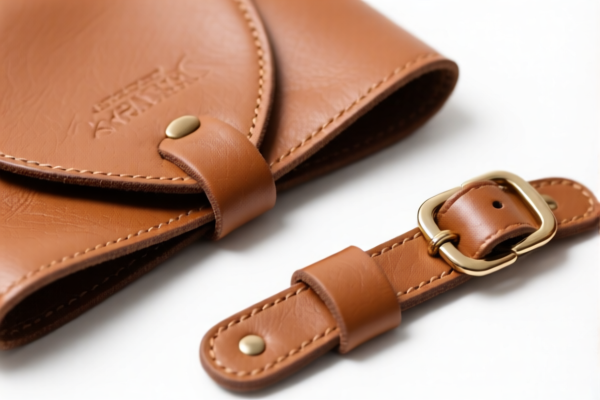
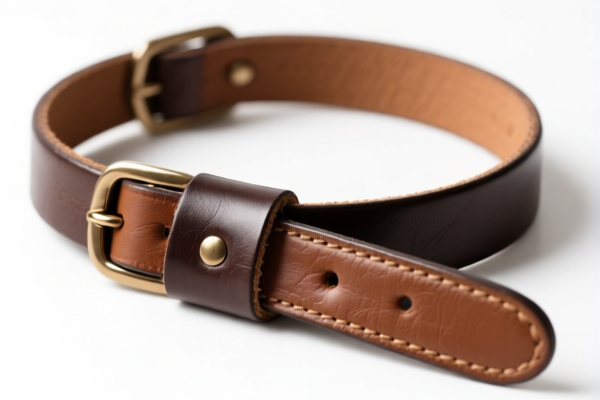
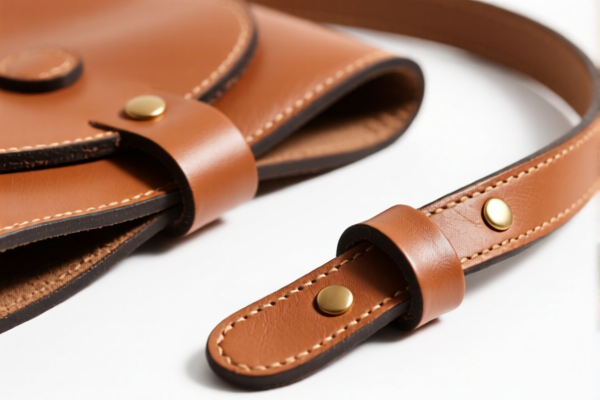
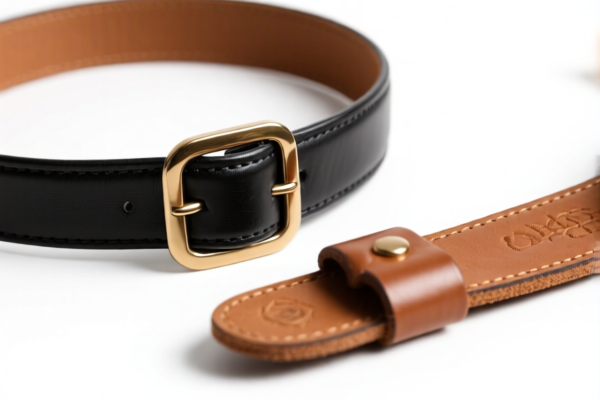
AI Analysis
👜 Leather Accessories for Clothing (Fashion Accessories)
🌐 HS Code Reference & Customs Clearance Guide | 2026 Latest Tariff Analysis | Professional Clearance Strategy
📌 I. Product Definition & Classification: Do You Really Understand "Leather Accessories"?
Leather accessories for clothing are small components used to decorate, fasten, or enhance garments. In international trade, they are often categorized under "Clothing Accessories" (Headings 6117 or 6217) or "Jewelry/Imitation Jewelry" (Heading 7117), depending on their material composition, function, and primary use.
⚠️ Key Distinction:
- If made of textile material with leather trim or primarily textile → Classified under 6117/6217.
- If made of non-precious metal or mixed materials acting as decorative elements → Classified under 7117.
- Crucial Note: Even if described as "leather," if the HS code implies textile-based accessories (like belts, ties, or scarves made of synthetic leather or coated fabric), the classification shifts to the textile headings. If the item is a standalone decorative piece (like a buckle, charm, or ornamental clasp) made of non-precious metal, it falls under 7117. The provided data suggests a mix of textile-based and general accessory classifications due to "undefined material" clauses.
📦 II. HS Code Classification Details (Based on Provided Data)
| HS Code | Product Description | Application Scenario | Tax Rate (Total) |
|---|---|---|---|
6217.10.85.00 |
Clothing Accessories: Matches garment attachment usage. When material is not specified, the fallback category applies. | General textile-based accessories, garment trims, straps. | 24.6% |
7117.90.90.00 |
Clothing Accessories: Based on the "other" fallback principle, inferred as non-precious metal decorative accessories. | Decorative buckles, ornamental clasps, metal-plated fashion jewelry for clothes. | 28.5% |
6217.10.95.50 |
Clothing Accessories: Fully matches "clothing accessories." When material is not specified, the "other" category applies. | Broad range of clothing accessories, including belts, suspenders, or ties not elsewhere specified. | 32.1% |
6117.80.95.70 |
Clothing Accessories: Matches garment attachment usage. When material is not specified, it defaults to possibly fitting here. | Knit or crocheted accessories, or specific textile-based trims. | 32.1% |
6117.90.90.95 |
Clothing Accessories: Consistent with garment attachments and parts. Classified based on accessory categories and fallback rules. | Parts of clothing accessories, miscellaneous textile garnments. | 32.1% |
🔍 Key Observation:
- The classification heavily depends on whether the item is considered a textile accessory (6117/6217) or a non-precious metal accessory (7117).
- "Undefined Material" Clause: When the material is not clearly defined as leather, customs may default to the broader "clothing accessories" categories, leading to higher tariffs (32.1%) if not properly specified as pure leather or textile.
- Section 301/122 Tariffs: All listed codes include 10% additional tariff under "Section 122" (often related to specific trade actions or tariffs on Chinese goods), which significantly impacts the final cost.
💰 III. 2026 Latest Tariff Rate Details (Including Additional Taxes)
✅ Applicable Country: United States (US)
✅ Origin: China (CN)
✅ Effective Date: 2025/2026 (Based on provided data structure)
🎯 1. 6217.10.85.00 —— Clothing Accessories (Fallback Category)
| Item | Content |
|---|---|
| Base Duty | 14.6% (Ad Valorem) |
| Section 301 Surcharge | 0.0% (Note: Data shows 0.0%, but Section 122 applies) |
| Section 122 Surcharge | +10% |
| Total Duty Rate | 24.6% |
| Tax Calculation | CIF Value × 24.6% |
| De Minimis Exemption | ❌ Not Applicable (Section 122 tariffs typically void de minimis for Chinese goods) |
| Legal Basis | USITC:6217.10.85.00 → FOOTNOTE:122 |
📌 Explanation:
- This is the lowest tariff option among the listed codes.
- It applies to general clothing accessories where the material is not strictly defined as leather or metal, falling into the "other" category under 6217.
- Tip: Ensure the product description clearly states "textile-based" or "general clothing accessory" to justify this lower rate.
🎯 2. 7117.90.90.00 —— Non-Precious Metal Decorative Accessories
| Item | Content |
|---|---|
| Base Duty | 11.0% (Ad Valorem) |
| Section 301 Surcharge | +7.5% |
| Section 122 Surcharge | +10% |
| Total Duty Rate | 28.5% |
| Tax Calculation | CIF Value × 28.5% |
| De Minimis Exemption | ❌ Not Applicable |
| Legal Basis | USITC:7117.90.90.00 → FOOTNOTE:122 |
📌 Explanation:
- Lower base duty (11.0%) but higher surcharges (17.5%) lead to a moderate total rate.
- This code is for non-precious metal items (e.g., metal buckles, decorative plates, or mixed-material accessories where metal is dominant).
- Warning: If the item is primarily leather or textile, misclassifying as metal can lead to customs audits and penalties.
🎯 3. 6217.10.95.50 & 6117.xxxxx —— Clothing Accessories (Other/Parts)
| Item | Content |
|---|---|
| Base Duty | 14.6% (Ad Valorem) |
| Section 301 Surcharge | +7.5% |
| Section 122 Surcharge | +10% |
| Total Duty Rate | 32.1% |
| Tax Calculation | CIF Value × 32.1% |
| De Minimis Exemption | ❌ Not Applicable |
| Legal Basis | USITC:6217.10.95.50 / 6117.80.95.70 / 6117.90.90.95 → FOOTNOTE:122 |
📌 Explanation:
- These codes have the highest total tariffs (32.1%).
- They apply when the accessory does not fit neatly into the "85" or "90" subcategories, or when it is considered a "part" of clothing accessories.
- Risk: High tariffs. Avoid if possible by refining the product description to fit6217.10.85.00(24.6%) if applicable.
🛠️ IV. Customs Clearance Practical Advice (Risk Avoidance Guide)
✅ 1. Preparation Checklist (Mandatory)
| Document | Required | Explanation |
|---|---|---|
| ✅ Product Specification Sheet | ✔️ | Must specify material (e.g., "Genuine Leather," "Synthetic Leather," "Metal Buckle"), dimensions, and weight. |
| ✅ Photos of Product & Labels | ✔️ | Clear images showing the item, any brand logos, and material tags. |
| ✅ Commercial Invoice | ✔️ | Must accurately describe the item as "Leather Clothing Accessories" or "Garment Trims," not just "Fashion Accessories." |
| ✅ Bill of Lading/Air Waybill | ✔️ | Ensure HS Code is pre-printed or clearly stated. |
| ✅ Certificate of Origin (CO) | ✔️ | If claiming any preferential treatment (though unlikely for US-China under current 122 tariffs). |
✅ 2. Declaration Tips (Key Mantras)
🔥 “Specify Material, Define Function, Choose Wisely, Save on Duties!”
| Scenario | Correct Declaration | Wrong Approach |
|---|---|---|
| Leather Belt/Tie | 6217.10.85.00 (if textile-based or general accessory) |
Misclassifying as "Jewelry" → Higher scrutiny |
| Metal Buckle/Clasp | 7117.90.90.00 |
Declaring as "Clothing Accessory" if metal-dominant → Potential reclassification |
| Mixed Material (Leather + Metal) | 6217.10.85.00 (if leather/textile is primary) |
Declaring as "Other" (6217.10.95.50) → Unnecessary 32.1% tax |
| Undeclared Material | DO NOT DO THIS | Leads to default to highest tariff (32.1%) or customs delay |
📌 Critical Advice:
- Material Definition is Key: If the item is 100% leather, it may still fall under 6217 if it's a "clothing accessory" (like a belt). However, if it's a standalone leather piece (like a keychain), it might be misclassified. Ensure the product is intended for garment attachment/decoration.
- Avoid "Other" Categories: Codes like6217.10.95.50and6117.90.90.95have higher tariffs. Try to fit your product into6217.10.85.00(24.6%) if it qualifies as a general clothing accessory.
✅ 3. Special Cases
| Scenario | Handling Advice |
|---|---|
| OEM/Private Label | Provide brand authorization letters to avoid "counterfeit" accusations, which can lead to seizure. |
| Leather vs. Synthetic | Clearly state "Genuine Leather" or "PU Leather." Misrepresentation can lead to fines. |
| Accessories Sold with Garments | If sold as a set, the entire set may be classified under the garment’s HS code, potentially lowering the accessory’s separate tax burden. |
| Samples | Even samples are subject to duties if declared as "Goods." Use "Non-commercial Samples" label if applicable, but be aware of Section 122 restrictions. |
🌍 V. Global Market Comparison (2026 Latest)
| Country/Region | Recommended HS Code | Tariff (Approx.) | Certification | Notes |
|---|---|---|---|---|
| 🇺🇸 USA | 6217.10.85.00 |
24.6% | None specific | High due to Section 122. |
| 🇨🇳 China | 6217.10.85.00 |
~5-10% | N/A | Lower base duty. |
| 🇪🇺 EU | 6217.10.85.00 |
~8-12% | CE (if electronic) | No Section 122. |
| 🇬🇧 UK | 6217.10.85.00 |
~8-12% | UKCA | Post-Brexit rules. |
| 🇯🇵 Japan | 6217.10.85.00 |
~8-10% | PSE (if applicable) | Low tariffs. |
📌 Conclusion:
- USA tariffs are significantly higher due to Section 122 (10%) and other surcharges.
- Material specification is the most critical factor in avoiding the 32.1% "other" category.
- For US imports, optimize HS Code selection to6217.10.85.00(24.6%) whenever possible.
📌 VI. Common Mistakes & Pitfalls (Lessons Learned)
❌ Mistake 1: Declaring "Leather Belt" as "Clothing Accessory" without material detail.
👉 Consequence: Customs may classify under 6217.10.95.50 (32.1%) or demand additional proof.
❌ Mistake 2: Misclassifying metal buckles as "Textile Accessories."
👉 Consequence: Audits, penalties, and potential retroactive duties.
❌ Mistake 3: Ignoring Section 122 Tariffs.
👉 Consequence: Unexpected 10% surcharge on all Chinese-origin goods, even if base duty is low.
❌ Mistake 4: Using vague terms like "Fashion Item" or "Garment Part."
👉 Consequence: Customs may apply the highest applicable duty rate (32.1%) or hold the shipment for inspection.
✅ Correct Practice:
"Genuine Leather Belt for Women, Woven Style, Black, 1 inch Width, Model XYZ, HS 6217.10.85.00"
🎯 VII. Conclusion: Precise Classification, Cost Savings!
🎯 Remember the Mantra:
🔹 "Specify Material, Avoid 'Other', Section 122 Hits Hard!"
🔹 "24.6% is the Target, 32.1% is the Trap!"
📌 Pro Tip:
- If your leather accessories are originating from Vietnam, Mexico, or Thailand, you may be eligible for lower or zero Section 122 tariffs.
- Consider supply chain diversification to mitigate US-China tariff risks.
📣 Immediate Action:
📞 Consult a Licensed Customs Broker to review your product specifications.
🚀 Apply for an Advance Ruling if importing large volumes, to lock in the correct HS Code and duty rate.
✨ Professional Clearance Starts with Accurate Classification!
💼 Every Percent of Duty Counts!
Customer Reviews
About HS Code Classification
The Harmonized System (HS) is an internationally standardized nomenclature developed by the World Customs Organization (WCO) to classify traded products. Over 200 countries use the HS system as the basis for customs tariffs, trade statistics, and import/export regulations.
Each HS code follows a hierarchical structure:
- Chapter (2 digits) — Broad category of goods (e.g., Chapter 84: Machinery and Mechanical Appliances)
- Heading (4 digits) — More specific grouping within the chapter
- Subheading (6 digits) — Internationally standardized breakdown, used by all WCO member countries
- National subdivisions (8-10 digits) — Country-specific extensions for further classification, such as US HTSUS 10-digit codes
Correct HS code classification is essential for smooth customs clearance, accurate duty payment, and compliance with trade regulations. Misclassification can lead to customs delays, overpayment of duties, or penalties.
When importing from CN to US, the applicable tariff rates may include:
- Most-Favored-Nation (MFN) rate — The standard duty rate applied to WTO members
- General rate — Applied to countries without trade agreements
- Trade remedy duties — Additional tariffs such as Section 301 (anti-dumping), Section 232 (national security), or countervailing duties
The information provided on this page is for reference purposes only. For official classification, please consult with your local customs authority or a licensed customs broker.