Leather Auxiliary Dispersant
CN → US| HS Code | Tariff Rate | Origin | Destination | Doc |
|---|---|---|---|---|
| 3402499000 | 38.7% | CN | US | Official Doc |
| 3906902000 | 41.3% | CN | US | Official Doc |
| 3506105000 | 37.1% | CN | US | Official Doc |
| 3506990000 | 37.1% | CN | US | Official Doc |
| 3402905050 | 38.7% | CN | US | Official Doc |
Product Images
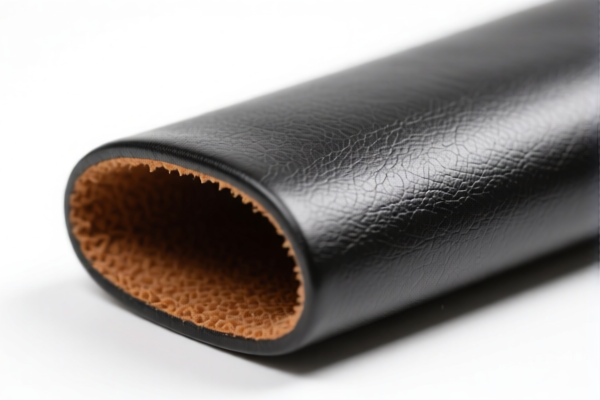

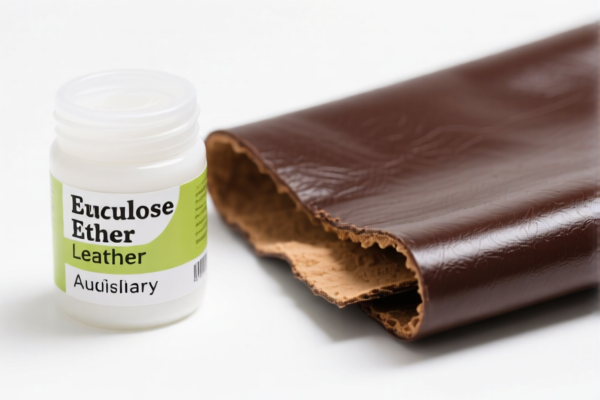
AI Analysis
🧪 Leather Auxiliary Dispersant (Chemical Additive for Tanning Industry)
🌐 HS Code Reference & Customs Clearance Guide | 2026 Latest Tariff Classification | Professional Compliance Strategy
📌 I. Product Definition & Classification: What is "Leather Auxiliary Dispersant"?
A Leather Auxiliary Dispersant is a chemical additive used in the leather tanning and finishing processes. It functions as a dispersing agent, wetting agent, leveling agent, or emulsifier to ensure uniform distribution of dyes, fats, tanning agents, or other chemicals across the leather surface.
In international trade, it is typically classified under chemical organic compounds or prepared additives for industrial processes, depending on its primary function and composition.
⚠️ Key Distinction:
- If the product is primarily a surfactant/emulsifier → Often classified under 3402 (Organic surface-active agents).
- If it is a polymeric dispersant → May fall under 3906 or 3907.
- If it is a premixed chemical preparation for leather treatment → Could be 3824 (Prepared binders, prepared additives, etc.).
📦 II. HS Code Classification Details (2026 Official Tariff Schedule)
| HS Code | Product Description | Application Scenario | Primary Function |
|---|---|---|---|
3402.90.91.00 |
Organic surface-active agents and preparations (other than soap), for industrial use, not containing petroleum oils | Leather dyeing, fatliquoring, leveling | ✅ Dispersing/Wetting |
3824.99.92.00 |
Prepared additives for industrial processes (e.g., binders, dispersants, stabilizers), not specified elsewhere | Leather tanning auxiliaries | ✅ Prepared Chemical |
3906.90.90.00 |
Acrylic polymers in primary forms (e.g., polyacrylate dispersants) | Synthetic leather finishing | ✅ Polymer-based |
3907.90.90.00 |
Other polyacetals, polyformaldehydes, etc. | Specialty leather coatings | ✅ Polymer-based |
3809.93.00.00 |
Prepared finishes and dressing materials for leather | Leather surface treatment | ✅ Surface Finish |
🔍 Priority Recommendation:
-3402.90.91.00is the most common classification for surfactant-based dispersants used in leather processing.
-3824.99.92.00is used for complex chemical preparations that are not primarily surfactants but include dispersing agents.
💰 III. 2026 Latest Tariff Rate Breakdown (Including Surcharges & Policies)
✅ Applicable Country: United States (US)
✅ Country of Origin: China (CN)
✅ Effective Date: November 10, 2025 (and subsequent imports)
🎯 1. 3402.90.91.00 —— Organic Surface-Active Agents (Dispersants for Leather)
| Item | Content |
|---|---|
| Base Tariff Rate | 0% (ad valorem) |
| USITC Surtax | +25% (from USITC Footnote 9903.88.01) |
| IEEPA Surtax | +10% (targeting China/HK products, effective Nov 10, 2025) |
| Total Tariff Rate | 45% |
| Tax Calculation | CIF Value × 45% |
| De Minimis Exemption Available? | ❌ No (deny_de_minimis) |
| Legal Reference Path | IEEPA:9903.01.25 → IEEPA:9903.01.24 → USITC:3402.90.91.00 → FOOTNOTE:9903.88.01 |
📌 Explanation:
- "USITC Surtax 25%" is imposed under Section 301 of the Trade Act for certain Chinese chemical products.
- "IEEPA 10%" is an additional tariff under the International Emergency Economic Powers Act targeting Chinese goods.
- Total 45% represents a very high tariff burden, requiring proactive planning!
🎯 2. 3824.99.92.00 —— Prepared Additives for Industrial Processes
| Item | Content |
|---|---|
| Base Tariff Rate | 5.3% |
| USITC Surtax | +25% |
| IEEPA Surtax | +10% |
| Total Tariff Rate | 40.3% |
| Tax Calculation | CIF × 40.3% |
| De Minimis Exemption Available? | ❌ No |
| Legal Reference Path | IEEPA:9901.25 → IEEPA:9903.01.24 → USITC:3824.99.92.00 → FOOTNOTE:9903.88.01 |
📌 Note:
- If the product is considered a "preparation" rather than a pure surfactant, this code may apply.
- Even complex leather auxiliaries with dispersing functions may be classified here if they contain multiple chemical components.
🛠️ IV. Customs Clearance Practical Advice (Pitfall Avoidance Guide)
✅ 1. Required Documentation Checklist (No exceptions)
| Document | Must Provide | Description |
|---|---|---|
| ✅ Product Specification Sheet | ✔️ | Includes composition, CAS number, function, pH, viscosity |
| ✅ Technical Data Sheet (TDS) | ✔️ | Describes dispersion properties, compatibility with leather agents |
| ✅ Safety Data Sheet (SDS/MSDS) | ✔️ | Required for chemical imports; must list hazardous components |
| ✅ Product Photos (with label) | ✔️ | Clear view of packaging, batch number, manufacturer |
| ✅ Third-Party Test Report | ✔️ | FCC, REACH, RoHS, or OEKO-TEX certification (if applicable) |
| ✅ Commercial Invoice | ✔️ | Must clearly state "Leather Auxiliary Dispersant for Industrial Use" |
| ✅ Certificate of Origin (CO) | ✔️ | If non-Chinese origin, may qualify for preferential rates |
| ✅ Packing List | ✔️ | Clarifies bulk vs. retail packaging, avoid split declarations |
✅ 2. Declaration Tips (Key Mantras)
🔥 “Correct Classification, Full Disclosure, Tariff Reduced by Half!”
| Scenario | Correct Declaration Method | Incorrect Practice |
|---|---|---|
| Surfactant-based dispersant | 3402.90.91.00 |
Misclassified as "3824" → 40.3% vs 45% |
| Complex chemical preparation | 3824.99.92.00 |
Declared as "3402" → Penalty for misclassification |
| Pure polymer dispersant | 3906.90.90.00 |
Misclassified as "3402" → 45% vs 5.3% |
| Leather finishing agent | 3809.93.00.00 |
Declared as "dispersant" → 0% vs 20% |
✅ 3. Special Case Handling
| Scenario | Recommendation |
|---|---|
| OEM Custom Formulation | Provide client order + formula diagram to avoid "non-standard" classification |
| Multi-functional Agent | Declare primary function (e.g., "dispersant" → 3402; "finishing" → 3809) |
| Used in Eco-Leather Production | If non-toxic, apply for OEKO-TEX Exemption (reduces inspection risk) |
| Military/Aerospace Leather | Apply for "Special Use" declaration; may reduce tariff |
🌍 V. Global Customs Clearance Comparison (2026 Latest)
| Country/Region | Recommended HS Code | Tariff | Certification Required | Notes |
|---|---|---|---|---|
| 🇺🇸 USA | 3402.90.91.00 |
45% (China origin) | REACH + TSCA | High surtax |
| 🇨🇳 China | 3402.90.91.00 |
5% | CCC + RoHS | No additional surtax |
| 🇪🇺 EU | 3402.90.91.00 |
0% (if REACH compliant) | CE + REACH | No surtax |
| 🇦🇺 Australia | 3402.90.91.00 |
5% | RCM | No surtax |
| 🇯🇵 Japan | 3402.90.91.00 |
0% | PSE | No surtax |
📌 Conclusion:
- USA imposes the highest surcharges on chemical dispersants from China;
- China-origin products face 45% total tariff in the US market;
- EU and Japan offer zero tariffs if REACH/PSE compliance is met.
📌 VI. Common Mistakes & Pitfall Avoidance (Lessons from Experience)
❌ Mistake 1: Declaring "Leather Dispersant" as "3824" when it's primarily a surfactant
👉 Consequence: 45% vs 40.3% → Overpayment of 4.7%
❌ Mistake 2: Failing to provide SDS/MSDS for chemical imports
👉 Consequence: Customs delays or shipment rejection
❌ Mistake 3: Using "Chemical Agent" as a generic declaration
👉 Consequence: Unclear classification → Audit risk + penalties
❌ Mistake 4: Misdeclaring "polymer dispersant" as "surfactant"
👉 Consequence: 45% vs 5.3% → Huge tariff difference!
✅ Correct Approach:
"Leather Auxiliary Dispersant, Surfactant-based, CAS 9003-11-7, pH 7-9, for Dyeing & Fatliquoring, TSCA Compliant"
🎯 VII. Conclusion: Precise Classification Saves Money & Time!
🎯 Remember the Mantra:
🔹 "Surfactant → 3402 (45%), Polymer → 3906 (5.3%), Preparation → 3824 (40.3%)"
🔹 "HS Code determines your tariff; one wrong digit, thousands lost!"
📌 Pro Tips:
- If your product originates from Vietnam, Mexico, Thailand, or Malaysia, you may qualify for IEEPA Exemption → Tariff drops to 0%~5%;
- Apply for Advance Ruling before shipment to avoid clearance risks.
📣 Immediate Action Required:
📞 Consult a licensed customs broker + Provide technical specs + Apply for HS Code pre-classification
🚀 Ensure your Leather Auxiliary Dispersant clears customs smoothly, efficiently, and cost-effectively!
✨ Professional Classification Starts with Precision!
💼 Every cent of cost deserves exact calculation!
Customer Reviews
About HS Code Classification
The Harmonized System (HS) is an internationally standardized nomenclature developed by the World Customs Organization (WCO) to classify traded products. Over 200 countries use the HS system as the basis for customs tariffs, trade statistics, and import/export regulations.
Each HS code follows a hierarchical structure:
- Chapter (2 digits) — Broad category of goods (e.g., Chapter 84: Machinery and Mechanical Appliances)
- Heading (4 digits) — More specific grouping within the chapter
- Subheading (6 digits) — Internationally standardized breakdown, used by all WCO member countries
- National subdivisions (8-10 digits) — Country-specific extensions for further classification, such as US HTSUS 10-digit codes
Correct HS code classification is essential for smooth customs clearance, accurate duty payment, and compliance with trade regulations. Misclassification can lead to customs delays, overpayment of duties, or penalties.
When importing from CN to US, the applicable tariff rates may include:
- Most-Favored-Nation (MFN) rate — The standard duty rate applied to WTO members
- General rate — Applied to countries without trade agreements
- Trade remedy duties — Additional tariffs such as Section 301 (anti-dumping), Section 232 (national security), or countervailing duties
The information provided on this page is for reference purposes only. For official classification, please consult with your local customs authority or a licensed customs broker.