Leather Binder Notebook
CN → US| HS Code | Tariff Rate | Origin | Destination | Doc |
|---|---|---|---|---|
| 4205008000 | 35.0% | CN | US | Official Doc |
| 4205006000 | 39.9% | CN | US | Official Doc |
| 4820102060 | 35.0% | CN | US | Official Doc |
| 4820104000 | 10.0% | CN | US | Official Doc |
| 4205008000 | 35.0% | CN | US | Official Doc |
Product Images
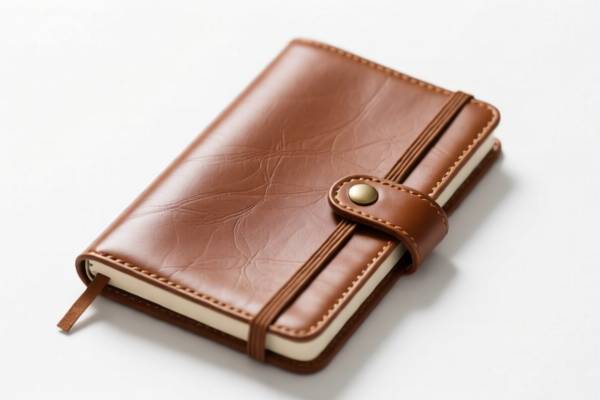
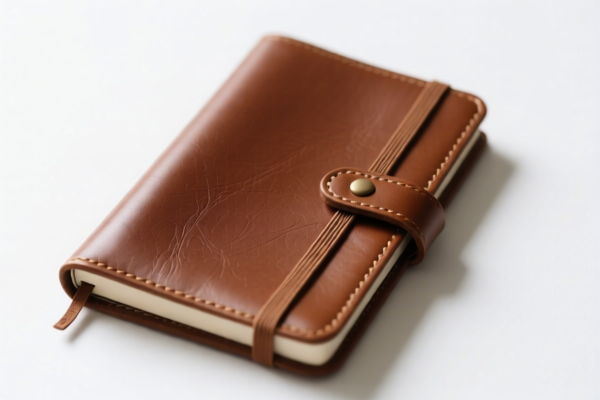
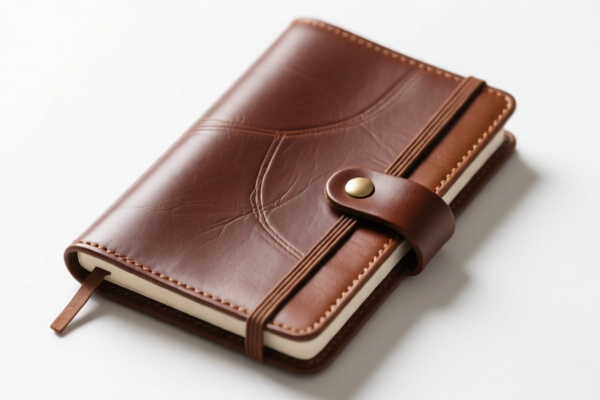
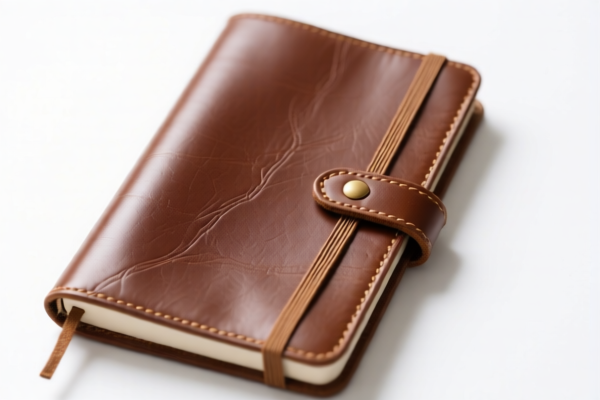
AI Analysis
📒 Leather Binder Notebook (Notebooks, Document Cases & Similar Articles)
🌐 HS Code Reference & Customs Clearance Guide | 2024-2025 Latest Tariff Analysis | Professional Compliance Strategy 📌 I. Product Definition & Classification: Do You Really Understand the "Leather Notebook"?
A "Leather Binder Notebook" is a versatile stationery item used for personal organization, business meetings, and academic recording. In international trade, the classification depends heavily on its primary material and structural composition. Is it primarily a leather good with paper pages, or is it a paper product with a leather cover? This distinction dictates the HS Code and, crucially, the tariff burden.
⚠️ Key Distinction Point:
- If the item is constructed mainly of leather (with paper inserts acting as accessories) → Classified under Chapter 42 (Articles of Leather).
- If the item is constructed mainly of paper/cardboard (with a leather cover acting as decoration/protection) → Classified under Chapter 48 (Paper and Paperboard).
📦 II. HS Code Classification Details (Latest Tariff Authority Comparison)
Based on the provided data, here are the specific classifications for leather notebooks and document cases. Note the significant variance in tax rates based on the HS Code chosen.
| HS Code | Product Description | Application Scenario | Material Priority | Total Tax Rate |
|---|---|---|---|---|
4205.00.80.00 |
Leather notebooks or loose-leaf document cases | Pure leather goods, finished leather products | Leather | 35.0% |
4205.00.60.00 |
Leather notebooks (Other leather articles) | Leather-made articles, no material conflict | Leather | 39.9% |
4820.10.20.60 |
Leather-covered notebooks | Stationery made of paper/cardboard; leather is just the cover | Paper | 35.0% |
4820.10.40.00 |
Leather notebooks (Core carrier is paper) | Stationery supplies where paper is the core component | Paper | 10.0% ⭐ |
4205.00.80.00 |
Leather loose-leaf document cases | Other leather articles, finished form | Leather | 35.0% |
🔍 Critical Insight:
- The difference between Chapter 42 (Leather) and Chapter 48 (Paper) is massive.
-4820.10.40.00offers the lowest tax rate (10%) but requires the argument that the paper/core is the primary character of the good.
-4205.00.80.00and4820.10.20.60both hit 35%, but for different structural reasons.
-4205.00.60.00is the most expensive (39.9%), so it should generally be avoided if a lower rate is applicable.
💰 III. 2024-2025 Latest Tariff Rate Breakdown (Including Surcharges & Policy Add-ons)
✅ Applicable Country: United States (US)
✅ Origin: China (CN)
✅ Effective Time: Ongoing (Section 301 & IEEPA measures)
🎯 1. 4205.00.80.00 & 4820.10.20.60 — The "Middle Ground" High Tax
(Applies to: Leather notebooks/document cases classified as leather articles OR paper articles with specific leather cover attributes)
| Item | Content |
|---|---|
| Base Tariff | 0.0% (Ad Valorem) |
| Section 301 Surcharge | +25.0% (From USITC Footnote 9903.88.01) |
| IEEPA Surcharge | +10.0% (Against China/HK products, effective from Nov 10, 2025, or current enforcement) |
| Total Tax Rate | 35.0% |
| Tax Calculation | CIF Value × 35% |
| De Minimis Exemption | ❌ Not Applicable (Most Section 301 goods are excluded from $800 de minimis) |
| Legal Basis Path | IEEPA:9903.01.25 → IEEPA:9903.01.24 → USITC:4205.00.80.00 / 4820.10.20.60 |
📌 Explanation:
- Even though the base tariff is 0%, the 25% Section 301 + 10% IEEPA surcharges create a heavy burden.
- This classification is common for document cases or notebooks where the leather is substantial.
🎯 2. 4205.00.60.00 — The Highest Tax Pitfall
(Applies to: Other leather-made articles, specifically identified as "Leather Notebooks" under this specific subheading)
| Item | Content |
|---|---|
| Base Tariff | 4.9% |
| Section 301 Surcharge | +25.0% |
| IEEPA Surcharge | +10.0% |
| Total Tax Rate | 39.9% |
| Tax Calculation | CIF Value × 39.9% |
| De Minimis Exemption | ❌ Not Applicable |
| Legal Basis Path | IEEPA:9901.25 → IEEPA:9903.01.24 → USITC:4205.00.60.00 |
📌 Warning:
- This is the most expensive classification.
- Only use this if the product is definitively a leather article and no other Chapter 42/48 option fits.
- Avoid if possible due to the 4.9% base rate adding to the surcharges.
🎯 3. 4820.10.40.00 — The Low-Tax Sweet Spot
(Applies to: Notebooks, account books, diaries, etc., of paper or paperboard, with leather covers)
| Item | Content |
|---|---|
| Base Tariff | 0.0% |
| Section 301 Surcharge | 0.0% |
| IEEPA Surcharge | +10.0% |
| Total Tax Rate | 10.0% |
| Tax Calculation | CIF Value × 10% |
| De Minimis Exemption | ❌ Not Applicable (Still subject to IEEPA) |
| Legal Basis Path | IEEPA:9903.01.24 → USITC:4820.10.40.00 |
📌 Strategic Advantage:
- Lowest Total Tax (10%).
- Requires proving the core function/material is paper, and leather is merely a cover/decoration.
- If your notebook has thin paper pages and a relatively thin leather cover, this is the ideal HS Code.
🛠️ IV. Customs Clearance Practical Advice (Real-World Pitfall Avoidance)
✅ 1. Documentation Checklist (Non-negotiable)
| Document | Required? | Description |
|---|---|---|
| ✅ Product Specifications | ✔️ | Must detail: Paper weight (gsm), Leather type (genuine/synthetic), Binding type. |
| ✅ Product Photos | ✔️ | Show the interior (paper pages) clearly to support Chapter 48 classification. |
| ✅ Commercial Invoice | ✔️ | Describe accurately: "Notebook, Paper Core, Leather Cover" (for 4820) vs. "Leather Document Case" (for 4205). |
| ✅ Packing List | ✔️ | List items separately if mixed. |
| ✅ Material Declaration | ✔️ | Explicitly state % of leather vs. paper by weight/value if questioned. |
✅ 2. Declaration Strategy (Key Mnemonics)
🔥 "Paper Core, Low Tax; Leather Body, High Tax!"
| Scenario | Correct HS Code | Risk |
|---|---|---|
| Standard Notebook (Paper pages, leather cover) | 4820.10.40.00 (10%) |
⭐ Best Option |
| Thick Leather Diary (Heavy leather, few pages) | 4205.00.80.00 (35%) |
⚠️ High Tax |
| Leather Document Case (Empty or with inserts) | 4205.00.80.00 (35%) |
⚠️ High Tax |
| Specific "Leather Notebook" Subheading | 4205.00.60.00 (39.9%) |
❌ Avoid |
✅ 3. Special Cases Handling
| Situation | Recommendation |
|---|---|
| Mixed Materials | If leather < 50% by weight, argue for Chapter 48 (4820.10.40.00). |
| OEM Custom Goods | Provide design sheets showing paper as the functional core. |
| High-Value Leather Goods | If the leather is exotic (e.g., crocodile), customs may insist on Chapter 42 (4205.00.80.00). |
| Samples/Ships | Ensure the description on the invoice matches the HS Code logic to avoid audits. |
🌍 V. Global Market Comparison (2024-2025 Update)
| Country/Region | Recommended HS Code | Estimated Duty | Certification | Notes |
|---|---|---|---|---|
| 🇺🇸 USA | 4820.10.40.00 |
10% (IEEPA only) | None | Best for cost reduction. |
| 🇺🇸 USA | 4205.00.80.00 |
35% (301+IEEPA) | None | Common for leather goods. |
| 🇨🇳 China | 4820.10.40.00 |
8-10% | N/A | Import duty varies by trade agreement. |
| 🇪🇺 EU | 4820.10.40.00 |
0% (if genuine paper) | CE (if applicable) | No Section 301/IEEPA equivalent. |
| 🇬🇧 UK | 4820.10.40.00 |
0-5% | N/A | Post-Brexit tariffs may vary. |
📌 Conclusion:
- The USA is the most critical market due to Section 301 and IEEPA surcharges.
- For the US market, classifying as Chapter 48 (4820.10.40.00) saves 25% in tariffs compared to Chapter 42.
- EU/UK generally do not have these aggressive anti-China surcharges on stationery, making the HS Code less critical for cost but still important for compliance.
📌 VI. Common Mistakes & Pitfalls (Lessons Learned)
❌ Mistake 1: Classifying all leather-bound items as Chapter 42.
👉 Consequence: You pay 35% tax instead of 10%.
💡 Fix: Argue that the paper content defines the essential character of the notebook.
❌ Mistake 2: Using 4205.00.60.00 without checking alternatives.
👉 Consequence: You pay 39.9% tax, the highest rate.
💡 Fix: Always compare with 4205.00.80.00 (35%) and 4820.10.40.00 (10%).
❌ Mistake 3: Misdeclaring "Leather Case" as "Notebook" to avoid higher taxes.
👉 Consequence: Customs audit, penalties, and detention.
💡 Fix: Be honest about the product nature. If it’s a case with inserts, it may still be 4820.10.20.60 (35%), which is better than being caught misdeclaring.
✅ Correct Declaration Example:
"Notebook, 8.5x11 inch, 100gsm paper pages, genuine leather cover, spiral bound, for office use."
➡️ Supports HS Code4820.10.40.00.
🎯 VII. Conclusion: Professional Classification Saves Money!
🎯 Remember the Mantra:
🔹 "Paper Core = 10% Tax (Chapter 48)"
🔹 "Leather Body = 35% Tax (Chapter 42)"
🔹 "Don't Pay 39.9% unless Forced!"
📌 Pro Tip:
If you are exporting to the US, consult a customs broker to perform an Advance Ruling for 4820.10.40.00. A formal ruling protects you from retroactive penalties if CBP challenges the classification later.
📣 Immediate Action:
📞 Contact a Customs Broker + Provide Product Specs + Request Advance Ruling
🚀 Ensure your Leather Notebooks clear customs smoothly, legally, and with minimal tax burden!
✨ Professional Classification Starts with Precision!
💼 Every percent of duty saved is pure profit!
Customer Reviews
About HS Code Classification
The Harmonized System (HS) is an internationally standardized nomenclature developed by the World Customs Organization (WCO) to classify traded products. Over 200 countries use the HS system as the basis for customs tariffs, trade statistics, and import/export regulations.
Each HS code follows a hierarchical structure:
- Chapter (2 digits) — Broad category of goods (e.g., Chapter 84: Machinery and Mechanical Appliances)
- Heading (4 digits) — More specific grouping within the chapter
- Subheading (6 digits) — Internationally standardized breakdown, used by all WCO member countries
- National subdivisions (8-10 digits) — Country-specific extensions for further classification, such as US HTSUS 10-digit codes
Correct HS code classification is essential for smooth customs clearance, accurate duty payment, and compliance with trade regulations. Misclassification can lead to customs delays, overpayment of duties, or penalties.
When importing from CN to US, the applicable tariff rates may include:
- Most-Favored-Nation (MFN) rate — The standard duty rate applied to WTO members
- General rate — Applied to countries without trade agreements
- Trade remedy duties — Additional tariffs such as Section 301 (anti-dumping), Section 232 (national security), or countervailing duties
The information provided on this page is for reference purposes only. For official classification, please consult with your local customs authority or a licensed customs broker.